


























Views
Downloads

Printable Essential Kindergarten Sight Words Worksheet
Paste this activity's link or code into your existing LMS (Google Classroom, Canvas, Teams, Schoology, Moodle, etc.).
Students can open and work on the activity right away, with no student login required.
You'll still be able to track student progress and results from your teacher account.
Foundational Literacy Practice
This Kindergarten sight words worksheet provides an engaging way for early readers to master high-frequency words through multisensory interaction. By combining reading, color-coding, and illustrative drawing, students build a permanent visual memory of essential vocabulary. This resource ensures that young learners move beyond phonics to recognize common words instantly and accurately.
At a Glance
- Grade: Kindergarten · Subject: ELA
- Standard:
CCSS.ELA-LITERACY.RF.K.3.C— Read common high-frequency words by sight and identify meanings- Skill Focus: High-frequency word recognition
- Format: 2 pages · 4 problems · Answer key included · PDF
- Best For: Independent reading centers and sub plans
- Time: 15–20 minutes
What's Inside
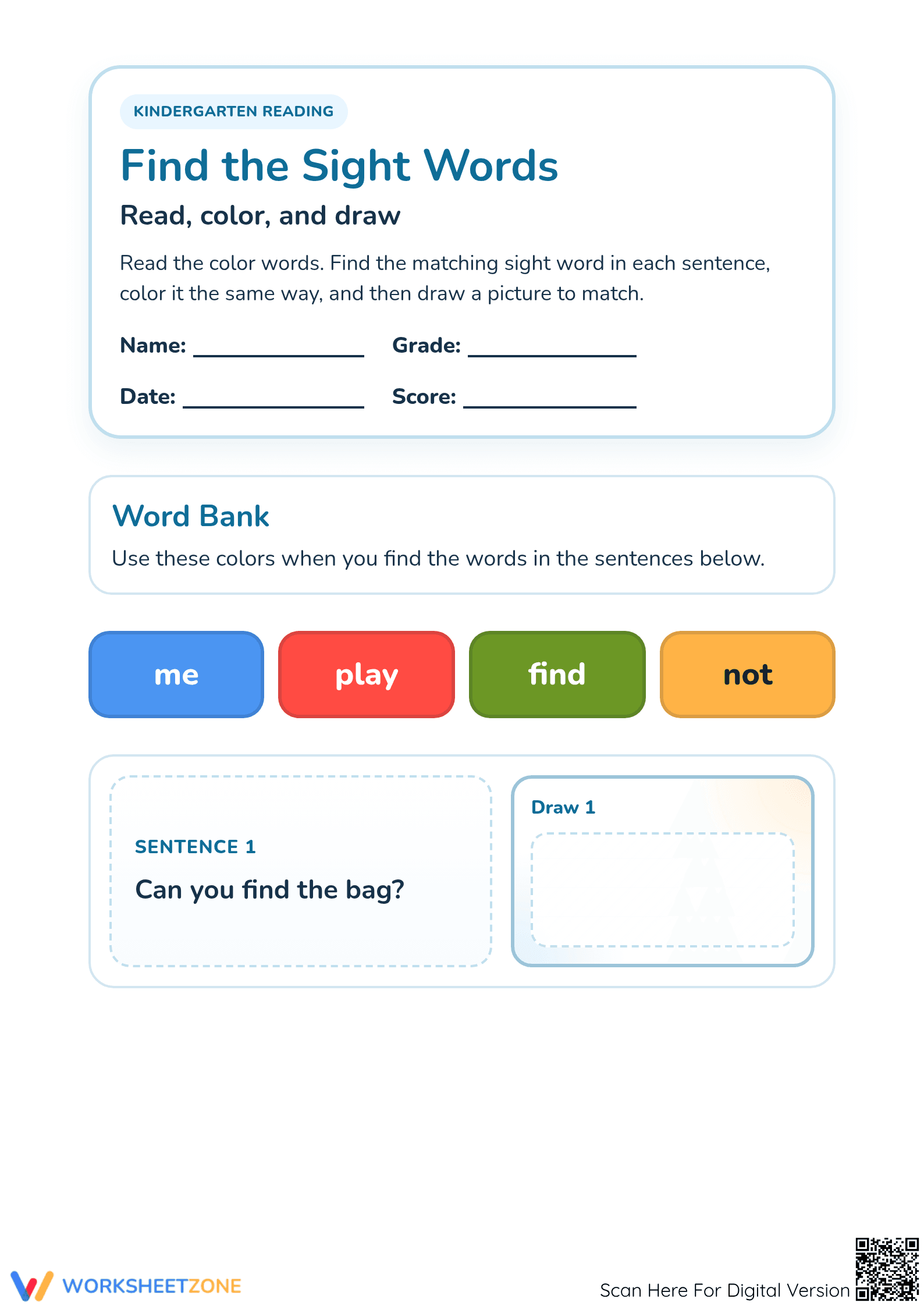
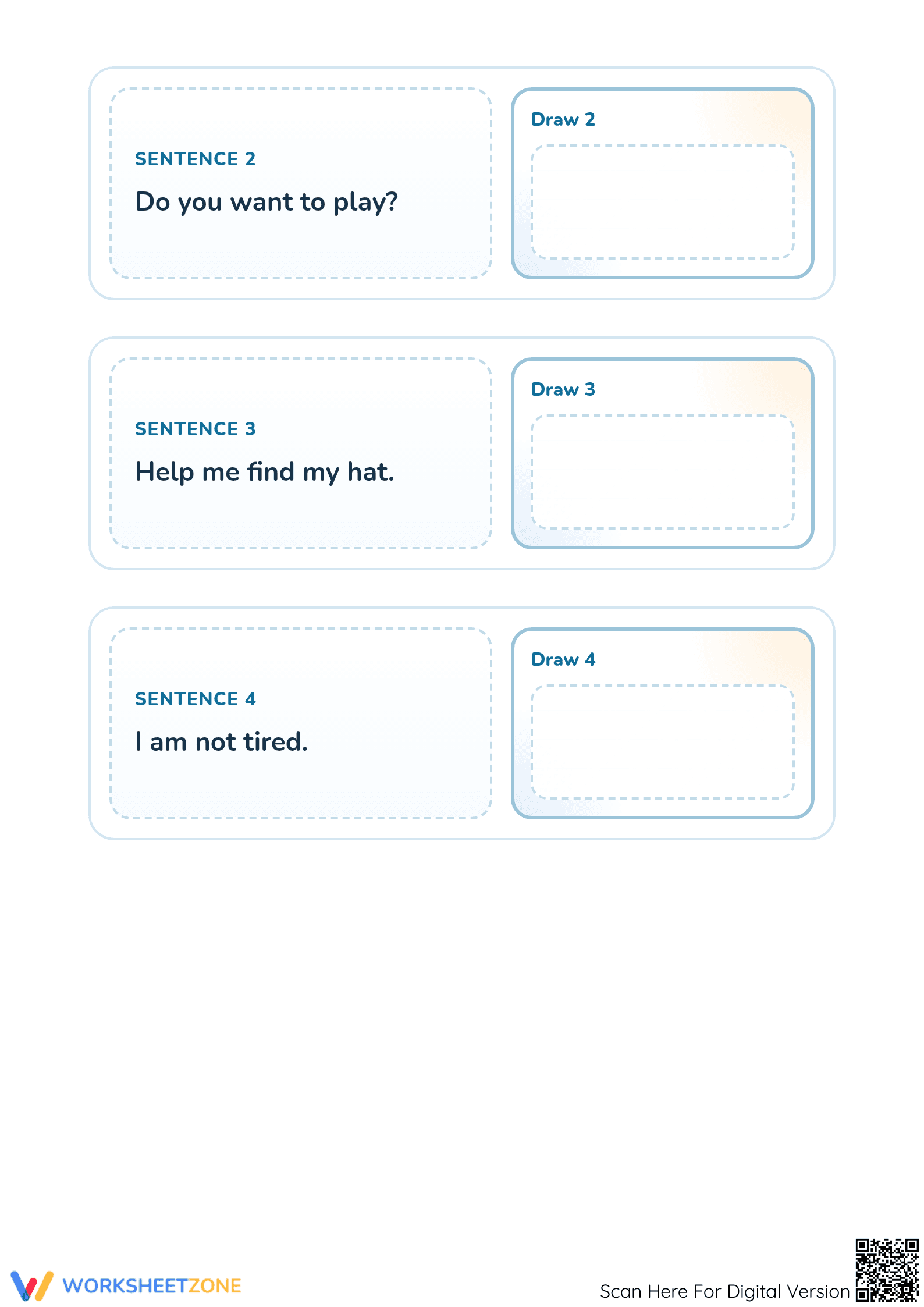
This two-page printable features a clear word bank containing four target sight words: me, play, find, and not. Each word is assigned a specific color to guide student interaction. The worksheet includes four distinct boxes where students must identify the target word, color it according to the bank, and then translate their comprehension into a hand-drawn picture. A comprehensive answer key is included.
Zero-Prep Workflow
The print-and-go design of this resource minimizes administrative burden and maximizes instructional time. Teachers can follow a simple process: First, print the two-page PDF (20 seconds). Second, distribute to students with crayons (40 seconds). Third, review completed drawings to confirm comprehension. Total teacher preparation time is under one minute, making it an ideal choice for emergency sub plans or last-minute literacy centers.
Standards Alignment
The primary alignment for this resource is CCSS.ELA-LITERACY.RF.K.3.C, which requires students to read common high-frequency words by sight. By requiring students to draw a corresponding picture for each sentence, the worksheet also supports early reading comprehension and semantic processing. This standard code can be copied directly into lesson plans, IEP goals, or district curriculum mapping tools.
How to Use It
Use this worksheet during the independent practice phase of a literacy block after introducing the target words. As students work, circulate and observe which children can find the word without rereading the sentence multiple times; this is a key indicator of sight word automaticity. The activity typically takes 15 to 20 minutes to complete, depending on the detail of the student drawings.
Who It's For
This resource is designed for Kindergarten students or Preschoolers entering the early reading stage. It is particularly effective for visual learners who benefit from color-coding and artistic expression. For students requiring more support, provide pre-colored word banks or sentence frames to help them focus exclusively on word recognition rather than fine motor skills.
According to the RAND AIRS 2024 report, the integration of multisensory activities—such as coloring and drawing—with high-frequency word instruction significantly improves retention rates among early childhood learners. This worksheet aligns with the Science of Reading by shifting students from labor-intensive decoding to automatic sight recognition of words like "me" and "play." By requiring students to visualize the sentence meaning through drawing, the resource ensures that recognition is paired with comprehension, a critical step highlighted in EdReports 2024 for foundational literacy success. This Grade K resource focuses on CCSS.ELA-LITERACY.RF.K.3.C and provides a structured environment for students to demonstrate mastery. The inclusion of illustrative tasks facilitates formative assessment, allowing educators to gauge whether students are truly understanding the linguistic context within basic sentence structures.


