


























Views
Downloads
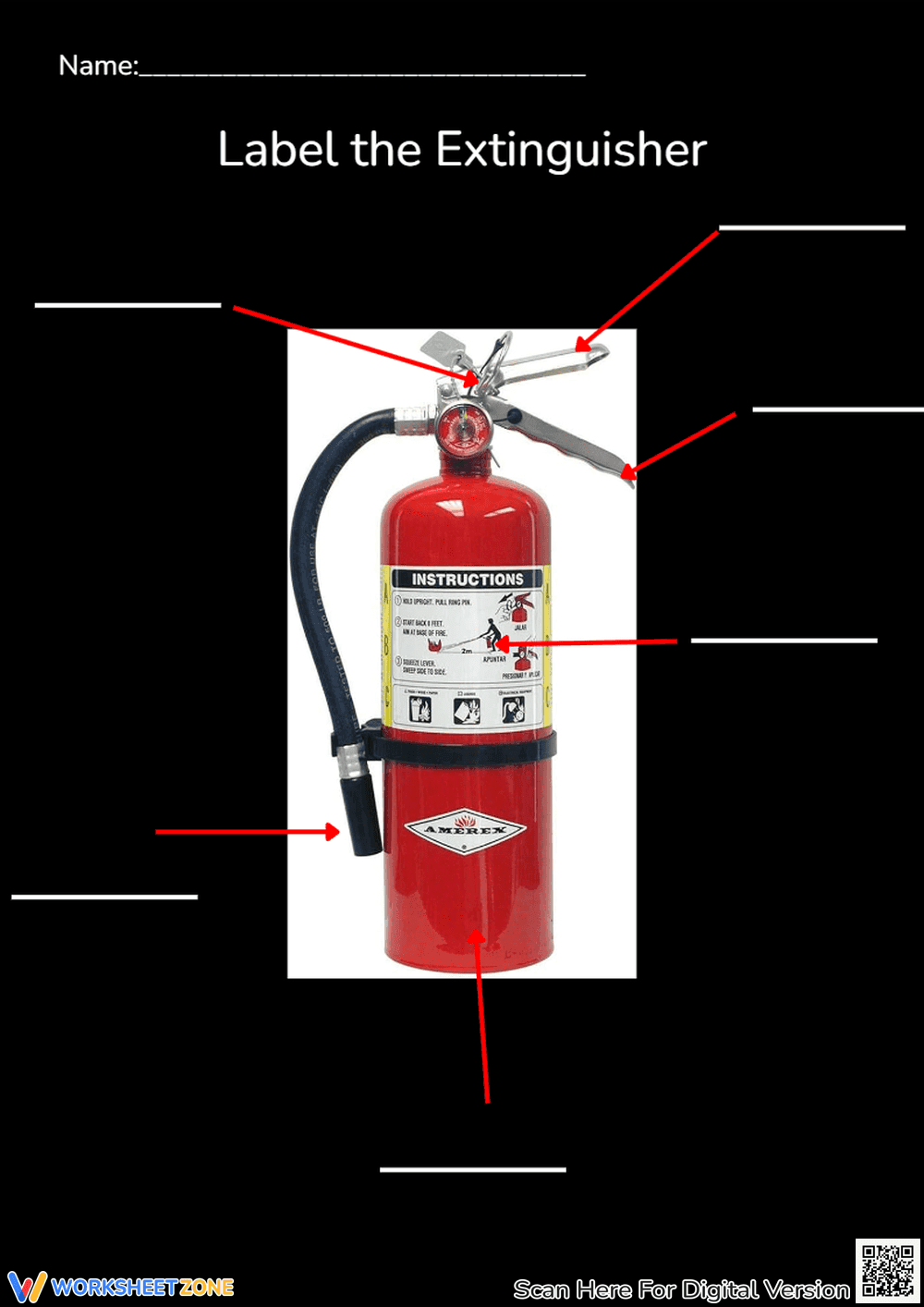

Fire Extinguisher Labeling Worksheet | Grade 11 Essential
Paste this activity's link or code into your existing LMS (Google Classroom, Canvas, Teams, Schoology, Moodle, etc.).
Students can open and work on the activity right away, with no student login required.
You'll still be able to track student progress and results from your teacher account.
This Grade 11 fire safety worksheet ensures students can accurately identify the critical components of a standard fire extinguisher. By mastering the anatomy of this life-saving tool, learners build the foundational knowledge required for emergency response and workplace safety protocols. It provides a clear, visual assessment of technical equipment familiarity.
At a Glance
- Grade: 11 · Subject: Health / CTE
- Standard:
HS-ETS1-2— Design a solution to a complex real-world problem by breaking it down- Skill Focus: Fire extinguisher component identification
- Format: 1 page · 6 problems · Answer key included · PDF
- Best For: Emergency medical services or workplace safety units
- Time: 10–15 minutes
What's Inside: This single-page PDF features a high-resolution image of a standard ABC fire extinguisher. It includes six distinct call-out lines pointing to essential parts such as the discharge hose, pressure gauge, and safety pin. The layout is clean and professional, providing ample space for student responses without unnecessary visual clutter. A comprehensive answer key is provided for rapid grading.
The zero-prep workflow for this resource is designed for maximum efficiency. First, print the single-page document (30 seconds). Second, distribute the sheets to students as a bell-ringer or quick check for understanding (1 minute). Finally, review the correct labels as a class using the provided key to reinforce safety vocabulary (5 minutes). Total teacher preparation time is under 2 minutes, making it an ideal sub plan or last-minute addition to a safety unit.
Standards Alignment: This resource aligns with `HS-ETS1-2`, which requires students to analyze technical systems and safety solutions. By identifying the specific mechanical parts of fire suppression equipment, students demonstrate an understanding of how individual components contribute to a functional safety system. This standard code can be copied directly into lesson plans, IEP goals, or district curriculum mapping tools.
How to Use It: Use this worksheet during the guided practice phase of a fire safety unit, immediately following a demonstration of the PASS (Pull, Aim, Squeeze, Sweep) method. It serves as an excellent formative assessment to ensure students know where to look for the gauge or pin before handling physical equipment. Expected completion time is approximately 12 minutes.
Who It's For: This worksheet is tailored for Grade 11 students in Health, EMS, or Career and Technical Education (CTE) pathways. It is particularly effective for learners who benefit from visual aids and direct labeling tasks. Pair this resource with a fire safety anchor chart or a short instructional video on extinguisher maintenance for a complete lesson.
Technical literacy in emergency response is a critical component of secondary education, particularly within Career and Technical Education (CTE) frameworks. According to the RAND AIRS 2024 report, visual identification tasks in safety training significantly improve retention rates for procedural knowledge compared to text-only instruction. This worksheet focuses on the HS-ETS1-2 standard, requiring students to identify the mechanical parts of a fire extinguisher, which is a prerequisite for the PASS technique. By isolating the anatomy of the device, the resource reduces cognitive load during high-stress simulations. Research from Fisher & Frey (2014) supports this gradual release of responsibility, where identifying tools precedes their active use. This 6-task assessment provides measurable evidence of student proficiency in equipment recognition, ensuring that learners are prepared for practical safety drills or workplace certification requirements in professional environments.


