


























Views
Downloads
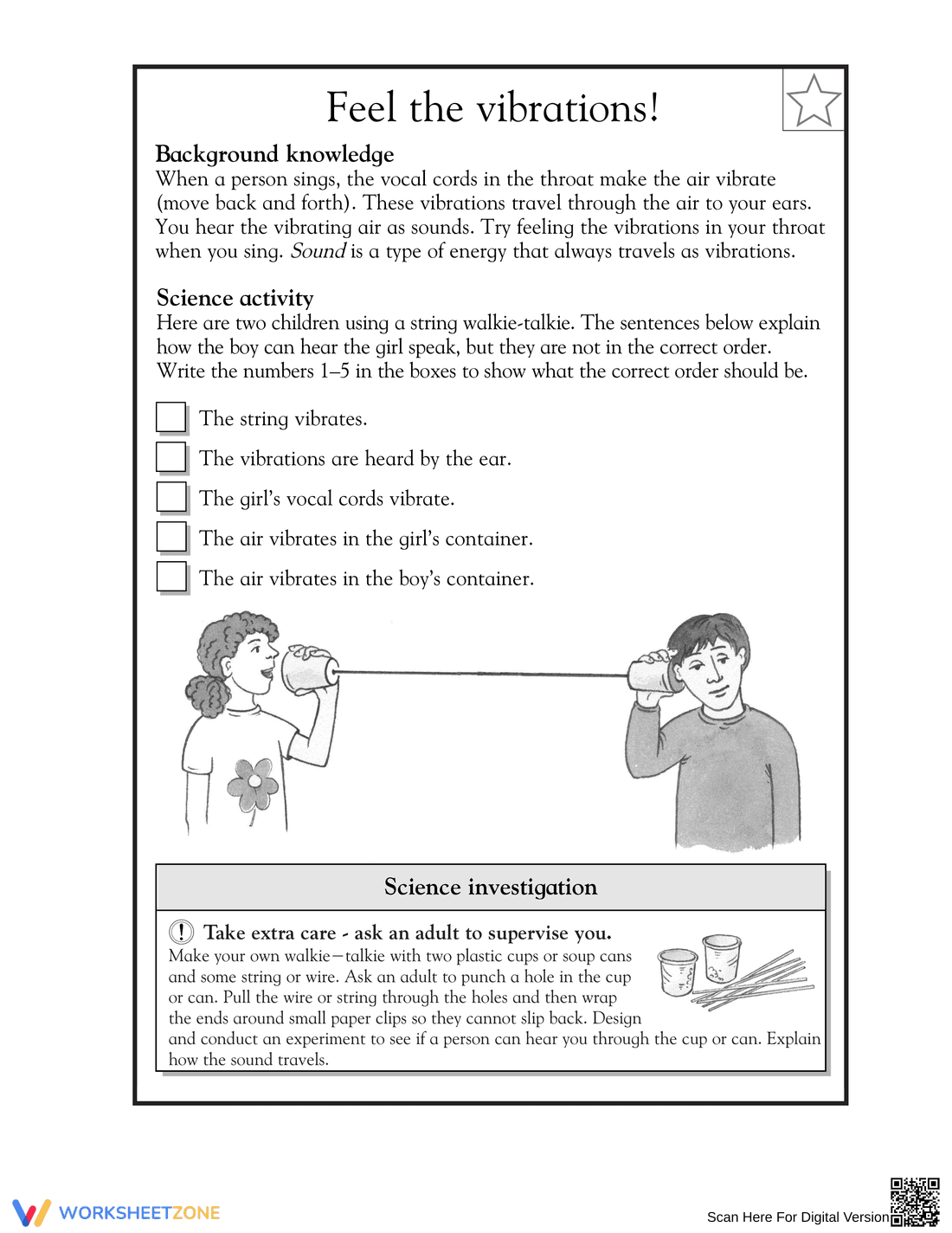
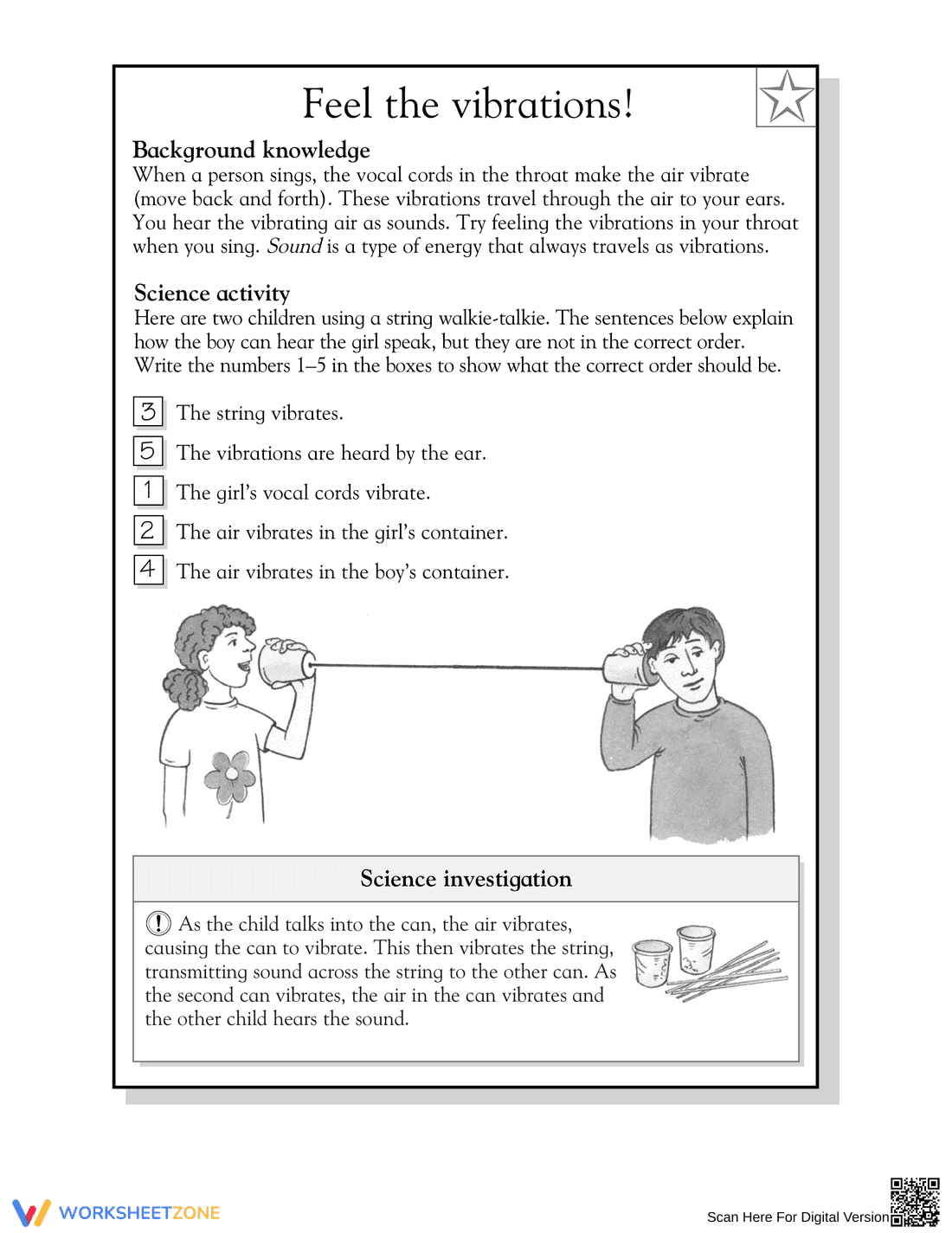

Grade 3 Sound Vibrations — Printable No-Prep Worksheet
Paste this activity's link or code into your existing LMS (Google Classroom, Canvas, Teams, Schoology, Moodle, etc.).
Students can open and work on the activity right away, with no student login required.
You'll still be able to track student progress and results from your teacher account.
This ready-to-use science worksheet helps third-grade students explain how sound travels through vibrations. Through a sequencing activity and a hands-on investigation, learners demonstrate the cause-and-effect relationship between vibrating materials and the sounds we hear. It provides a concrete, memorable way to grasp a key concept in physical science.
At a Glance
- Grade: 3 · Subject: Science
- Standard:
1-PS4-1— Investigate how vibrating materials can make sound.- Skill Focus: Cause and Effect of Sound Vibrations
- Format: 2 pages · 2 problems · Answer key included · PDF
- Best For: Concept reinforcement, science centers, sub plans
- Time: 20–30 minutes
What's Inside
This resource includes a single-page worksheet and a full answer key. The main activity asks students to order five steps explaining how a string walkie-talkie works. A second, hands-on task challenges students to build their own and explain the science. The clear layout and included background information make it entirely self-contained.
A Simple Workflow for Busy Teachers
Designed for immediate use, this worksheet minimizes teacher prep. The process is straightforward, making it ideal for sub plans or science centers.
- 1. Print (1 minute): The resource is a single PDF page with a separate answer key.
- 2. Distribute (15-20 minutes): Students complete the sequencing task using the background text. The optional investigation requires only cups and string.
- 3. Review (5 minutes): Use the answer key for the main task and have students share investigation findings aloud.
Total prep time is under two minutes, providing a quality lesson without the planning overhead.
Connecting to Science Standards
This worksheet directly aligns with the foundational standard 1-PS4-1, where students investigate how vibrating materials create sound. While designed for third grade, it offers a perfect review of this core concept. Both the sequencing and hands-on tasks require students to use evidence to explain sound transmission. The standard code can be copied directly into lesson plans, IEP goals, or curriculum maps.
Practical Classroom Application
Use this worksheet for formative assessment after a lesson on sound energy. As students work independently, circulate to check their sequencing. This provides a quick check for understanding. The hands-on investigation is an excellent "during" unit activity to make the abstract concept of vibrations tangible. The entire activity should take approximately 20 to 30 minutes to complete.
Built for the Elementary Classroom
This resource is for third-grade students studying physical science. The clear instructions make it accessible for most learners. For students needing support, complete the first task as a group. For an extension, pair this worksheet with an anchor chart defining key terms like "vibration" and "energy." It works well after a video on sound experiments.
This activity provides targeted practice for NGSS standard 1-PS4-1, where students investigate the relationship between vibrating materials and sound. By sequencing the steps of how a string telephone works, learners apply the scientific principle that sound is a form of energy that travels in waves caused by vibrations. This hands-on approach to learning physics concepts is supported by research emphasizing the importance of inquiry-based science education in elementary grades. As noted by Fisher & Frey (2014), engaging students in the practices of science, such as planning investigations and constructing explanations, leads to deeper and more durable understanding. The worksheet acts as a structured inquiry, guiding students to build an evidence-based explanation for a tangible phenomenon, a foundational skill for all future science learning. The exercise connects a simple, engaging experiment directly to a core disciplinary idea about waves.


