


























Views
Downloads
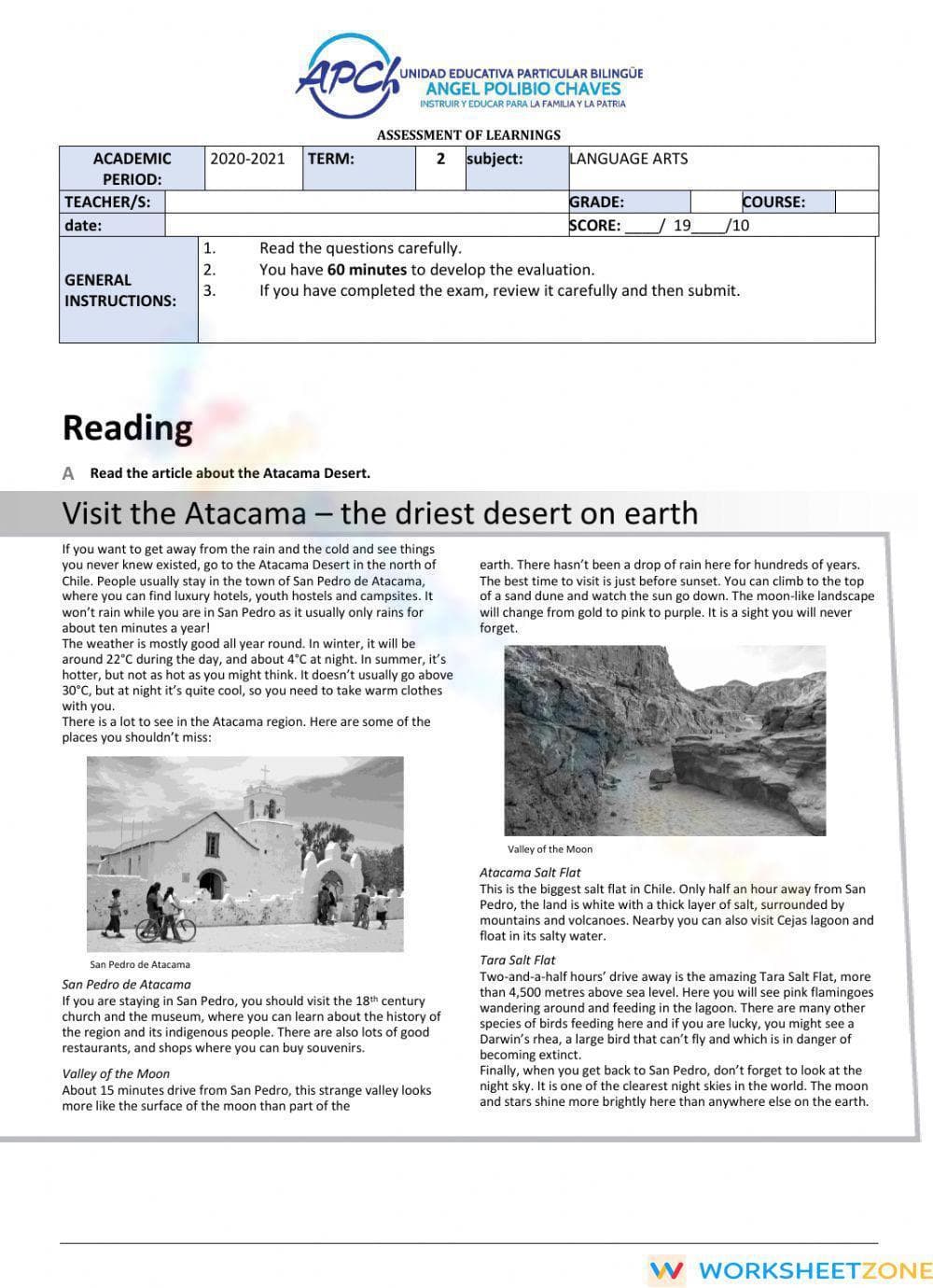
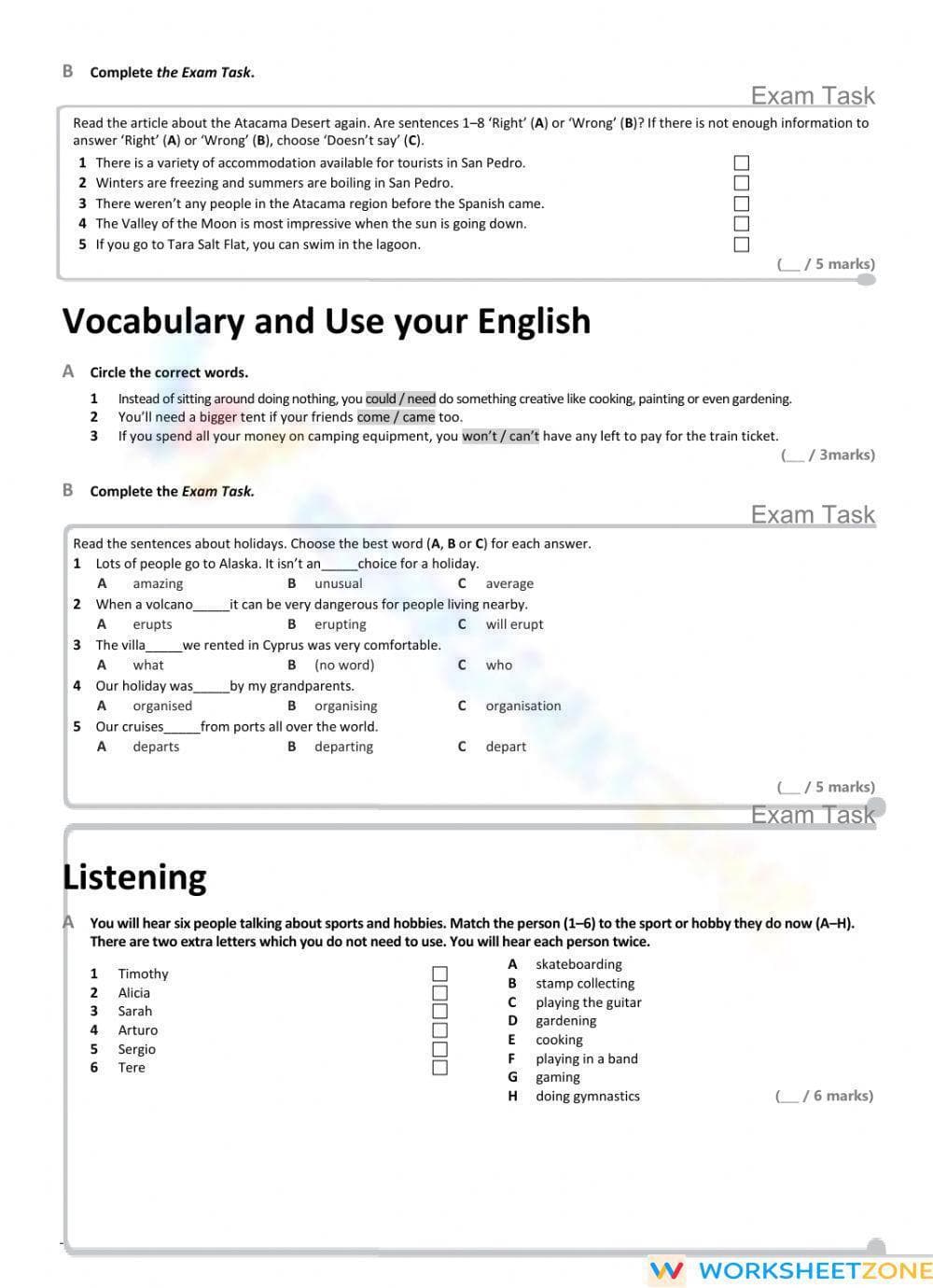

9th Grade ELA Assessment: Atacama Desert Aligned Exam
Paste this activity's link or code into your existing LMS (Google Classroom, Canvas, Teams, Schoology, Moodle, etc.).
Students can open and work on the activity right away, with no student login required.
You'll still be able to track student progress and results from your teacher account.
This comprehensive Grade 9 ELA assessment measures student proficiency in reading informational texts, vocabulary application, and listening comprehension. By engaging with a detailed article about the Atacama Desert, students demonstrate their ability to extract evidence and apply grammatical conventions in a formal testing environment. It ensures objective data collection for quarterly progress monitoring.
At a Glance
- Grade: 9 · Subject: English Language Arts
- Standard:
CCSS.ELA-LITERACY.RI.9-10.1— Cite strong and thorough textual evidence to support analysis of what the text says- Skill Focus: Informational Reading & Grammar
- Format: 2 pages · 19 problems · Answer key included · PDF
- Best For: End-of-unit assessment or mid-term evaluation
- Time: 45–60 minutes
The assessment is structured into three distinct sections totaling 19 items. It features a high-interest reading passage on the Atacama Desert followed by true/false/not-stated comprehension questions. The "Vocabulary and Use your English" section includes multiple-choice grammar checks focusing on modals and verb tenses. Finally, a matching listening task evaluates auditory processing and detail retention regarding various hobbies and sports.
Mastery Evidence
This exam serves as diagnostic evidence for student mastery of 9th-grade conventions. Each task maps to specific sub-skills: literal comprehension, lexical precision, and auditory synthesis. Teachers can use the 19-point scoring system to categorize performance into tiers, allowing for direct entry into digital gradebooks or IEP progress logs. The inclusion of "Doesn't Say" options in reading prevents guessing and measures higher-order critical thinking.
Standards Alignment
The primary focus is RI.9-10.1, requiring students to cite strong and thorough textual evidence. Supporting standards include L.9-10.1, which governs the conventions of standard English grammar and usage when writing or speaking. Both standard codes can be copied directly into lesson plans, IEP goals, or district curriculum mapping tools to ensure vertical alignment across the secondary English Language Arts department.
How to Use It
Administer this as a summative assessment following a unit on informational text structures or travel-themed literature. For a formative approach, use individual sections as timed warm-ups to observe student speed and accuracy in evidence retrieval. Expect most students to finish within a 60-minute block. Teachers should observe whether students return to the text for the "Doesn't Say" items as a key indicator of rigorous reading habits.
Who It's For
This resource is designed for Grade 9 students in general education or honors tracks who are refining their academic reading stamina. It is highly effective for English Language Learners (ELL) at the bridging level due to the clear layout and contextual vocabulary support. Pair this assessment with an anchor chart on reading strategies for informational text or a direct instruction lesson on complex verb phrases.
According to the RAND AIRS 2024 report, high-quality assessments that integrate multiple modalities—reading, writing, and listening—provide a more accurate reflection of secondary student literacy than isolated skill checks. This worksheet aligns with Fisher & Frey (2014) principles of purposeful assessment by requiring students to move beyond surface-level recall to verify information absence via "Doesn't Say" distractors. Research from EdReports 2024 highlights that using informational texts with geographic and scientific themes increases engagement and supports cross-curricular knowledge building in 9th-grade classrooms. By providing 19 distinct data points across diverse language domains, this tool helps educators identify specific gaps in standard RI.9-10.1 proficiency. This evidence-based approach ensures that instructional interventions are targeted and effective, supporting the gradual release of responsibility toward independent mastery of complex text analysis required for college and career readiness.


