




























Views
Downloads

Essential Irrigation Word Search | Grades 4–5 Science

Paste this activity's link or code into your existing LMS (Google Classroom, Canvas, Teams, Schoology, Moodle, etc.).
Students can open and work on the activity right away, with no student login required.
You'll still be able to track student progress and results from your teacher account.
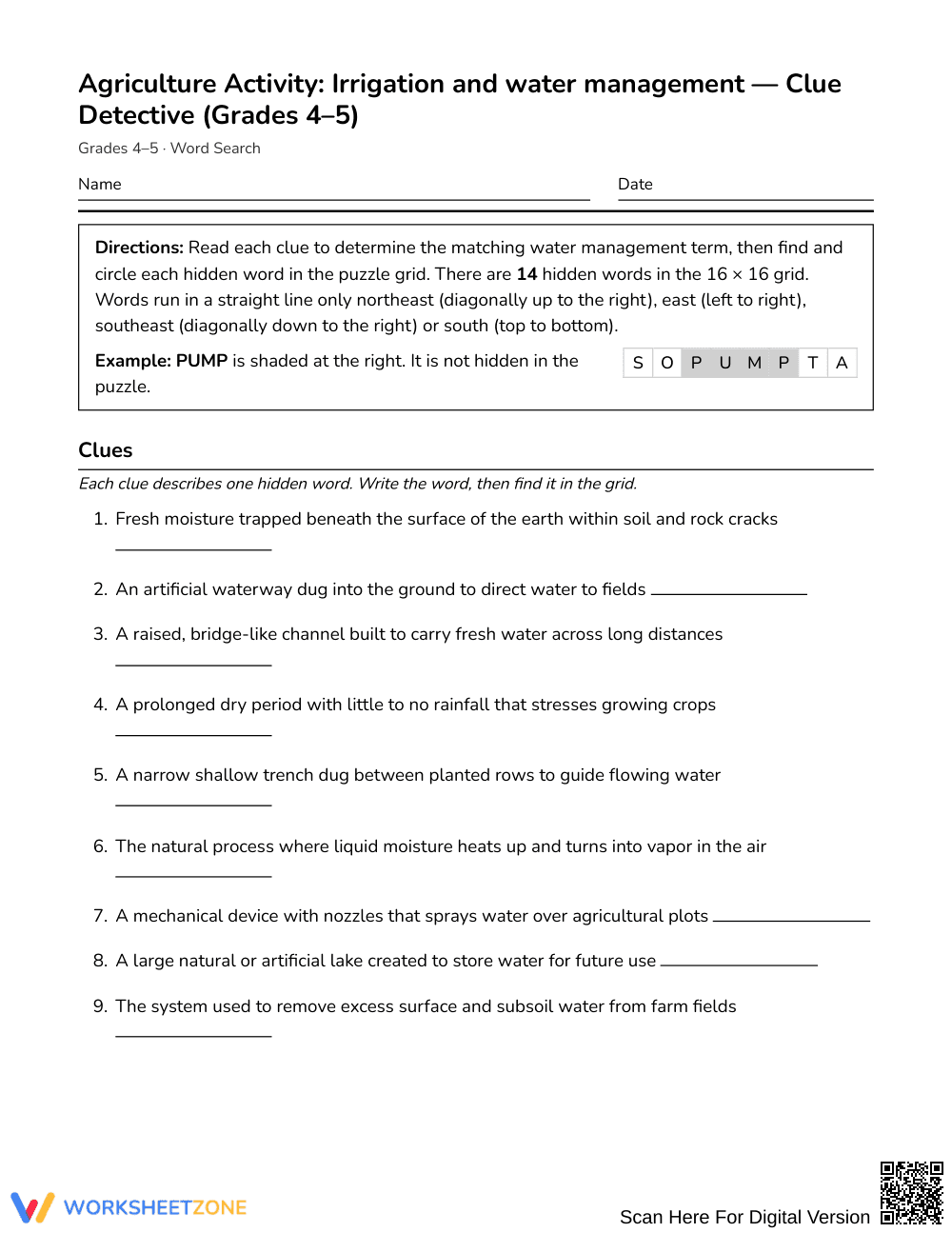
This Grades 4–5 science word search reinforces agricultural irrigation and water management terminology through clue-based retrieval. Students decode descriptive clues to identify 14 essential Earth science terms before locating them inside the puzzle grid. The activity strengthens domain-specific vocabulary retention, environmental science literacy, and reading comprehension in an engaging, self-directed format.
At a Glance
- Grade: Grades 4–5 · Subject: Science · Unit: Water
- Standard: Not standards-assessed — vocabulary enrichment and concept review
- Skill Focus: Agricultural irrigation and water management vocabulary definitions
- Format: 3 pages · 14 words · Complete answer key included · Ready-to-print PDF
- Best For: Independent science vocabulary practice and early finisher enrichment
- Time: 15–25 minutes of engaged student discovery
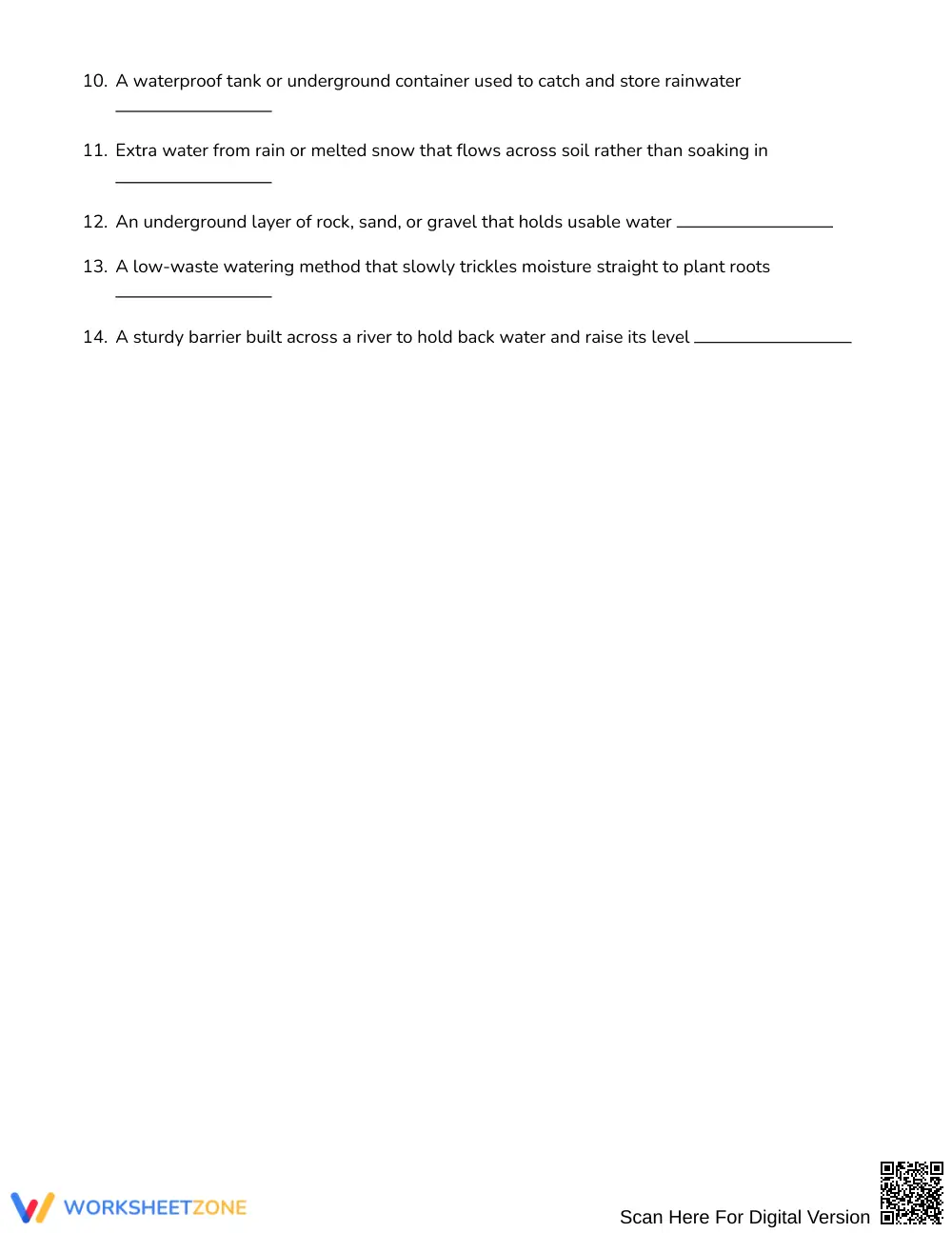
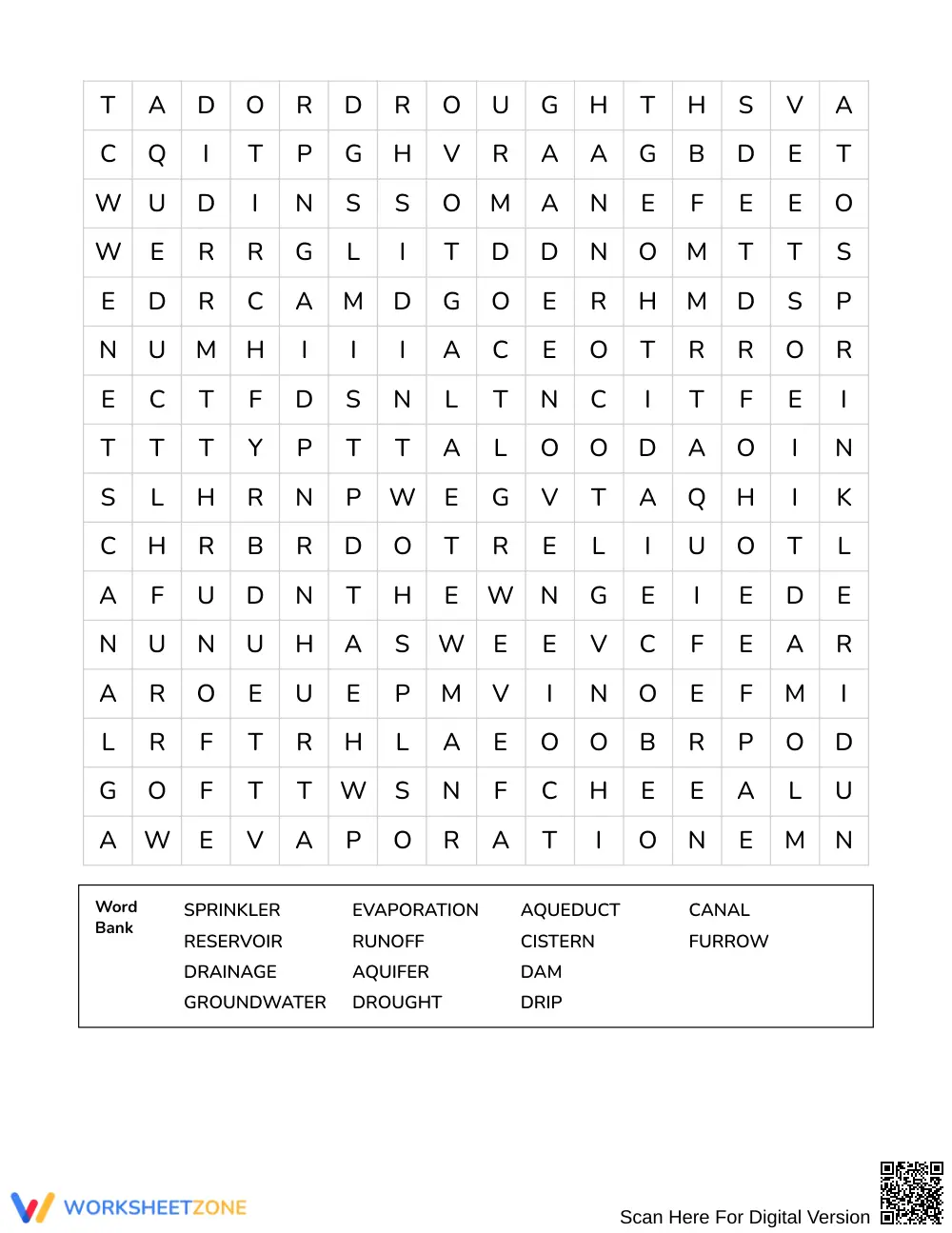
The 3-page printable resource includes a Clue Detective activity sheet featuring 14 water management terms, a full-sized 16 by 16 puzzle grid, and a complete 3-page answer key. Rather than relying on a simple word bank, the activity pairs each hidden word with a detailed conceptual clue covering structures like aqueducts and dams, natural reserves like aquifers and groundwater, and processes like evaporation and drainage.
Puzzle Structure and Mechanics
The activity features a 16 by 16 letter grid designed to build pattern recognition and word-search stamina. Words are hidden across four directional orientations: northeast, east, southeast, and south. Instead of a pre-identified word list, students consult 14 clues to solve for terms such as reservoir, cistern, furrow, and drip irrigation, then locate the shuffled targets within the grid.
Standards Alignment
This resource serves as targeted vocabulary enrichment and is not aligned to a specific state or national content standard. It supports foundational scientific literacy by reinforcing essential water resource terms across upper-elementary environmental science and agricultural units.
How to Use It
Deploy this word search during direct instruction as an interactive guided vocabulary review, or assign it after completing a water cycle and irrigation unit as independent enrichment. While students work, circulate to observe whether they can match clues like underground water storage to aquifer without consulting external notes. Expect completion within 15 to 25 minutes.
Who It's For
This activity is designed for Grades 4–5 science students exploring natural resources, agriculture, and human impacts on water systems. For students needing additional scaffolding, pair the puzzle with an illustrated irrigation anchor chart or allow collaborative peer partner work. It integrates effectively into science centers, substitute plans, or morning warm-up routines.
Supplemental science vocabulary enrichment activities provide essential semantic scaffolding for upper-elementary learners encountering specialized agricultural and environmental concepts. As demonstrated by Fisher & Frey (2014), intentional vocabulary exposure paired with contextual definitions accelerates conceptual comprehension and enhances content-area reading acquisition across diverse student populations. This Grades 4–5 science word search targets 14 fundamental terms related to irrigation and water management, including structures such as aqueducts and cisterns, natural phenomena like evaporation and runoff, and conservation methods such as drip irrigation. Because this learning tool is designed strictly for vocabulary enrichment, it carries no formal standard code. By challenging students to solve descriptive clues before scanning a 16 by 16 letter grid across multiple orientations, the resource reinforces domain-specific terminology through active retrieval practice, supporting long-term memory retention and scientific literacy during upper-elementary water resources units.


