




























Views
Downloads



Essential Asking for Help Word Search | Grades 6–7 ELA

Paste this activity's link or code into your existing LMS (Google Classroom, Canvas, Teams, Schoology, Moodle, etc.).
Students can open and work on the activity right away, with no student login required.
You'll still be able to track student progress and results from your teacher account.
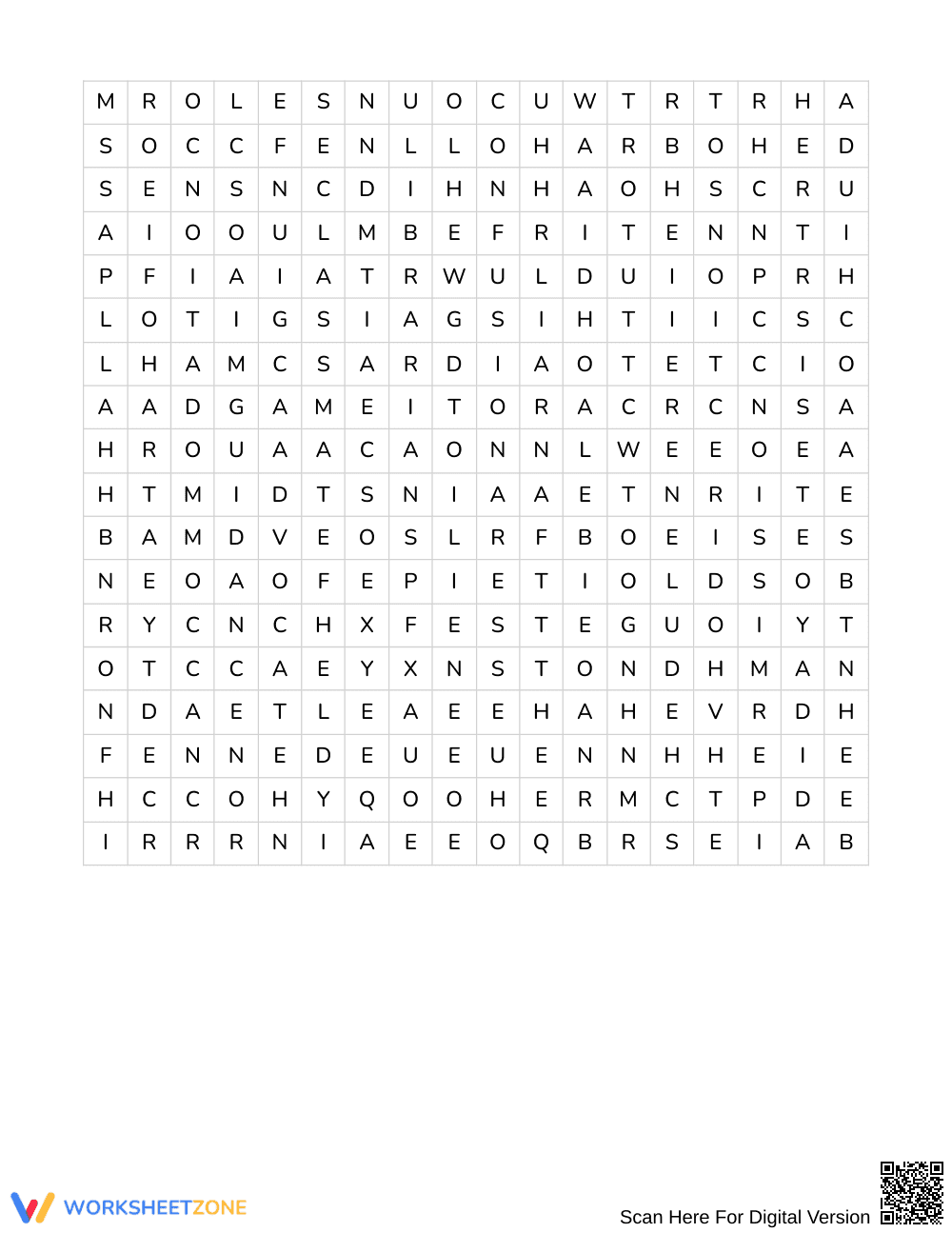
This vocabulary word search reinforces self-advocacy and communication skills for middle school students navigating the first weeks of school. By deciphering context clues rather than relying on a word bank, learners identify 16 essential terms related to asking for help, strengthening both functional school vocabulary and independent problem-solving strategies.
At a Glance
- Grade: Grades 6–7 · Subject: English Language Arts (ELA)
- Standard: Not standards-assessed — vocabulary enrichment
- Skill Focus: Asking for help vocabulary and self-advocacy
- Format: 3 pages · 16 words · Answer key included · PDF
- Best For: First week orientation and advisory activity
- Time: 20–30 minutes
What's Inside
The activity packet spans 3 printable pages centered on an engaging clue-based word search puzzle, accompanied by a dedicated 4-page answer key. Rather than scanning a pre-printed list of words, students read 16 detailed definitions and scenarios to deduce each target vocabulary term before searching the puzzle grid.
Puzzle Mechanics and Design
This puzzle is structured without a visible word list to encourage active recall and close reading:
- 18 × 18 Letter Grid: A dense letter matrix offers an age-appropriate challenge for middle school learners.
- Omnidirectional Word Placement: Hidden terms run across all 8 possible compass directions: north, northeast, east, southeast, south, southwest, west, and northwest.
- Clue-Driven Solving: Students must analyze definitional clues for terms like advocate, clarify, and accommodation to deduce target words before locating them.
Standards Alignment
This activity serves as targeted vocabulary enrichment and self-advocacy building rather than formal assessment against an individual academic standard. It focuses on functional academic literacy and school survival vocabulary, supporting general communicative competence across grade-level reading and advisory coursework.
How to Use It
Distribute this word search during homeroom, advisory, or the opening week of ELA instruction as students adjust to middle school expectations. Alternatively, use it as a productive fast-finisher task following direct instruction on self-advocacy and classroom routines. While students work, monitor whether they successfully infer target terms from the clues before scanning the grid, or if they struggle with definitions for terms such as accommodation or advocate. Most students finish within 20 to 30 minutes.
Who It's For
Designed specifically for sixth and seventh graders, this resource provides timely social-emotional and functional language support for transitioning students. Pair this activity with an interactive anchor chart outlining concrete steps for emailing teachers or asking questions during class.
Building functional school vocabulary empowers early adolescents to articulate academic needs and seek timely support. According to Fisher & Frey (2014), explicit vocabulary acquisition is most effective when students actively generate meaning from context clues before engaging in retrieval practice. This no-bank word search directly facilitates that cognitive process by requiring middle school learners in Grades 6–7 to deduce 16 essential help-seeking terms—including advocate, clarify, and guidance—directly from descriptive prompts rather than passive word lists. Embedding self-advocacy terminology into early-year literacy routines reduces the affective barrier to requesting academic intervention, fostering classroom environments where students feel prepared to communicate with teachers, counselors, and peers. Educators can deploy this vocabulary enrichment puzzle during advisory periods, homeroom transitions, or introductory English Language Arts units to establish positive communication habits and independent learning routines that sustain academic engagement throughout the school year.


