


























1 / 2
0
Views
0
Downloads

0.0
0
Save
0 Likes
Share
Dred Scott v Sandford (1857) Worksheet
0 Views
0 Downloads
Paste this activity's link or code into your existing LMS (Google Classroom, Canvas, Teams, Schoology, Moodle, etc.).
Students can open and work on the activity right away, with no student login required.
You'll still be able to track student progress and results from your teacher account.
Information
Description
What It Is:
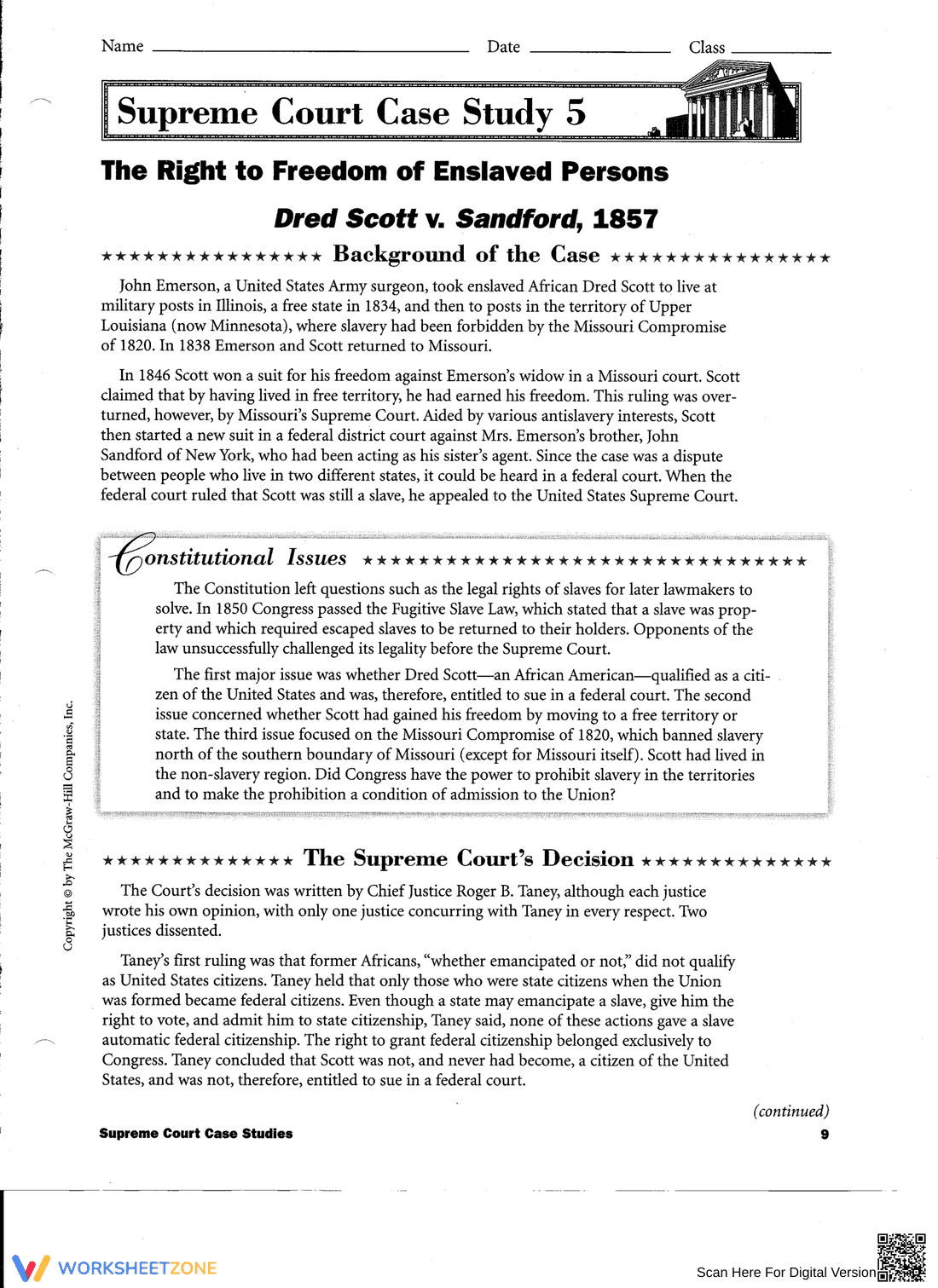
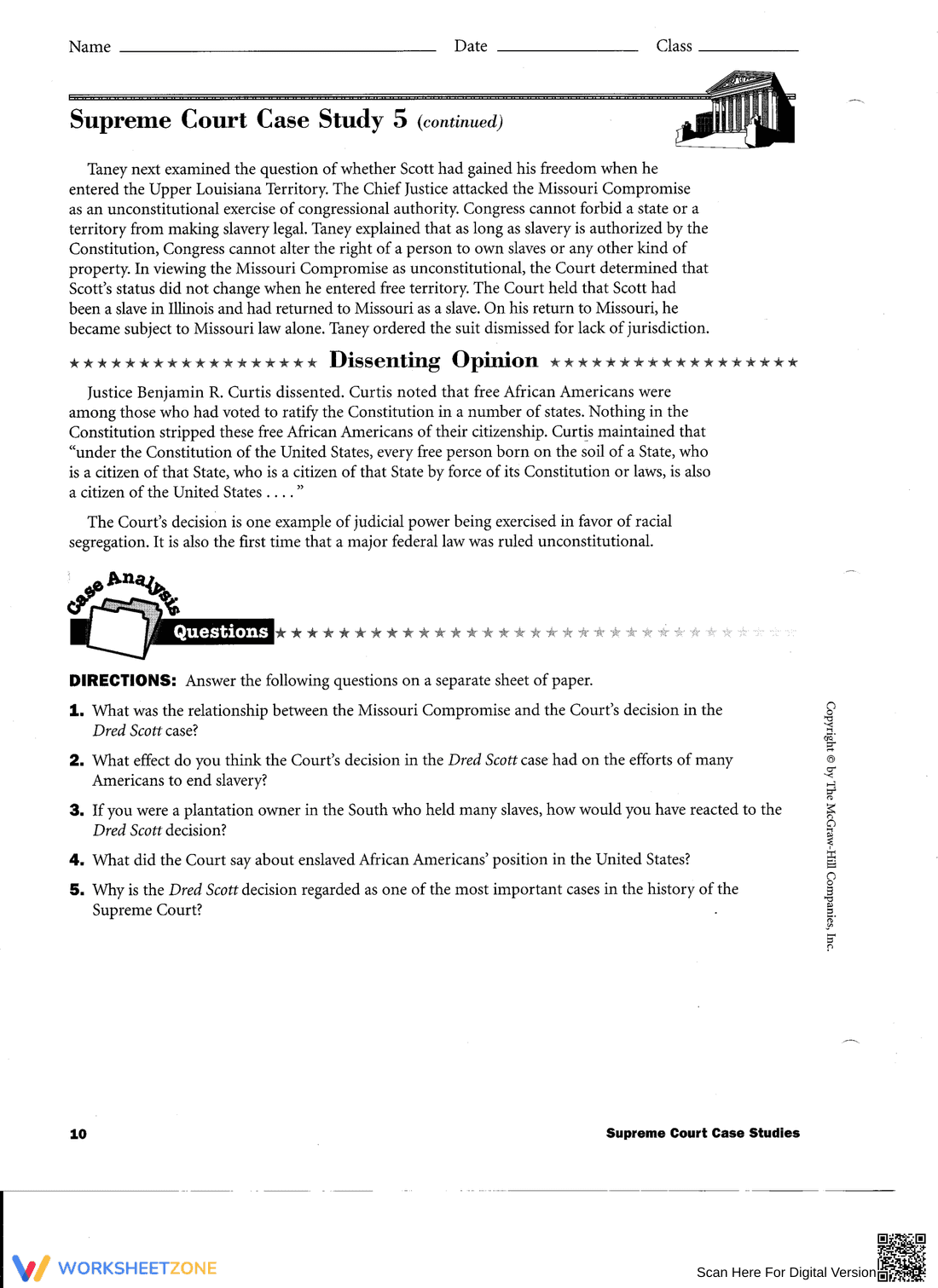
This is a worksheet titled 'Supreme Court Case Study 5,' focusing on the Dred Scott v. Sandford (1857) Supreme Court case. It presents a background of the case, detailing John Emerson's involvement, Dred Scott's legal battle for freedom, and the constitutional issues at stake, including the Fugitive Slave Law and the Missouri Compromise. It also summarizes the Supreme Court's decision written by Chief Justice Roger B. Taney, explaining the ruling that African Americans were not considered citizens and Dred Scott was not entitled to sue in federal court.
Grade Level Suitability:
This worksheet is most suitable for grades 8-12. The complex legal concepts, historical context, and sophisticated language require a strong reading comprehension and analytical skills typically developed in middle and high school. It involves understanding constitutional law, historical events surrounding slavery, and the significance of Supreme Court decisions.
Why Use It:
This worksheet helps students understand the historical context and legal implications of the Dred Scott decision. It promotes critical thinking by examining the constitutional issues involved and the Supreme Court's reasoning. It also fosters an understanding of the complexities of slavery and its impact on American society and legal system.
How to Use It:
Students should read the background information, constitutional issues, and the Supreme Court's decision carefully. They can then discuss the case in class, analyze the arguments presented, and evaluate the impact of the decision on American history. The worksheet can be used as a basis for further research and debate on the topics of slavery, civil rights, and constitutional law.
Target Users:
The target users are students in middle school and high school studying American history, civics, or government. It is also beneficial for students preparing for advanced placement (AP) history or government exams. Teachers can use this worksheet as a supplemental resource to enhance their lesson plans on the Civil War era and the Supreme Court.
This is a worksheet titled 'Supreme Court Case Study 5,' focusing on the Dred Scott v. Sandford (1857) Supreme Court case. It presents a background of the case, detailing John Emerson's involvement, Dred Scott's legal battle for freedom, and the constitutional issues at stake, including the Fugitive Slave Law and the Missouri Compromise. It also summarizes the Supreme Court's decision written by Chief Justice Roger B. Taney, explaining the ruling that African Americans were not considered citizens and Dred Scott was not entitled to sue in federal court.
Grade Level Suitability:
This worksheet is most suitable for grades 8-12. The complex legal concepts, historical context, and sophisticated language require a strong reading comprehension and analytical skills typically developed in middle and high school. It involves understanding constitutional law, historical events surrounding slavery, and the significance of Supreme Court decisions.
Why Use It:
This worksheet helps students understand the historical context and legal implications of the Dred Scott decision. It promotes critical thinking by examining the constitutional issues involved and the Supreme Court's reasoning. It also fosters an understanding of the complexities of slavery and its impact on American society and legal system.
How to Use It:
Students should read the background information, constitutional issues, and the Supreme Court's decision carefully. They can then discuss the case in class, analyze the arguments presented, and evaluate the impact of the decision on American history. The worksheet can be used as a basis for further research and debate on the topics of slavery, civil rights, and constitutional law.
Target Users:
The target users are students in middle school and high school studying American history, civics, or government. It is also beneficial for students preparing for advanced placement (AP) history or government exams. Teachers can use this worksheet as a supplemental resource to enhance their lesson plans on the Civil War era and the Supreme Court.


