


























Views
Downloads
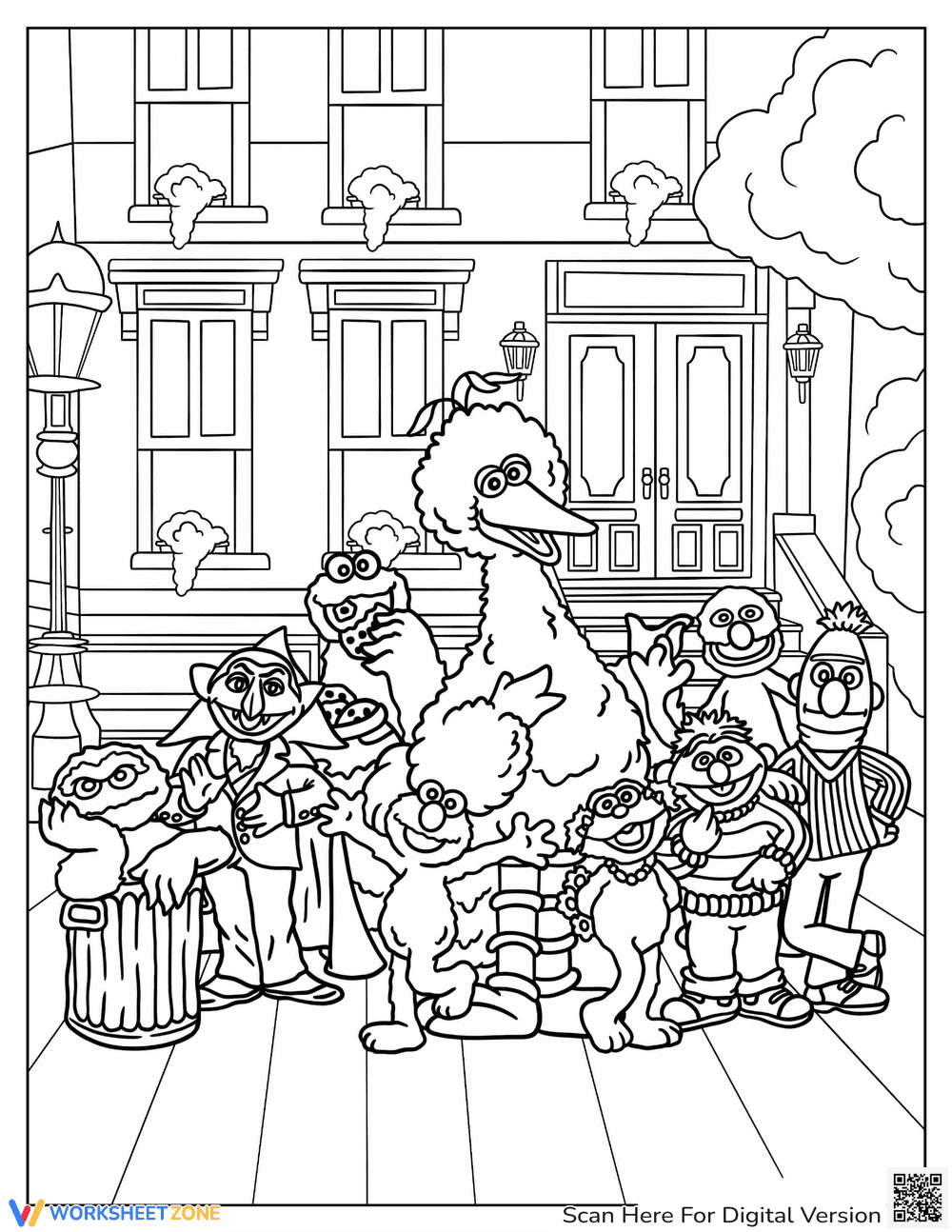

Printable Sesame Street Coloring Page | Grade K-1
Paste this activity's link or code into your existing LMS (Google Classroom, Canvas, Teams, Schoology, Moodle, etc.).
Students can open and work on the activity right away, with no student login required.
You'll still be able to track student progress and results from your teacher account.
This printable Sesame Street coloring page provides Kindergarten and first-grade students with an engaging way to develop fine motor skills and character recognition. By coloring familiar figures like Big Bird, Elmo, and Cookie Monster, young learners practice hand-eye coordination and focus while interacting with beloved educational television icons.
At a Glance
- Grade: K · Subject: English
- Standard:
CCSS.ELA-LITERACY.SL.K.5— Add drawings to descriptions to provide detail- Skill Focus: Fine motor skills
- Format: 1 page · 1 task · No answer key · PDF
- Best For: Morning work or centers
- Time: 15–20 minutes
What's Inside
Inside this download, educators will find a single, highly detailed coloring page featuring the iconic 123 Sesame Street brownstone. The illustration includes a rich ensemble of classic characters, offering a dense visual landscape that encourages sustained attention. The line art is crisp and clear, providing distinct boundaries to help early learners practice staying within the lines while exploring their creativity.
Zero-Prep Workflow
- Print (1 minute): Simply download the PDF and print the desired number of copies. No special paper or color ink is required.
- Distribute (1 minute): Hand out the coloring pages along with crayons, markers, or colored pencils.
- Review (0 minutes): As a creative exercise, no formal grading is necessary. Total teacher prep time is under two minutes, making this an excellent option for emergency sub plans or spontaneous quiet time activities.
Standards Alignment
Aligned to CCSS.ELA-LITERACY.SL.K.5: Add drawings or other visual displays to descriptions as desired to provide additional detail. While primarily a fine motor activity, this worksheet supports foundational speaking and listening skills when students are prompted to describe the characters they are coloring. Both standard codes can be copied directly into lesson plans, IEP goals, or district curriculum mapping tools.
How to Use It
This resource is highly versatile for early childhood classrooms. Use it as a calming morning work activity as students arrive and settle into the day. Alternatively, place it in an independent art center during literacy block rotations. As a formative assessment observation tip, watch how students grip their coloring tools and navigate the smaller details of the characters to gauge their fine motor development. Expected completion time ranges from 15 to 20 minutes.
Who It's For
This worksheet is designed primarily for Kindergarten and first-grade students developing their pencil grip and visual-spatial skills. It naturally differentiates itself, as advanced students can focus on intricate shading while developing learners can focus on basic color application. Pair this activity with a read-aloud session featuring a Sesame Street book or a direct instruction lesson on community helpers.
Integrating familiar media characters into early childhood classroom activities can significantly boost student engagement and task persistence. This worksheet aligns with CCSS.ELA-LITERACY.SL.K.5, encouraging students to add drawings to descriptions to provide detail. According to Fisher & Frey (2014), utilizing high-interest, culturally recognizable materials helps lower the affective filter, allowing young learners to focus more intently on foundational mechanical skills like pencil grip and hand-eye coordination. When students color detailed scenes featuring characters they already know and trust, they consistently demonstrate increased stamina for seated tasks. This simple yet highly effective fine motor exercise provides a necessary bridge between play-based learning and structured academic expectations, ensuring that early learners build the physical dexterity required for future writing tasks while remaining fully engaged in the creative process.


