


























Views
Downloads
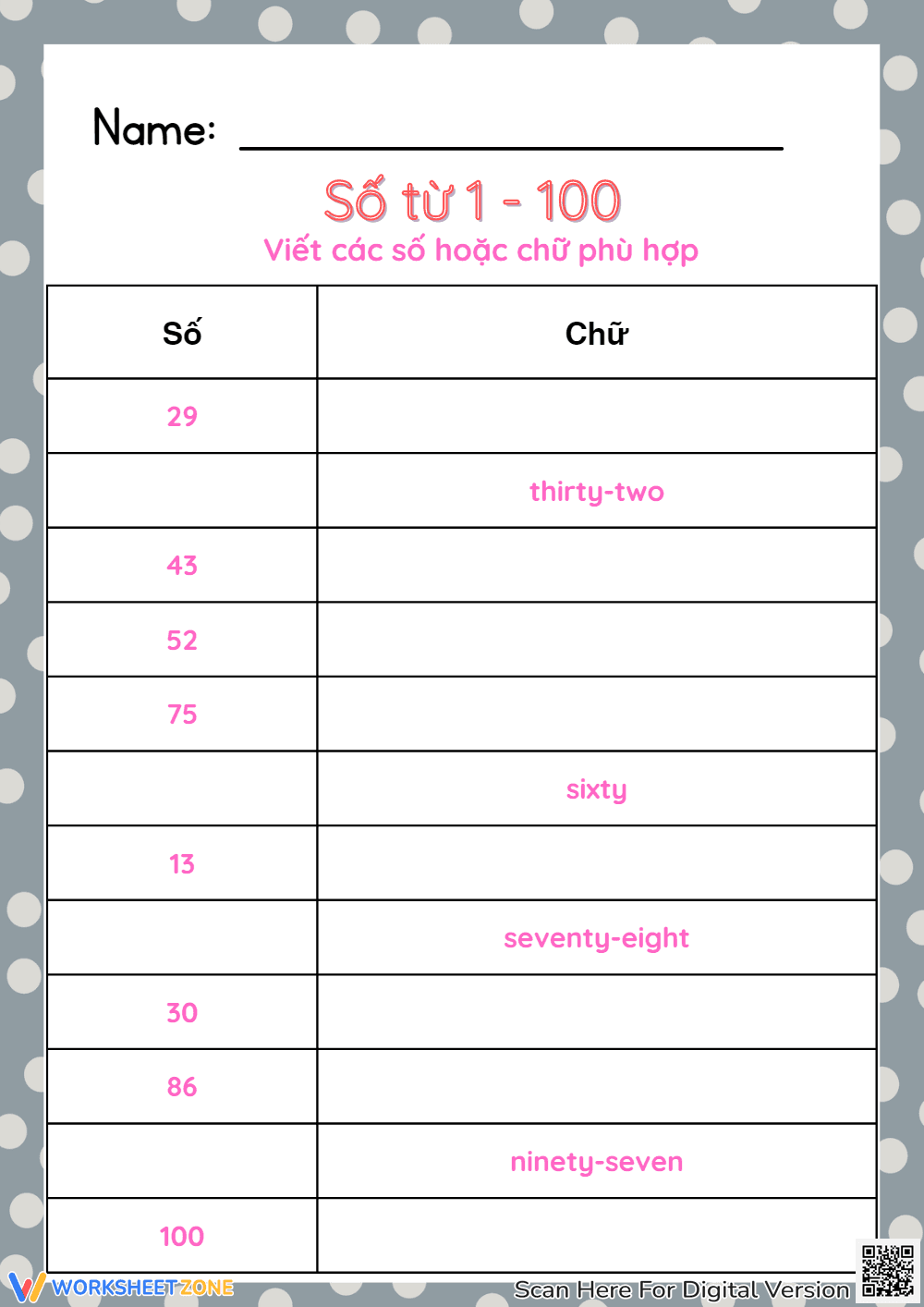

Number Words 1-100 Worksheet | Essential Grade 2 ELA
Paste this activity's link or code into your existing LMS (Google Classroom, Canvas, Teams, Schoology, Moodle, etc.).
Students can open and work on the activity right away, with no student login required.
You'll still be able to track student progress and results from your teacher account.
This Grade 2 number words worksheet helps students master the transition between numerical digits and their written English names. By completing the 12 structured tasks, learners reinforce their spelling accuracy and place value understanding for numbers up to 100. This focused practice builds the linguistic foundation necessary for complex mathematical communication.
At a Glance
- Grade: 2 · Subject: English Language Arts (ELA)
- Standard:
CCSS.MATH.CONTENT.2.NBT.A.3— Read and write numbers to 1000 using base-ten numerals and number names- Skill Focus: Number words 1–100
- Format: 1 page · 12 problems · Answer key included · PDF
- Best For: Morning work or quick formative assessment
- Time: 10–15 minutes
The worksheet features a clean, two-column table layout designed for maximum clarity. It contains 12 specific tasks where students must either provide the digit for a given number word (e.g., "thirty-two") or write the word for a given digit (e.g., "86"). The 1-page format keeps the task manageable for young students while ensuring comprehensive coverage of tricky spelling patterns.
Zero-Prep Workflow: Step 1: Print the single-page PDF (30 seconds). Step 2: Distribute to students as a warm-up or independent practice session (1 minute). Step 3: Review the 12 responses using the included answer key to identify common spelling or digit-matching errors (2 minutes). Total teacher preparation time is under two minutes, making this an ideal resource for busy classroom schedules or substitute teacher plans.
Standards Alignment: The primary focus is `CCSS.MATH.CONTENT.2.NBT.A.3`: "Read and write numbers to 1000 using base-ten numerals, number names, and expanded form." While the worksheet focuses on the 1-100 range, it provides the essential linguistic foundation for the full standard. Both standard codes can be copied directly into lesson plans, IEP goals, or district curriculum mapping tools.
How to Use It: Use this worksheet as a "Bell Ringer" at the start of a math or ELA block to settle the class and focus on spelling. It also serves as an excellent formative assessment tool after a lesson on hyphenated number words. Teachers should observe if students correctly include hyphens in compound numbers like "seventy-eight." Completion typically takes 10–15 minutes depending on student proficiency.
Who It's For: This resource is designed for Grade 2 students but is also highly effective for English Language Learners (ELL) and older students requiring intervention in basic number nomenclature. It pairs naturally with a classroom number chart or a direct instruction lesson on place value. The clear structure supports students who benefit from predictable, repetitive task formats to build confidence.
Research from the RAND AIRS 2024 report emphasizes that the integration of mathematical literacy within English Language Arts instruction significantly improves retention for early elementary learners. This worksheet targets CCSS.MATH.CONTENT.2.NBT.A.3, which requires students to read and write numbers to 1000 using base-ten numerals and number names. By focusing on the specific spelling patterns of numbers like "seventy-eight" and "ninety-seven," students bridge the gap between abstract numerical concepts and linguistic representation. The RAND study indicates that high-quality, focused practice materials that isolate specific sub-skills—such as the 12 targeted tasks provided here—allow for more effective formative assessment than broad-spectrum assessments. Educators can use this resource to identify specific phonetic spelling errors or digit-recognition gaps in Grade 2 students. This structured approach ensures that students develop the necessary fluency in number nomenclature required for more complex mathematical reasoning and written communication in later grades.


