


























Views
Downloads

Essential Decimals and Fractions Practice | Grade 5 Math
Paste this activity's link or code into your existing LMS (Google Classroom, Canvas, Teams, Schoology, Moodle, etc.).
Students can open and work on the activity right away, with no student login required.
You'll still be able to track student progress and results from your teacher account.
This worksheet provides a comprehensive review of decimal and fraction relationships for 5th-grade students. By engaging in matching, conversion, and arithmetic tasks, learners develop a deep understanding of place value and numerical equivalence. Students will gain confidence in translating between base-ten numerals and fractions, ensuring they are ready for more complex mathematical concepts in middle school.
At a Glance
- Grade: 5 · Subject: Math
- Standard:
CCSS.MATH.CONTENT.5.NBT.A.3— Read, write, and compare decimals to thousandths using numerals and fractions- Skill Focus: Converting decimals and fractions
- Format: 4 pages · 25 problems · Answer key included · PDF
- Best For: Independent practice and decimal fluency review
- Time: 30–45 minutes
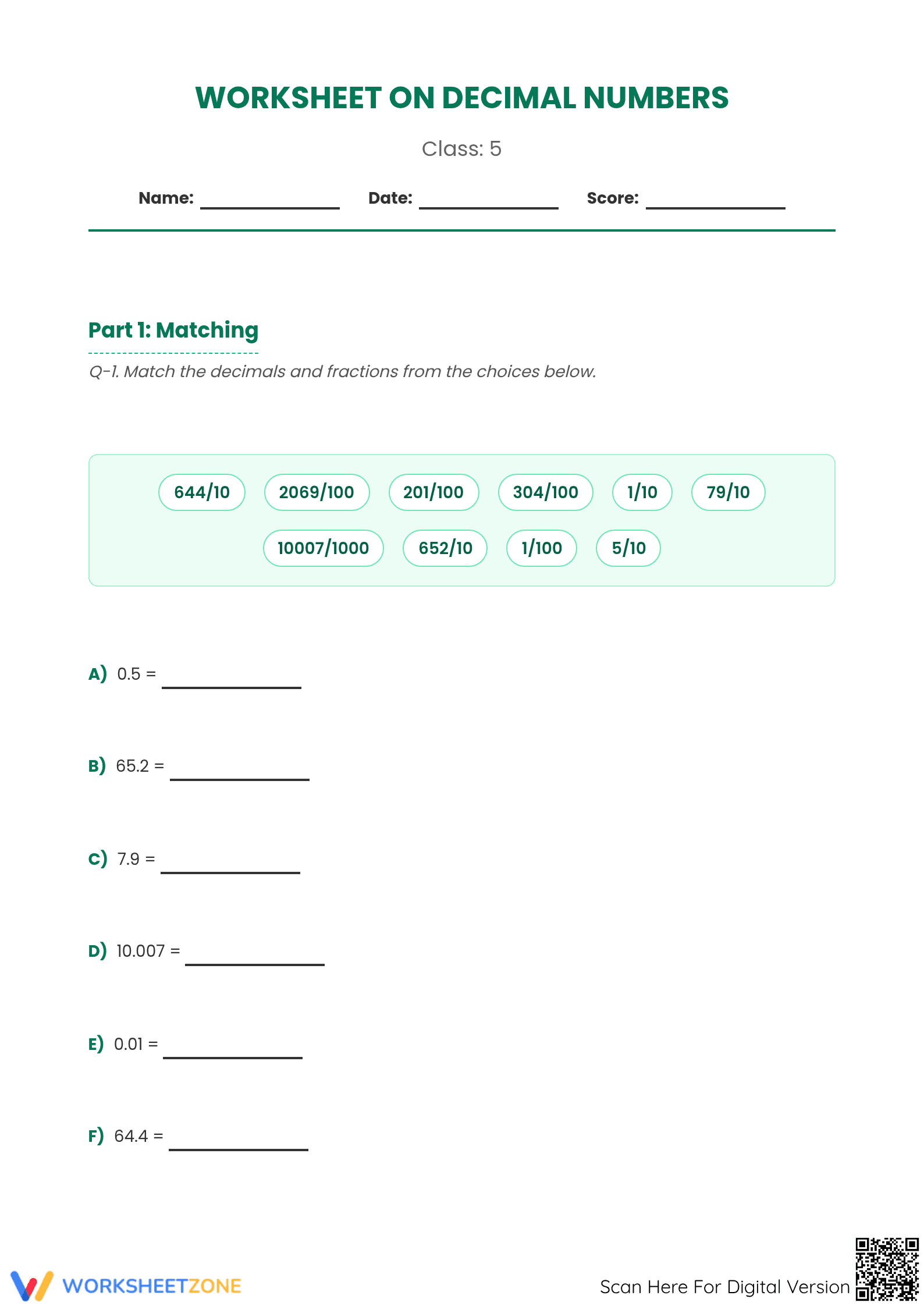
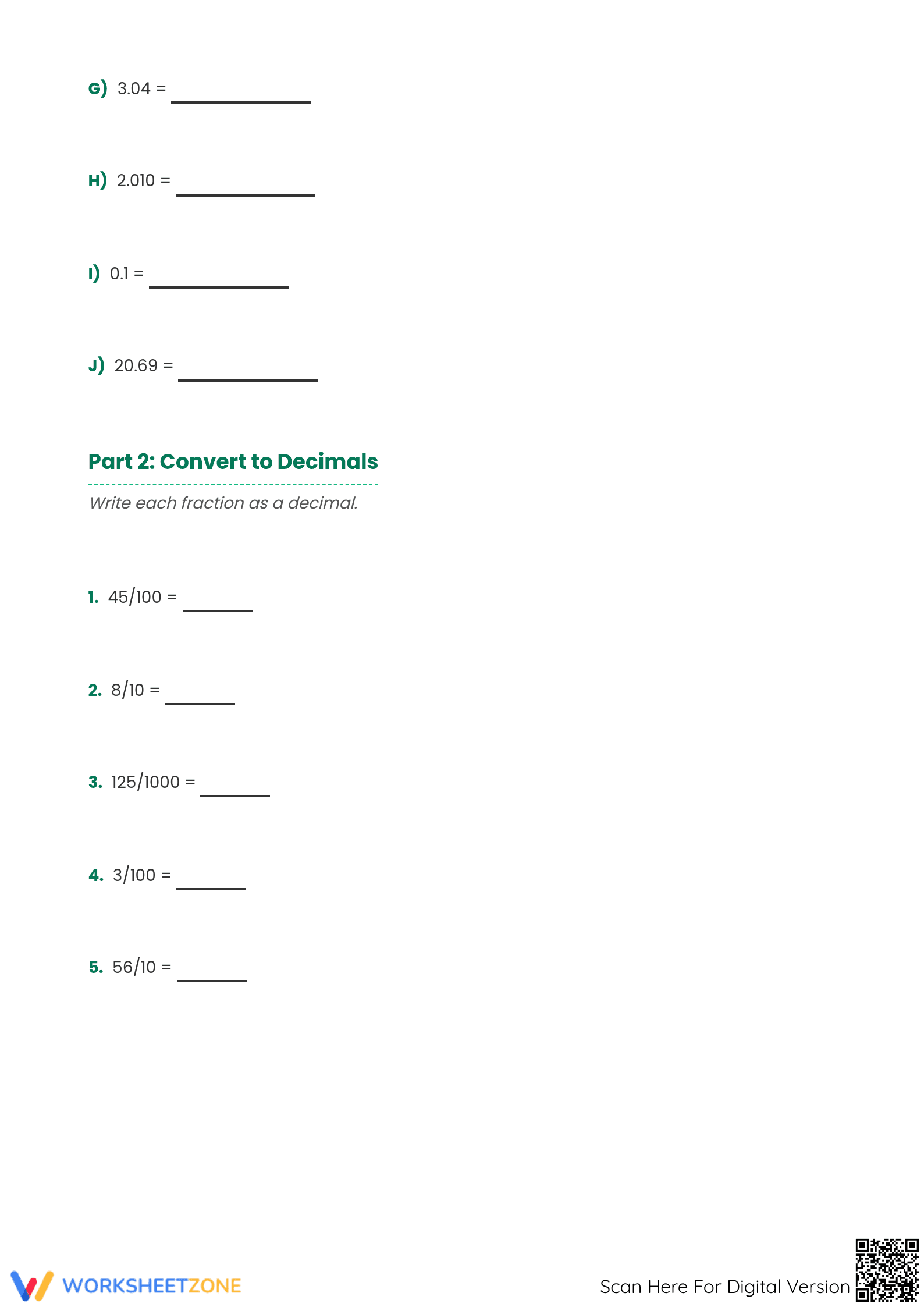
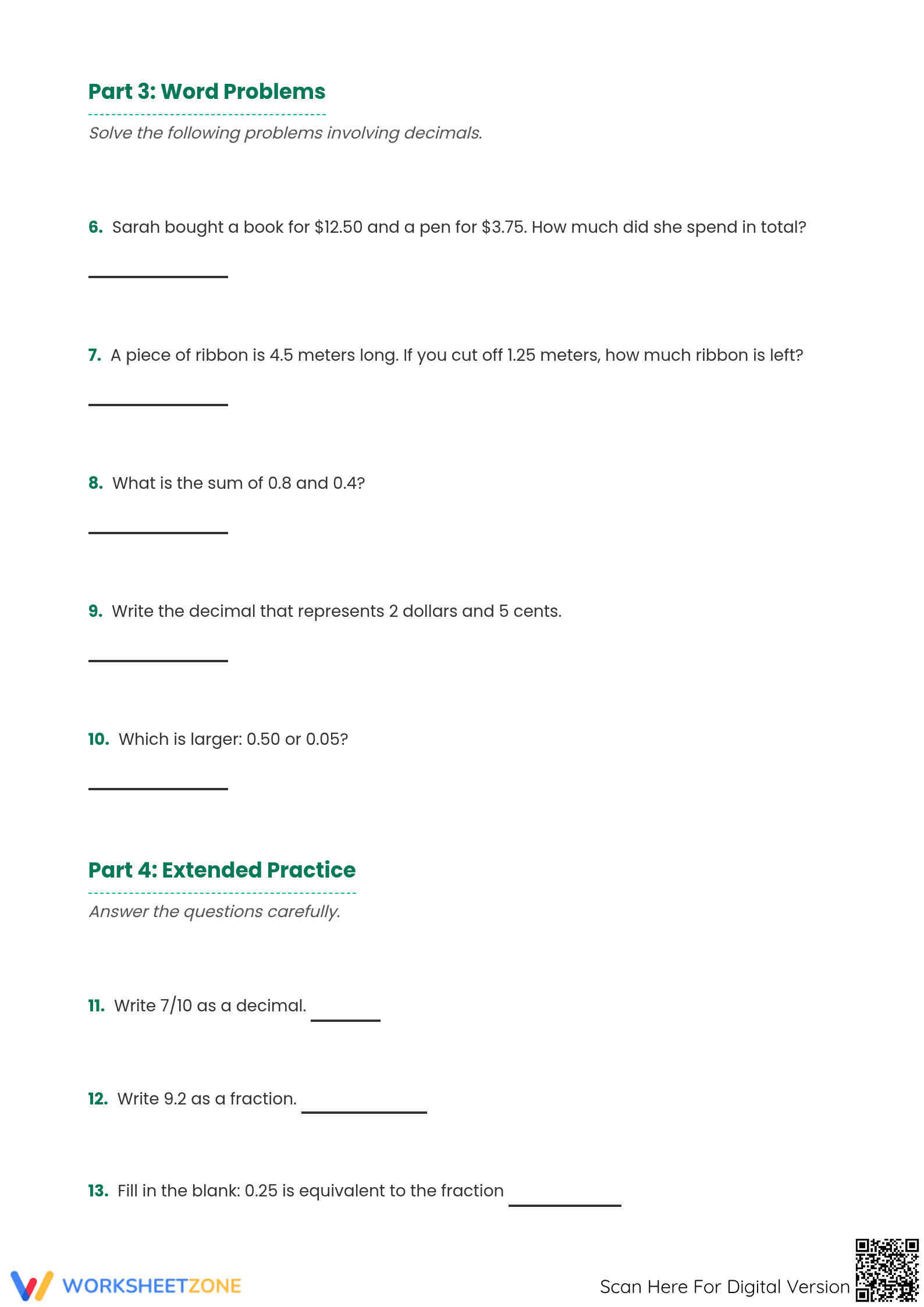
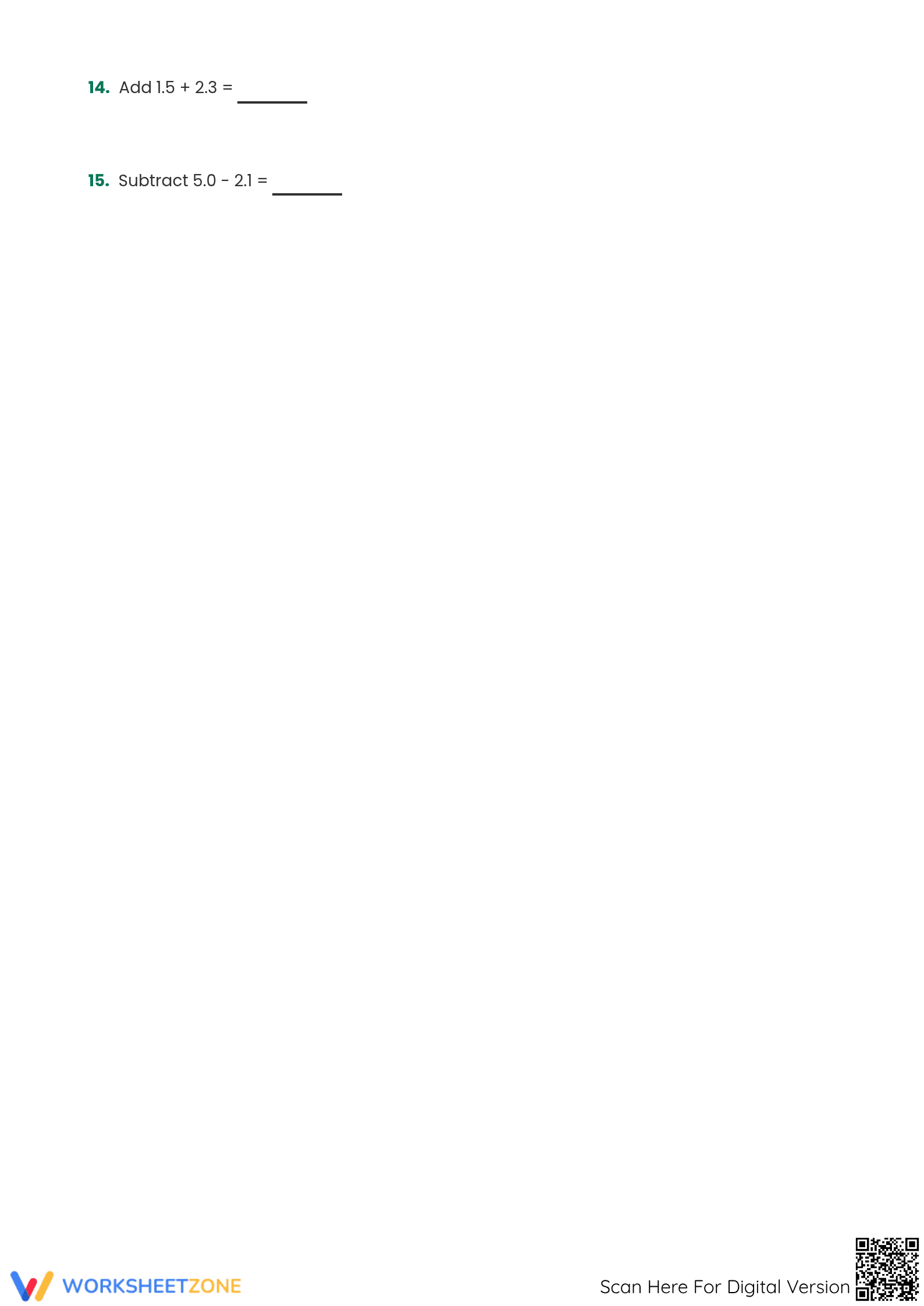
The four-page PDF is divided into four distinct sections to scaffold student learning. It includes a matching word bank with ten options, ten decimal-to-fraction matching pairs, five direct fraction-to-decimal conversions, five multi-step word problems involving real-world currency and measurement, and five extended practice arithmetic problems. A full answer key is included for quick grading or student self-correction.
Skill Progression
- Guided practice: The matching section provides a visual word bank to support students as they identify equivalent forms of decimals and fractions (10 problems).
- Supported practice: Part 2 transitions to direct conversion without a bank, requiring students to apply place value rules independently (5 problems).
- Independent practice: Word problems and extended practice (10 problems) challenge students to apply their knowledge to arithmetic and contextual scenarios.
This gradual-release structure follows the "I Do, We Do, You Do" instructional model, moving from recognition to application and mastery.
Standards Alignment
This resource is aligned to CCSS.MATH.CONTENT.5.NBT.A.3, which requires students to "read, write, and compare decimals to thousandths." It specifically addresses writing decimals in various forms, including fractions with denominators of 10, 100, and 1,000. This standard code can be copied directly into lesson plans, IEP goals, or district curriculum mapping tools.
How to Use It
- Instructional Moment: Use this worksheet during the "independent practice" phase of a lesson on decimal place value. It serves as an excellent bridge between concrete fraction models and abstract decimal notation.
- Formative Assessment: Observe students during the Part 3 word problems. Difficulty with currency-based problems often indicates a need for more support with hundredths versus tenths.
Expected completion time is 30 to 45 minutes depending on student familiarity with thousandths.
Who It's For
This practice set is designed for Grade 5 students but serves as an effective extension for advanced 4th graders or a targeted intervention for 6th and 7th graders struggling with decimal foundations. It pairs naturally with a decimal place value anchor chart or a short lesson on base-ten fractions.
According to RAND AIRS 2024, consistent exposure to multiple representations of decimals and fractions is critical for developing the numerical fluency required for algebra readiness. This Grade 5 worksheet addresses this need by providing 25 targeted tasks that bridge the gap between abstract decimal notation and concrete fraction relationships. By focusing on CCSS.MATH.CONTENT.5.NBT.A.3, the resource ensures that students master reading and writing decimals to thousandths, a foundational skill identified by Fisher & Frey (2014) as essential for the gradual release of responsibility in mathematics. The inclusion of word problems and arithmetic practice aligns with NAEP standards for mathematical complexity, encouraging students to apply their knowledge in diverse contexts. This structured approach helps prevent common misconceptions regarding place value, providing a printable and ready-to-use tool for any classroom environment aiming for high-quality standards alignment and student success in middle school math.


