


























Views
Downloads

Essential Decimals Practice Worksheet | Grade 6-8 Math
Paste this activity's link or code into your existing LMS (Google Classroom, Canvas, Teams, Schoology, Moodle, etc.).
Students can open and work on the activity right away, with no student login required.
You'll still be able to track student progress and results from your teacher account.
Mastering decimal operations is a foundation for middle school math. This worksheet provides a varied set of problems to build confidence in rounding, adding, and applying decimals. By moving from number lines to word problems, learners develop a thorough understanding of place value and procedural fluency.
At a Glance
- Grade: 6–8 · Subject: Math
- Standard:
CCSS.MATH.CONTENT.6.NS.B.3— Fluently add multi-digit decimals using the standard algorithm for each operation- Skill Focus: Decimal rounding, addition, and word problems
- Format: 5 pages · 21 problems · Answer key included · PDF
- Best For: Mid-unit practice and formative skills assessment
- Time: 35–45 minutes
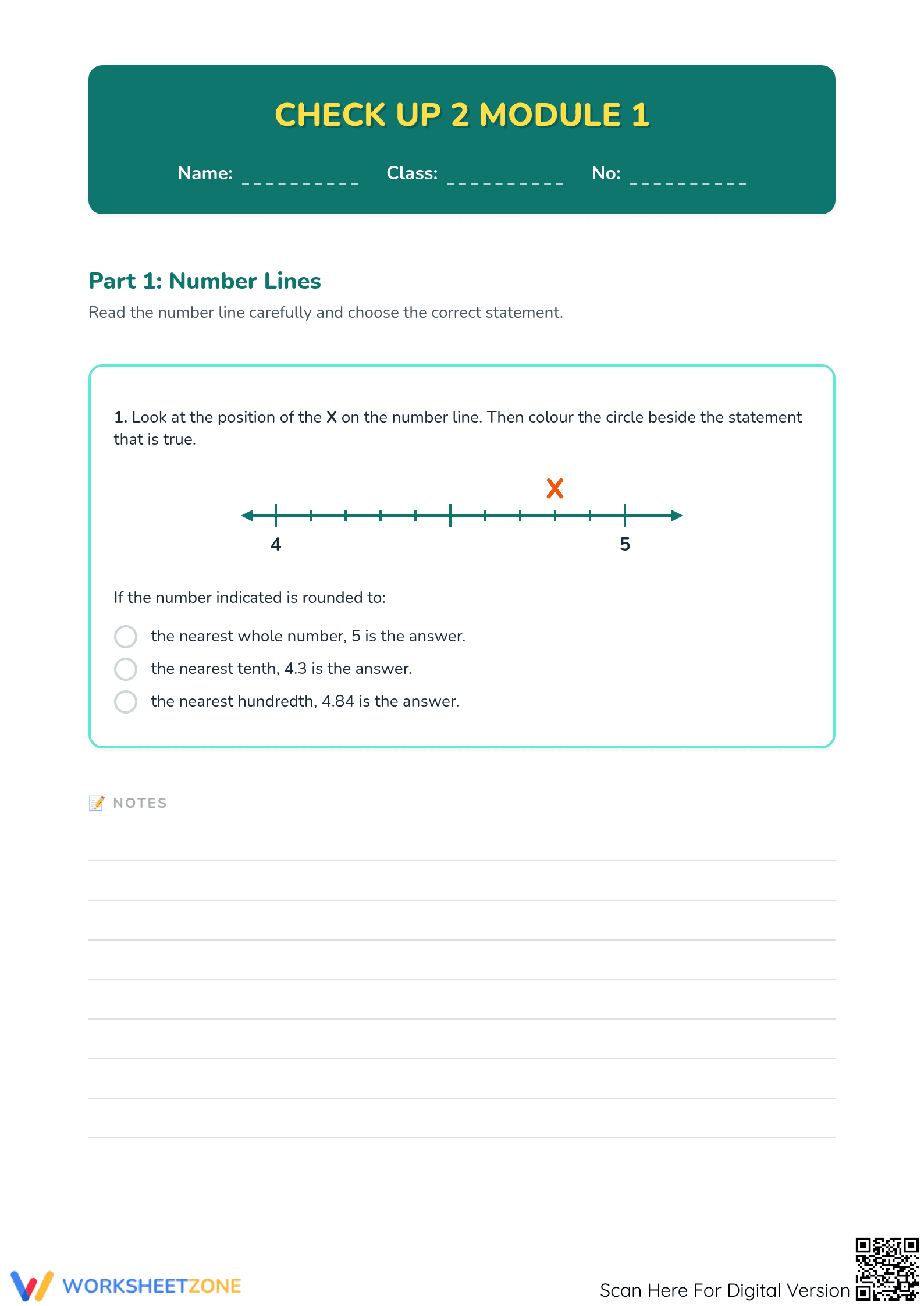
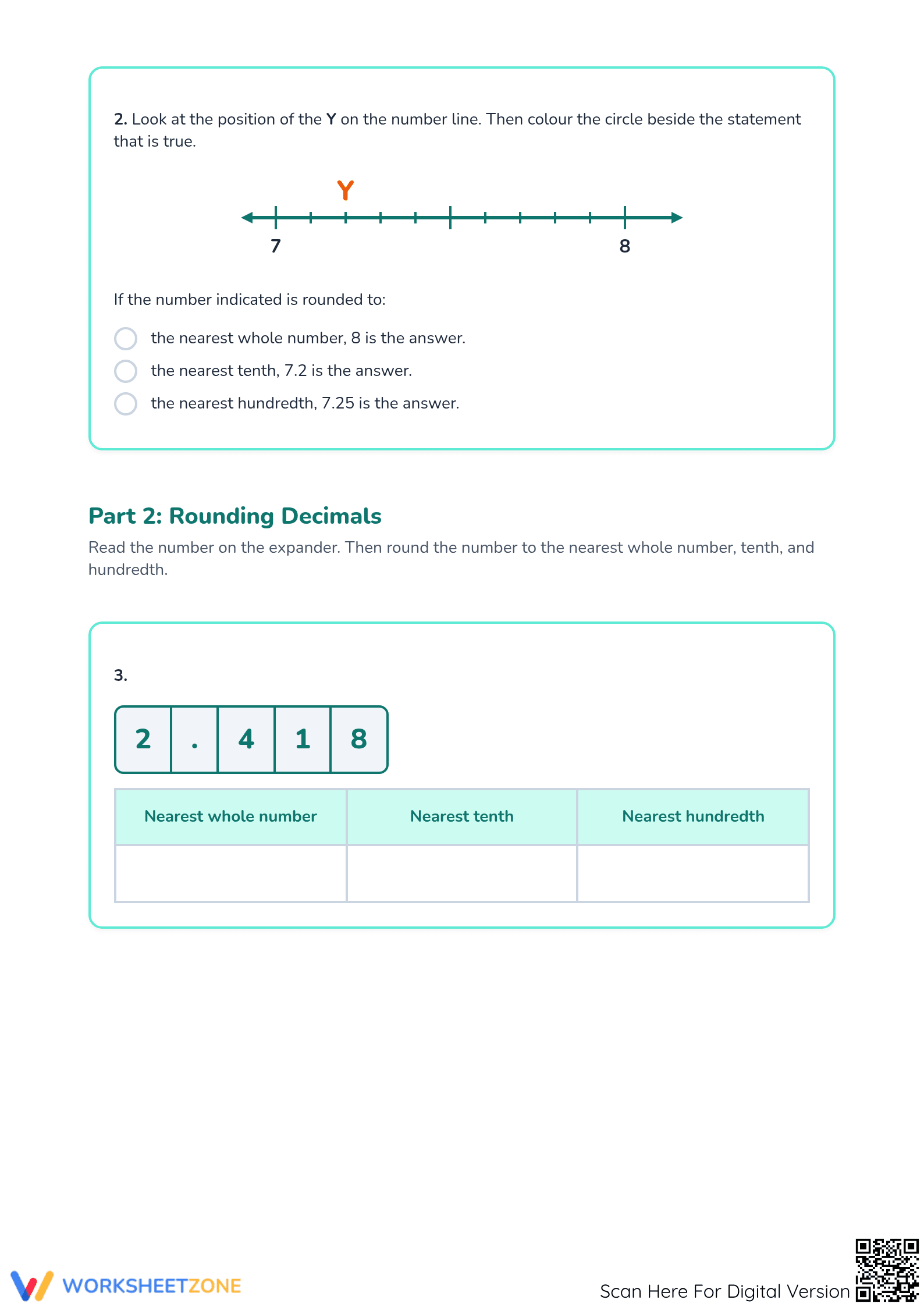
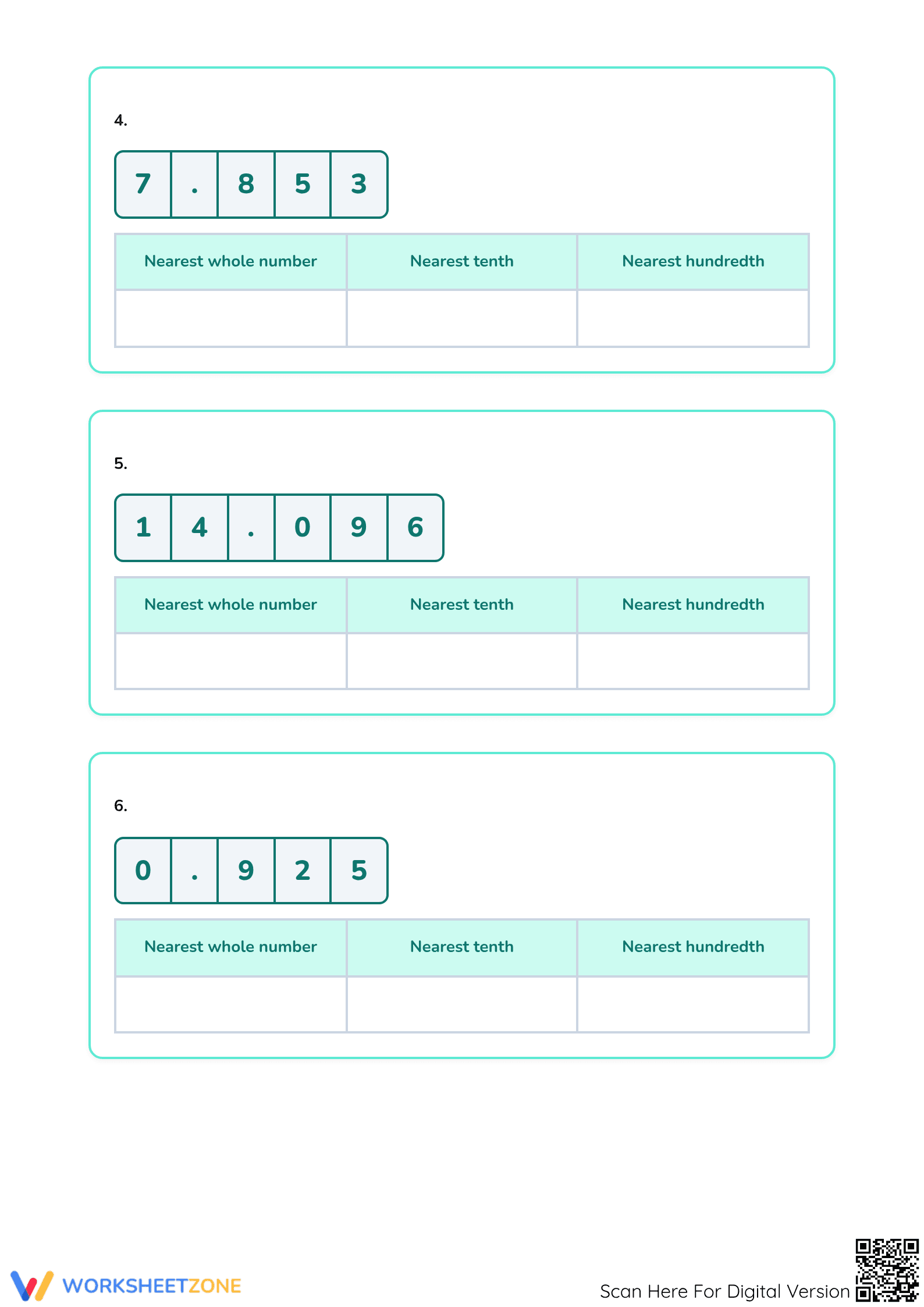
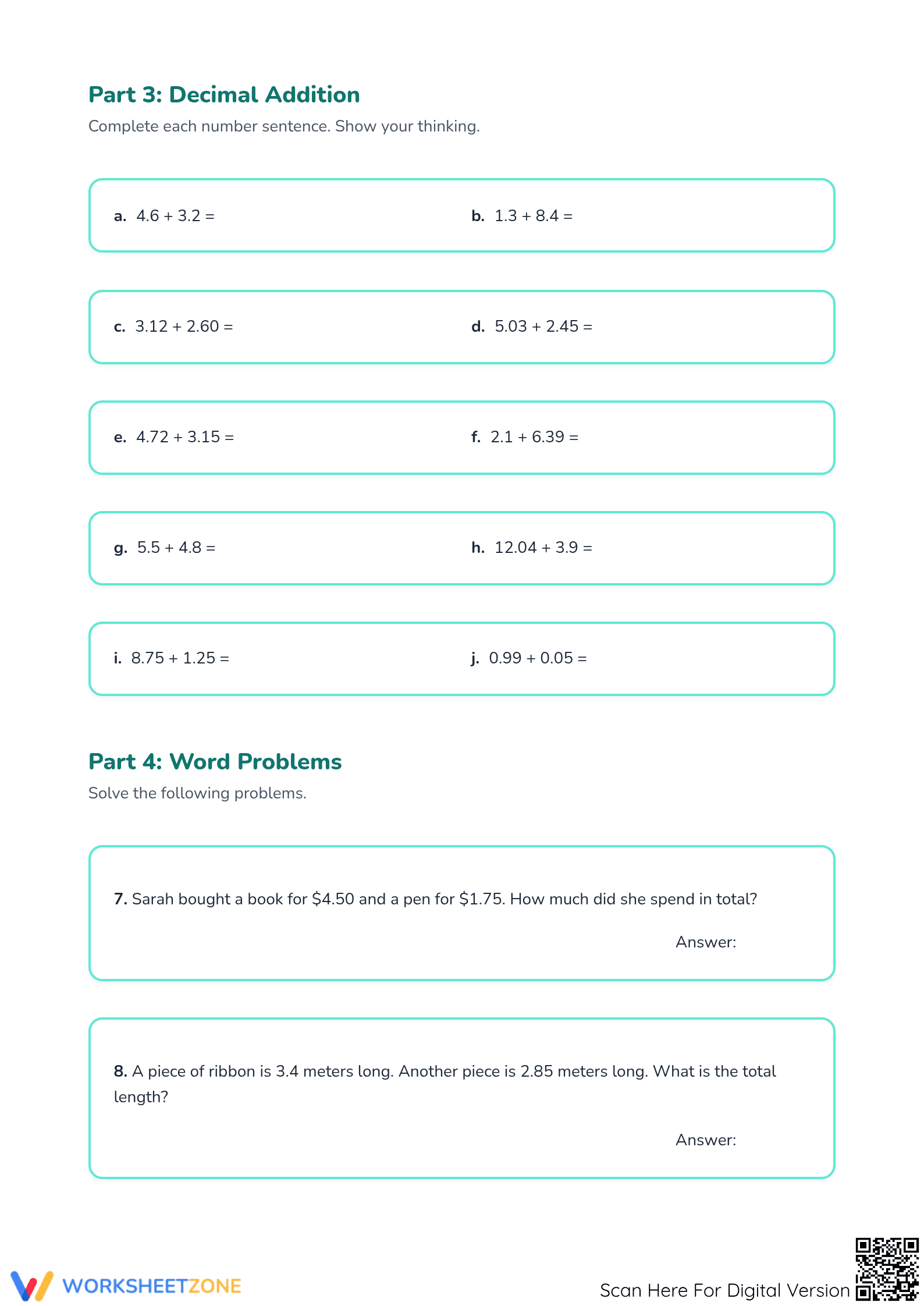
Inside this 5-page PDF, teachers will find 21 scaffolded tasks. The resource begins with visual rounding, progresses to expansion grids, and concludes with ten addition sentences and five word problems. Each page has ample workspace and clear instructions. A full answer key facilitates quick grading or student self-correction.
Skill Progression and Scaffolding
- Guided Practice (Tasks 1-2): Students use visual number lines to identify decimal positions and round, grounding rules in spatial awareness.
- Supported Practice (Tasks 3-16): Place-value expanders provide structural support for rounding, while ten addition sentences challenge students to align decimals independently.
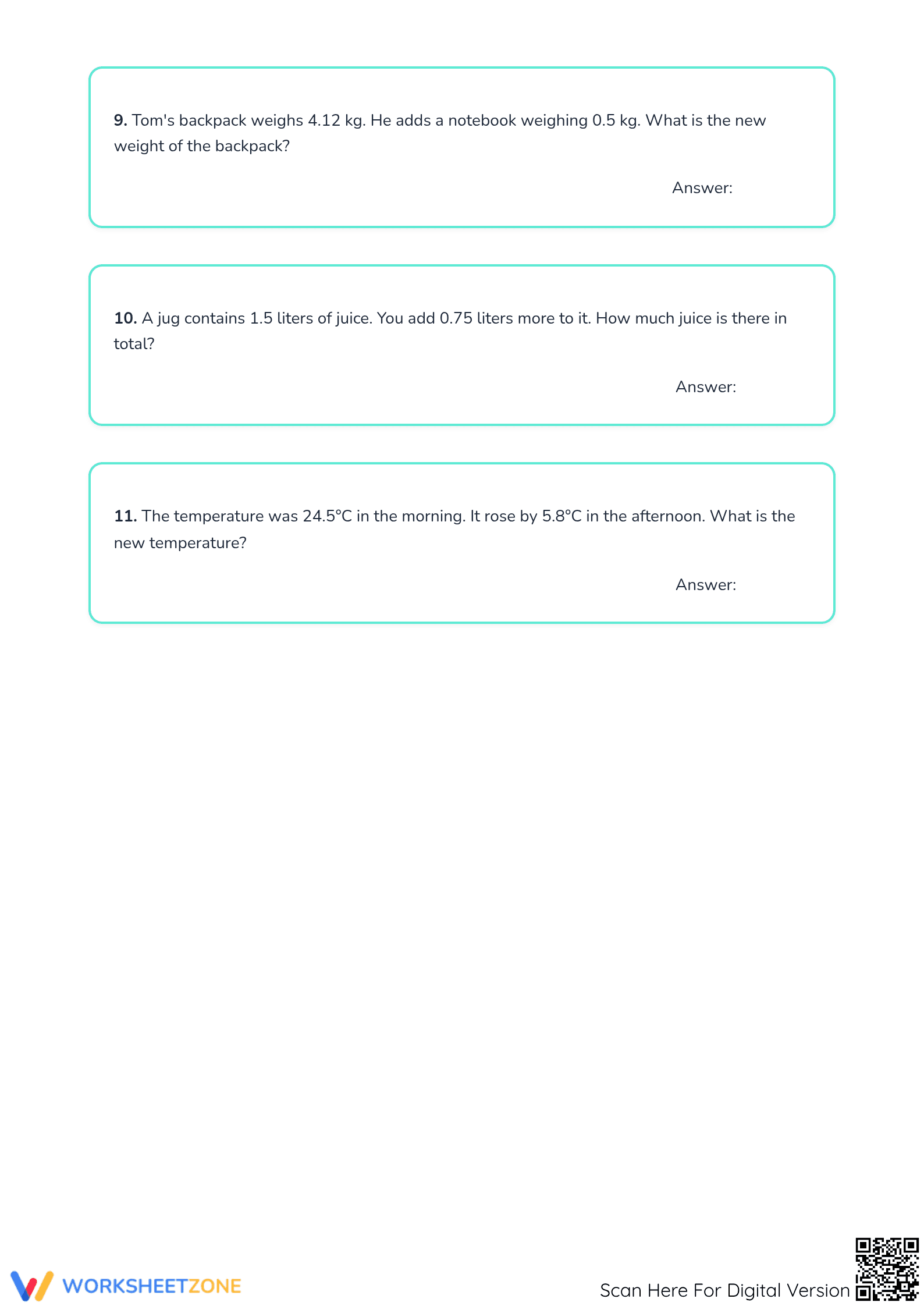
- Independent Practice (Tasks 17-21): Five real-world word problems involving money and weight require students to identify operations and apply fluency to practical dilemmas.
This gradual release approach ensures that students build upon their successes as they move through the module.
Standards Alignment
This resource is strictly aligned to CCSS.MATH.CONTENT.6.NS.B.3: "Fluently add, subtract, multiply, and divide multi-digit decimals using the standard algorithm for each operation." It also supports CCSS.MATH.CONTENT.5.NBT.A.4 by reinforcing decimal rounding skills essential for estimation. Both standard codes can be copied directly into lesson plans, IEP goals, or district curriculum mapping tools to demonstrate compliance with national requirements.
How to Use It in the Classroom
This worksheet is ideal for mid-unit practice. Use the first two pages as a "warm-up" to check place-value understanding, then assign the word problems for independent work. Observe students during the word problem phase to see if they correctly interpret phrases like "in total," which serves as an excellent formative assessment indicator. The expected completion time is 40 minutes.
Who It's For
This resource is for Grade 6-8 students mastering the Number System. It is effective for learners who benefit from visual aids to organize work. For differentiation, use the first three pages for support, while challenging advanced learners with word problems. It pairs well with direct instruction on decimal algorithms or a math interactive notebook.
According to NAEP mathematics framework analysis (2024), fluency with decimal operations is a critical predictor of success in middle school algebra. This worksheet aligns with CCSS.MATH.CONTENT.6.NS.B.3 by providing a structured sequence from visual rounding on number lines to complex multi-step word problems involving currency and measurement. Research from ScienceDirect (2024) indicates that students who engage with varied representations of decimals—including number lines and place-value expanders—develop a more robust conceptual understanding than those who focus solely on vertical algorithms. By bridging the gap between abstract calculation and concrete application in scenarios like Sarah's purchase and ribbon measurement, this resource ensures that Grade 6-8 learners build the procedural flexibility required for advanced STEM coursework. Teachers can utilize the 21 varied tasks to identify specific misconceptions in place value, facilitating targeted intervention and mastery-based progression in the middle school classroom.


