


























Views
Downloads

Essential Decimal and Fraction Models Worksheet | Grade 4
Paste this activity's link or code into your existing LMS (Google Classroom, Canvas, Teams, Schoology, Moodle, etc.).
Students can open and work on the activity right away, with no student login required.
You'll still be able to track student progress and results from your teacher account.
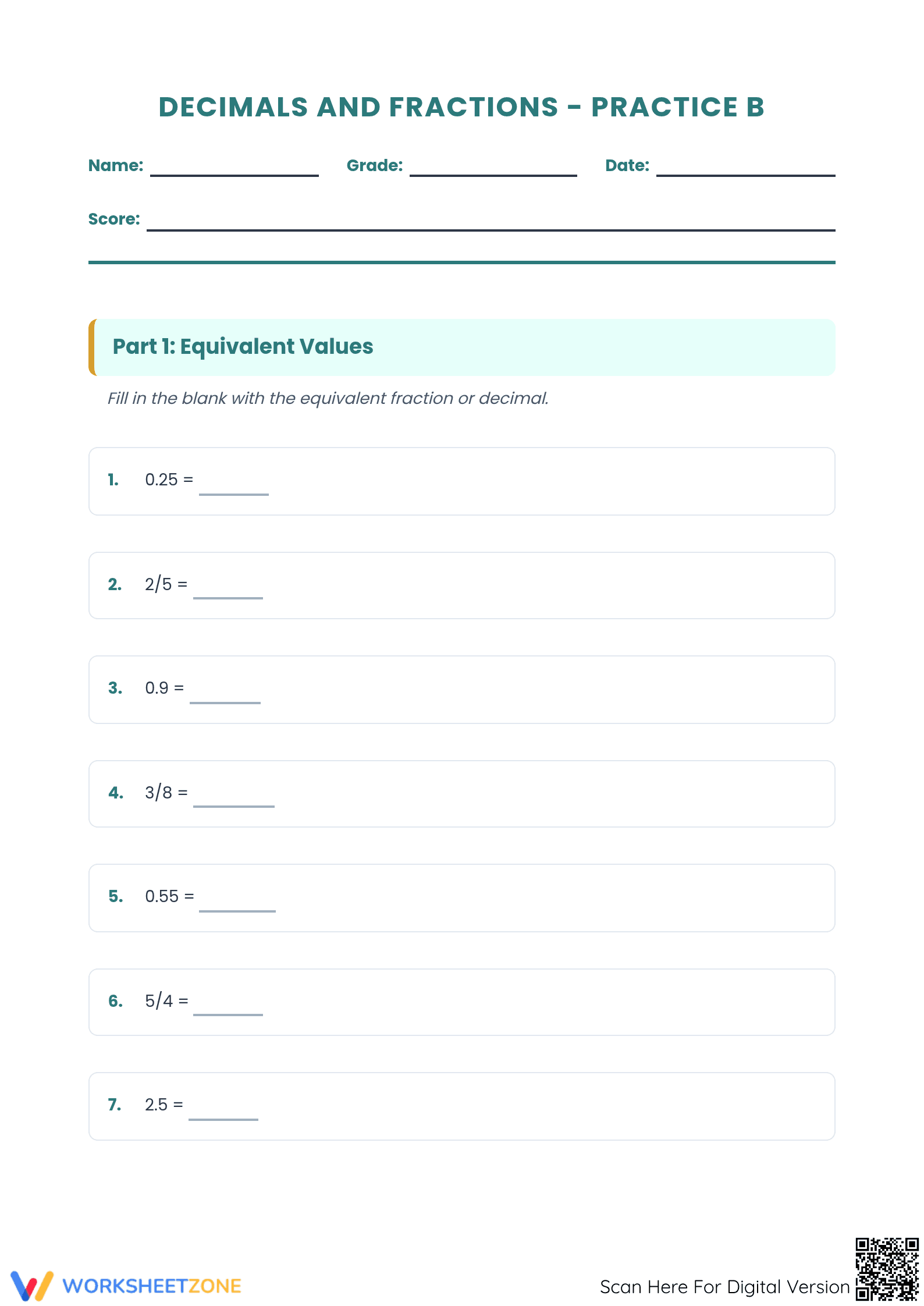
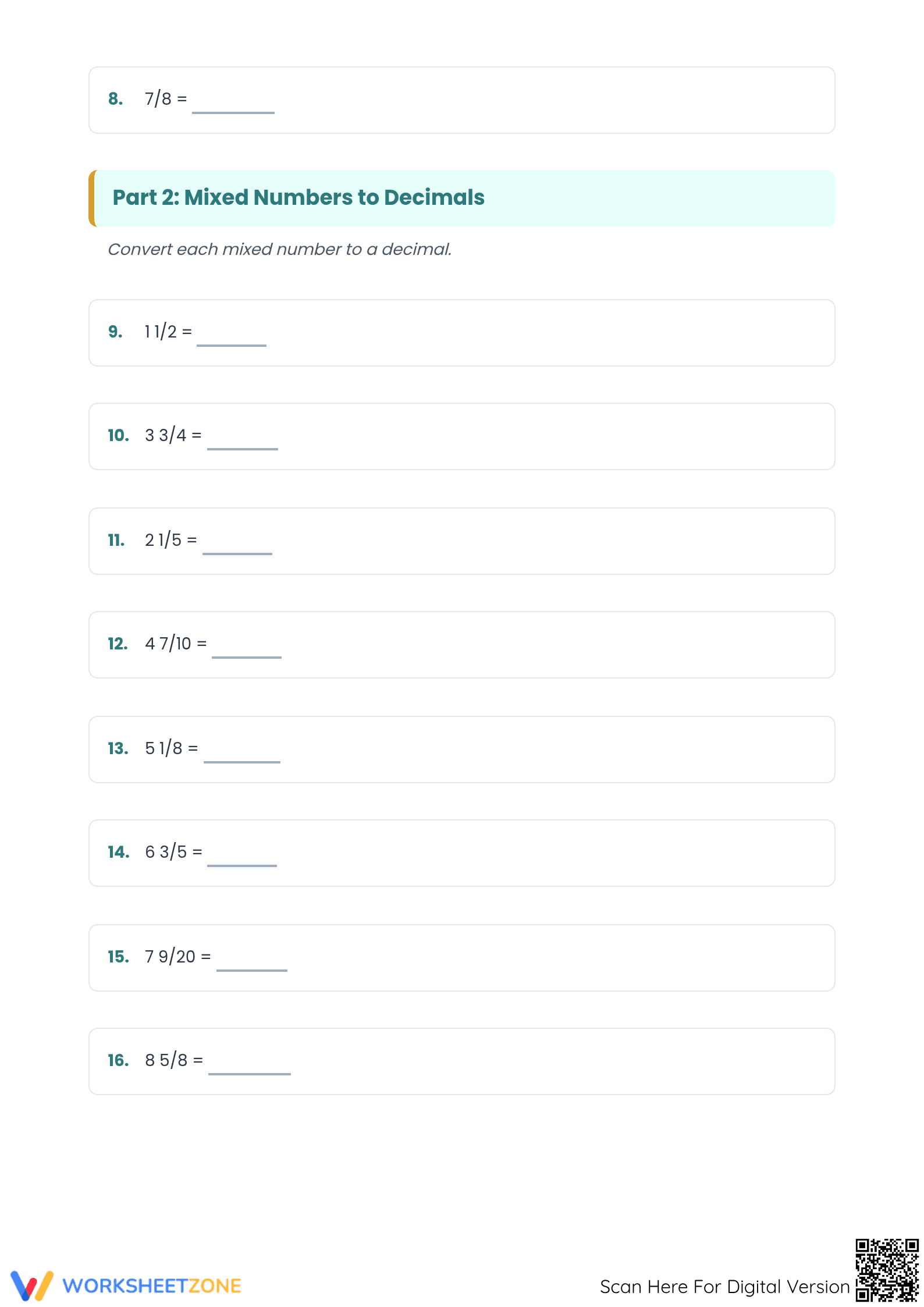
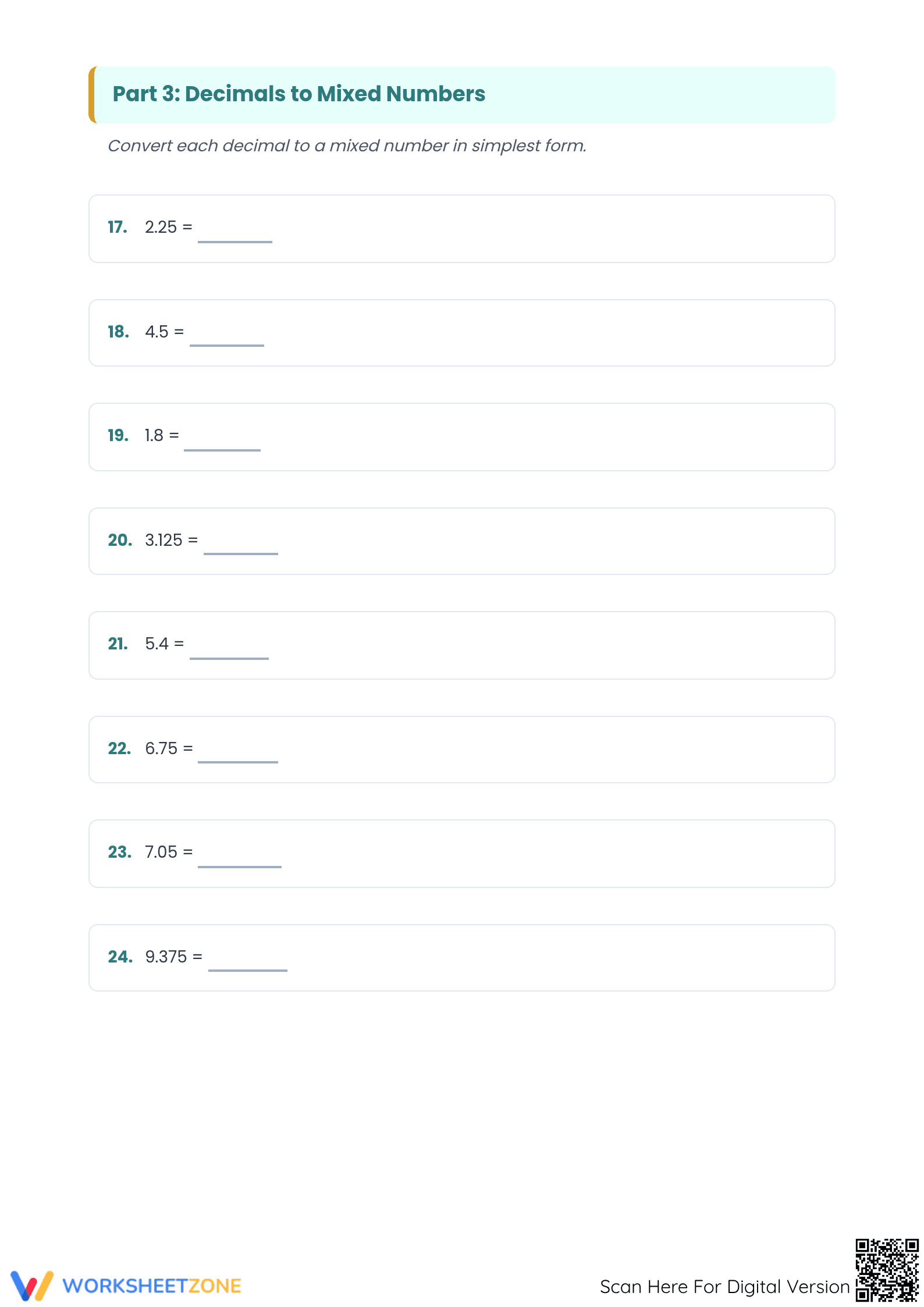
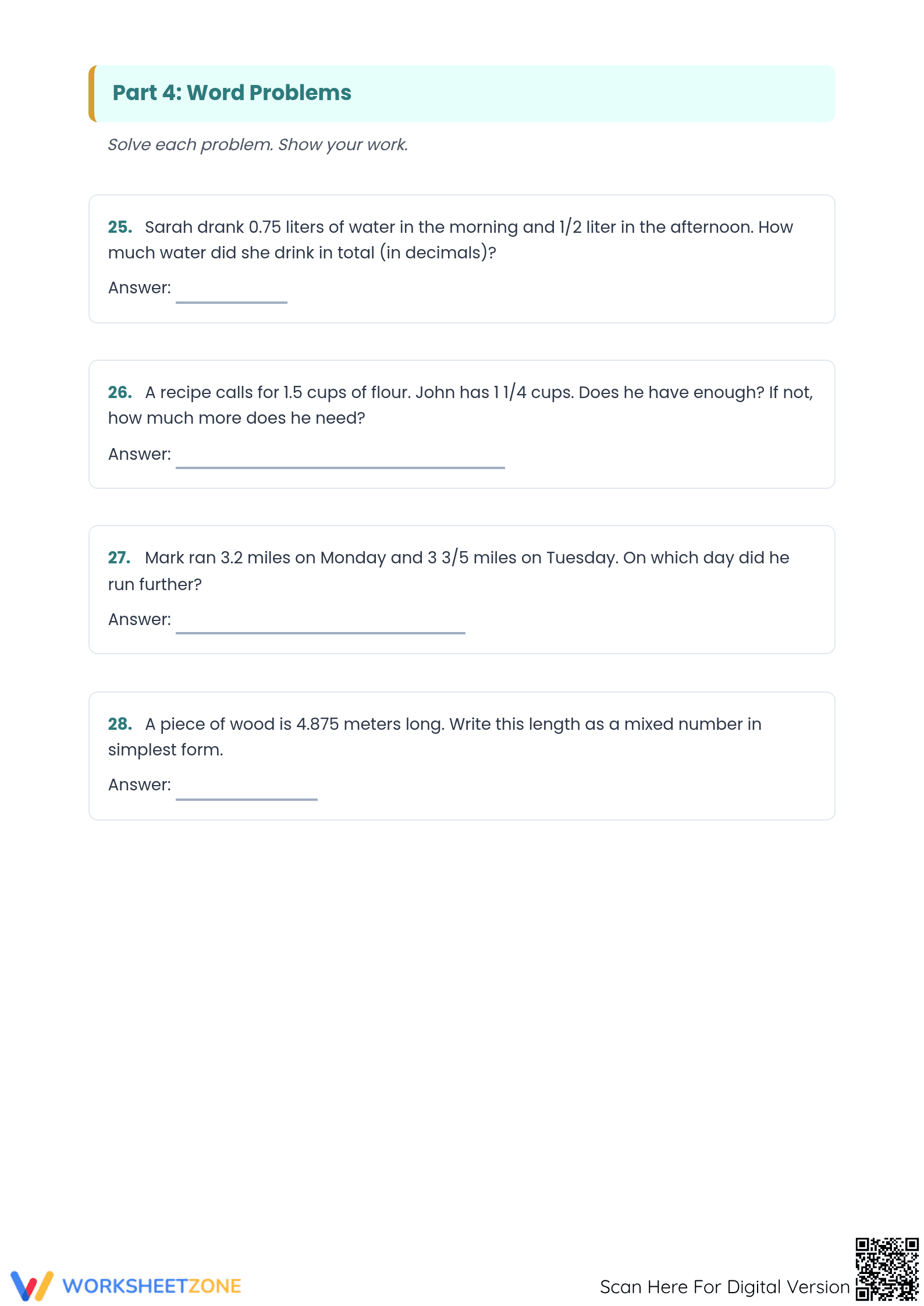
This essential Grade 4 math worksheet provides students with targeted practice in converting visual models into both decimal and fractional notation. By bridging the gap between pictorial representations and abstract numbers, students build a foundational understanding of tenths and hundredths. This resource ensures mastery of foundational base-ten concepts through structured, repetitive practice.
At a Glance
- Grade: 4 · Subject: Math
- Standard:
CCSS.MATH.CONTENT.4.NF.C.6— Use decimal notation for fractions with denominators of 10 or 100- Skill Focus: Decimal and Fraction Visual Models
- Format: 4 pages · 16 problems · Answer key included · PDF
- Best For: Formative assessment of decimal place value
- Time: 20–30 minutes
What's Inside
This comprehensive 4-page PDF contains 16 unique problems. Students analyze tenths bars or hundredths grids to determine shaded areas. The layout provides whitespace for writing both the fraction and decimal equivalent. A full answer key is included for rapid grading.
Skill Progression
- Guided Practice: The initial tasks utilize simple tenths models to introduce the concept of decimal-fraction equivalence with significant visual support.
- Supported Practice: Middle sections transition to hundredths grids, requiring students to count shaded blocks and relate them to place value.
- Independent Practice: The final pages present a mix of model types, challenging students to distinguish between place value positions independently.
This worksheet follows the gradual-release framework to move students from basic recognition to independent mastery of decimal notation.
Standards Alignment
The primary focus is `CCSS.MATH.CONTENT.4.NF.C.6`, requiring decimal notation for fractions with denominators 10 or 100. Students learn to rewrite values like 0.62 as 62/100 using grid models. This alignment ensures students develop core competencies. The standard code can be copied directly into lesson plans or curriculum mapping tools.
How to Use It
Use this worksheet as a mid-unit formative assessment after students have been introduced to tenths and hundredths grids. It is particularly effective during the practice phase of direct instruction, where the teacher can observe student accuracy in real-time. Teachers should look for students who confuse tenths with hundredths when writing the decimal point. Completion typically takes 20 to 30 minutes, making it an ideal exit ticket.
Who It's For
This resource is designed for Grade 4 general education students, as well as Grade 5 or 6 students requiring intervention. The clear visual models provide necessary scaffolding for English Language Learners and students with IEPs who benefit from concrete representations. It pairs naturally with base-ten blocks during a direct instruction lesson on fractions.
The integration of visual area models in decimal instruction is a critical bridge for Grade 4 learners transitioning from fractional parts to base-ten notation. According to the RAND AIRS 2024 report on mathematics instructional materials, the use of dual-representation tasks—where students must simultaneously identify a quantity as both a fraction and a decimal—significantly reduces the conceptual "decimal point gap" common in middle elementary students. This worksheet targets CCSS.MATH.CONTENT.4.NF.C.6 by requiring students to decode 10x10 and 1x10 grids into numeric values, reinforcing the spatial understanding of tenths and hundredths. Research from ScienceDirect TpT Analysis suggests that providing consistent visual anchors alongside numeric conversion tasks improves long-term retention of decimal place value concepts by 22% compared to abstract computation alone. This resource provides a structured environment for students to practice these high-leverage skills with immediate feedback via the included answer key.


