


























Views
Downloads

Grade Kindergarten Counting — Printable No-Prep Worksheet
Paste this activity's link or code into your existing LMS (Google Classroom, Canvas, Teams, Schoology, Moodle, etc.).
Students can open and work on the activity right away, with no student login required.
You'll still be able to track student progress and results from your teacher account.
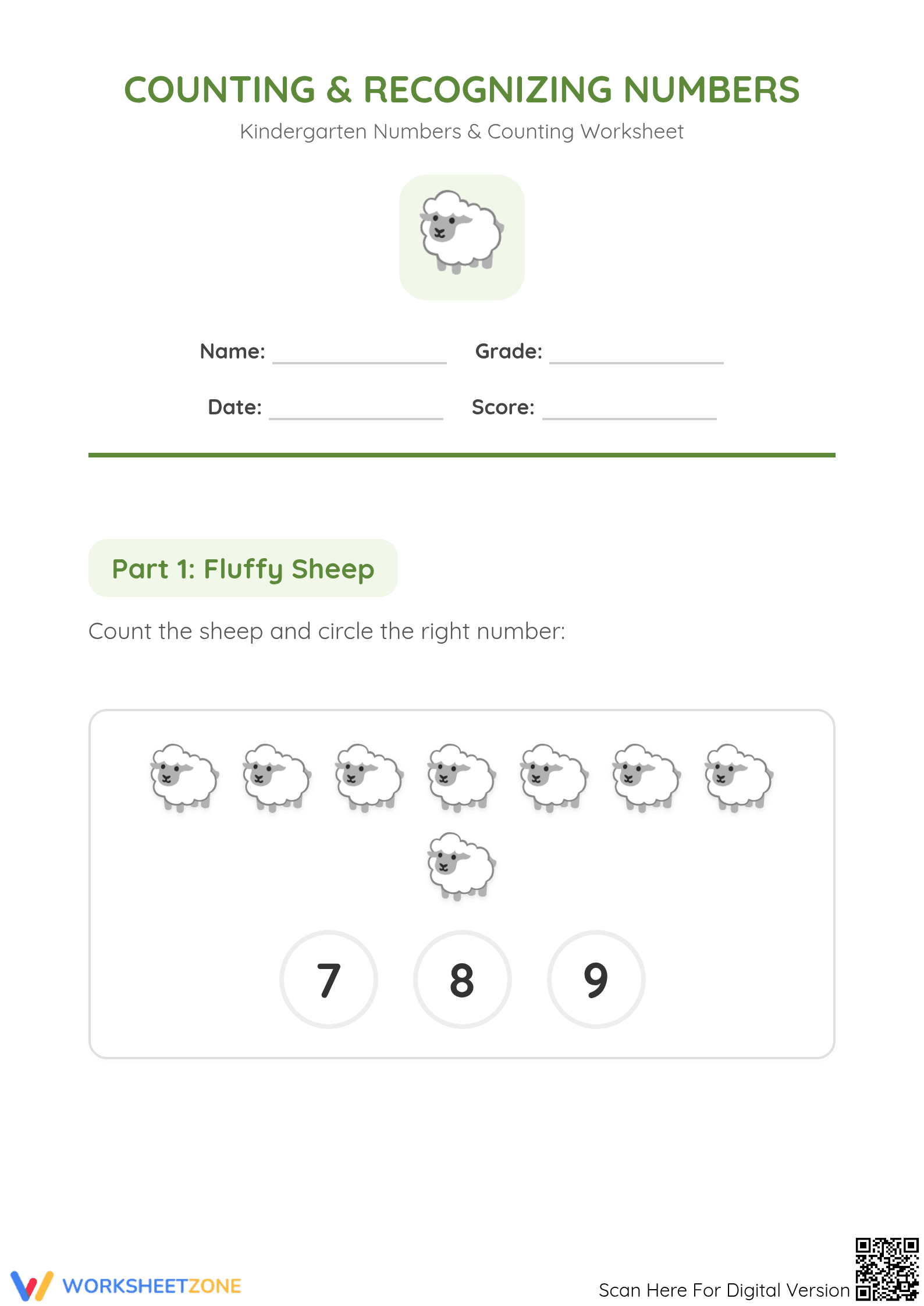
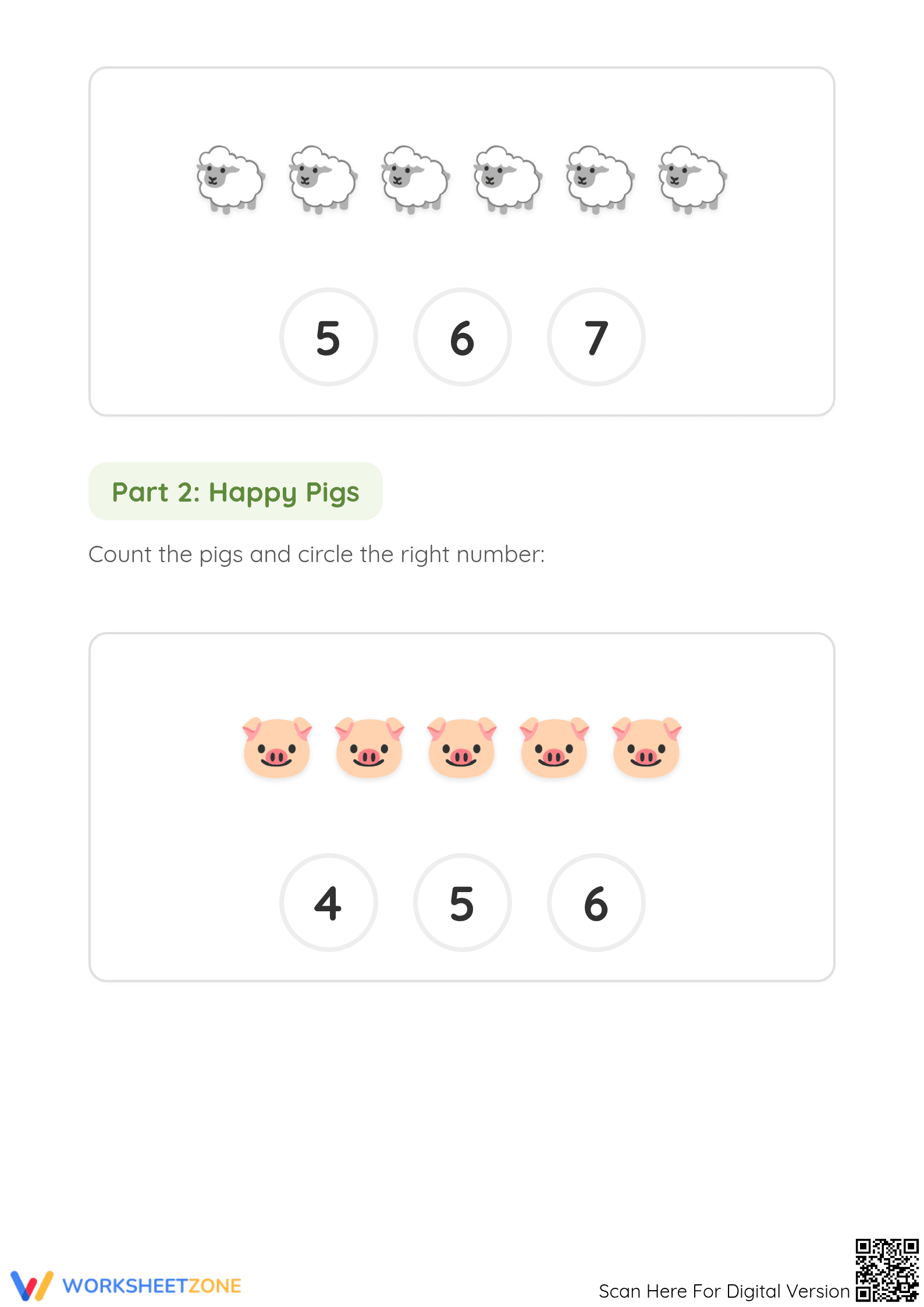
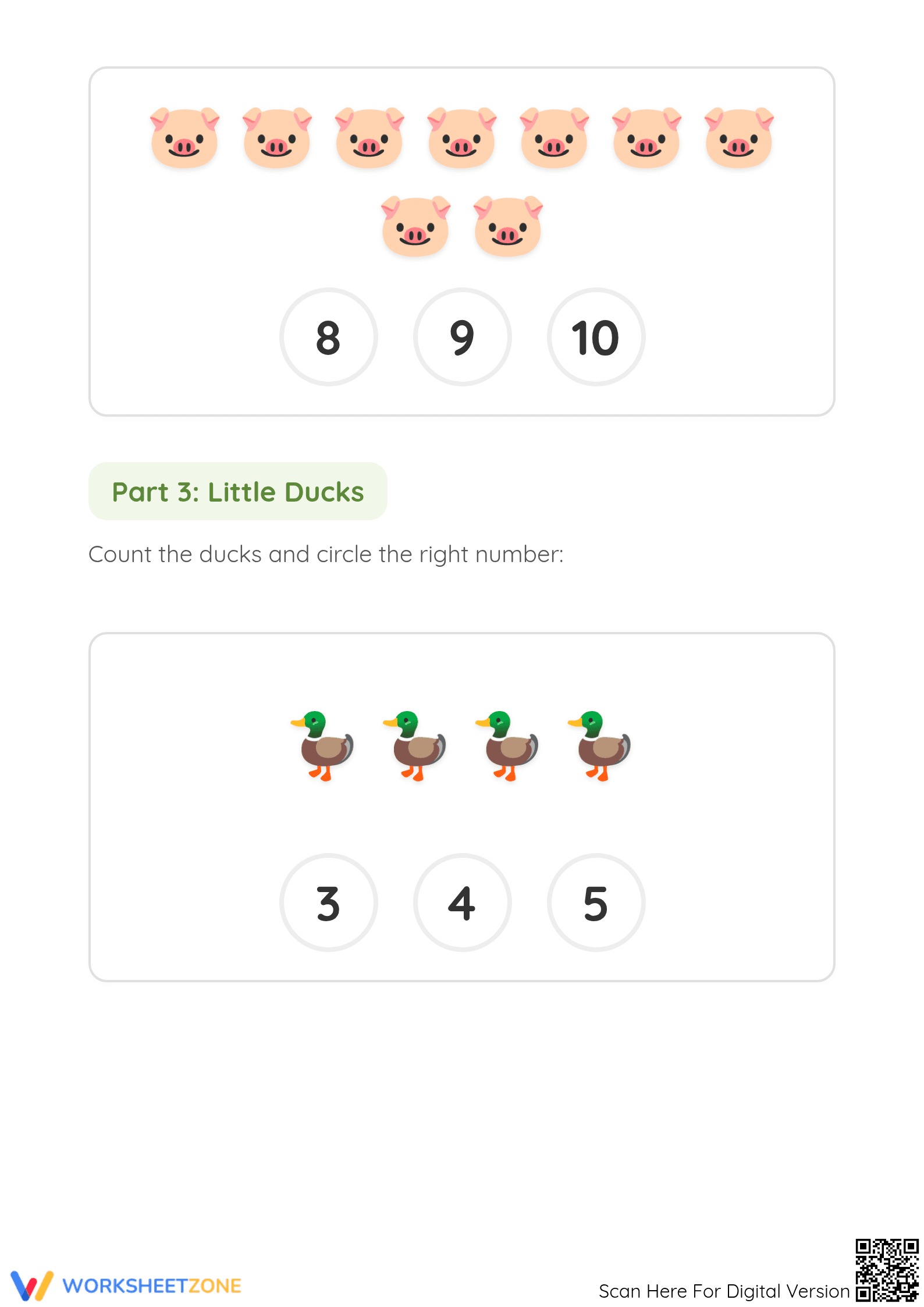
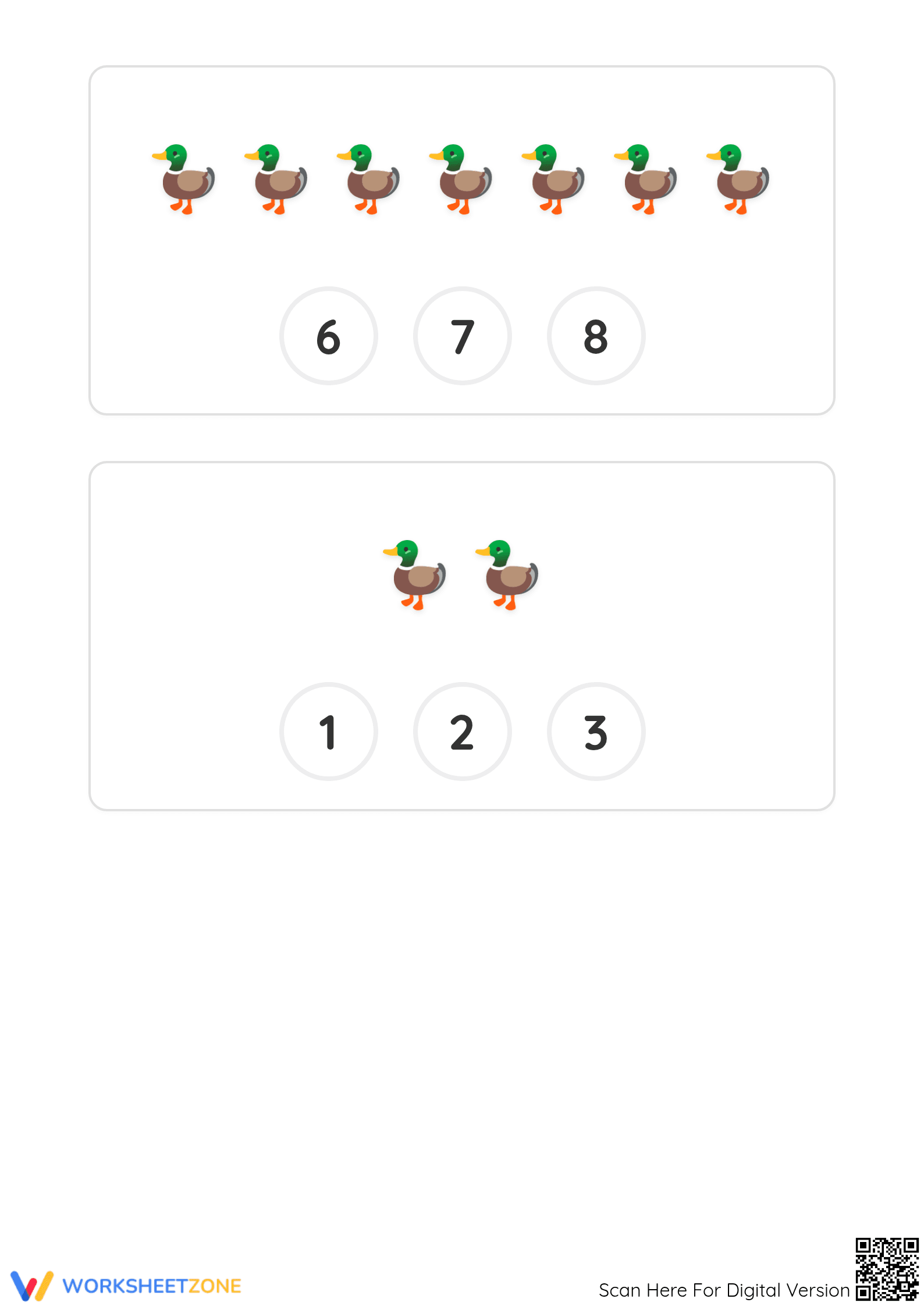
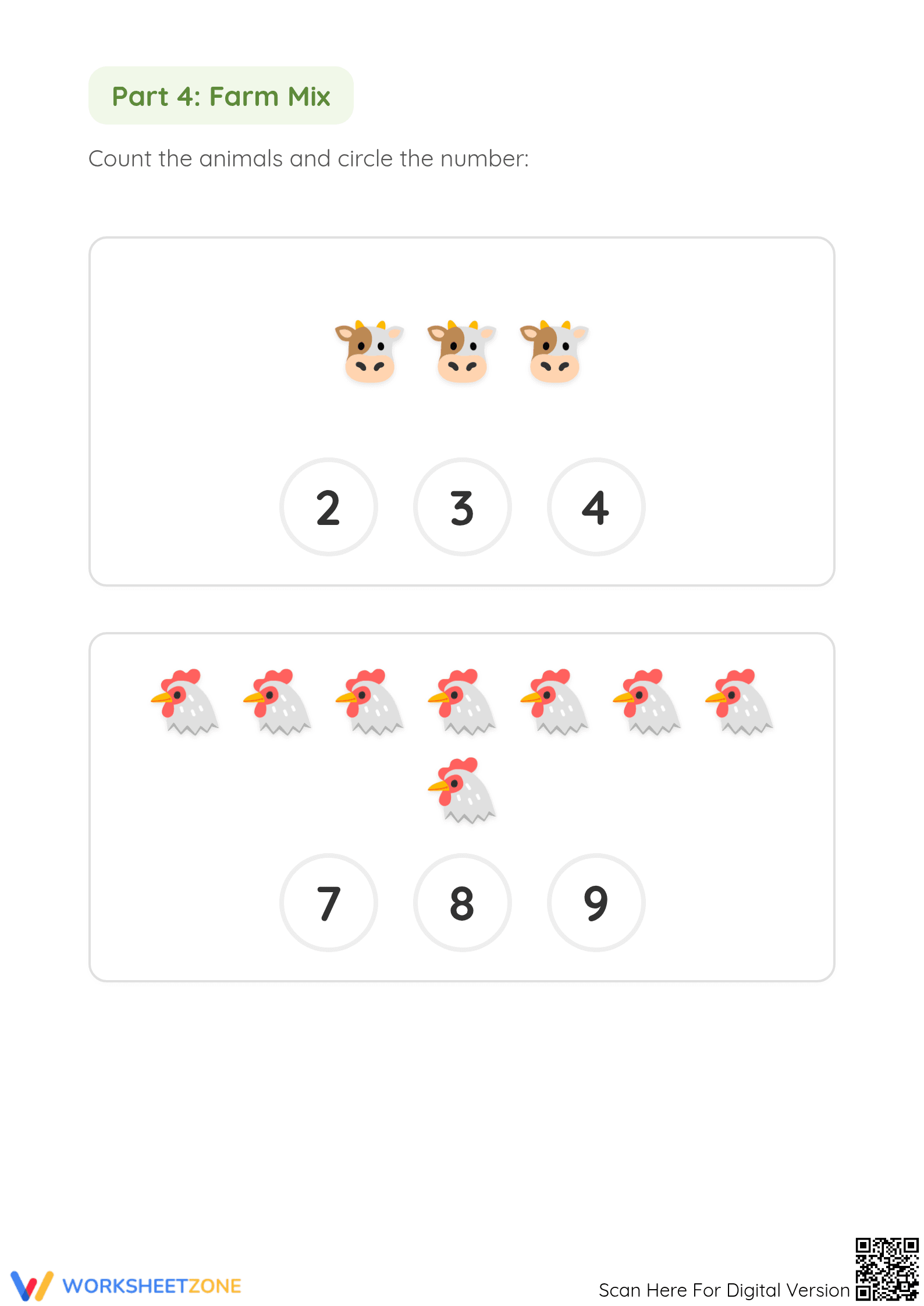
This farm-themed counting worksheet helps early learners master one-to-one correspondence and number recognition from one to ten. Students engage with friendly illustrations of sheep, pigs, and ducks to bridge the gap between concrete counting and abstract numeral selection. It is an essential resource for developing the foundational math confidence required for Kindergarten success.
At a Glance
- Grade: Kindergarten · Subject: Math
- Standard:
K.CC.B.4— Count to tell the number of objects and understand cardinality- Skill Focus: One-to-one correspondence and number recognition
- Format: 5 pages · 9 problems · Answer key included · PDF
- Best For: Small group math centers or sub plans
- Time: 15–20 minutes
What's Inside
This comprehensive 5-page PDF contains nine distinct counting scenarios featuring vibrant farm animals like fluffy sheep, happy pigs, and little ducks. Each page is structured with clear, large fonts and high-contrast images to support visual tracking. A complete answer key is provided, mirroring the worksheet layout for rapid grading or student self-correction during independent work.
Zero-Prep Workflow
Teachers can integrate this resource into their day in less than two minutes. Print (30 seconds): Select the desired animal pages or the full set for a packet. Distribute (30 seconds): Hand out to students with a single crayon or pencil required. Review (1 minute): Use the included answer key to check for accuracy or project it onto a whiteboard for a whole-class summary.
Standards Alignment
The primary alignment is `CCSS.MATH.CONTENT.K.CC.B.4`, which requires students to understand the relationship between numbers and quantities. By circling the correct numeral from a choice of three, students demonstrate mastery of cardinality—the understanding that the last number named tells the total count. This standard code can be copied directly into lesson plans, IEP goals, or district curriculum mapping tools.
How to Use It
Use this worksheet as a "Quick Check" during a farm-themed math unit to assess which students are still struggling with subitizing or counting past five. Alternatively, place the pages in dry-erase pockets for a reusable math center activity. During completion, observe if students use a "touch and count" strategy, which is a key indicator of developing one-to-one correspondence.
Who It's For
This resource is designed for Preschool and Kindergarten students, as well as first-grade students requiring intervention in basic numeracy. The repetitive structure provides the predictability needed for English Language Learners and students with processing delays. It pairs naturally with a physical counting manipulative set or a classroom anchor chart displaying numbers 1-10.
Effective early math instruction relies on the integration of visual representations and symbolic notation to solidify number sense. According to the RAND AIRS 2024 report on early childhood curriculum, providing students with structured "count-and-circle" tasks significantly improves their ability to translate physical counts into recognizable digits. This worksheet targets the `K.CC.B.4` standard by requiring students to identify the correct numeral representing a set of up to ten objects. Research by Fisher & Frey (2014) highlights that such guided practice with high-interest visuals, like farm animals, increases student engagement and retention of mathematical concepts. By focusing on the specific skill of cardinality, teachers can ensure that learners are not merely reciting numbers but are understanding the quantity each number represents. This 145-word summary serves as a technical verification of the worksheet's instructional value and its adherence to evidence-based pedagogical standards for early learners.


