


























Views
Downloads


Printable Counting & Number Recognition Worksheet | Grade K
Paste this activity's link or code into your existing LMS (Google Classroom, Canvas, Teams, Schoology, Moodle, etc.).
Students can open and work on the activity right away, with no student login required.
You'll still be able to track student progress and results from your teacher account.
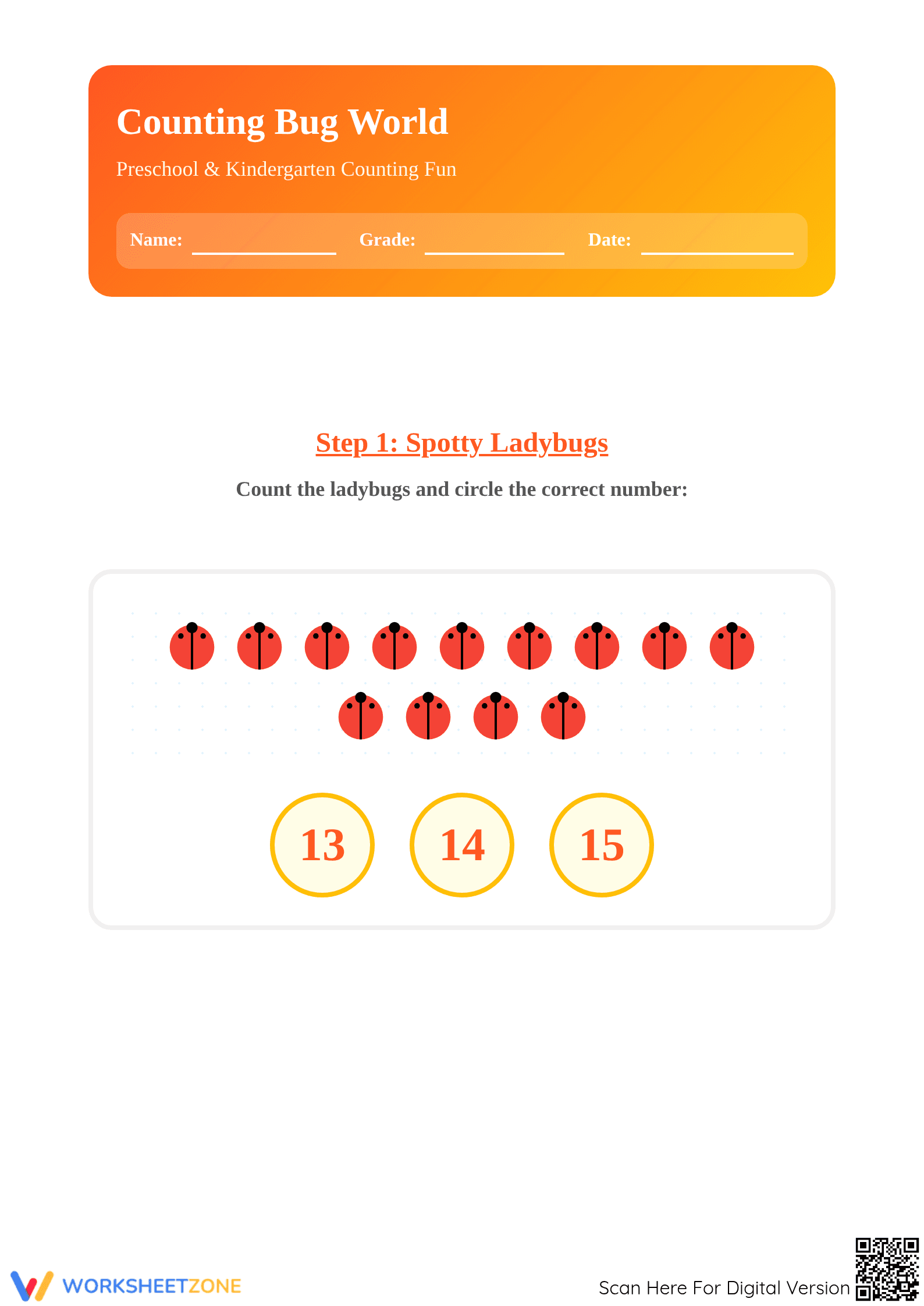
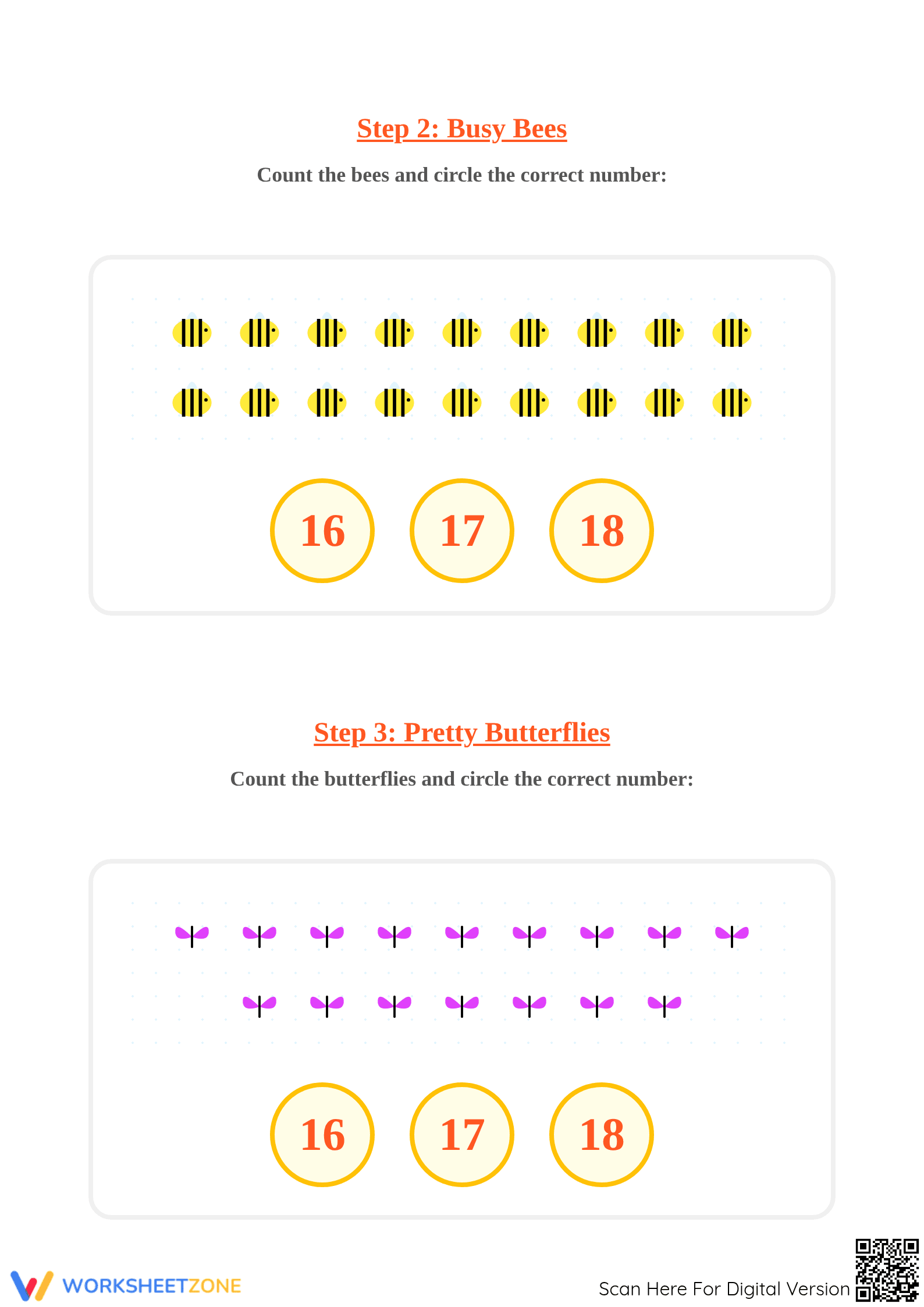
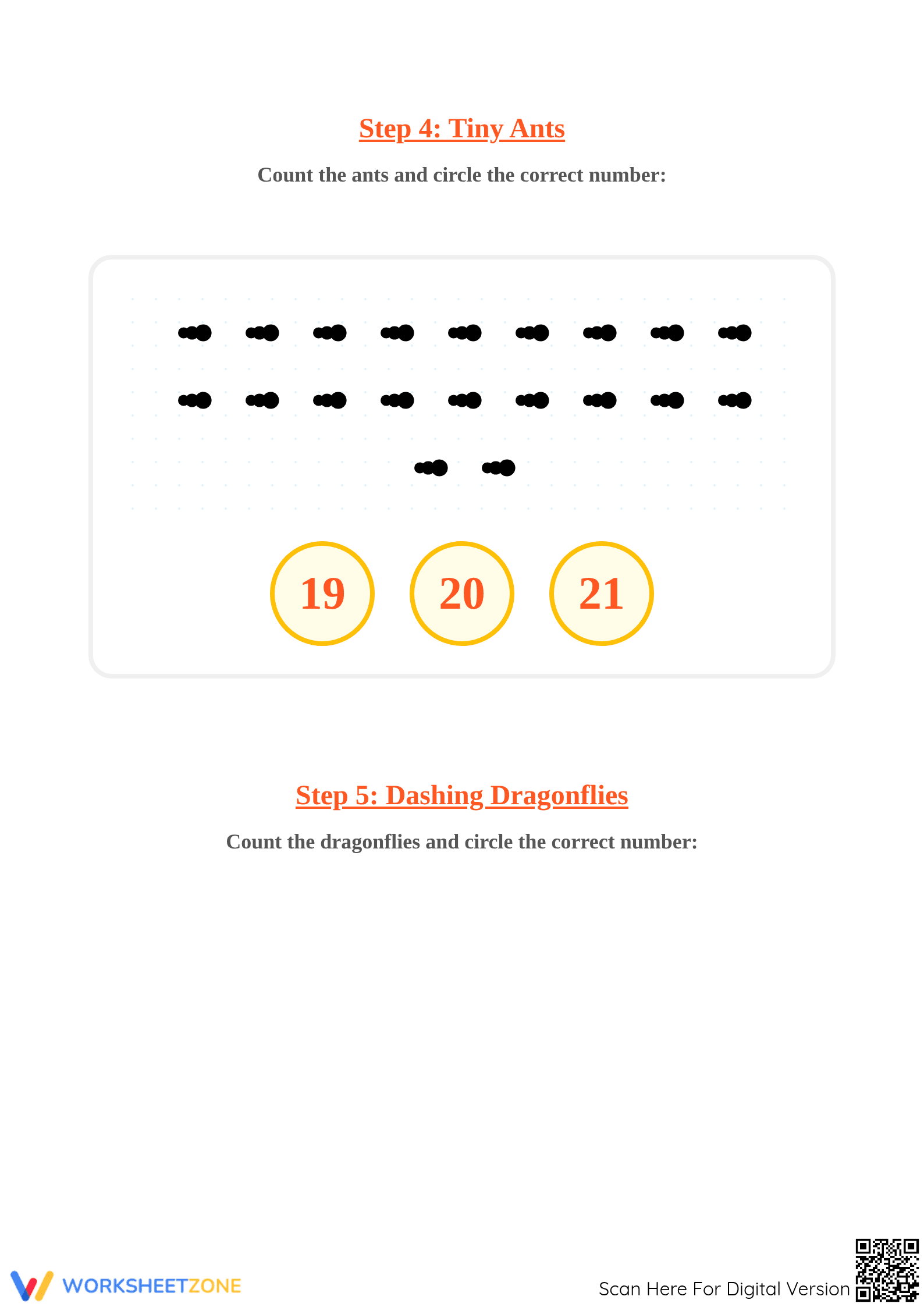
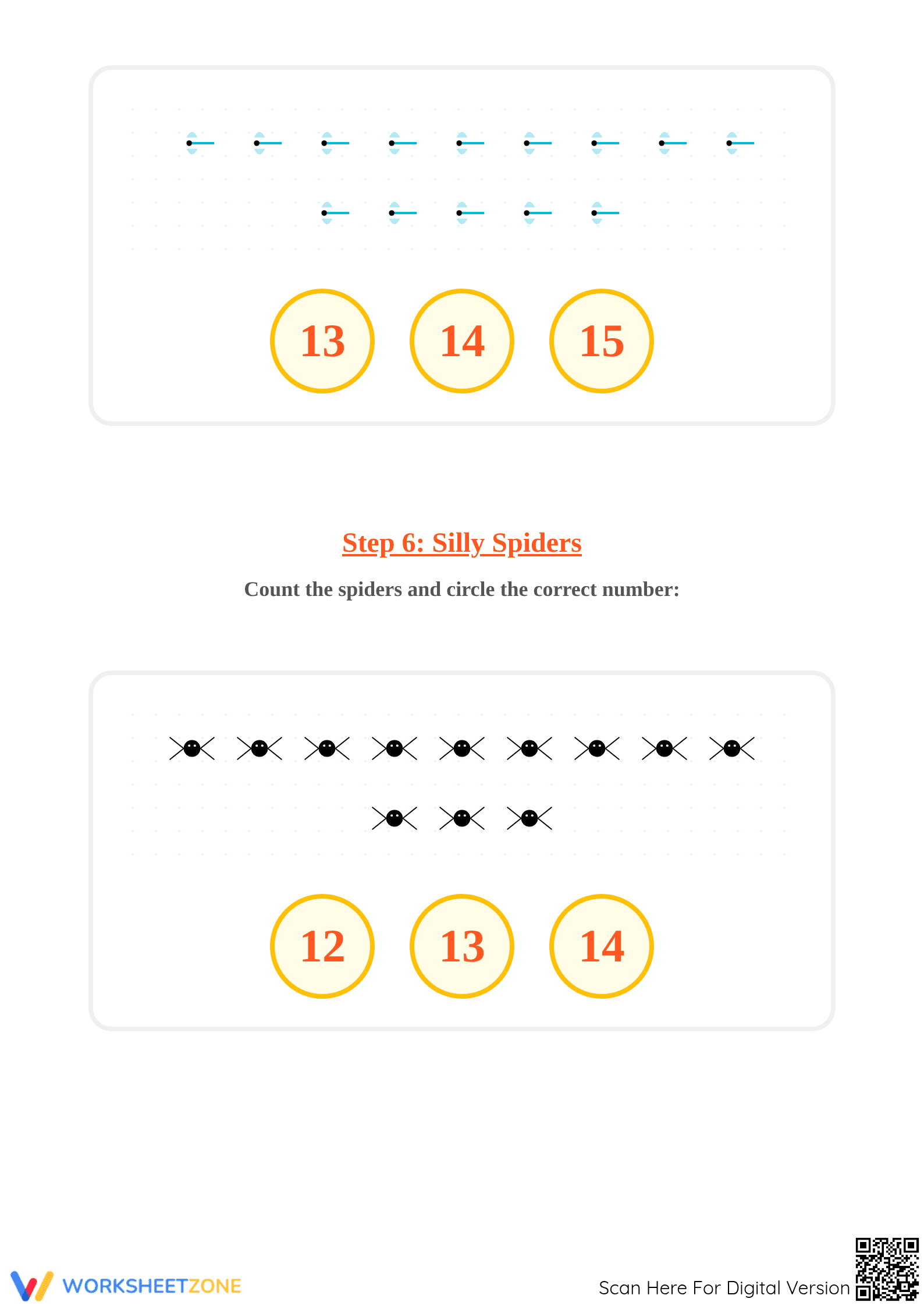
Help your young students master the fundamental skill of counting to 20 with this engaging, bug-themed worksheet packet. By counting vibrant insects and identifying the correct numeral, learners build the strong one-to-one correspondence and number recognition necessary for future mathematical success. This resource ensures immediate student engagement while providing essential practice.
At a Glance
- Grade: Kindergarten · Subject: Math
- Standard:
CCSS.MATH.CONTENT.K.CC.B.5— Count to tell the number of objects up to 20 in a line- Skill Focus: Number recognition and counting 1–20
- Format: 5 pages · 7 problems · Answer key included · PDF
- Best For: Independent math centers or sub plans
- Time: 15–20 minutes
This comprehensive 5-page PDF contains seven distinct counting steps featuring friendly "Bug World" characters like ladybugs, bees, butterflies, ants, dragonflies, spiders, and caterpillars. Each page presents large, clear illustrations for easy tracking and three multiple-choice numeral options. A complete answer key is provided for rapid grading or student self-check.
The zero-prep design of this worksheet makes it an ideal resource for busy classrooms. Simply print the document in less than 30 seconds, distribute it to your students in under a minute, and spend only two minutes reviewing the results using the provided key. This streamlined process saves valuable planning time while delivering high-quality instructional content.
This resource is directly aligned with `CCSS.MATH.CONTENT.K.CC.B.5`: "Count to tell the number of objects. Count to answer 'how many?' questions about as many as 20 things arranged in a line." It also supports `K.CC.B.4` by reinforcing the relationship between numbers and quantities. Both standard codes can be copied directly into lesson plans, IEP goals, or district curriculum mapping tools.
Use this packet during the "You Do" phase of a lesson to assess individual mastery of counting sets. It also serves as an excellent formative assessment observation tool: watch as students point to each insect to check for one-to-one correspondence. Most Kindergarten students will complete the full seven-step sequence in approximately 18 minutes.
This resource is designed for Preschool and Kindergarten students who are developing their counting fluency. The clear visuals and uncluttered layout make it particularly effective for English Language Learners and students with processing needs. Pair this worksheet with physical manipulatives or a number line anchor chart for additional support.
The development of one-to-one correspondence and cardinality is a pivotal milestone in early childhood numeracy. Research by RAND AIRS (2024) indicates that students who regularly engage in structured counting tasks with concrete visual representations demonstrate significantly higher levels of mathematical readiness by the end of their Kindergarten year. This worksheet leverages high-interest insect themes to maintain cognitive focus, which aligns with evidence-based practices for improving student outcomes in early math. By requiring students to circle the correct number from a field of three, the task builds both cardinality and numeral recognition simultaneously. According to current NAEP data, early mastery of number systems and the CCSS.MATH.CONTENT.K.CC.B.5 standard is the strongest predictor of long-term academic achievement in mathematics. This resource provides the repetitive, high-quality practice necessary to move students from rote counting to a conceptual understanding of "how many," ensuring a solid foundation for more complex operations in first grade and beyond.


