


























Views
Downloads


Verb Tense Shifts Worksheet | Grade 5 Essential Practice
Paste this activity's link or code into your existing LMS (Google Classroom, Canvas, Teams, Schoology, Moodle, etc.).
Students can open and work on the activity right away, with no student login required.
You'll still be able to track student progress and results from your teacher account.
This Grade 5 ELA worksheet helps students master verb tense consistency by identifying and correcting inappropriate shifts within sentences. Students learn to maintain a logical timeline across complex clauses, ensuring their writing remains clear and grammatically sound. By the end of these exercises, learners will confidently recognize when a tense change is necessary versus when it is an error.
At a Glance
- Grade: 5 · Subject: English Language Arts
- Standard:
CCSS.ELA-LITERACY.L.5.1.D— Recognize and correct inappropriate shifts in verb tense in writing- Skill Focus: Verb Tense Consistency
- Format: 4 pages · 15 problems · Answer key included · PDF
- Best For: Grammar reinforcement and writing revision
- Time: 20–30 minutes
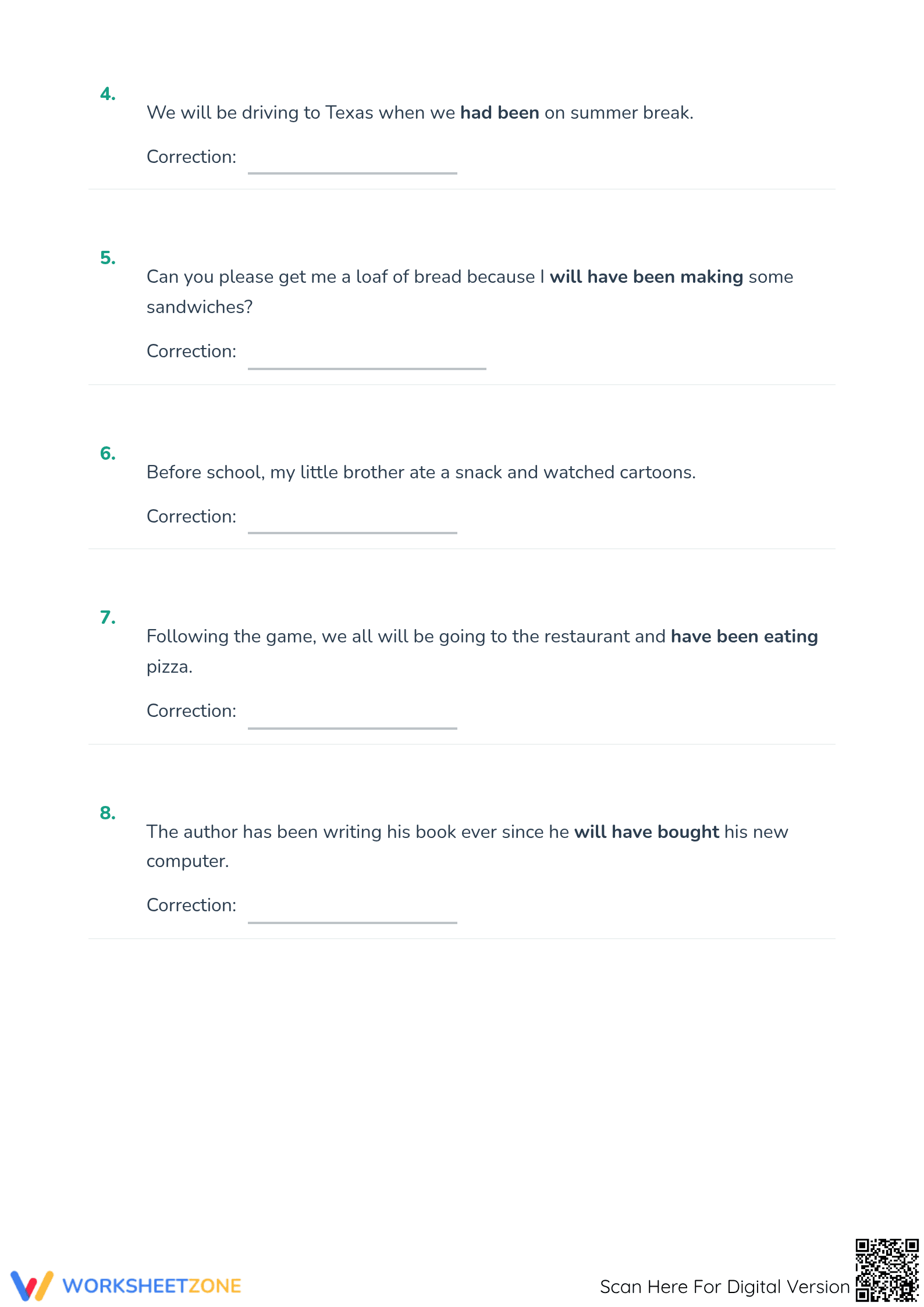
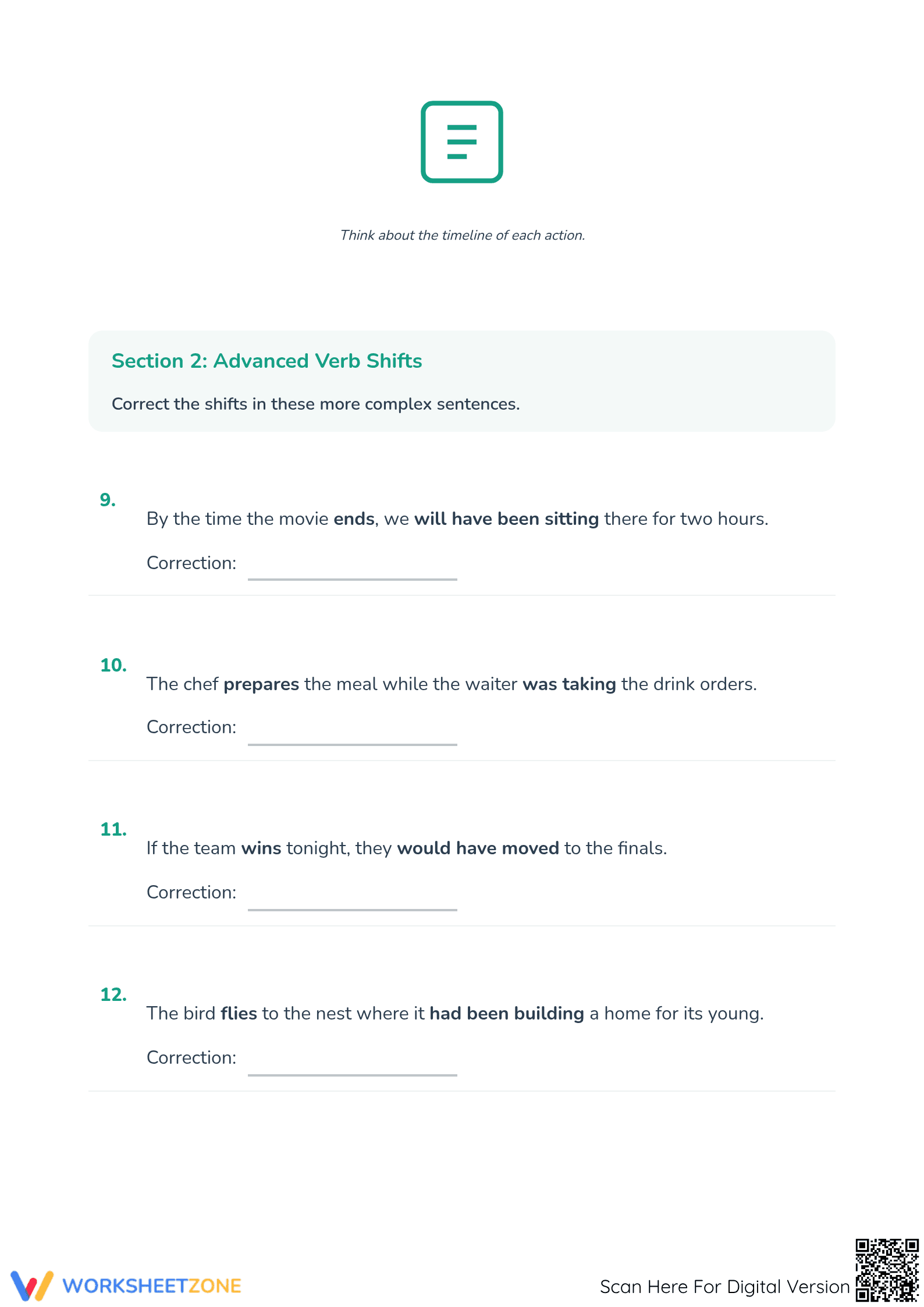
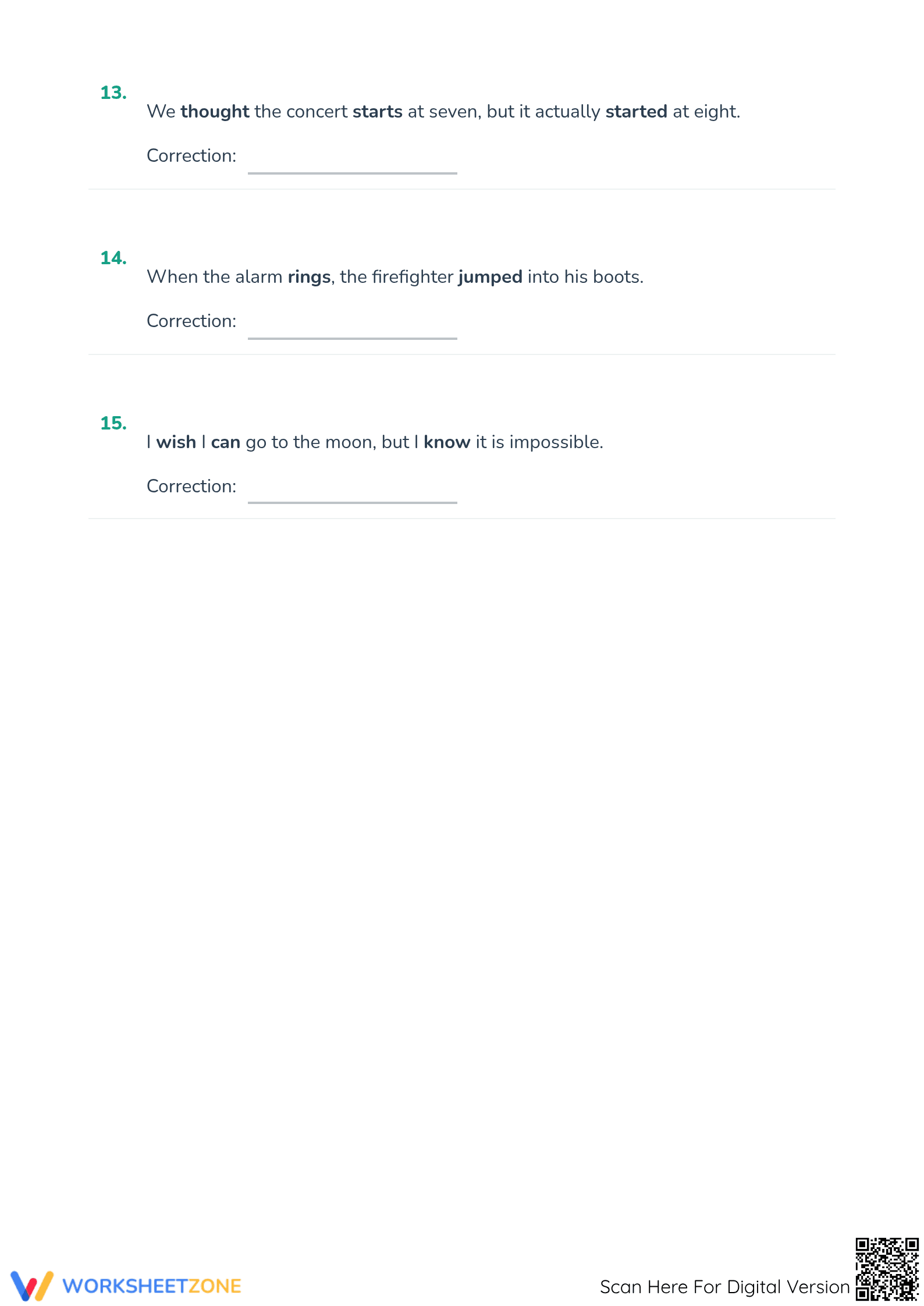
This 4-page PDF contains 15 targeted problems in two sections. Section 1 focuses on foundational correction, while Section 2 introduces advanced shifts. The layout provides writing space for corrections. A 4-page answer key is included for rapid grading and feedback.
- Guided Practice: The first three problems provide a clear instructional anchor, reminding students to maintain the same tense unless the timeline explicitly changes.
- Supported Practice: Problems 4 through 8 challenge students to identify errors in sentences with multiple clauses, requiring them to analyze the relationship between different actions.
- Independent Practice: The final section presents complex scenarios where students must independently determine if a shift is appropriate or if it disrupts the narrative flow.
This gradual-release model ensures students build the stamina needed for sophisticated writing tasks.
The primary focus is CCSS.ELA-LITERACY.L.5.1.D, requiring students to correct inappropriate shifts in verb tense. By practicing with these 15 sentences, students demonstrate mastery of maintaining a consistent temporal perspective. This is a critical component of the fifth-grade Language strand. Both standard codes can be copied directly into lesson plans, IEP goals, or district curriculum mapping tools.
Use this worksheet as a formative assessment after a direct instruction lesson on verb tenses. It is particularly effective during the independent practice phase of a writing workshop. Teachers can observe students as they work through Section 2 to identify those struggling with complex sentence structures. Expect students to complete the full set in 20 to 30 minutes, depending on their prior knowledge of auxiliary verbs.
This resource is designed for fifth-grade students but serves as an excellent review for sixth graders or a challenge for advanced fourth graders. It is ideal for general education classrooms, small group intervention, or as a supplemental activity paired with a mentor text that demonstrates strong narrative pacing and tense control.
Verb tense consistency is a hallmark of proficient writing at the upper elementary level, as outlined in CCSS.ELA-LITERACY.L.5.1.D. Research from Fisher & Frey (2014) emphasizes that the gradual release of responsibility—moving from simple sentence identification to correcting complex shifts—is essential for internalizing grammatical rules. This worksheet provides 15 specific opportunities for students to engage in this cognitive process, ensuring they can maintain a logical timeline in their own compositions. By isolating the skill of tense shifting, educators can provide the targeted intervention necessary to prevent common errors that obscure meaning in student essays. According to the Fisher & Frey framework, providing students with clear non-examples of grammar allows them to develop the metalinguistic awareness required for self-editing. This printable resource serves as a bridge between rote memorization and the application of language standards in authentic writing contexts, supporting long-term literacy growth and academic success.


