


























Views
Downloads

Grade 4-6 Sentence Structure — Printable No-Prep Worksheet
Paste this activity's link or code into your existing LMS (Google Classroom, Canvas, Teams, Schoology, Moodle, etc.).
Students can open and work on the activity right away, with no student login required.
You'll still be able to track student progress and results from your teacher account.
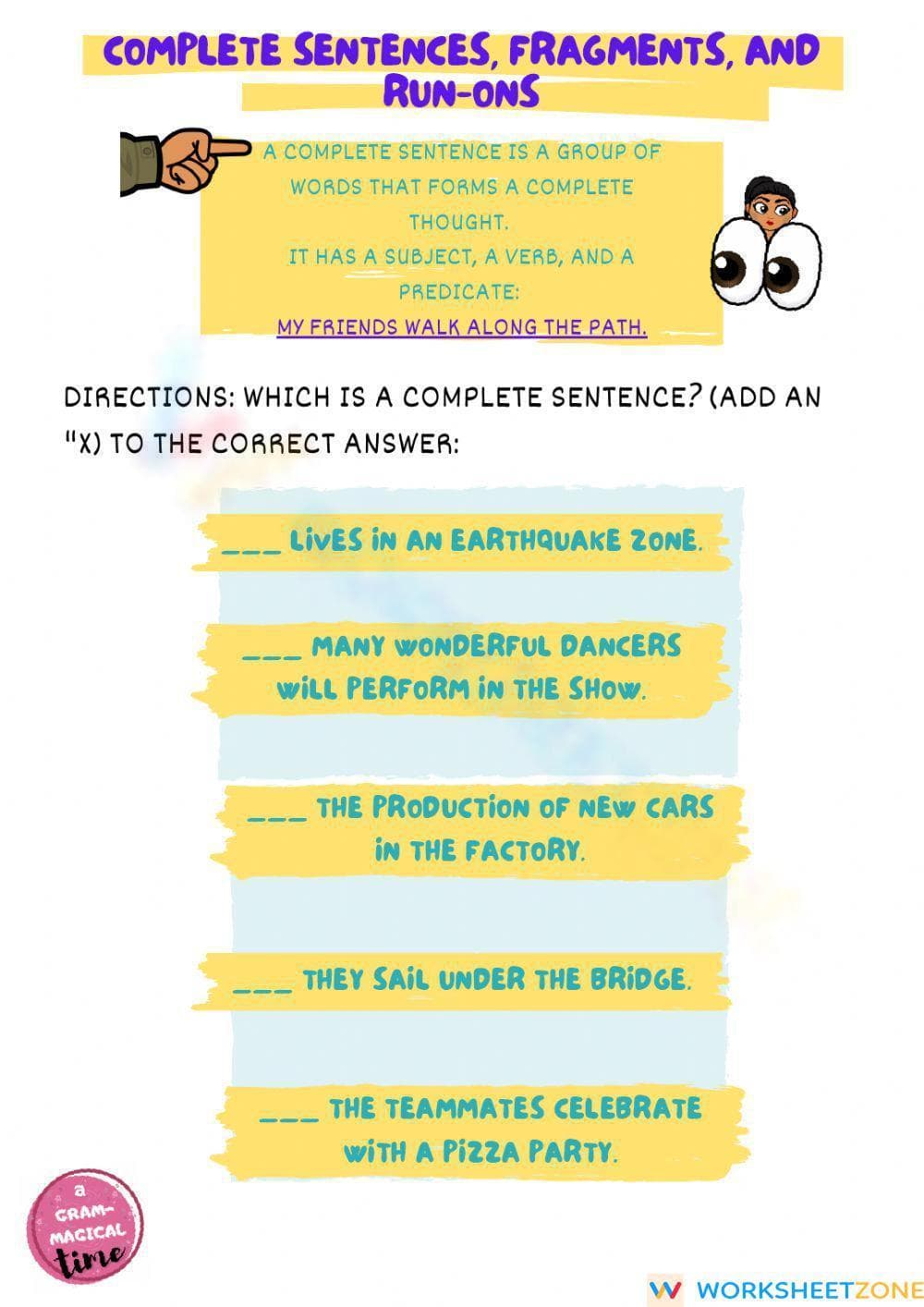
This comprehensive Grade 4-6 English Language Arts worksheet provides a structured approach to mastering sentence boundaries. By explicitly defining and identifying complete thoughts, fragments, and run-ons, students develop the essential linguistic awareness needed for clear writing. This resource transforms complex grammar rules into manageable, actionable tasks that yield immediate student results.
At a Glance
- Grade: 4-6 · Subject: English Language Arts
- Standard:
CCSS.ELA-LITERACY.L.4.1.F— Produce complete sentences while correcting inappropriate fragments and run-on sentences- Skill Focus: Sentence Boundaries and Structure
- Format: 3 pages · 13 problems · Answer key included · PDF
- Best For: Independent grammar practice or sub plans
- Time: 15–20 minutes
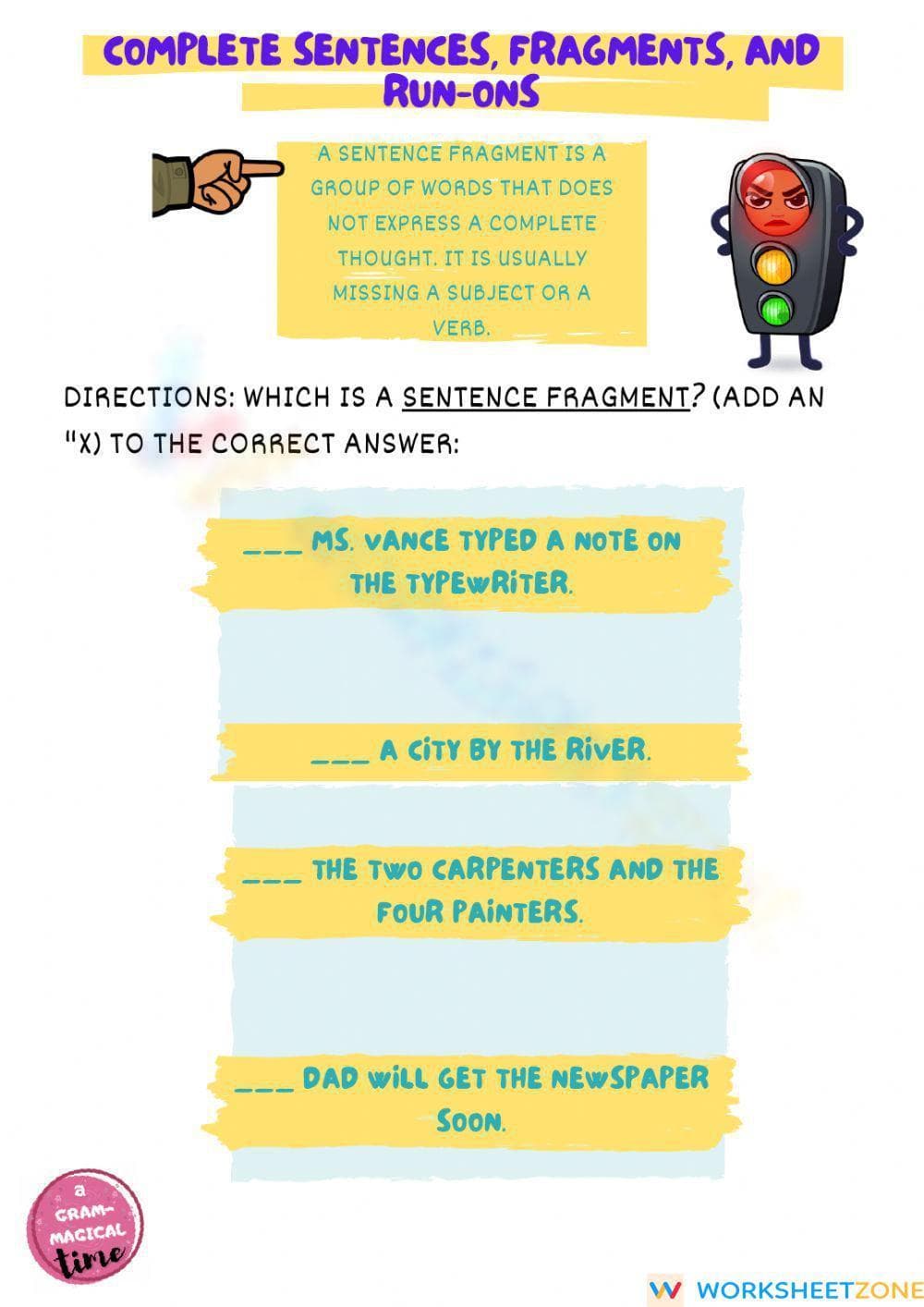
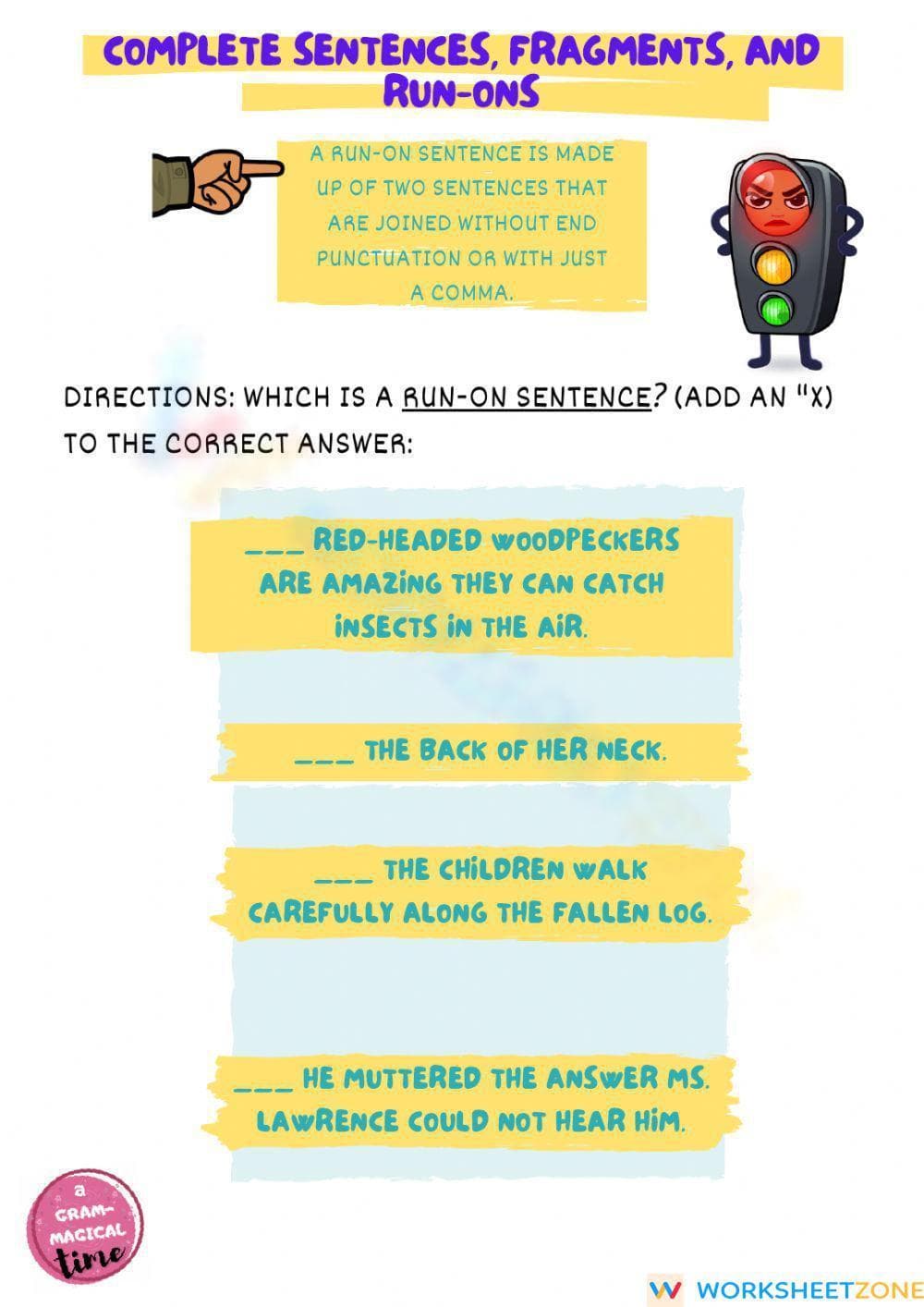
The packet contains three distinct pages, each dedicated to a specific pillar of sentence structure. Page one focuses on identifying complete thoughts with five targeted exercises. Page two addresses fragments through four identification tasks, while page three challenges students to spot run-on sentences in four additional problems. Each page includes clear, student-friendly definitions and visual cues to support independent work.
Zero-Prep Workflow
This resource is designed for immediate classroom integration. The workflow is simple: Print the three-page PDF in seconds, distribute to students, and allow them to work through the self-explanatory tasks at their own pace. Reviewing the 13 answers using the provided key takes less than two minutes, making it an ideal choice for busy instructional days or emergency substitute folders.
Standards Alignment
The primary focus is CCSS.ELA-LITERACY.L.4.1.F, which requires students to produce complete sentences and correct boundary errors. It also supports CCSS.ELA-LITERACY.L.3.1.I regarding simple, compound, and complex sentences. Both standard codes can be copied directly into lesson plans, IEP goals, or district curriculum mapping tools.
How to Use It
Deploy this worksheet after a direct instruction lesson on sentence types to provide immediate guided practice. It serves as an effective formative-assessment tool; teachers should observe if students struggle specifically with run-ons, which often indicates a need for further instruction on punctuation. Students typically complete the full 13-item set within 20 minutes.
Who It's For
This practice set is ideal for upper elementary students in grades 4 through 6 who are refining their academic writing. It provides necessary scaffolding for English Language Learners through visual stoplight icons and clear definitions. Pair this resource with a short mentor text passage to help students identify similar structures in authentic literature.
Sentence structure mastery is a prerequisite for advanced academic writing, as boundary errors like fragments and run-ons frequently obscure meaning for the reader. This worksheet aligns with CCSS.ELA-LITERACY.L.4.1.F, targeting the specific mechanics of producing complete sentences and correcting common structural pitfalls. According to Fisher & Frey (2014), the gradual release of responsibility begins with clear definitions and guided identification, which are core features of this 13-task resource. Research from the NAEP consistently highlights that students who possess a strong grasp of sentence boundaries perform significantly better on complex writing assessments. By providing 3 pages of focused, low-stakes practice, this tool ensures students internalize the rhythmic and logical requirements of a complete thought. This pedagogical approach supports long-term retention of grammatical rules, allowing students to transition from simple identification to the sophisticated production of varied sentence structures in their independent compositions.


