




























Views
Downloads

Complete School Day Sequence Word Search | Grades 7–8 ELA

Paste this activity's link or code into your existing LMS (Google Classroom, Canvas, Teams, Schoology, Moodle, etc.).
Students can open and work on the activity right away, with no student login required.
You'll still be able to track student progress and results from your teacher account.
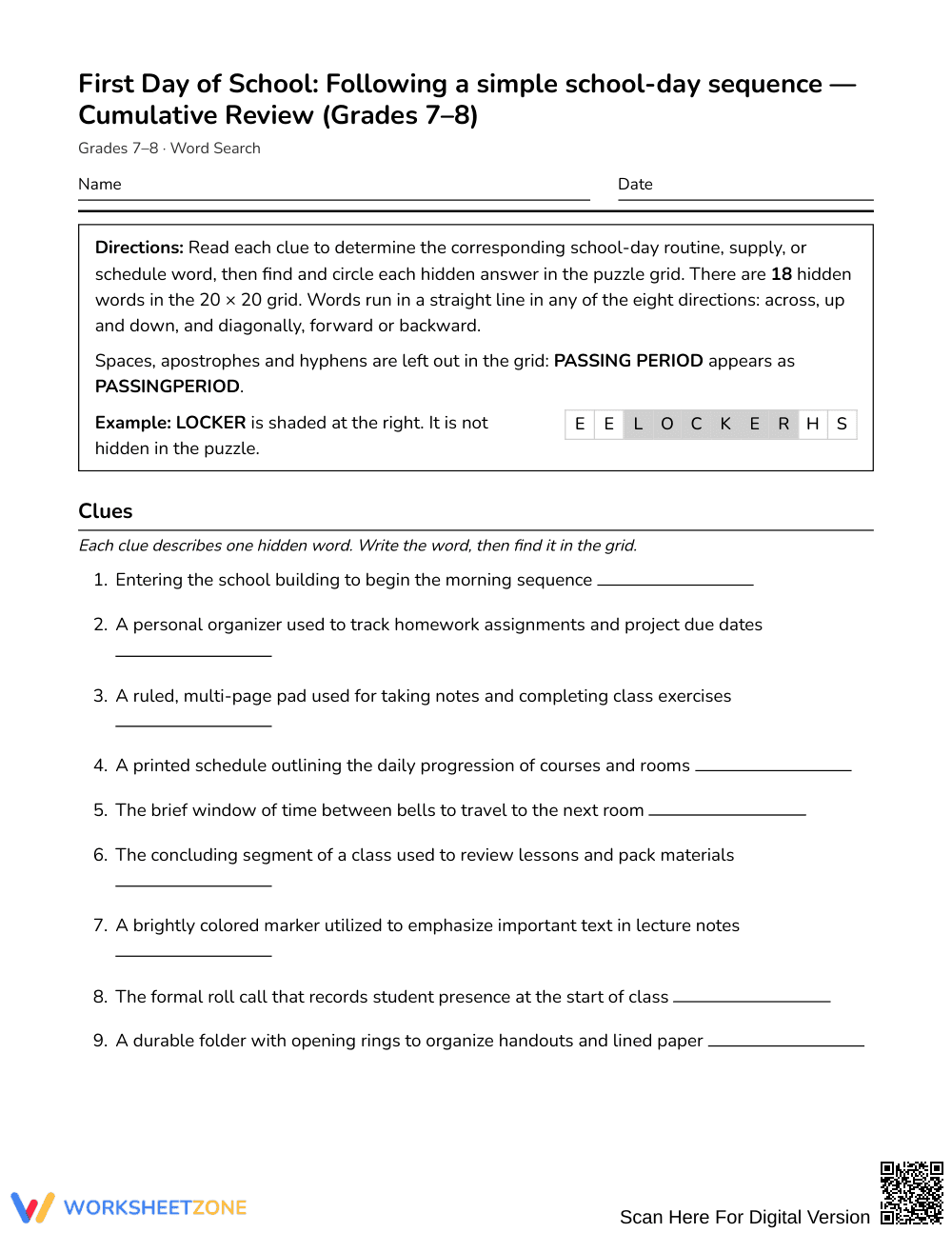
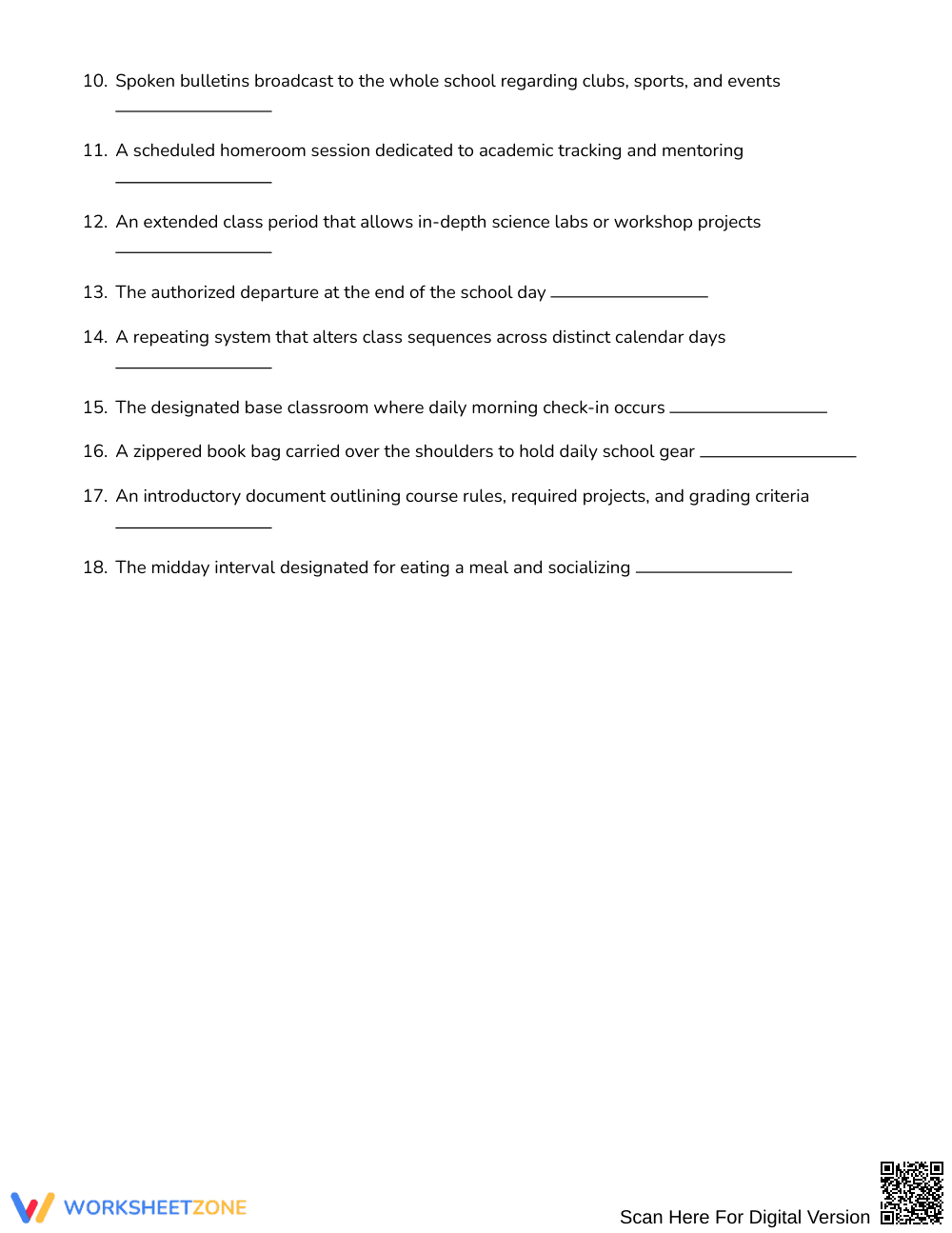
This school-day sequence word search reinforces essential secondary routines, schedules, and academic materials for middle school students. Learners read functional definitions to identify 18 core vocabulary terms—such as homeroom, passing period, timetable, and syllabus—before locating them within a comprehensive grid. The activity reinforces operational literacy, establishing confidence during back-to-school transitions and schedule orientations.
At a Glance
- Grade: Grades 7–8 · Subject: English Language Arts (ELA)
- Standard: Not standards-assessed — vocabulary enrichment
- Skill Focus: Following a simple school-day sequence
- Format: 3 pages · 18 words · Answer key included · PDF
- Best For: First-week orientation and vocabulary review
- Time: 25–35 minutes
What's Inside
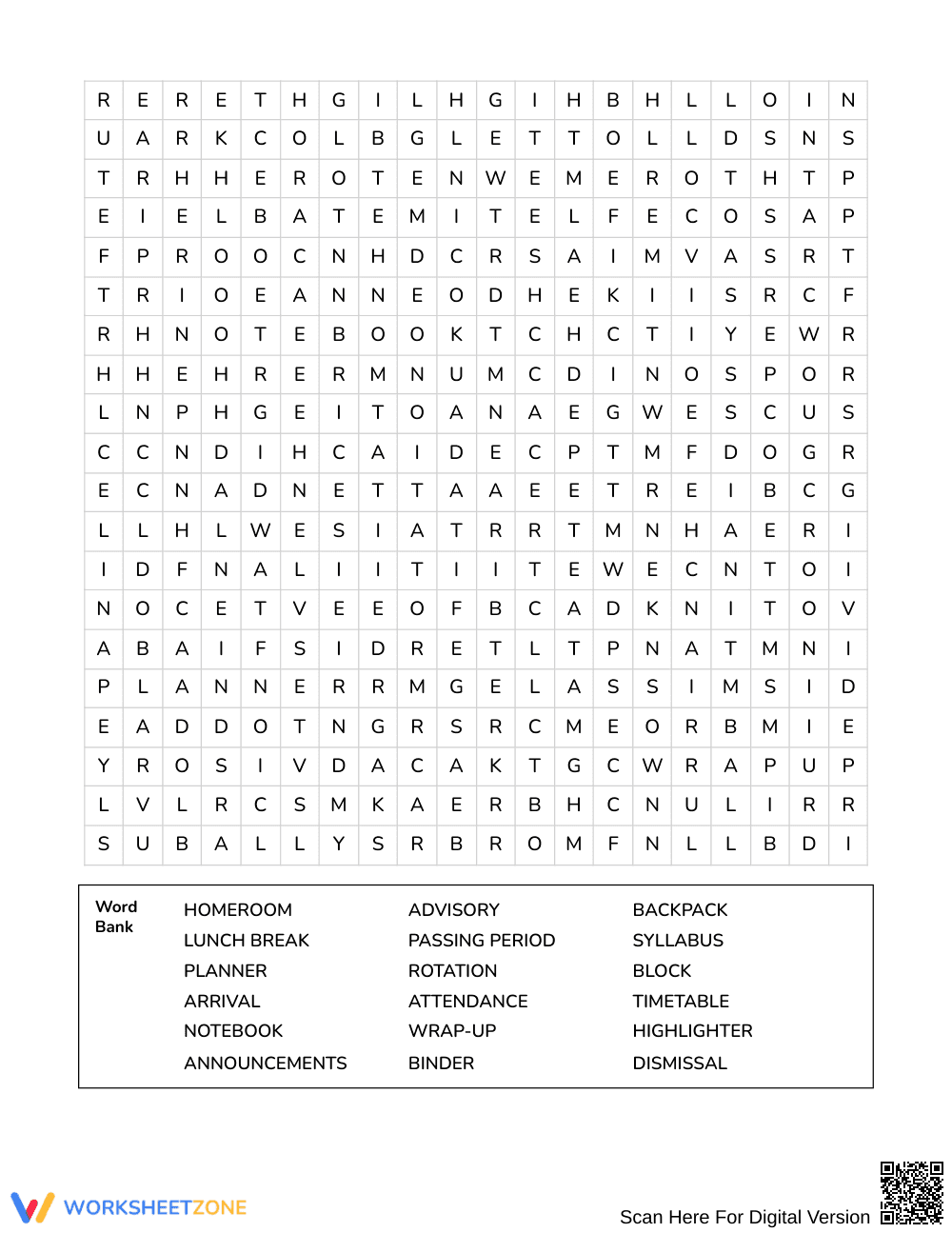
This 3-page printable activity features an extensive word search paired with an instructional clue list covering 18 foundational school-day concepts. Students analyze descriptive clues for terms spanning daily schedules, organizational tools, and administrative periods before locating the shuffled terms. A complete 3-page answer key provides clear letter-by-letter solutions, enabling rapid verification and stress-free independent checking.
Puzzle Structure and Mechanics
Built upon a dense 20 by 20 letter grid, the puzzle embeds 18 vocabulary words hidden across all 8 directions: north, northeast, east, southeast, south, southwest, west, and northwest. Each hidden word corresponds to a provided context clue rather than a basic list, requiring students to match definitions for items like block scheduling, advisory, and passing periods before tracking letter sequences across the puzzle layout.
Standards Alignment
This activity serves strictly as functional vocabulary enrichment and routine acclimation rather than formal standards-based assessment. Because middle school transitions require procedural fluency with bell schedules and academic expectations, this resource targets contextual comprehension of daily school procedures. It supports broader literacy and communication benchmarks without aligning to an individual state reporting standard.
How to Use It
Introduce this activity during first-week homeroom advisories or as an introductory bellringer after reviewing the campus timetable. As students work through the clues, circulate to note which operational terms—such as block rotation or syllabus—require explicit reteaching. Expect completion within 25 to 35 minutes, providing a productive, low-anxiety transition into departmentalized classroom routines.
Who It's For
This word search supports Grades 7–8 students adjusting to complex rotating periods, lockers, and multi-teacher schedules. It provides valuable visual scaffolding for English language learners and students with executive functioning accommodations who benefit from concrete routine review. For optimal results, pair this puzzle directly with your school’s student handbook or published master bell schedule.
Procedural vocabulary acquisition forms the cornerstone of effective classroom engagement during secondary transitions. Research synthesized by Fisher & Frey (2014) highlights that purposeful routine literacy and direct exposure to domain-specific terminology dramatically lower student anxiety and improve task initiation across departmentalized learning environments. By challenging learners in following a simple school-day sequence through contextual definition matching and systematic visual search, this resource consolidates working knowledge of essential institutional structures. Students who master organizational concepts—including block rotations, advisory sessions, syllabi, and timetable navigation—demonstrate stronger self-regulation and increased academic autonomy during instructional intervals. Integrating intentional vocabulary enrichment at the beginning of the academic year equips adolescent learners with the procedural schema required for collaborative secondary coursework. Consequently, targeted word searches structured around contextual clues reinforce both cognitive retention and environmental orientation without necessitating formal standards-based assessment protocols during early transitional phases.


