


























Views
Downloads



Complete Field Notes Word Search | Grades 6–7 ELA
Paste this activity's link or code into your existing LMS (Google Classroom, Canvas, Teams, Schoology, Moodle, etc.).
Students can open and work on the activity right away, with no student login required.
You'll still be able to track student progress and results from your teacher account.
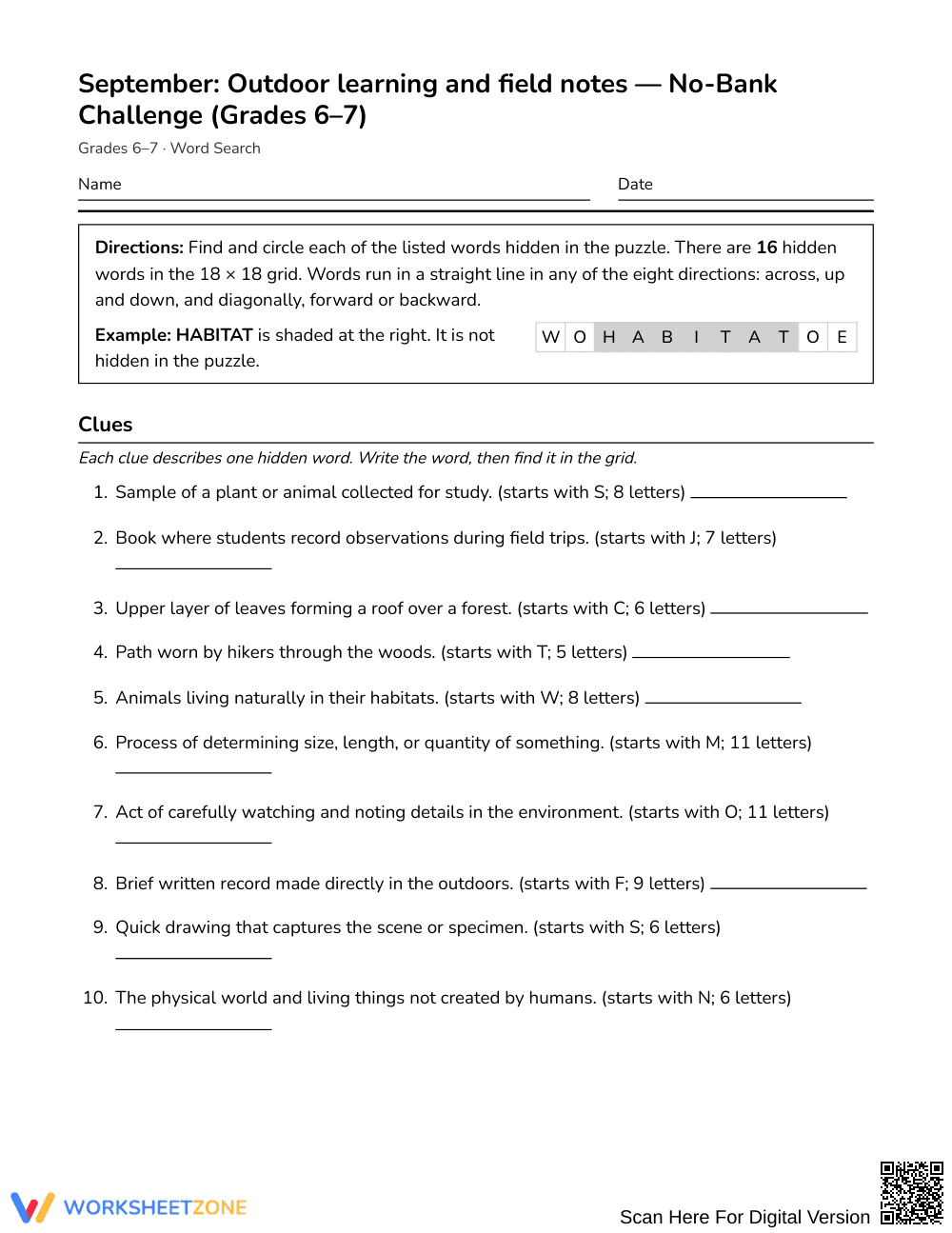
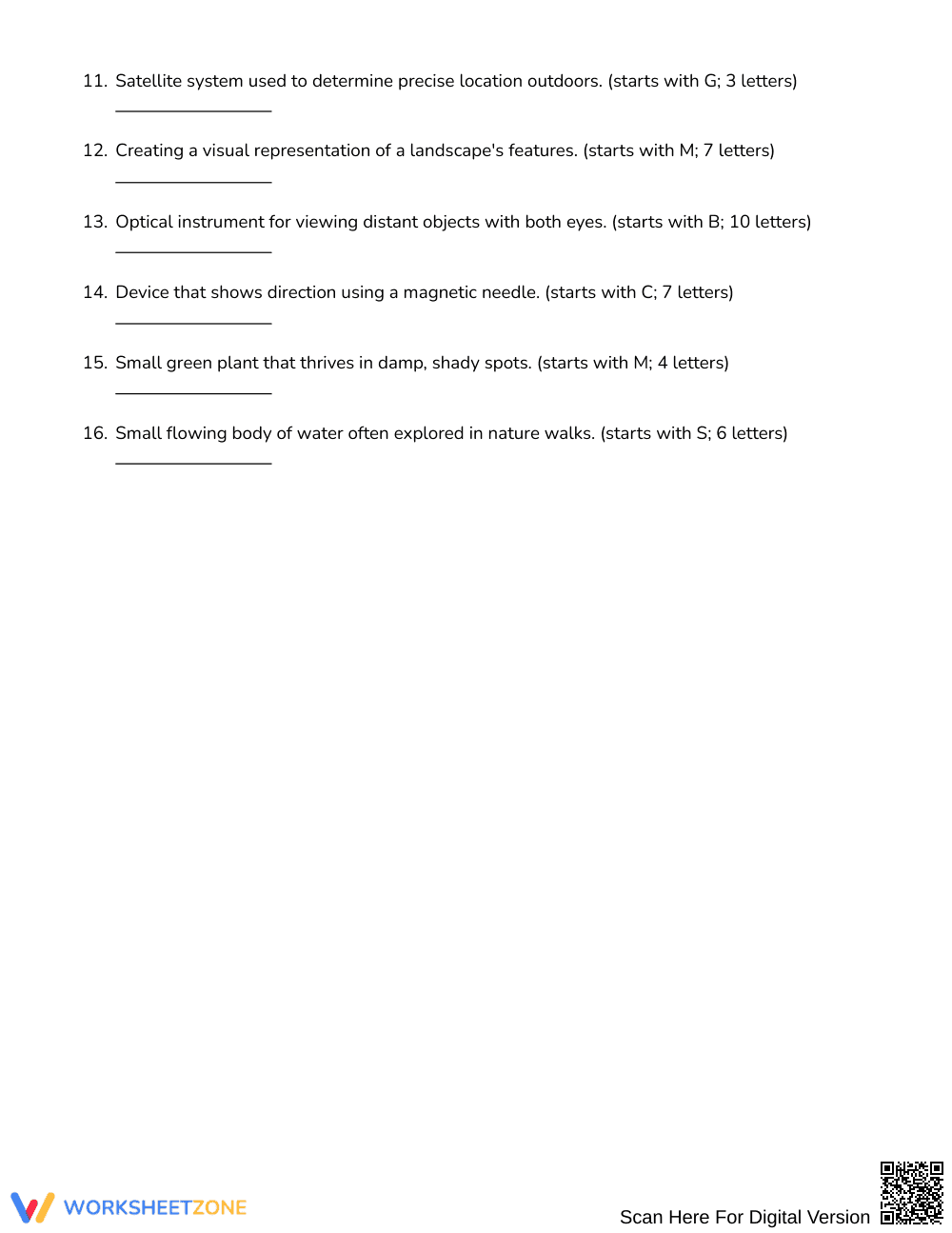
This vocabulary word search reinforces essential outdoor learning and field study terminology for middle school learners. Students read descriptive clues to identify sixteen science and nature terms, then locate them across a letter grid. The activity strengthens domain-specific vocabulary recall, context clue interpretation, and spatial reasoning in an engaging puzzle format.
At a Glance
- Grade: Grades 6–7 · Subject: English Language Arts
- Standard: Not standards-assessed — vocabulary enrichment
- Skill Focus: Outdoor learning and field notes vocabulary
- Format: 3 pages · 16 words · Answer key included · PDF
- Best For: Nature unit opener, sub plan, or review
- Time: 20–35 minutes
What's Inside
This 3-page printable set delivers an intentional, no-bank vocabulary challenge. Instead of scanning a simple list, students read sixteen definitions covering field study concepts such as observation, canopy, specimen, and measurement. The package includes clean puzzle pages and a 3-page full-size answer key that highlights every hidden term for fast verification.
Puzzle Mechanics
The activity features an 18 x 18 grid designed to challenge intermediate readers. The sixteen hidden words run in all eight possible directions: north, northeast, east, southeast, south, southwest, west, and northwest. Because no traditional word bank is provided on the puzzle sheet, students must actively read the definitions to deduce each target term before searching the letter matrix.
Standards Alignment
This resource is designed purely for vocabulary enrichment and is not aligned to a specific state or national content standard. It supports cross-curricular literacy by bridging English language arts reading skills with life science and outdoor exploration themes.
How to Use It
Integrate this word search immediately after an outdoor field experience or direct instruction on scientific observation methods. As students work, circulate to observe whether they solve the clues independently or reference science notebooks to verify spelling. The puzzle also serves as a productive, quiet early-finisher task during extended testing blocks or flexible advisory periods. Most middle schoolers complete the grid within 20 to 35 minutes.
Who It's For
This activity supports learners in Grades 6–7 studying descriptive writing, environmental science, or informational text comprehension. Provide struggling readers with a highlighter to isolate clue keywords, or encourage collaborative partner solving. Pair this word search directly with a guided nature journaling lesson or informational texts about field biologists.
Vocabulary acquisition requires varied contextual encounters to transition terms into active working memory. Fisher & Frey (2014) demonstrate that intentional word-study tasks combining semantic definitions with focused orthographic analysis build durable domain-specific comprehension. This field notes word search presents sixteen essential environmental science terms across an 18 x 18 grid, challenging learners in Grades 6–7 to decode definitions rather than passively copy words from a bank. By integrating directional word finding with conceptual clues such as canopy, specimen, and observation, students engage both spatial scanning and conceptual retrieval. The standalone 3-page format and complete answer key provide teachers with a structured, independent vocabulary routine suitable for field trip debriefs, science literacy stations, or cross-curricular review.


