


























Views
Downloads
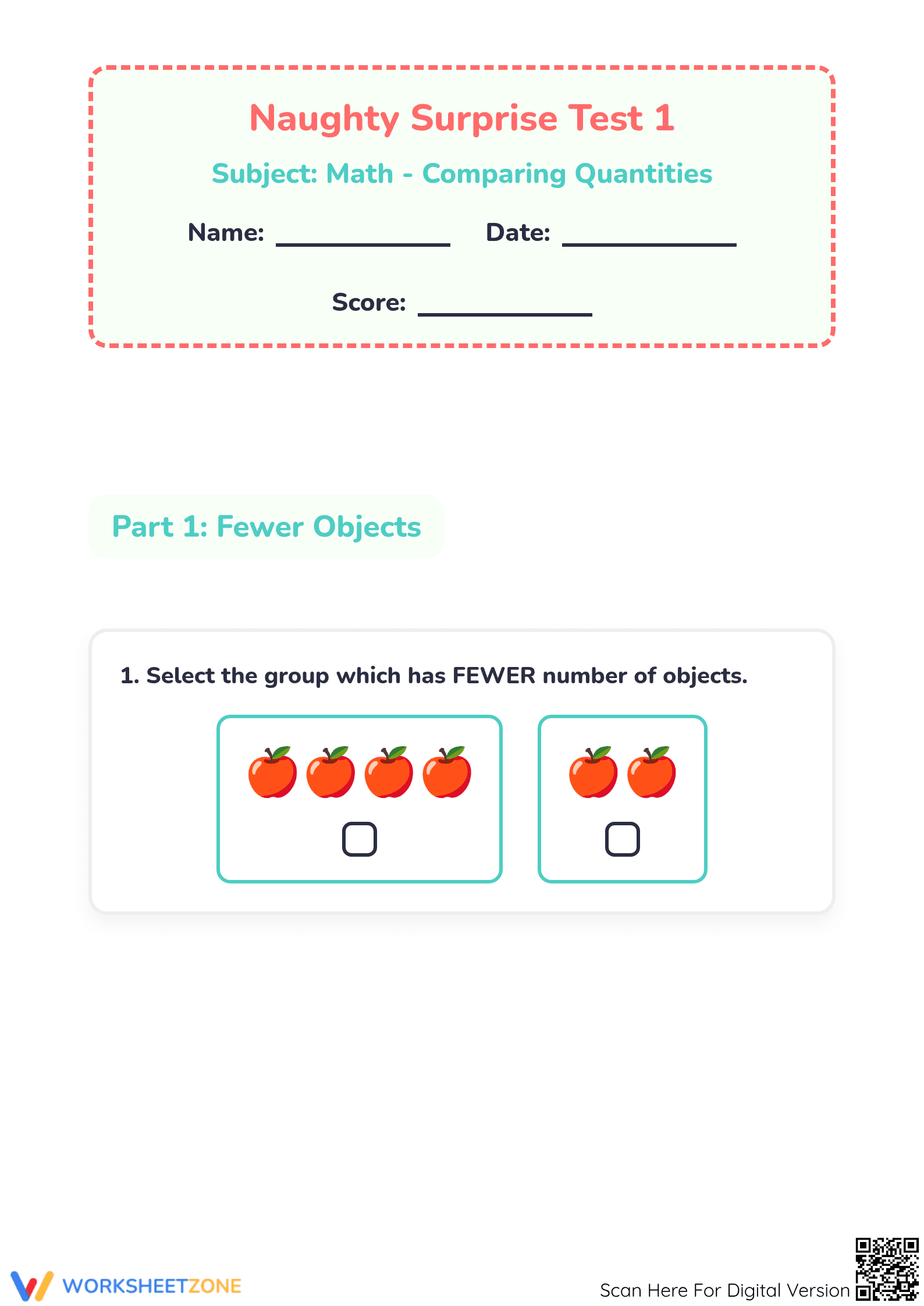
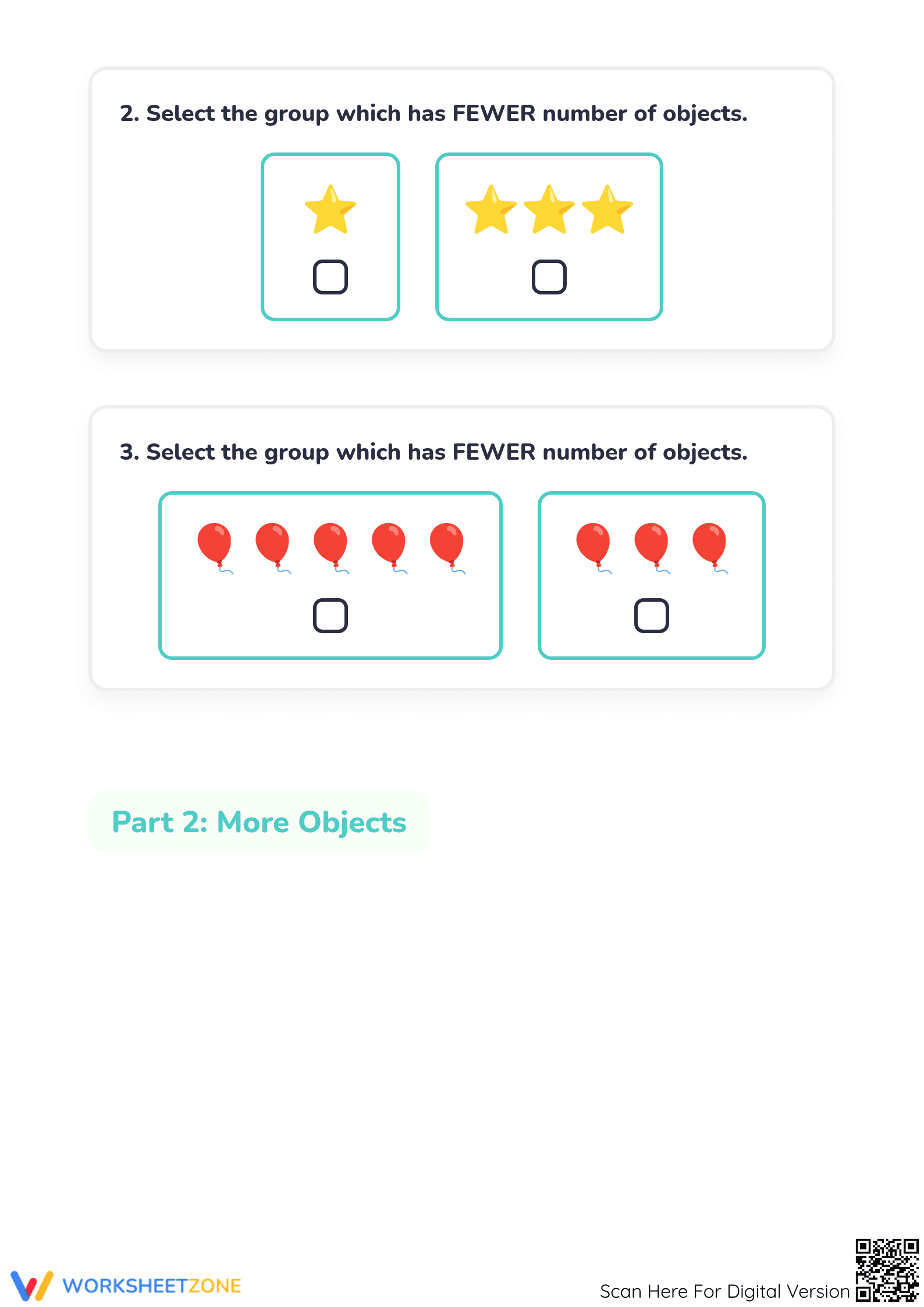
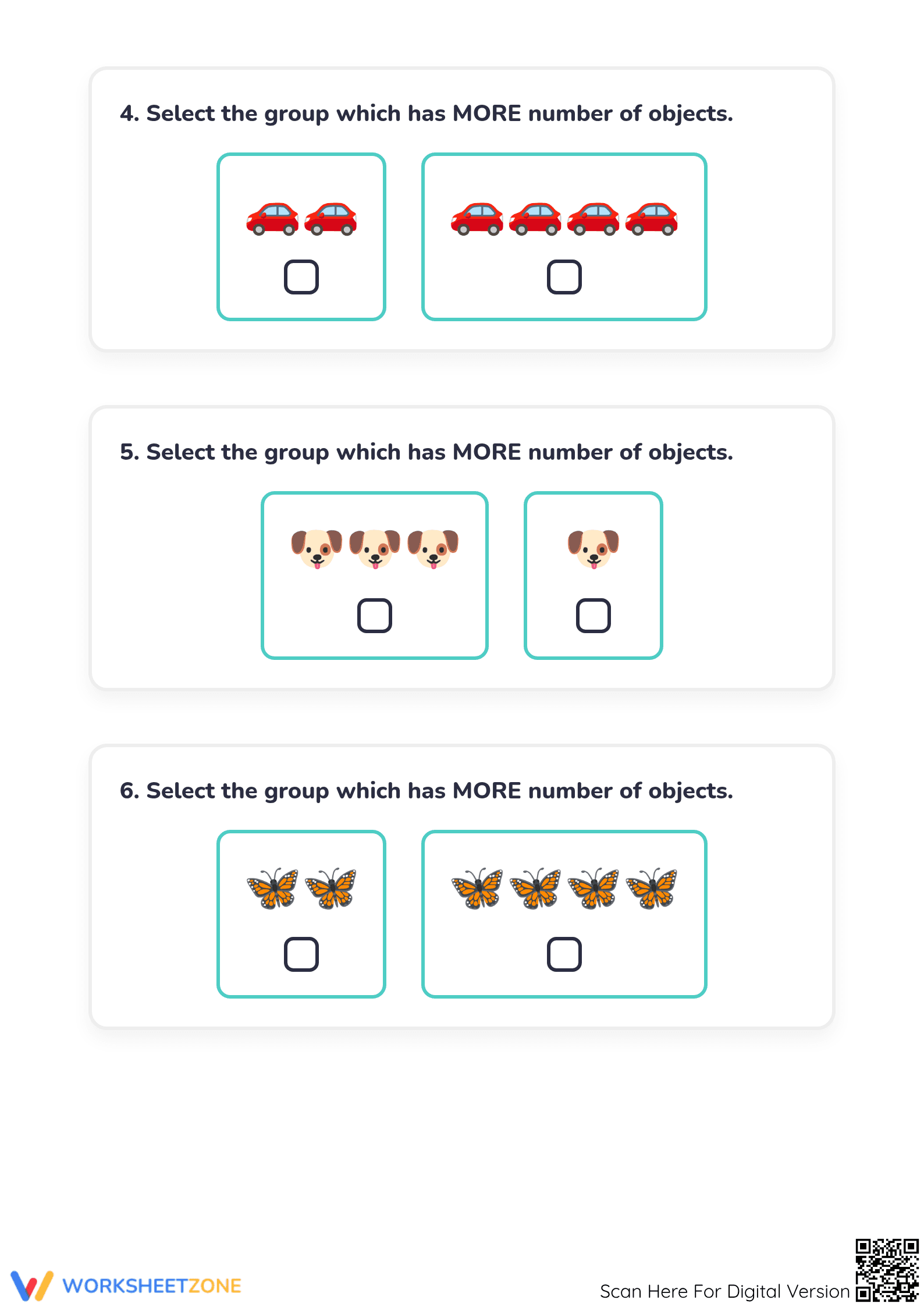
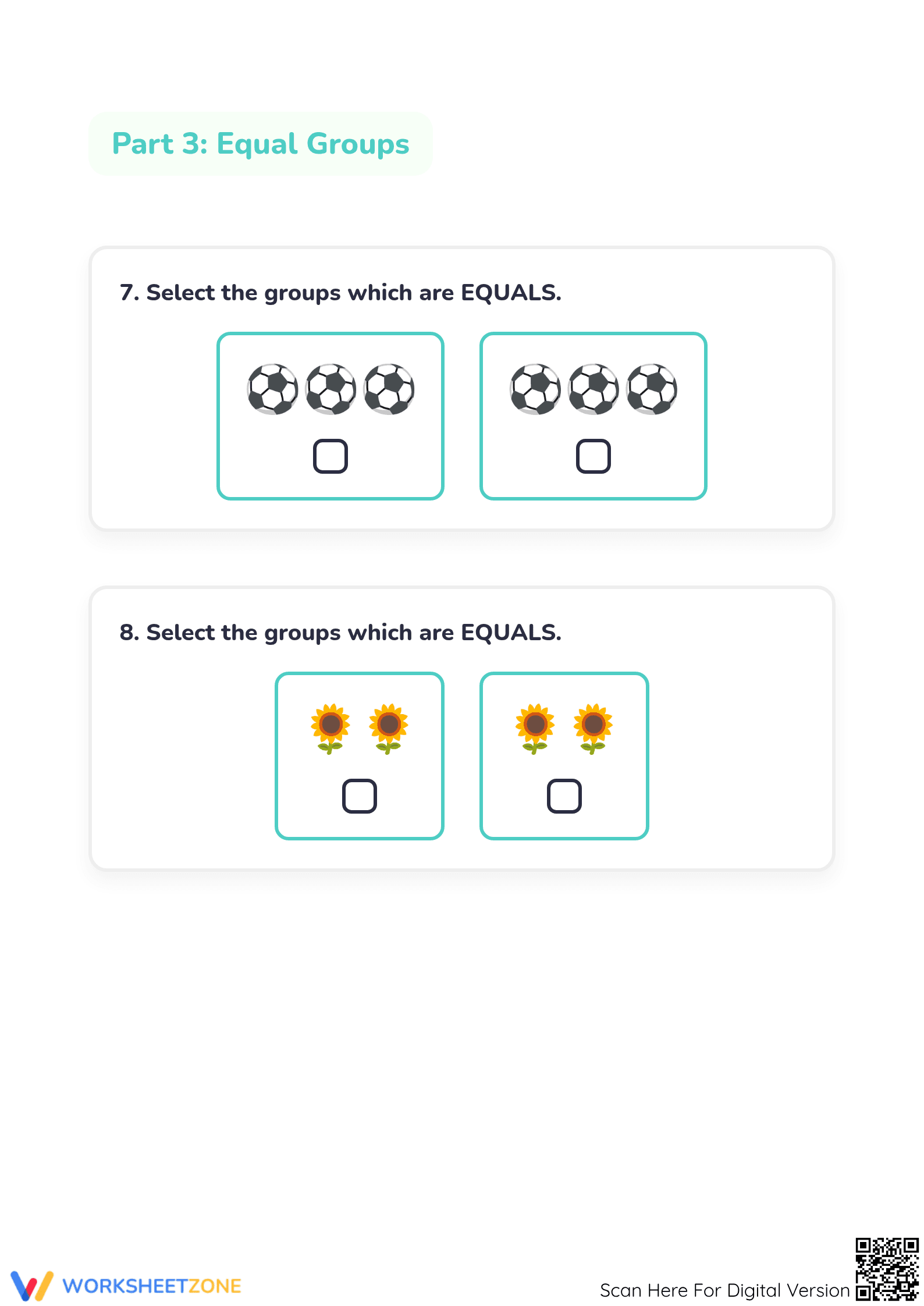

Comparing More and Fewer Worksheet | Grade K Essential Math
Paste this activity's link or code into your existing LMS (Google Classroom, Canvas, Teams, Schoology, Moodle, etc.).
Students can open and work on the activity right away, with no student login required.
You'll still be able to track student progress and results from your teacher account.
Developing a strong sense of number comparison is a foundational skill in early mathematics. This Grade K comparing quantities worksheet allows students to practice identifying groups with more or fewer objects through engaging visual representations. Mastering these concepts builds the prerequisite knowledge necessary for understanding inequality and basic operations in subsequent mathematical units.
At a Glance
- Grade: Kindergarten · Subject: Math
- Standard:
CCSS.MATH.CONTENT.K.CC.C.6— Identify whether the number of objects in one group is greater than or less than another- Skill Focus: Comparing quantities using more and fewer
- Format: 5 pages · 18 problems · Answer key included · PDF
- Best For: Independent practice or small group instruction
- Time: 20–30 minutes
What's Inside
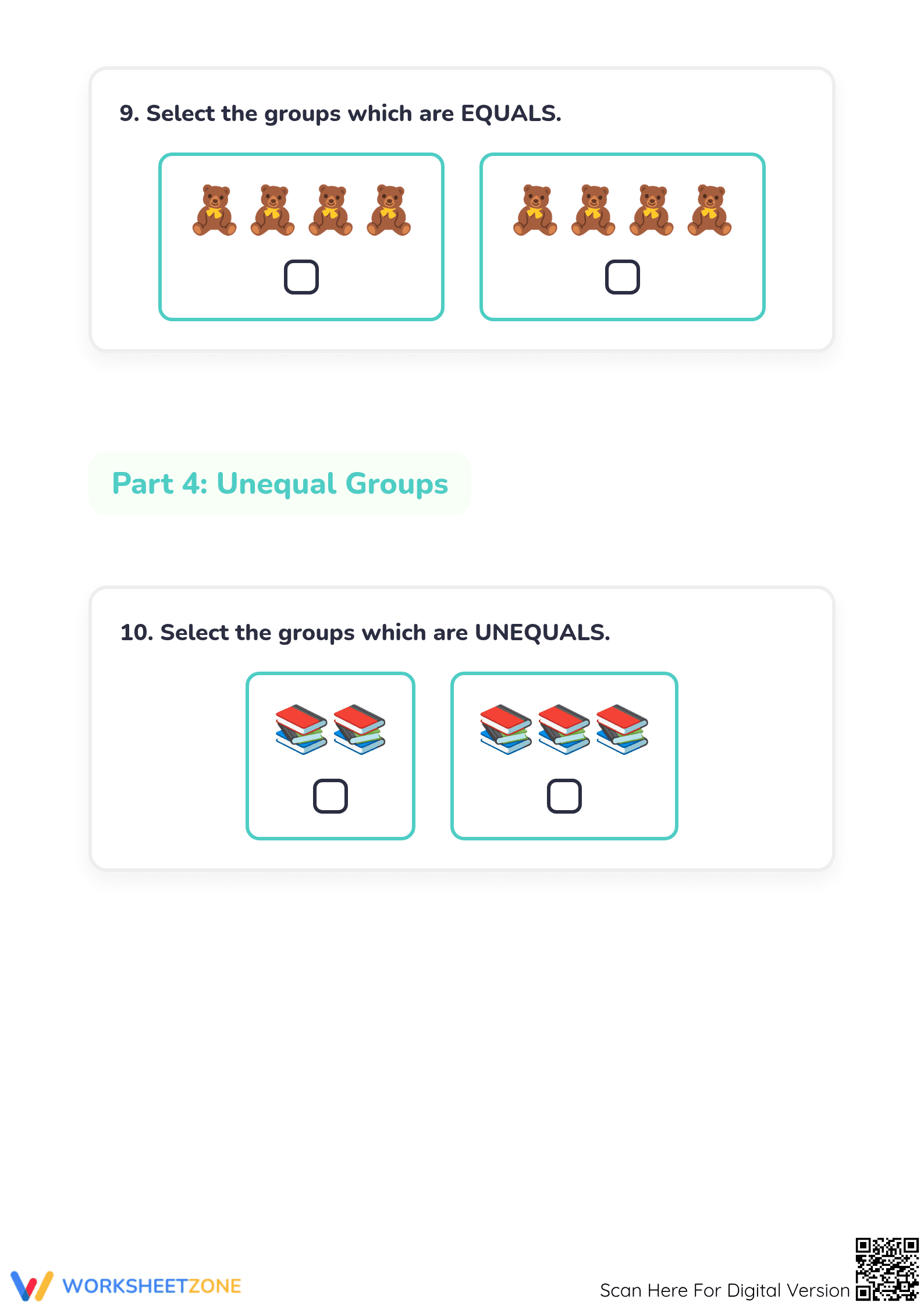
This 5-page PDF offers 18 structured tasks for early learners. Initial pages focus on identifying groups with more objects (cars, balloons), transitioning to fewer objects (fish, apples). It includes tick-box exercises and drawing tasks to visually represent quantities, ensuring varied interaction. A full answer key is provided.
Skill Progression
- Guided practice: The first two pages introduce the concepts of more and fewer through simple selection tasks with clear, large illustrations, allowing teachers to model the comparison process for 6 initial problems.
- Supported practice: Pages three and four increase the complexity by requiring students to independently tick boxes for 8 additional problems, reinforcing the terminology through repetitive reinforcement of visual quantity differences.
- Independent practice: The final page challenges students with 4 drawing tasks where they must create their own sets to demonstrate a conceptual understanding of more and fewer without pre-drawn selections.
This structure follows a gradual-release model, ensuring students move confidently from recognition to independent production.
Standards Alignment
Primary standard: `CCSS.MATH.CONTENT.K.CC.C.6`. The full text states: "Identify whether the number of objects in one group is greater than, less than, or equal to the number of objects in another group, e.g., by using matching and counting strategies." This worksheet focuses specifically on the greater than (more) and less than (fewer) components of the standard. This standard code can be copied directly into lesson plans, IEP goals, or district curriculum mapping tools.
How to Use It
Ideal for 'We Do' or 'You Do' lesson phases on number sense, this resource can serve as a formative assessment. Students can practice counting and comparing objects. For center-based activities, laminate pages for use with dry-erase markers. Completion time for the 5-page set is approximately 25 minutes.
Who It's For
Designed for Kindergarten, this worksheet is also suitable for Preschoolers ready for early math or Grade 1 students needing remedial support. It pairs well with hands-on manipulatives, providing a concrete bridge to pictorial representations and supporting differentiated instruction.
Early mastery of non-numerical comparison is a significant predictor of long-term arithmetic fluency. This Grade K worksheet targets CCSS.MATH.CONTENT.K.CC.C.6, providing 18 opportunities for students to engage with identical object sets, reducing cognitive load and focusing on quantity comparison. The gradual release model ensures students transition from guided recognition to independent production. Incorporating both selection and drawing tasks, the resource addresses multiple levels of Bloom’s Taxonomy, ensuring it is standards-compliant and pedagogically sound for diverse learners.


