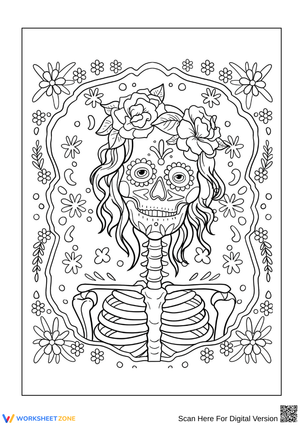
Skeleton Coloring Pages That Mix Science And Fun
I remember a quiet afternoon when half my class had finished early and the other half was restless, and nothing I tried seemed to help them refocus. That day I pulled out a set of skeleton coloring pages I had printed from Worksheetzone, not expecting much. Within minutes, the room shifted. Students who usually fidgeted were leaning over their desks, carefully working through each bone of the human figure with genuine curiosity. It was the kind of moment every teacher hopes for but rarely plans, and it started simply with a printable sheet and some colored pencils.
Skeleton coloring pages do more than fill quiet time. As students trace the shape of a femur or identify the ribcage, they are absorbing vocabulary that would otherwise require hours of drilling. The act of coloring itself supports fine motor development, hand strength, and sustained attention, all skills that carry over directly into reading, writing, and standardized assessments. I have found that pairing these sheets with a simple labeling task turns a passive coloring session into an active science lesson. Teachers do not need a separate anatomy unit to get this kind of mileage out of a single printable resource. You can pair these activities with related lessons from our anatomy activities guide for extended learning opportunities across the curriculum.
Curiosity is the engine that keeps students engaged, and skeleton coloring pages give that curiosity a clear visual anchor. Children are naturally drawn to the human body because it is something they already experience every day. When a printable sheet maps out the spine or highlights the structure of a hand, it answers questions students did not even know they had. I encourage teachers to let students ask questions while they color, turning each worksheet into a mini discussion rather than a silent task. That small shift transforms a simple activity into a genuine inquiry session, and students walk away with knowledge that sticks because it came from their own wondering.
Parents looking for meaningful at-home activities will find skeleton coloring pages just as useful outside the classroom. A Sunday afternoon spent coloring together becomes a biology conversation that feels nothing like homework. I have heard from parents who were surprised when their child could name the bones they had colored a week later, recalling the details without any formal review. The printable format makes these resources easy to access at any time, whether tucked into a weekend activity bag or set out on the kitchen table before dinner. For those who want to extend the theme into related imagery, our zombie coloring pages offer another set of engaging character-based sheets that complement the skeletal theme. Worksheetzone is designed to bridge the gap between screen time and hands-on learning in a way that feels natural for both parent and child.
Every teacher and parent deserves a resource library that makes those lightbulb moments easier to reach. Skeleton coloring pages are one of the most versatile tools available, fitting naturally into science, art, health, and even creative writing lessons. The variety of styles available at Worksheetzone ensures that there is a printable format suited to every learner, from early childhood through middle school. Whether you use them as a warm-up, a reward, or the centerpiece of a unit, these sheets consistently deliver engagement and educational value. Start building your collection today and discover how a single skeleton coloring page can open the door to a richer, more connected learning experience.
Frequently Asked Questions
Question 1: What age group is best suited for skeleton coloring pages?
Skeleton coloring pages work well for children from preschool through middle school. Simpler outline designs suit younger learners who are building fine motor skills, while more detailed anatomical sheets challenge older students. Teachers and parents can choose a difficulty level that matches the child's current stage, making these printables a flexible resource across a wide range of grades and abilities.
Question 2: How can teachers use skeleton coloring pages as a science lesson?
Teachers can pair skeleton coloring pages with labeling tasks, asking students to identify and name each bone as they color. Adding a short discussion about bone function or a comparison between animal and human skeletons deepens the learning. This approach connects art and science in a single activity, supports visual learners, and gives students a memorable reference they can return to throughout the unit.
Question 3: Are skeleton coloring pages appropriate for Halloween themes?
Yes, skeleton coloring pages fit naturally into Halloween-themed classroom activities and can be used alongside other seasonal printables. They keep the festive spirit while delivering real educational content about human anatomy. Teachers who want to maintain curriculum alignment during holiday periods will find these sheets a practical way to engage students with seasonal themes without sacrificing academic value.
Question 4: What supplies do students need to complete skeleton coloring pages?
Students only need a printed sheet and basic coloring tools such as crayons, colored pencils, or markers. No special materials are required, which makes skeleton coloring pages accessible in any classroom or home setting. For more detailed sheets, fine-tipped colored pencils help students stay within small areas and produce cleaner results, supporting precision and patience as part of the overall learning process.
Clear All