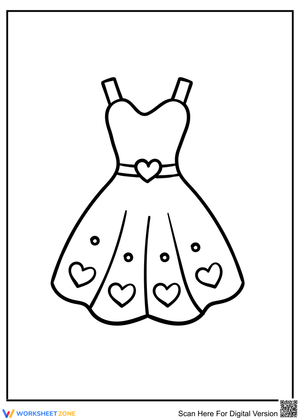
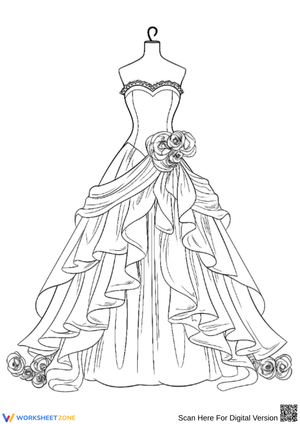
Why Dress Coloring Pages Appeal to Fashion Lovers
Dresses offer some of the most satisfying outlines in fashion illustration. The sweep of a ball gown skirt, the tiered ruffles of a sundress, the structured bodice of a cocktail dress — each gives colorists something genuinely different to work with. Dress designs reward close attention: a single page might include lace at the hem, pleating at the waist, and subtle fabric texture across the skirt.
The range of styles means there's always something new to color. Flowy boho maxi dresses, strapless prom gowns, vintage A-line silhouettes, and delicate wedding dresses all carry their own color logic and mood, making this category endlessly engaging for anyone into fashion or art.
What to Expect from These Coloring Sheets
The dress coloring pages on Worksheetzone span a wide difficulty range — some feature clean, bold outlines of a simple wrap dress, while others include intricate ruched fabric, floral embroidery, or layered tulle skirts. Beginners and younger kids lean toward simpler silhouettes, while teens and adults often prefer the more detailed couture-style gowns.
- Simple sundress and everyday dress outlines suitable for ages 5 and up
- Prom and formal gown designs with detailed bodice and skirt work
- Vintage-inspired styles including 1950s swing dresses and flapper silhouettes
- Wedding dress pages featuring layered veils, lace overlays, and cathedral trains
Coloring Techniques for Getting the Best Results
For formal gowns and full skirts, try building color from light to dark in the direction of the fabric's flow — working from the waist downward on a ball gown creates a gradient that mimics how light falls on satin or organza. Colored pencils work well here because they allow layering without bleeding through the paper.
For casual summer dresses, bright fills in coral, sunflower yellow, or sky blue keep things fresh. If you're adding a floral print to a sundress, use a fine-tip marker for the pattern first, then fill the background fabric with a lighter matching shade. Gel pens are a great pick for adding shimmer to sequined gowns or metallic detail to evening wear.
Frequently Asked Questions
Are these dress coloring pages appropriate for young children?
Several designs use large, simple shapes for kids ages 4–6 to fill in with crayons. More detailed gown pages with lace trim or embroidery are better matched to ages 8 and up, or adults who enjoy fashion illustration.
What colors work best for coloring a formal gown or ball gown?
Deep jewel tones — sapphire blue, emerald green, burgundy — make formal gowns look dramatic. Adding a light gray to the fabric folds gives the gown a dimensional, silky appearance without needing to blend multiple colors.
What paper size and type should I use when printing at home?
Standard US letter-size paper (8.5 × 11 inches) works for most pages. If you plan to use markers or watercolors rather than pencils, 60–90 lb cardstock prevents bleed-through and keeps the page flat while you work.
What is the origin of the A-line dress silhouette?
Christian Dior named the A-line in 1955 after his Spring collection's gently flared skirts, which resembled the capital letter A. The silhouette proved so adaptable that it became a staple across 1960s mod fashion, 1970s bohemian styles, and modern bridal design — making it one of the most frequently drawn dress shapes in fashion illustration coloring sheets today.












 Interactive Worksheet Maker
 Quiz Maker
 Word Search Maker
 Crossword Puzzle Maker
 Word Scramble Generator
 Sentence Scramble Generator
 Handwriting Worksheet Generator
 Name Tracing Generator
 Fill In The Blank Generator