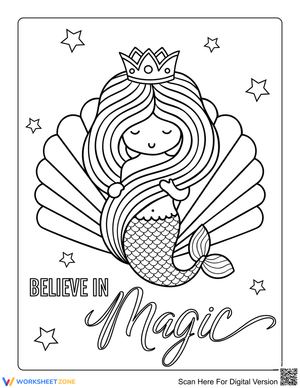
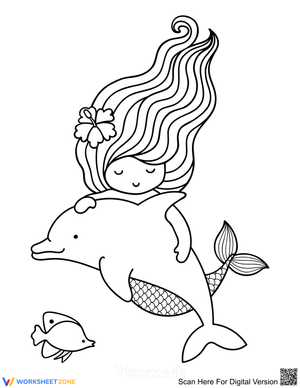
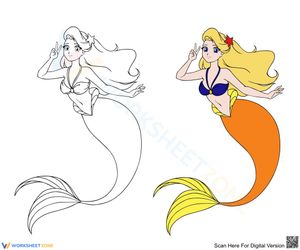
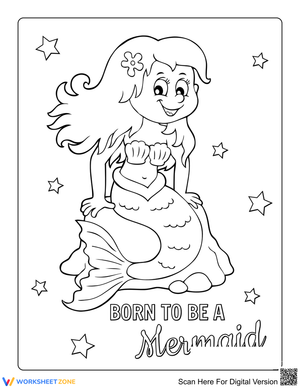
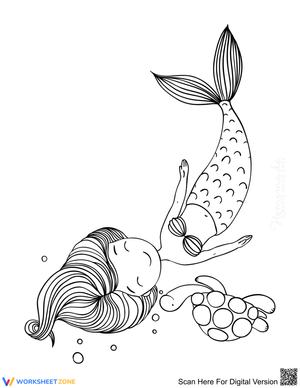
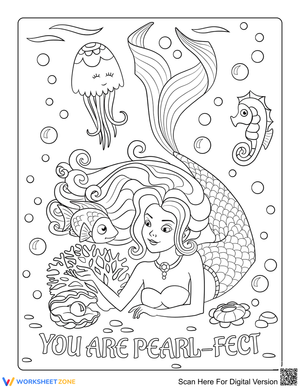
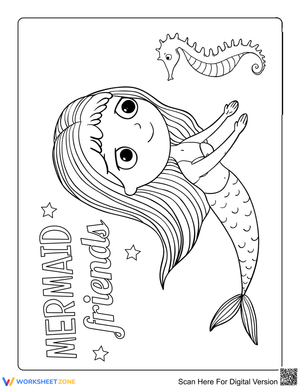
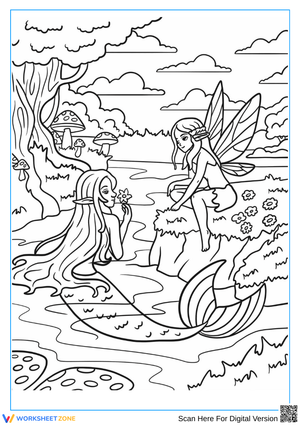
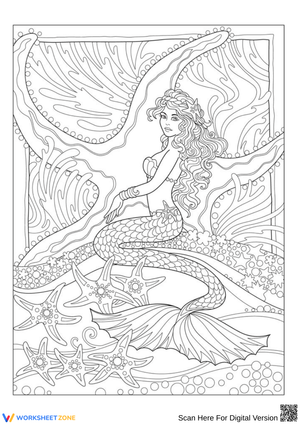
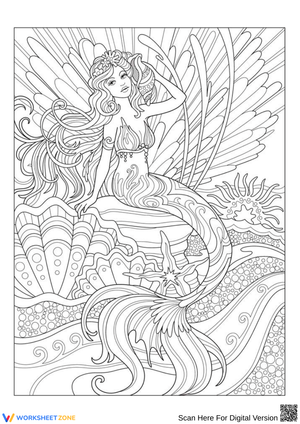
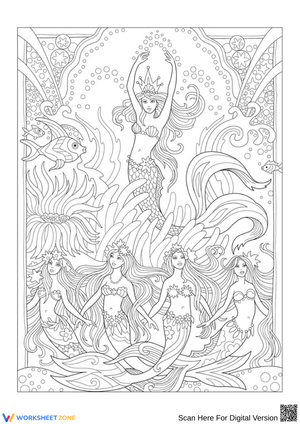
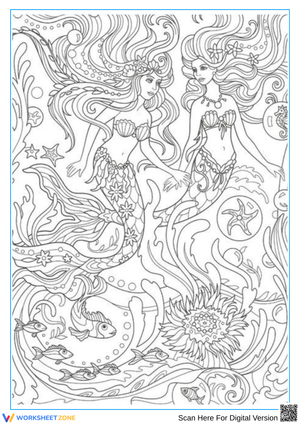
There is a quiet magic that arrives the moment a child opens a fresh sheet of Mermaid coloring pages and reaches for a blue crayon. The blank ocean waits, the scales wait, and a small artist suddenly holds the whole underwater kingdom in her hands. Each page becomes a tiny stage where imagination decides which currents shimmer, which shells gleam, and which tail color tells the story of a brave sea princess.
Behind the wonder, real learning is happening. Worksheetzone designs every illustration so that young hands practice careful pencil grip, controlled wrist movement, and steady hand-eye coordination as they trace flowing fins and curling waves. Coloring inside narrow scale shapes strengthens the same fine motor muscles children later rely on when forming letters, cutting paper, or holding a pair of safety scissors in the classroom.
Look closely and the pages reward patience. Tiny bubbles rise behind a Mermaid's shoulder, seahorses peek from coral branches, and braided hair twists into patterns that ask the eye to slow down. Students who notice these hidden treasures begin building visual discrimination skills, the same observation habits that support early reading. For parents who love mythical worlds, our printable fairy artwork collection offers another gentle invitation into wonder.
Older students discover a different gift inside the same artwork. The repetitive rhythm of shading a long Mermaid tail or layering soft greens along a kelp forest acts like a quiet form of mindfulness. Teachers who set out coloring stations during transition times often notice calmer breathing, lower noise levels, and more focused conversations. The page becomes a small breathing space, where pressure fades and a student can simply choose her next color without judgment.
So invite the artist in your home or classroom to dive in. Pull out the watercolor pencils, the metallic gel pens, or a humble box of crayons, and let the underwater world come to life. Whether your young creator paints sunrise pinks across the waves or moonlit silvers along the scales, our Mermaid coloring pages give every imagination a place to swim freely.
Frequently Asked Questions
Question 1: What age group is best suited for Mermaid coloring pages?
Mermaid coloring pages work beautifully for children between ages four and ten, though older students often enjoy them as a calming activity. Younger artists benefit from the larger shapes and bold outlines, while elementary students can challenge themselves with the more intricate scale patterns, hair details, and underwater scenery. Teachers and parents can match each design to a child's current pencil control and attention span.
Question 2: How can teachers use Mermaid coloring pages in the classroom?
Teachers can use these pages during morning soft-start routines, indoor recess, or transitions between subjects to settle a busy classroom. They also pair well with ocean science units, fairy tale literature studies, or creative writing prompts about underwater adventures. A short coloring session helps students refocus before assessments, and finished artwork makes a lovely classroom display that celebrates each child's artistic voice.
Question 3: What developmental skills do these printable activities support?
These pages strengthen several core skills at once. Children practice fine motor control as they color inside flowing fins, build hand-eye coordination tracing curved scales, and develop patience while completing detailed sections. They also support color recognition, planning skills, and visual discrimination. Older students gain a quiet space for mindfulness, helping them manage stress and return to academic tasks with renewed focus.
Question 4: What art supplies work best with these printable pages?
Worksheetzone designs each printable for everyday school supplies, so basic crayons, colored pencils, and washable markers all work wonderfully. For older students who want a richer effect, watercolor pencils blended with a damp brush bring the ocean scenes to life. Metallic gel pens add sparkle to scales and shells, and fine-tip markers help highlight the tiny details hidden throughout each illustration.












 Interactive Worksheet Maker
 Quiz Maker
 Word Search Maker
 Crossword Puzzle Maker
 Word Scramble Generator
 Sentence Scramble Generator
 Handwriting Worksheet Generator
 Name Tracing Generator
 Fill In The Blank Generator