


























Views
Plays



Essential PGCPS Math Curriculum Quiz | Professional Guide
Paste this activity's link or code into your existing LMS (Google Classroom, Canvas, Teams, Schoology, Moodle, etc.).
Students can open and work on the activity right away, with no student login required.
You'll still be able to track student progress and results from your teacher account.
This professional development worksheet evaluates teacher understanding of the PGCPS elementary mathematics framework. It focuses on the four-task instructional cycle and the role of formative assessment in promoting productive struggle. By completing these 12 targeted questions, educators verify their knowledge of curriculum resources and student learning progressions within the district's math toolkit.
At a Glance
- Grade: Professional · Subject: Math Pedagogy
- Standard:
CCSS.MATH.PRACTICE.MP1— Make sense of problems and persevere in solving them through productive struggle- Skill Focus: Curriculum Implementation
- Format: 3 pages · 12 problems · Answer key included · PDF
- Best For: Teacher Professional Development and Collaborative Planning
- Time: 15–20 minutes
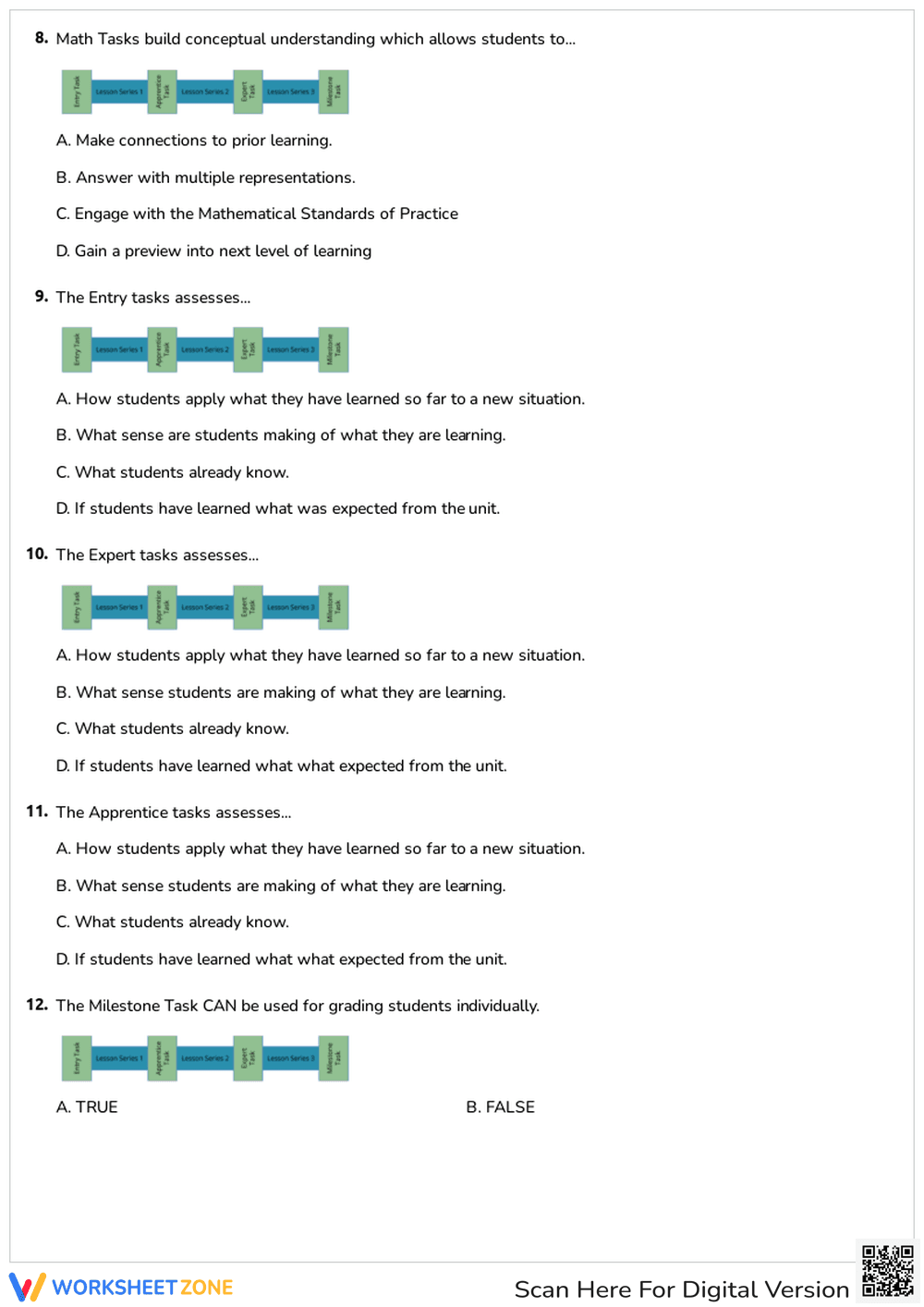
The document contains 12 multiple-choice and true-false questions spread across 3 pages. It includes visual aids like the Math Teaching Toolkit and the instructional sequence timeline. The content specifically addresses the Entry, Apprentice, Expert, and Milestone tasks, ensuring teachers understand how to use each assessment type to monitor student progress and conceptual understanding throughout a unit of study.
This resource is designed for immediate use in professional learning communities. Facilitators can print the 3-page PDF in under 1 minute. Distribution takes seconds during a Tuesday Collaborative Planning session. Reviewing the 12 answers as a group provides instant feedback on curriculum alignment, requiring less than 2 minutes of total teacher preparation time before the meeting begins. It is an ideal tool for sub-plans or quick staff check-ins.
This quiz aligns with CCSS.MATH.PRACTICE.MP1, which emphasizes student perseverance and productive struggle. It also supports district-specific implementation of formative assessment strategies. Both standard codes can be copied directly into lesson plans, IEP goals, or district curriculum mapping tools to ensure all instructional staff are aligned with the core pedagogical requirements of the elementary math program.
Use this as a Do Now activity at the start of a grade-level planning meeting to gauge collective understanding of the math framework. Alternatively, assign it as a self-reflection tool after a curriculum training session. Completion typically takes 15 minutes, followed by a 5-minute formative discussion regarding the Milestone Task's role in individual grading and how it differs from the Entry task assessment.
This is intended for elementary school teachers, math coaches, and instructional leads working within the PGCPS framework. It pairs naturally with district Canvas resources and the elementary mathematics program guide. It serves as an excellent check for understanding for new hires or as a refresher for veteran staff during mid-year collaborative planning sessions to maintain instructional fidelity.
This assessment tool targets the implementation of the CCSS.MATH.PRACTICE.MP1 standard by focusing on the instructional architecture required for productive struggle. Research from Fisher & Frey (2014) emphasizes that the gradual release of responsibility—mirrored here in the progression from Entry to Milestone tasks—is critical for building student agency and conceptual mastery. By evaluating teacher knowledge of these specific task types, schools ensure that formative assessments are used to bridge the gap between what students already know and the application of new skills in novel situations. According to the RAND AIRS 2024 report, high-quality curriculum implementation is directly linked to the consistency of instructional tasks across grade levels. This 12-question quiz provides a structured method for ensuring that consistency, allowing educators to align their classroom practices with evidence-based district standards and proven pedagogical frameworks for elementary mathematics instruction.


