


























Views
Downloads

Printable Vowel Digraph ea Worksheet | Grade 1 Phonics
Paste this activity's link or code into your existing LMS (Google Classroom, Canvas, Teams, Schoology, Moodle, etc.).
Students can open and work on the activity right away, with no student login required.
You'll still be able to track student progress and results from your teacher account.
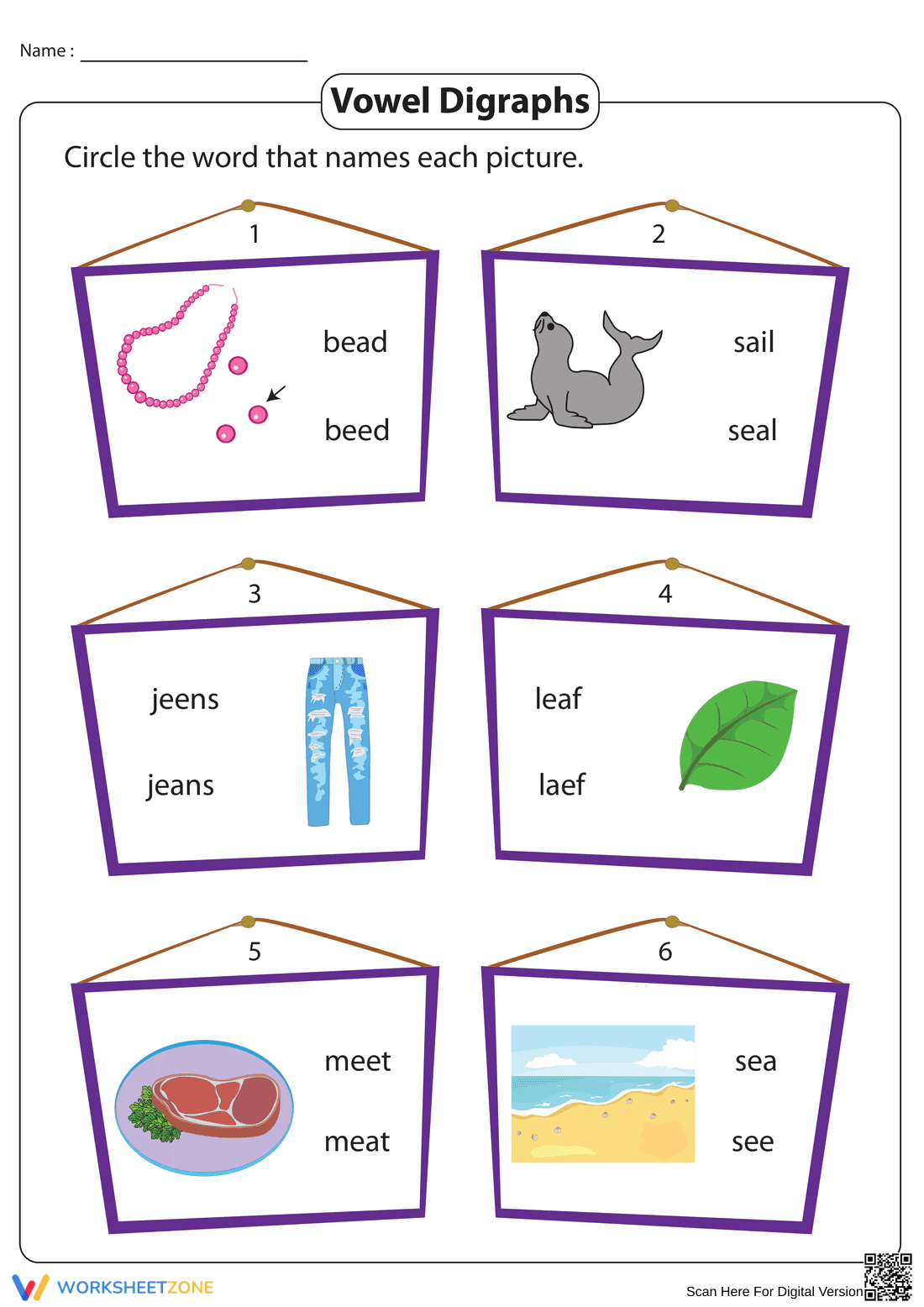
This Grade 1 vowel digraph "ea" worksheet helps students master long vowel sounds through visual association and spelling recognition. By identifying the correct spelling for common objects like leaves and seals, learners build the phonemic awareness necessary for fluent reading. This resource provides immediate, focused practice to reinforce essential early literacy skills in a clear, engaging format.
At a Glance
- Grade: 1 · Subject: English Language Arts
- Standard:
CCSS.ELA-LITERACY.RF.1.3.C— Know common vowel team conventions for representing long vowel sounds in words- Skill Focus: Vowel Digraph "ea" Recognition
- Format: 1 page · 6 problems · Answer key included · PDF
- Best For: Phonics centers and independent practice sessions
- Time: 5–10 minutes
This single-page PDF features six distinct identification tasks designed for young learners. Each task presents a high-quality illustration paired with two similar-looking words—one utilizing the "ea" digraph and another with a common misspelling or a different vowel team. The layout is clean and spacious, ensuring that first-grade students can focus on the phonics patterns without visual overwhelm. A comprehensive answer key is included for rapid grading.
The zero-prep workflow for this resource allows teachers to integrate phonics practice into their day with minimal effort. First, simply print the required number of copies (less than 1 minute). Next, distribute the sheets during your literacy block or as a transition activity (under 1 minute). Finally, review the answers as a whole group or use the provided key for quick individual assessment. Total teacher preparation time remains under 2 minutes, making this an ideal choice for sub plans or emergency literacy fillers.
This worksheet is primarily aligned with CCSS.ELA-LITERACY.RF.1.3.C, which requires students to know final -e and common vowel team conventions for representing long vowel sounds. By choosing "leaf" over "laef" or "sea" over "see," students demonstrate mastery of the "ea" team in context. Both standard codes can be copied directly into lesson plans, IEP goals, or district curriculum mapping tools to ensure instructional compliance and data tracking.
Use this worksheet as a formative assessment after a direct instruction lesson on the long /e/ sound. Observe if students are sounding out both options or if they recognize the visual pattern of the "ea" digraph immediately. Alternatively, assign this during independent "must-do" center time. Teachers can quickly scan completed pages to identify students who may need additional scaffolding with vowel team phonemic awareness before moving on to more complex spelling patterns.
This resource is tailored for first-grade students, but it also serves as an excellent intervention tool for second-grade learners who struggle with vowel team consistency. It provides the necessary visual support for English Language Learners (ELLs) by pairing vocabulary words with clear images. This worksheet pairs naturally with a long vowel anchor chart or a decodable reader focused on beach or nature themes, where "ea" words are frequently encountered.
Mastering vowel teams like "ea" is crucial for reading fluency. This worksheet aligns with CCSS.ELA-LITERACY.RF.1.3.C, helping students distinguish correct vowel team conventions from phonetic distractors. Research from Fisher & Frey (2014) highlights visual supports in early literacy; pairing images with word recognition tasks improves retention for Grade 1 learners. These 6 tasks reinforce the long /e/ sound through a structured format, offering valuable data on student progress towards foundational literacy benchmarks. This evidence-based practice maximizes instructional time and supports orthographic mapping.


