


























Views
Downloads

Grade 1 Weather and Clothes — Printable No-Prep Worksheet
Paste this activity's link or code into your existing LMS (Google Classroom, Canvas, Teams, Schoology, Moodle, etc.).
Students can open and work on the activity right away, with no student login required.
You'll still be able to track student progress and results from your teacher account.
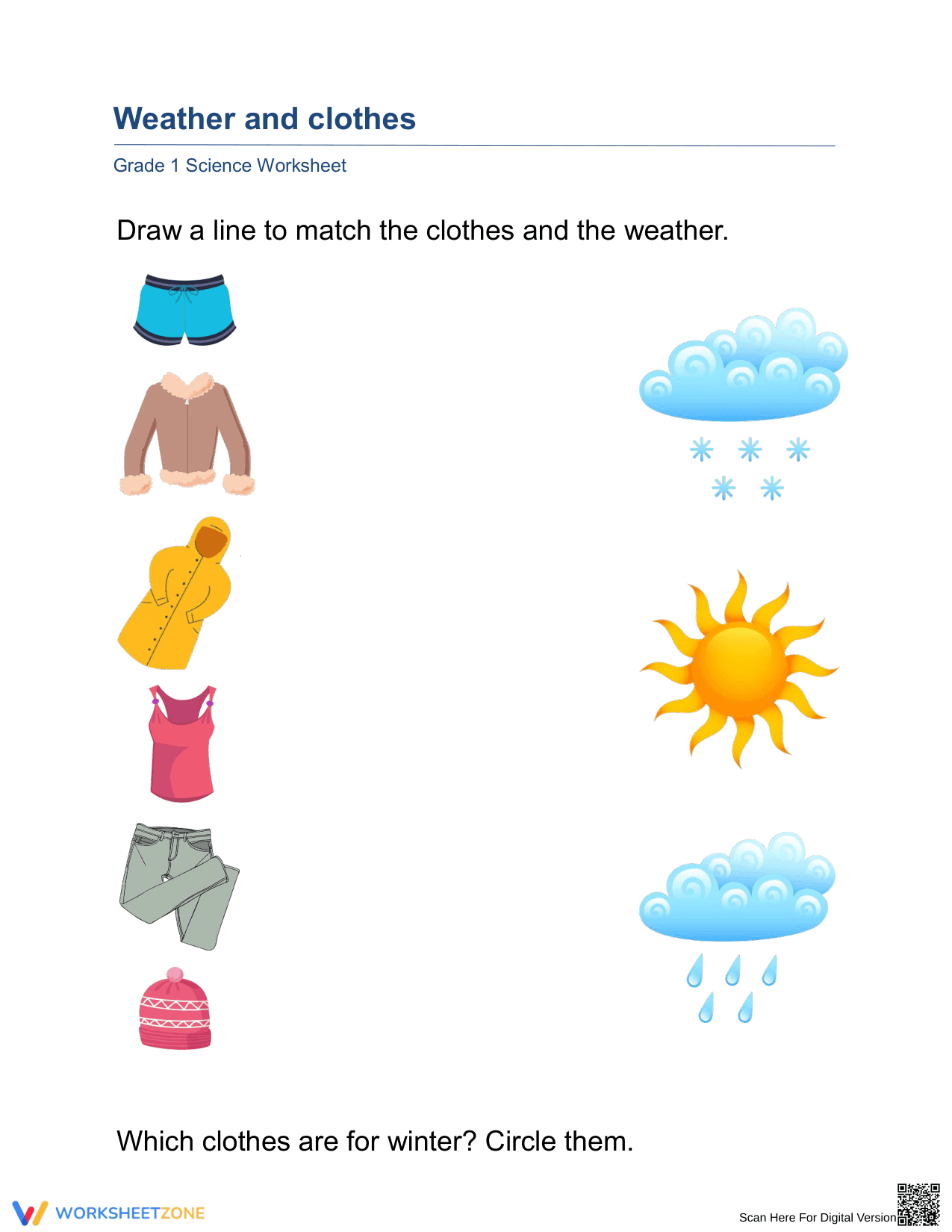
This Grade 1 science worksheet helps students connect weather observations with practical daily decisions by matching appropriate clothing to specific environmental conditions. By identifying which items belong in snowy, sunny, or rainy weather, learners develop foundational categorization skills and a deeper understanding of seasonal patterns. This essential resource ensures students can apply scientific concepts to their real-world routines effectively.
At a Glance
- Grade: 1 · Subject: Science
- Standard:
1-ESS1-2— Analyze seasonal patterns to describe how weather affects human behavior and clothing choices.- Skill Focus: Weather-Appropriate Clothing & Categorization
- Format: 1 page · 7 problems · Answer key included · PDF
- Best For: Independent Science Practice or Sub Plans
- Time: 10–15 minutes
What's Inside
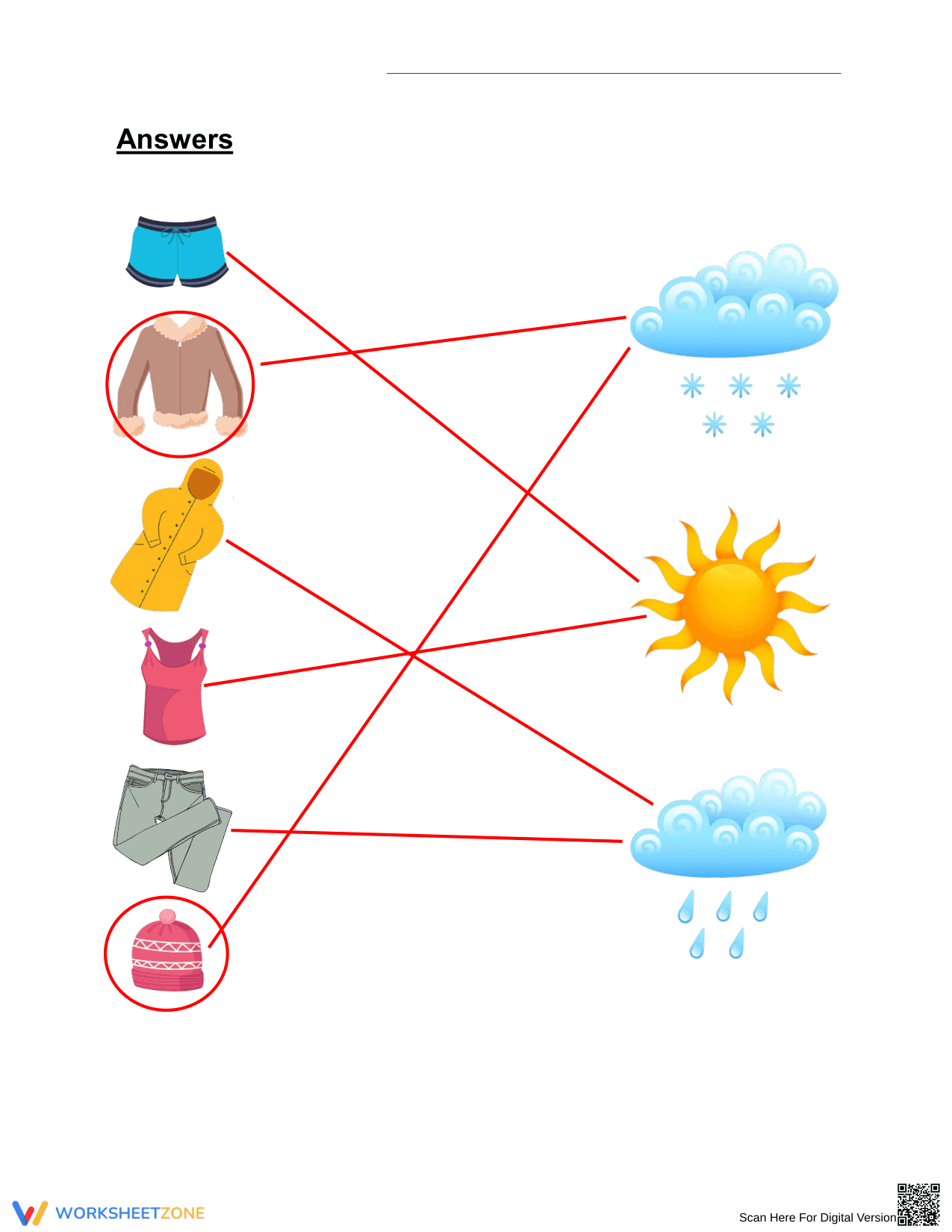
This visual-heavy layout is perfect for early readers. It consists of a single instructional page where students encounter six distinct clothing icons, including winter coats, shorts, and rain gear. On the right, three distinct weather icons provide the targets for the matching activity. A secondary task asks students to circle specific winter items, reinforcing targeted seasonal identification. A complete answer key is provided for immediate feedback.
Zero-Prep Workflow
This activity requires minimal effort, making it ideal for busy classroom environments or transitions.
- Print (30 seconds): Download the PDF and print the single-page worksheet for your entire class or small group.
- Distribute (1 minute): Hand out the sheets and briefly explain the matching icons to ensure students recognize each clothing item and weather type.
- Review (2 minutes): Use the included answer key to quickly grade submissions or display it on a projector for student self-correction.
Total prep time is under two minutes, ensuring instructional continuity without the burden of complex setup.
Standards Alignment
This resource aligns primarily with `1-ESS1-2`, which focuses on observing and using seasonal patterns to describe the natural world. Students demonstrate mastery by predicting the appropriate human response to specific weather stimuli. Both standard codes can be copied directly into lesson plans, IEP goals, or district curriculum mapping tools to ensure compliance with rigorous science frameworks.
How to Use It
Use this worksheet as a summative assessment after a unit on weather or as a quick morning work activity during seasonal changes. Before starting, have a brief class discussion about what students wore to school today and why. This creates an immediate personal connection to the task. For formative assessment, observe if students can differentiate between the winter coat and the raincoat, as this indicates a nuanced understanding of precipitation.
Who It's For
This activity is designed for first-grade students but is also suitable for kindergarteners needing enrichment. It is an excellent fit for English Language Learners due to the heavy reliance on visual cues and minimal text. Pair this with a local weather chart or a classroom anchor chart for a comprehensive learning experience.
Research from EdReports 2024 emphasizes that high-quality science instruction for primary grades must bridge the gap between abstract weather concepts and concrete, observable human behaviors. This worksheet directly addresses the `1-ESS1-2` standard by requiring students to apply categorization logic to environmental data, a key cognitive milestone in early scientific literacy. Fisher & Frey (2014) highlight the importance of visual scaffolds, which this worksheet provides via clear iconography and structured matching tasks. By linking clothing to weather, students build a mental model of cause-and-effect that serves as a prerequisite for more complex earth science topics in later grades. This alignment ensures that classroom activities are rooted in evidence-based pedagogical strategies that support long-term retention and mastery of the core science curriculum.


