


























1 / 10
0
Views
0
Downloads

0.0
0
Save
0 Likes
Share
Advanced Charles's Law Worksheet
0 Views
0 Downloads
Paste this activity's link or code into your existing LMS (Google Classroom, Canvas, Teams, Schoology, Moodle, etc.).
Students can open and work on the activity right away, with no student login required.
You'll still be able to track student progress and results from your teacher account.
Information
Description
What It Is:
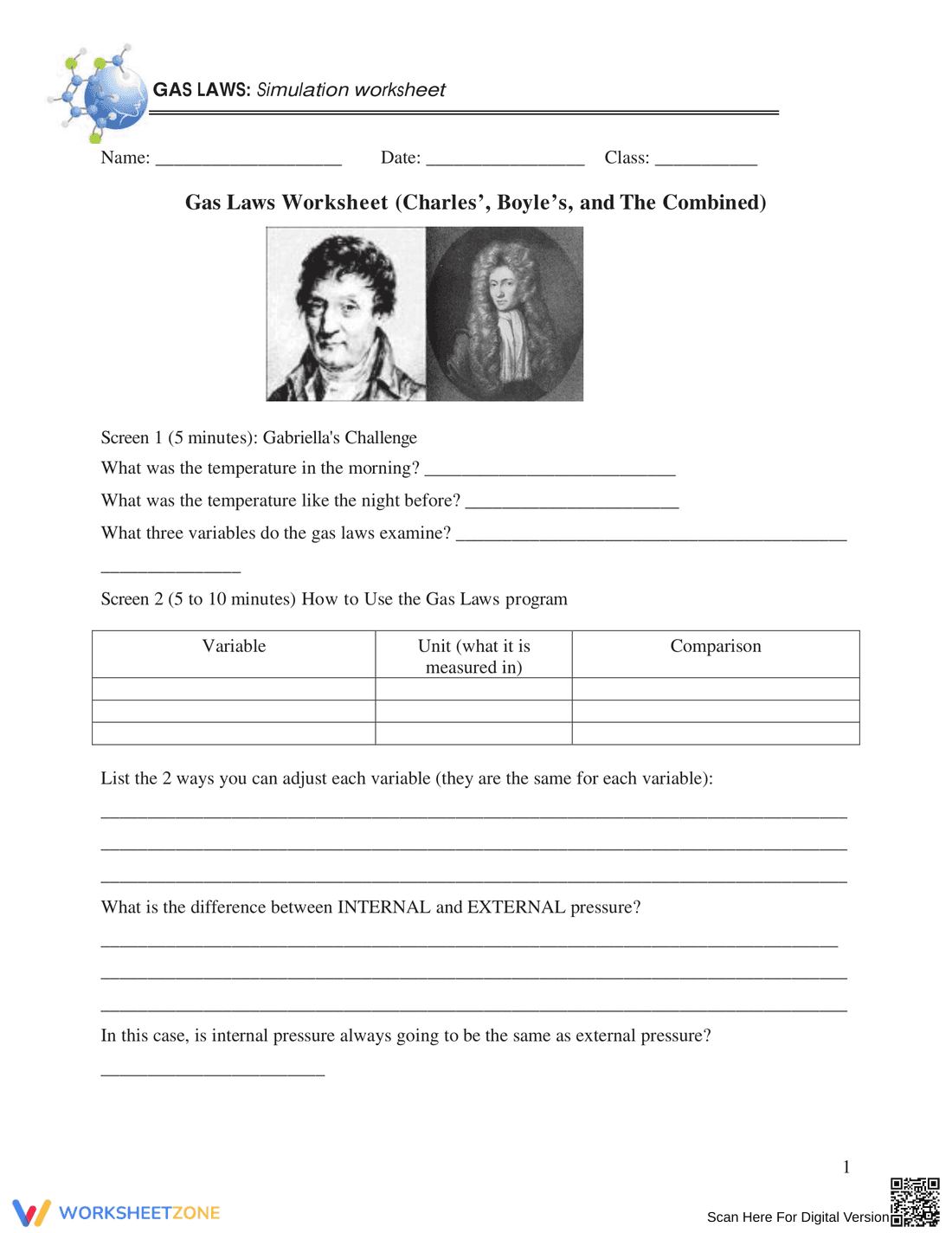
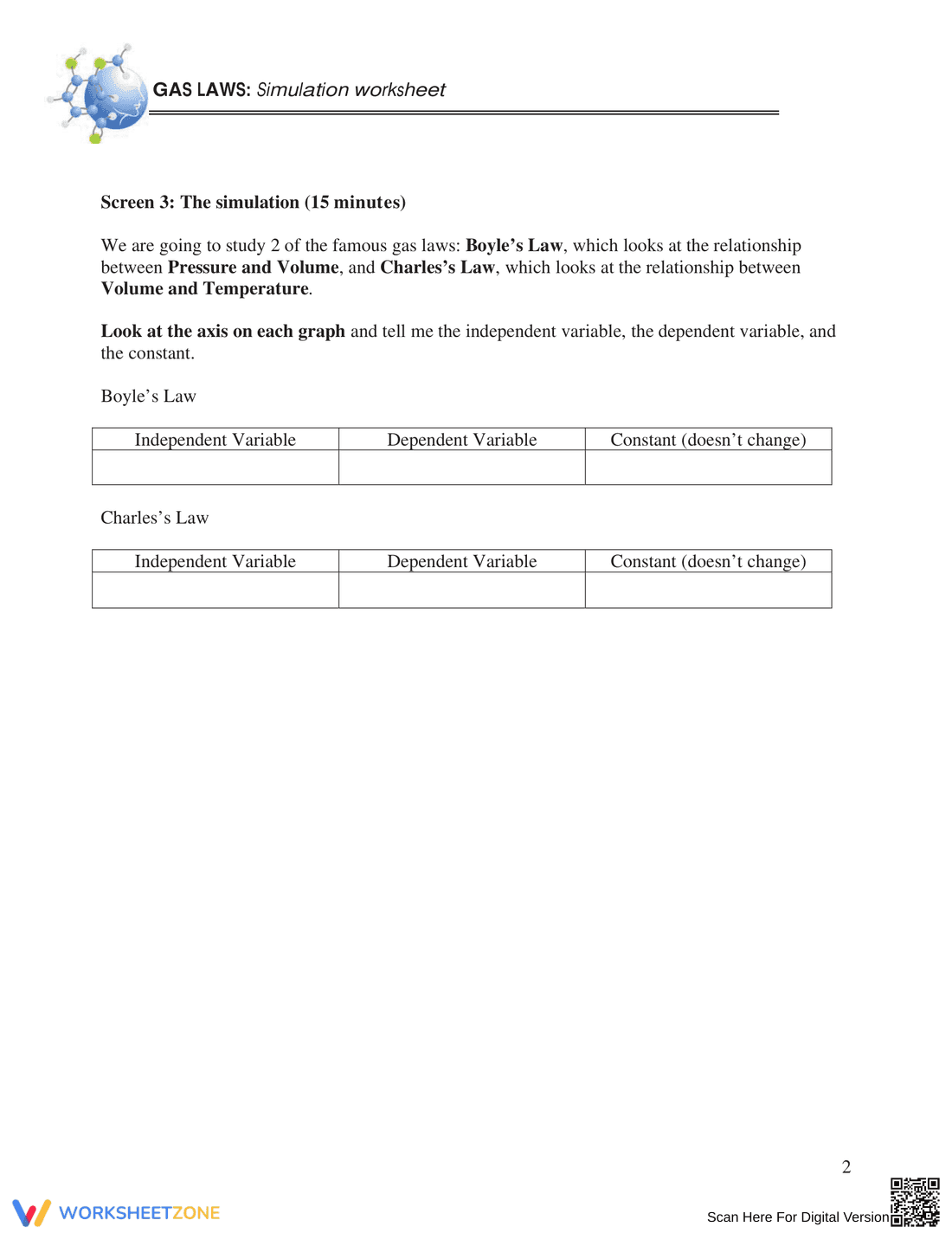
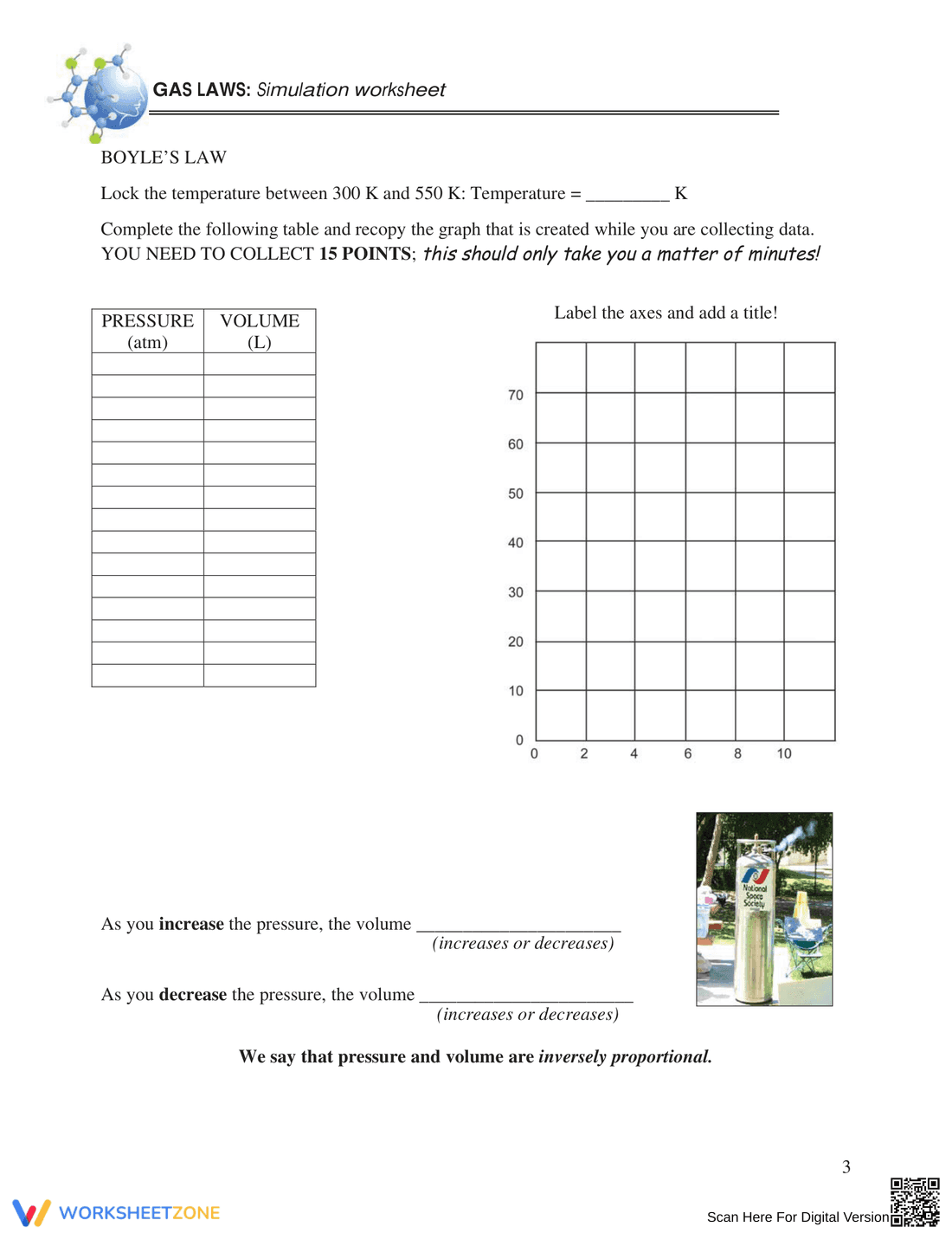
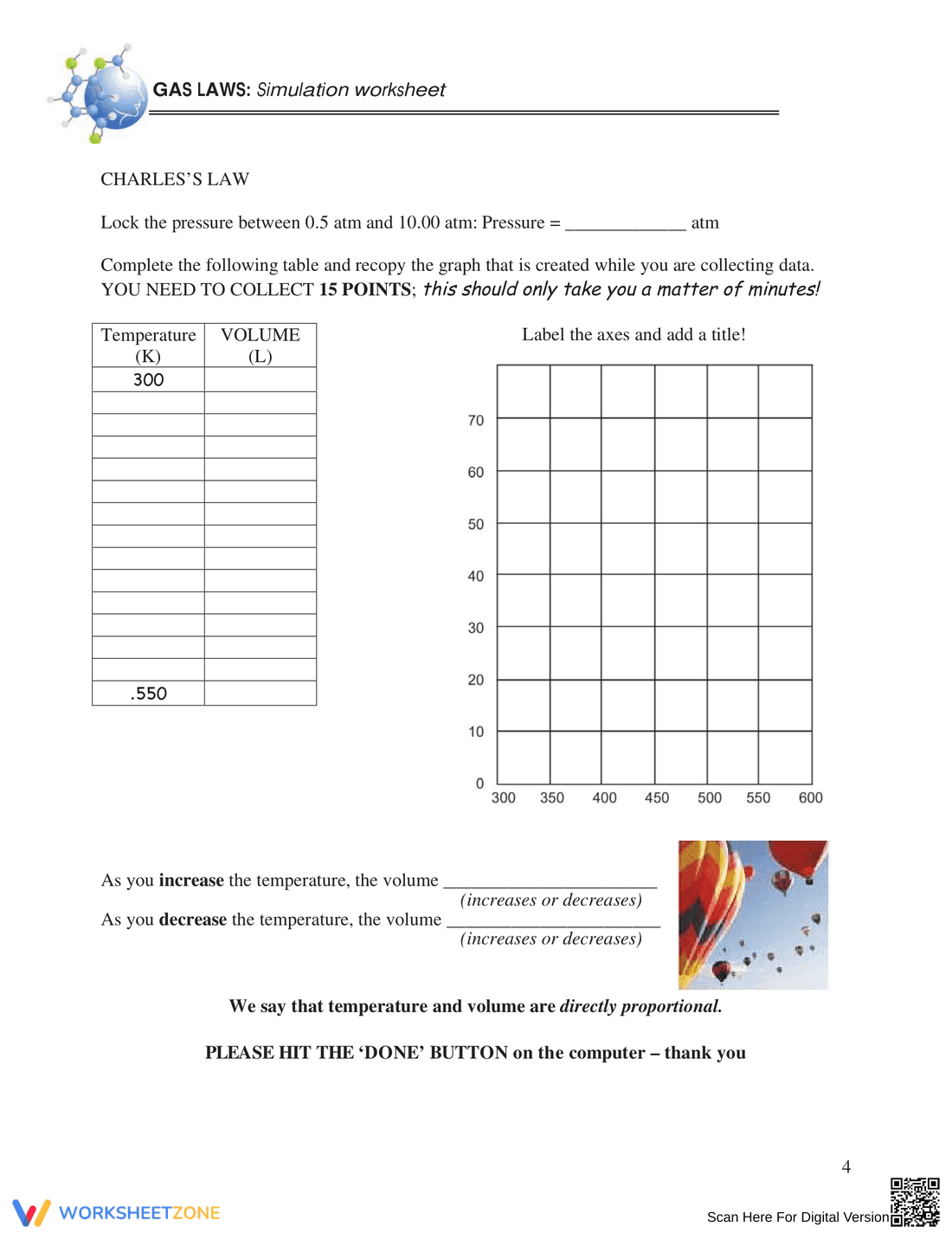
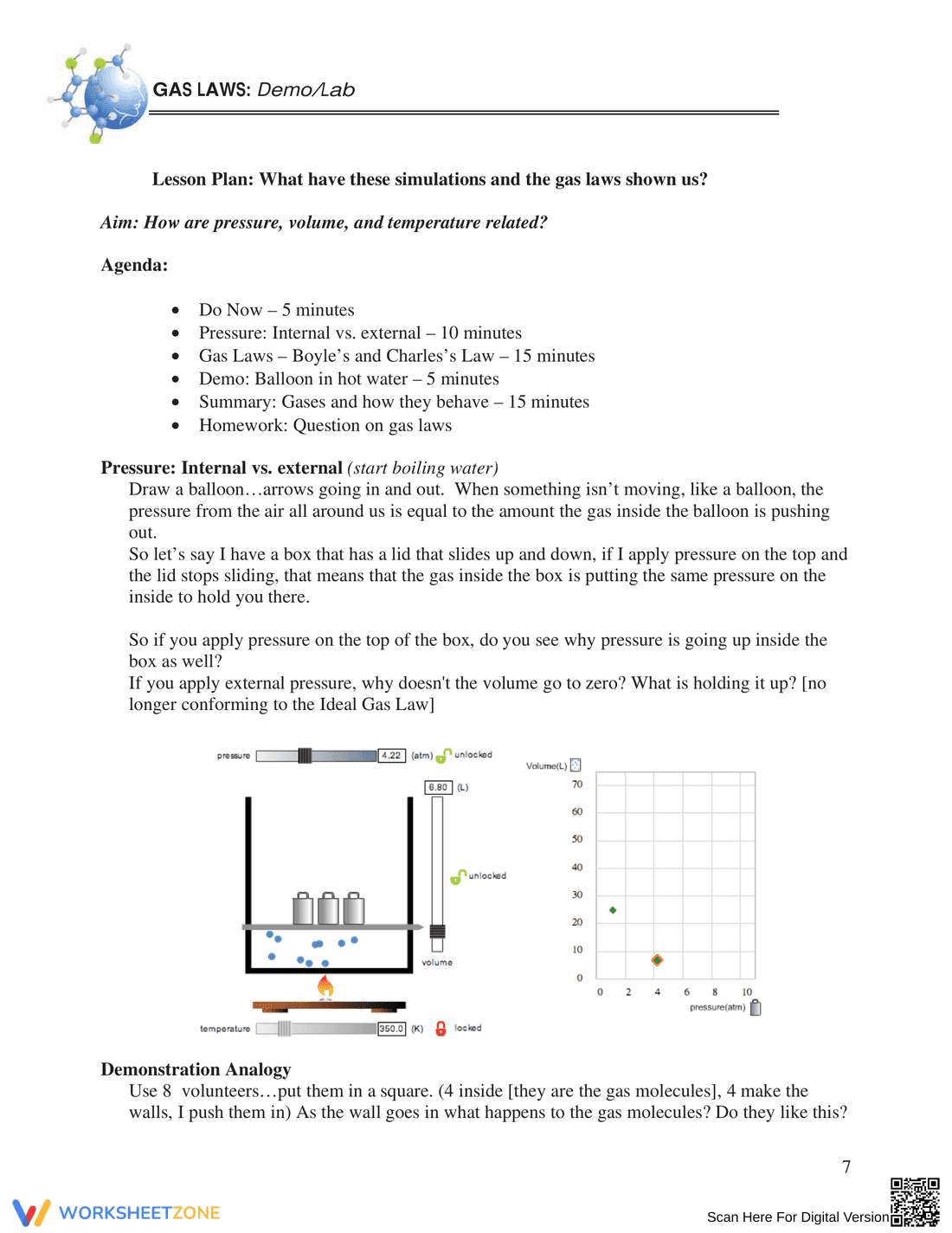
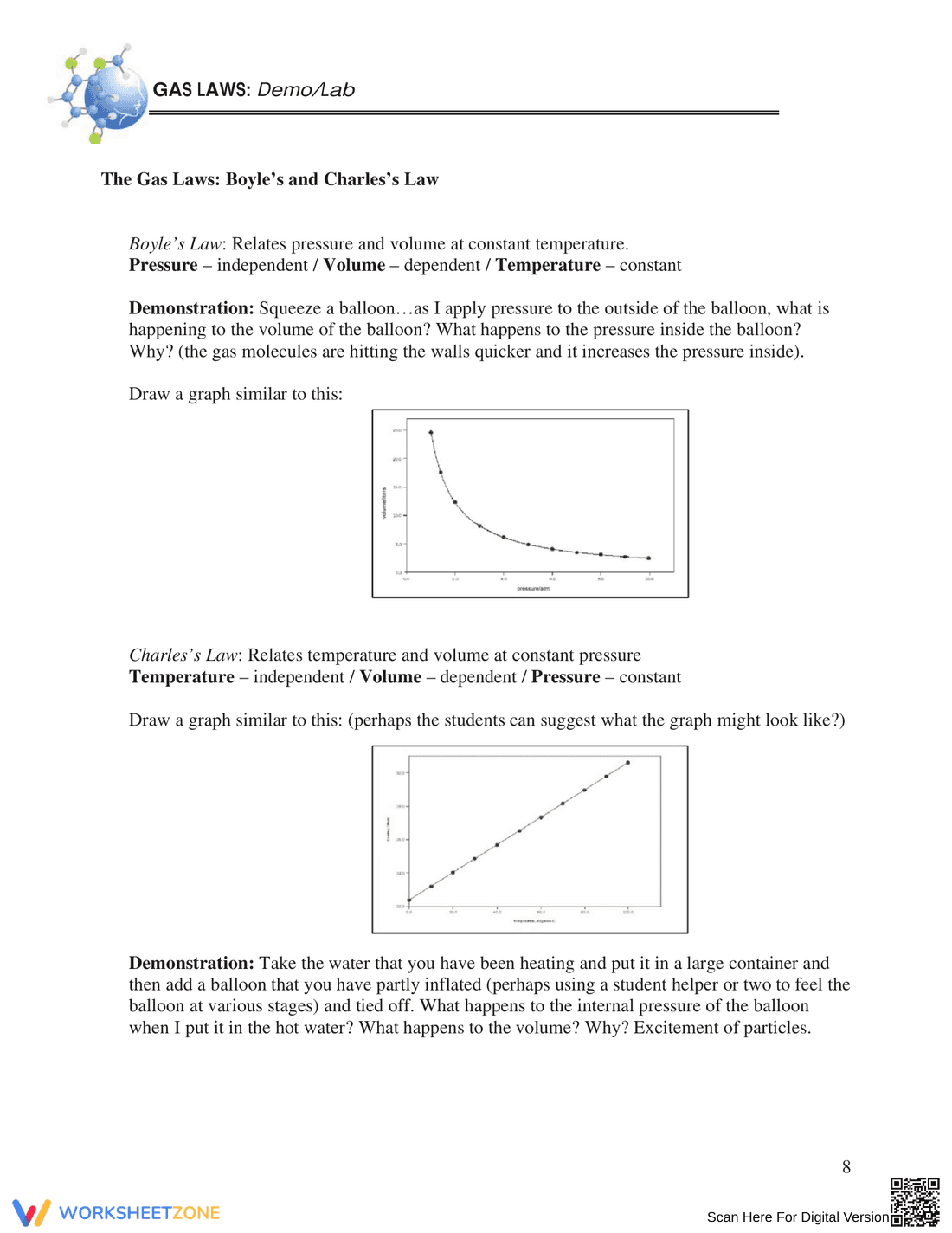
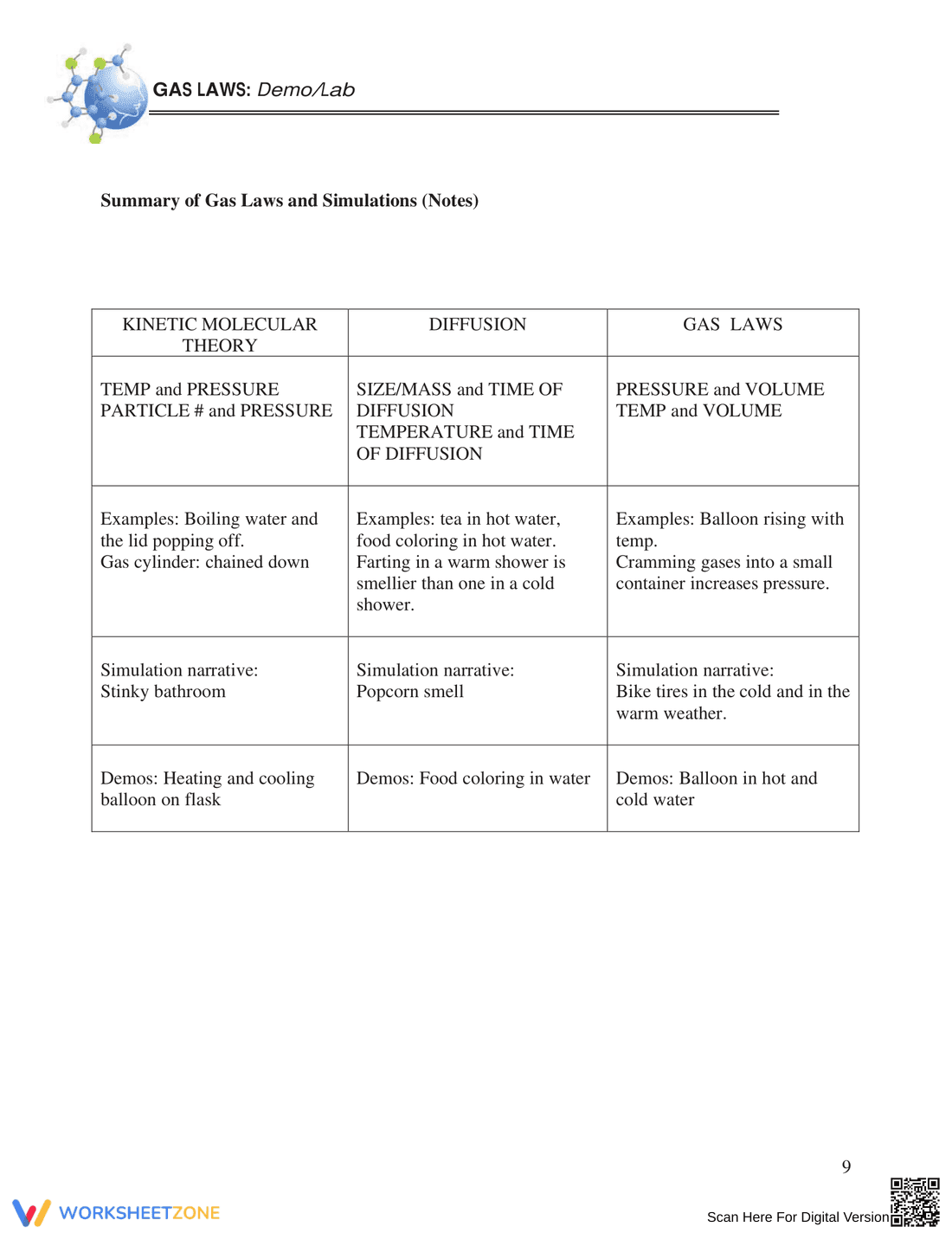
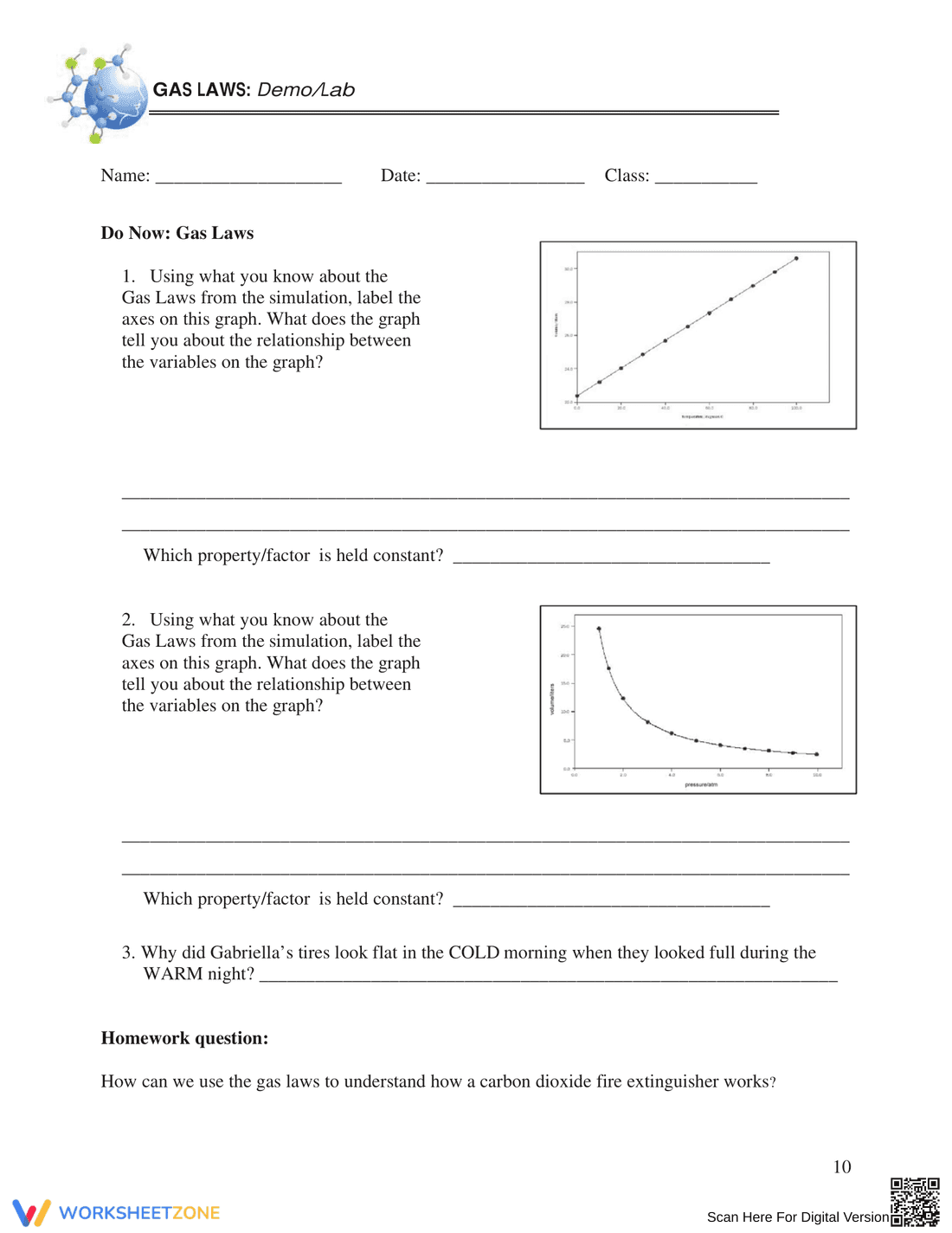
This is a Gas Laws Simulation worksheet focusing on Charles', Boyle's, and the Combined Gas Laws. It includes questions about temperature, variables examined by the gas laws, a table for comparing variables and their units, and questions about internal and external pressure. It also has images of Charles and Boyle.
Grade Level Suitability:
This worksheet is suitable for high school students, specifically grades 9-12, studying chemistry or physics. The concepts of gas laws, temperature, pressure, and volume are typically covered in these grade levels.
Why Use It:
This worksheet reinforces understanding of gas laws through simulation exercises and critical thinking questions. It helps students identify variables, understand units of measurement, and compare internal and external pressure, enhancing their comprehension of gas behavior.
How to Use It:
Students should first complete the simulation, then answer the questions based on their observations. The table requires students to identify variables, their units, and make comparisons. The final questions require students to define and differentiate between internal and external pressure.
Target Users:
The target users are high school students in chemistry or physics classes, as well as teachers looking for supplementary materials to enhance their lessons on gas laws.
This is a Gas Laws Simulation worksheet focusing on Charles', Boyle's, and the Combined Gas Laws. It includes questions about temperature, variables examined by the gas laws, a table for comparing variables and their units, and questions about internal and external pressure. It also has images of Charles and Boyle.
Grade Level Suitability:
This worksheet is suitable for high school students, specifically grades 9-12, studying chemistry or physics. The concepts of gas laws, temperature, pressure, and volume are typically covered in these grade levels.
Why Use It:
This worksheet reinforces understanding of gas laws through simulation exercises and critical thinking questions. It helps students identify variables, understand units of measurement, and compare internal and external pressure, enhancing their comprehension of gas behavior.
How to Use It:
Students should first complete the simulation, then answer the questions based on their observations. The table requires students to identify variables, their units, and make comparisons. The final questions require students to define and differentiate between internal and external pressure.
Target Users:
The target users are high school students in chemistry or physics classes, as well as teachers looking for supplementary materials to enhance their lessons on gas laws.


