




















Bubble activities for kids turn learning into a fun, hands-on adventure that kids love. They help develop motor skills, creativity, and social interaction naturally through play. Whether indoors or outdoors, bubbles inspire curiosity and joyful exploration without feeling like work.
These simple yet engaging activities make any classroom livelier and more interactive. So, let’s dive in and explore a variety of engaging ideas that will spark excitement and learning for your students!
10+ Bubble Activities for Kids
Here are multiple creative bubble ideas that will keep your students engaged, active, and learning—perfect for adding excitement to your daily routine:
1. Bubble Painting
Bubble painting is a fun and unique way for children to express their creativity while experimenting with colors.
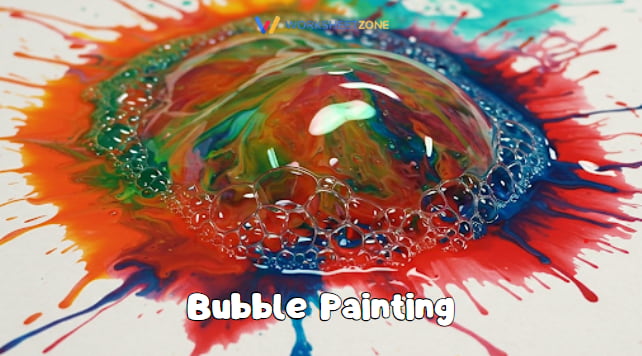
By using bubble solution with added food coloring, children create vibrant prints on paper as they blow bubbles. This activity helps children learn about color mixing and encourages them to explore their artistic side.
Materials Needed:
- Bubble solution
- Food coloring
- Straws
- White paper or canvas
How to do:
- Mix a few drops of food coloring into a shallow dish of bubble solution. The more color you add, the more vibrant the prints will be.
- Give each child a straw and show them how to blow gently into the solution to create bubbles.
- Place a piece of paper or canvas under the bubbles. As the bubbles pop, they will leave colorful prints.
- Let the prints dry and admire the unique designs. Children can experiment with different color combinations for varied results.
2. Bubble Popping Challenge
This activity challenges children to pop bubbles using different methods. It’s not only a fun way to burn energy but also an opportunity to work on coordination and body control.
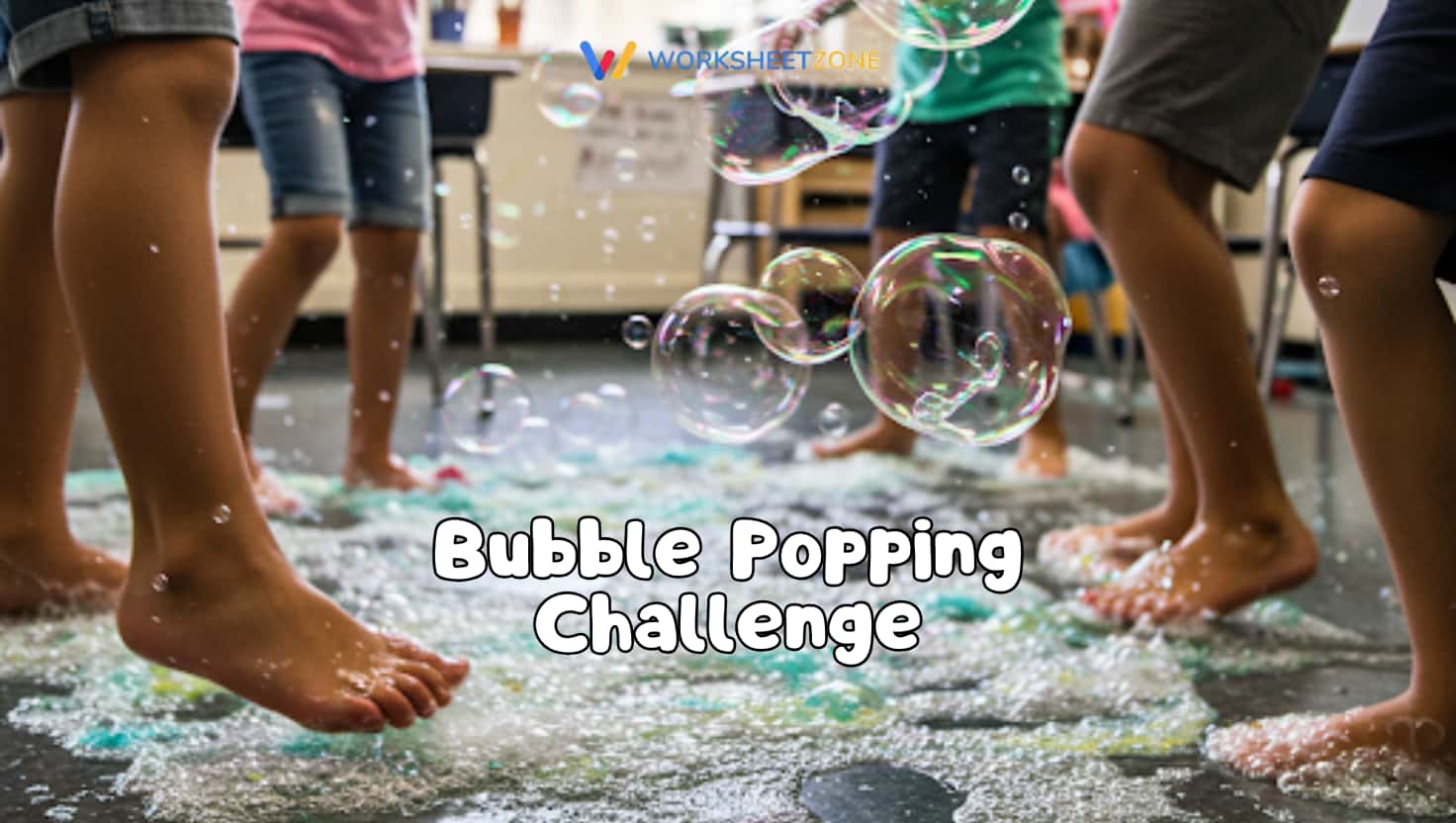
By varying the ways they pop bubbles—using their hands, feet, or even a balloon—children are learning motor control while having a blast.
Materials Needed:
- Bubble solution
- Plastic balloons or rubber balls
How to do:
- Blow bubbles into the air using a wand or straw.
- Have children take turns popping the bubbles with their hands, feet, or using plastic balloons.
- Make it a challenge by adding a point system: 1 point for hand-popping, 2 points for foot-popping, and 3 points for popping with the balloon.
- Keep track of the points and crown the winner at the end. Encourage friendly competition and teamwork by splitting the children into groups.
3. Bubble Wand Making
Bubble Wand Making is a creative DIY activity where students design and build their own custom bubble wands.
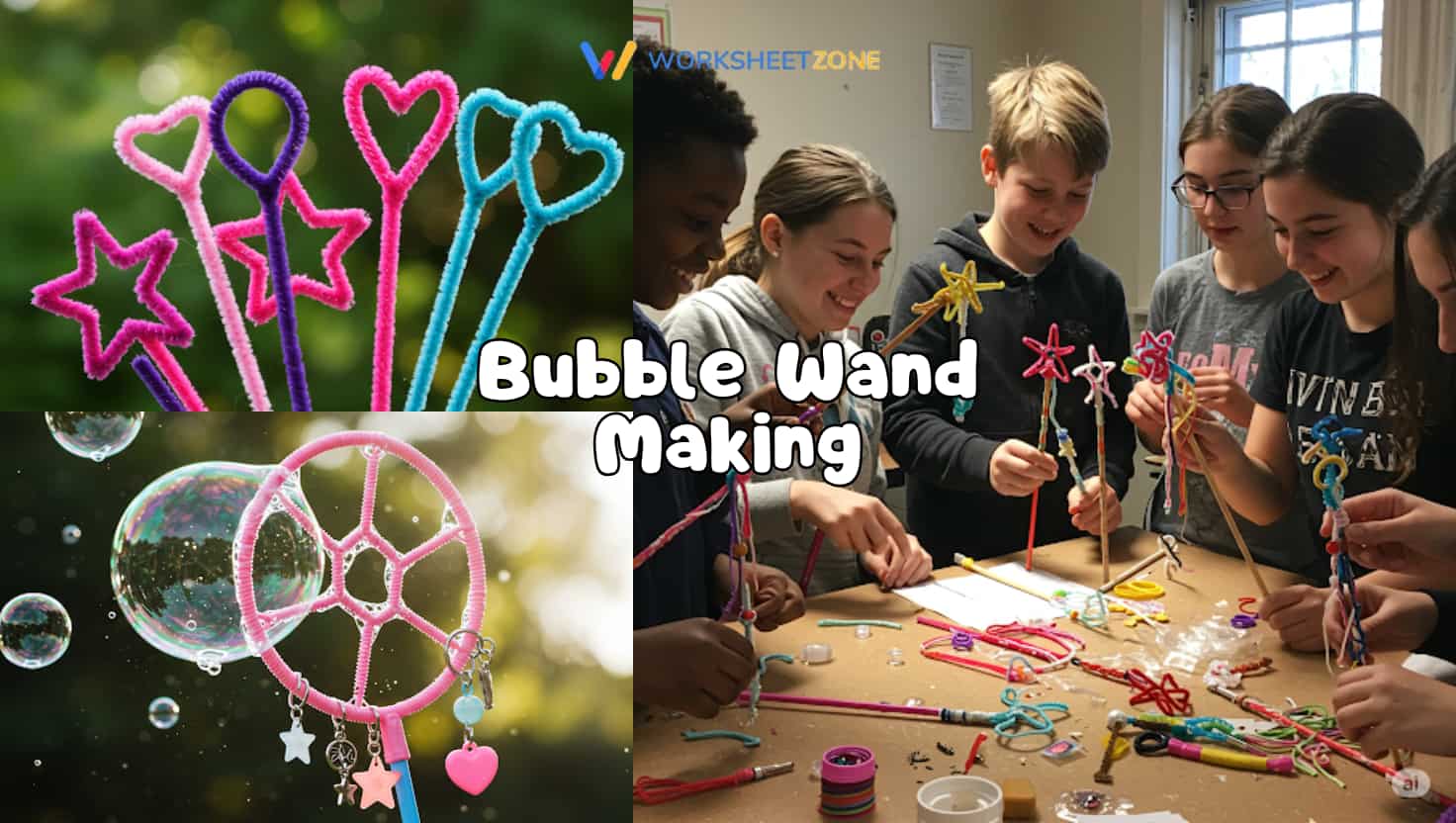
This hands-on craft promotes fine motor skills, artistic expression, and introduces basic engineering concepts like structure and functionality. Plus, it adds a personal touch to bubble play—kids love using wands they’ve made themselves!
Materials Needed:
- Pipe cleaners
- Straws
- Beads
- Cookie cutters
- String
- Scissors
- Wire (optional)
- Tape or glue
How to do:
- Provide students with different materials to experiment with wand shapes and sizes.
- Show them how to twist pipe cleaners into loops, stars, or hearts to form the wand’s bubble-blowing end.
- Optional: Attach beads or decorations to the handle for extra flair.
- Test out the wands with bubble solution and encourage kids to adjust their designs for better bubble results.
4. Bubble Science Experiment
This activity introduces children to the scientific principles behind bubbles, such as surface tension, air pressure, and the process of bubble formation.

It’s a great hands-on way for kids to learn about how and why bubbles form, making it an ideal STEM activity. Children will experiment with different bubble wands and techniques to discover how they affect the size and longevity of bubbles.
Materials Needed:
- Bubble solution
- Straws
- Small containers
- Dish soap
How to do:
- Fill small containers with bubble solution and place them around the room.
- Have children experiment by blowing bubbles through straws to see how different blowing techniques affect bubble size.
- Ask children to observe and describe the bubbles: how long they last, how they change shape, and what happens when they pop.
- Discuss the science behind the experiment, explaining how surface tension allows bubbles to form and why they pop.
5. Giant Bubble Fun
Making giant bubbles is a magical experience that can fascinate children of all ages. This activity takes the fun of bubbles to the next level by using a large hula hoop as a bubble wand, allowing children to create enormous, shimmering bubbles.
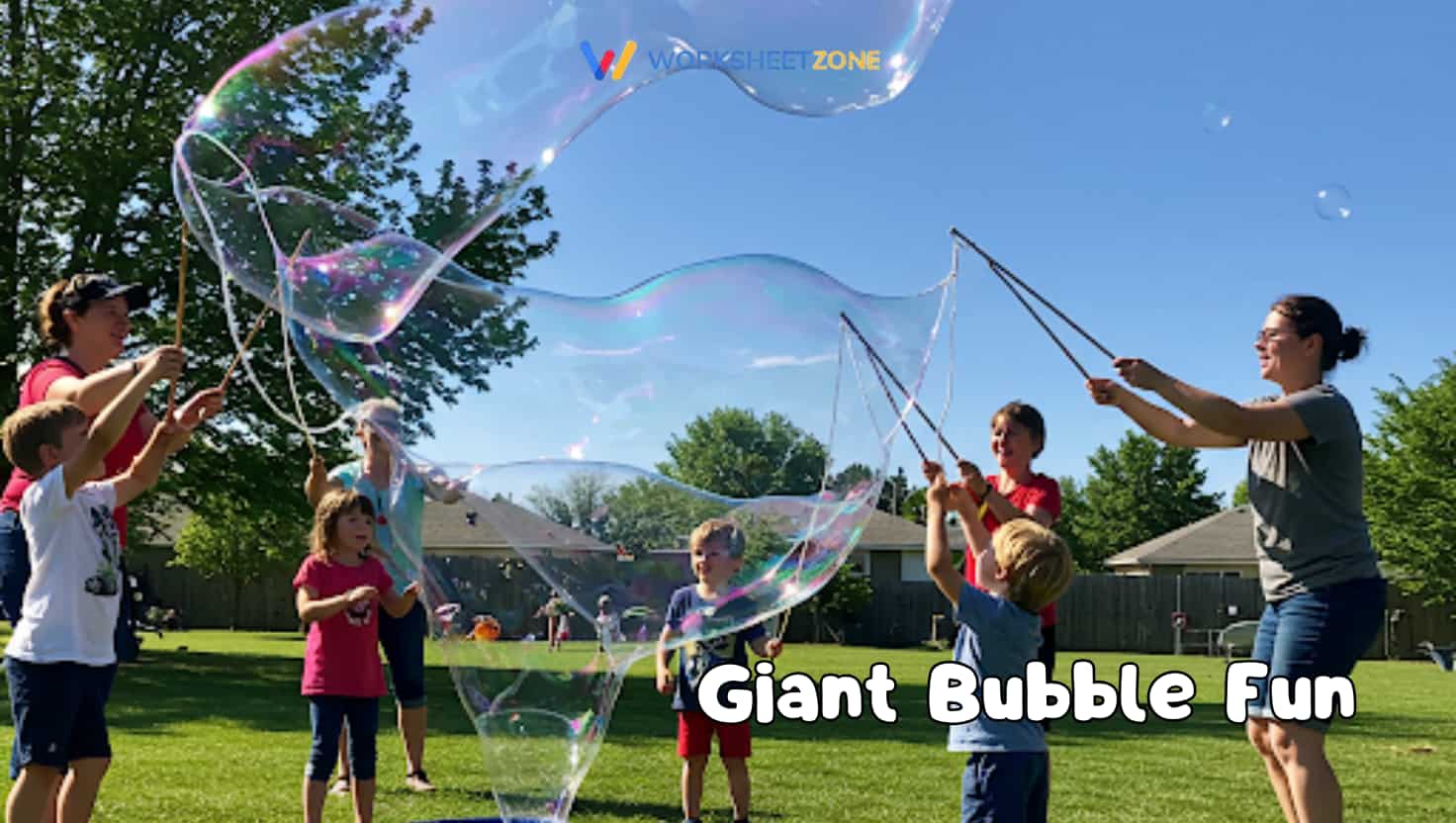
It promotes teamwork and helps children develop an understanding of cause and effect, as they witness how their movements influence the size of the bubbles.
Materials Needed:
- Large hula hoop
- Bubble solution
- Rope
How to do:
- Tie a long piece of rope to the ends of the hula hoop to create a larger bubble wand.
- Mix a large batch of bubble solution in a container big enough to dip the hula hoop.
- Show children how to dip the hoop into the solution and gently pull it through the air to create massive bubbles.
- Encourage teamwork by having groups of children work together to create the largest bubble possible.
6. Bubble Obstacle Course
This activity sets up an obstacle course in which children must pop bubbles while navigating through different stations.
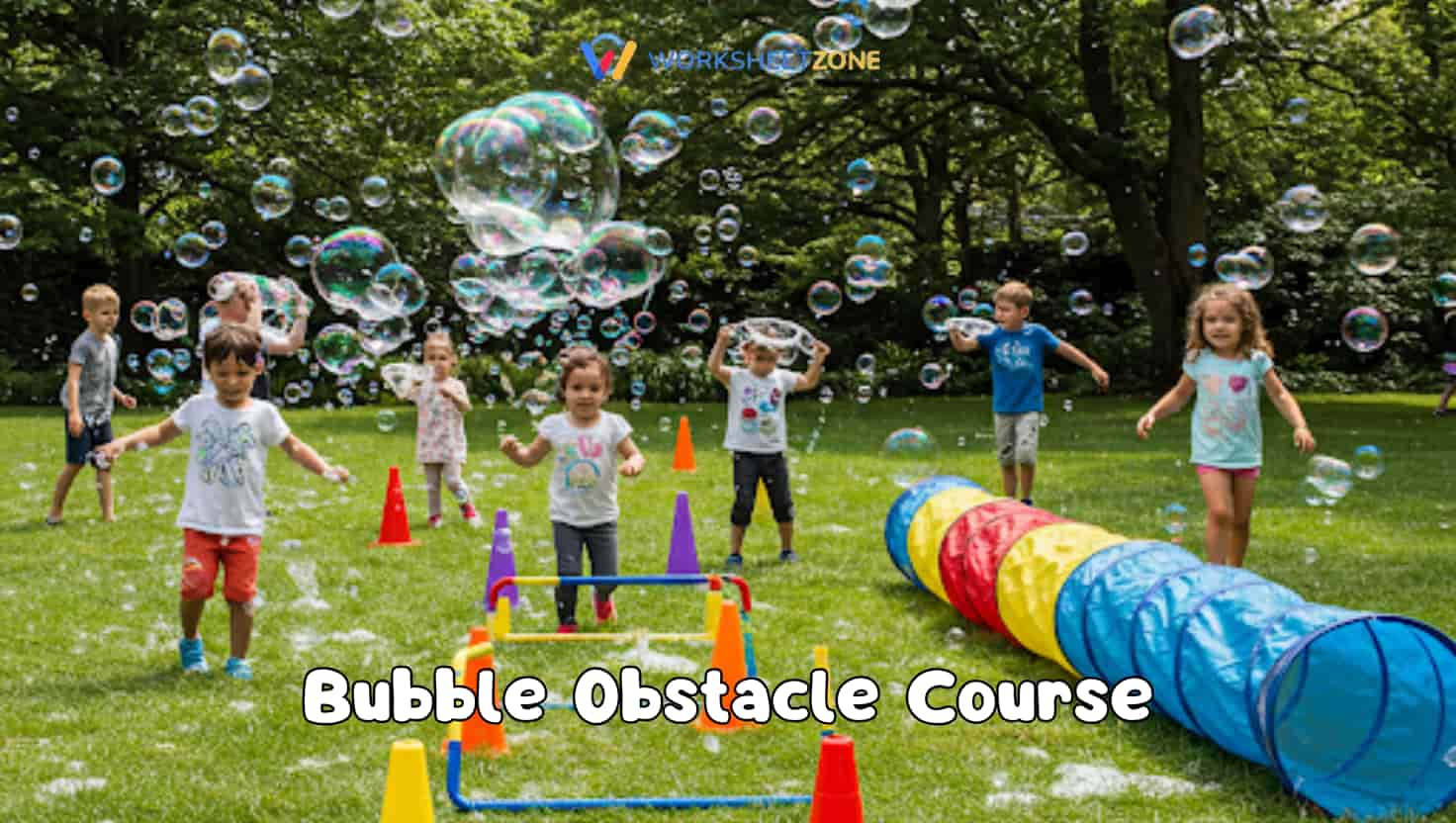
It combines physical activities with bubble play, encouraging both coordination and concentration. By adding different tasks to each station, children also work on their problem-solving skills and teamwork.
Materials Needed:
- Bubble solution
- Cones or objects for an obstacle course
How to do:
- Set up an obstacle course with cones, tunnels, and other obstacles.
- Blow bubbles throughout the course and ask children to pop the bubbles as they go through each station.
- Add challenges like “pop a bubble with your elbow” or “only use your feet to pop the bubbles.”
- Time each child’s performance to add a competitive element.
7. Bubble Dance Party
A bubble dance party is a great way to get children moving and grooving while popping bubbles. The combination of music and bubble popping helps children work on their coordination, rhythm, and gross motor skills.
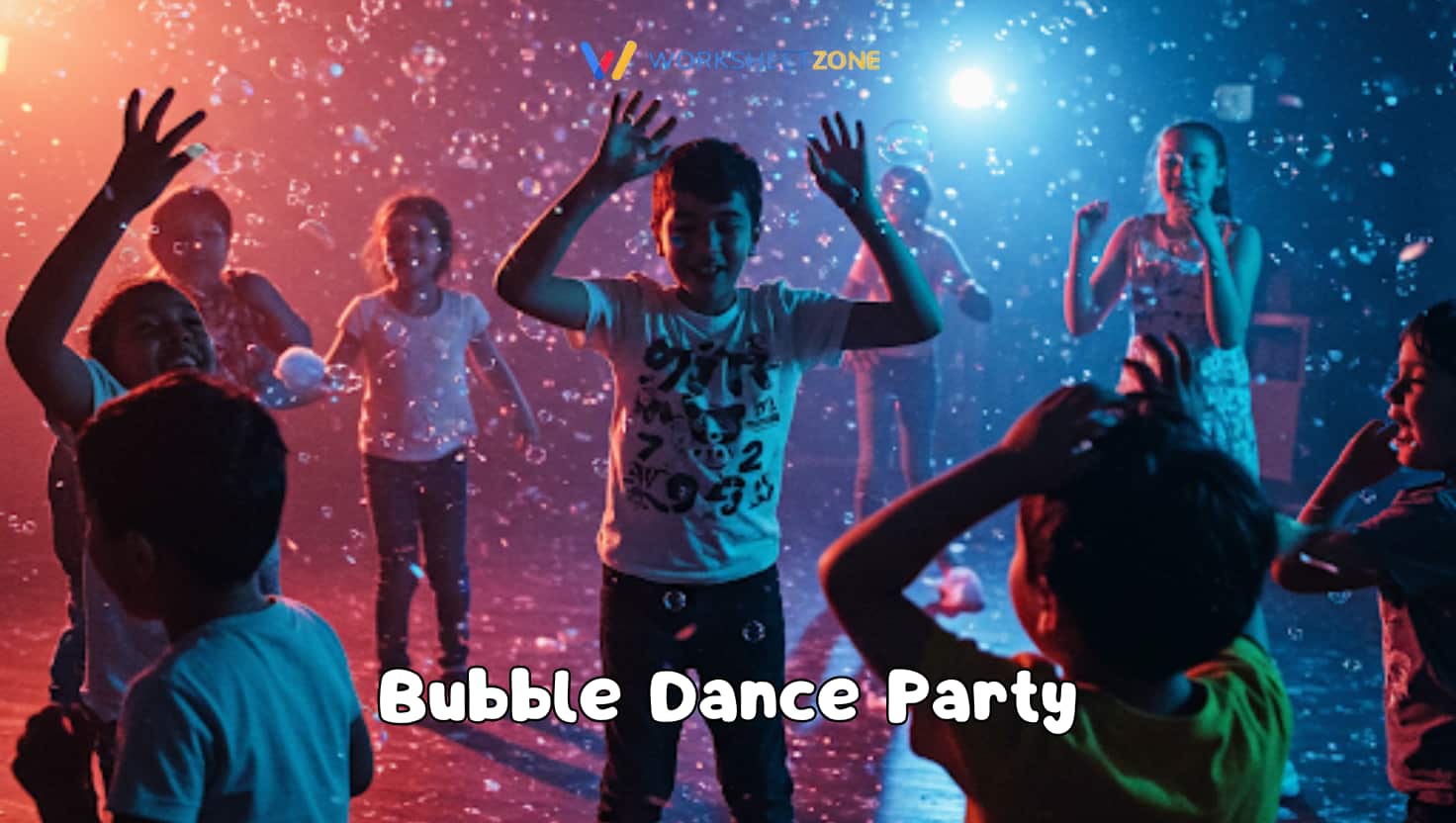
This fun and energetic activity allows children to express themselves through movement, all while playing with bubbles.
Materials Needed:
- Bubble solution
- Music
- Bubble wands
How to do:
- Play upbeat music and encourage children to dance.
- Blow bubbles around the room and have children pop them as they dance.
- Change the pace of the music and challenge children to pop bubbles to the beat or in different ways, such as with their elbows, knees, or heads.
8. DIY Bubble Solution
DIY Bubble solution is a simple science experiment that helps students understand mixtures and chemical properties in a hands-on way.
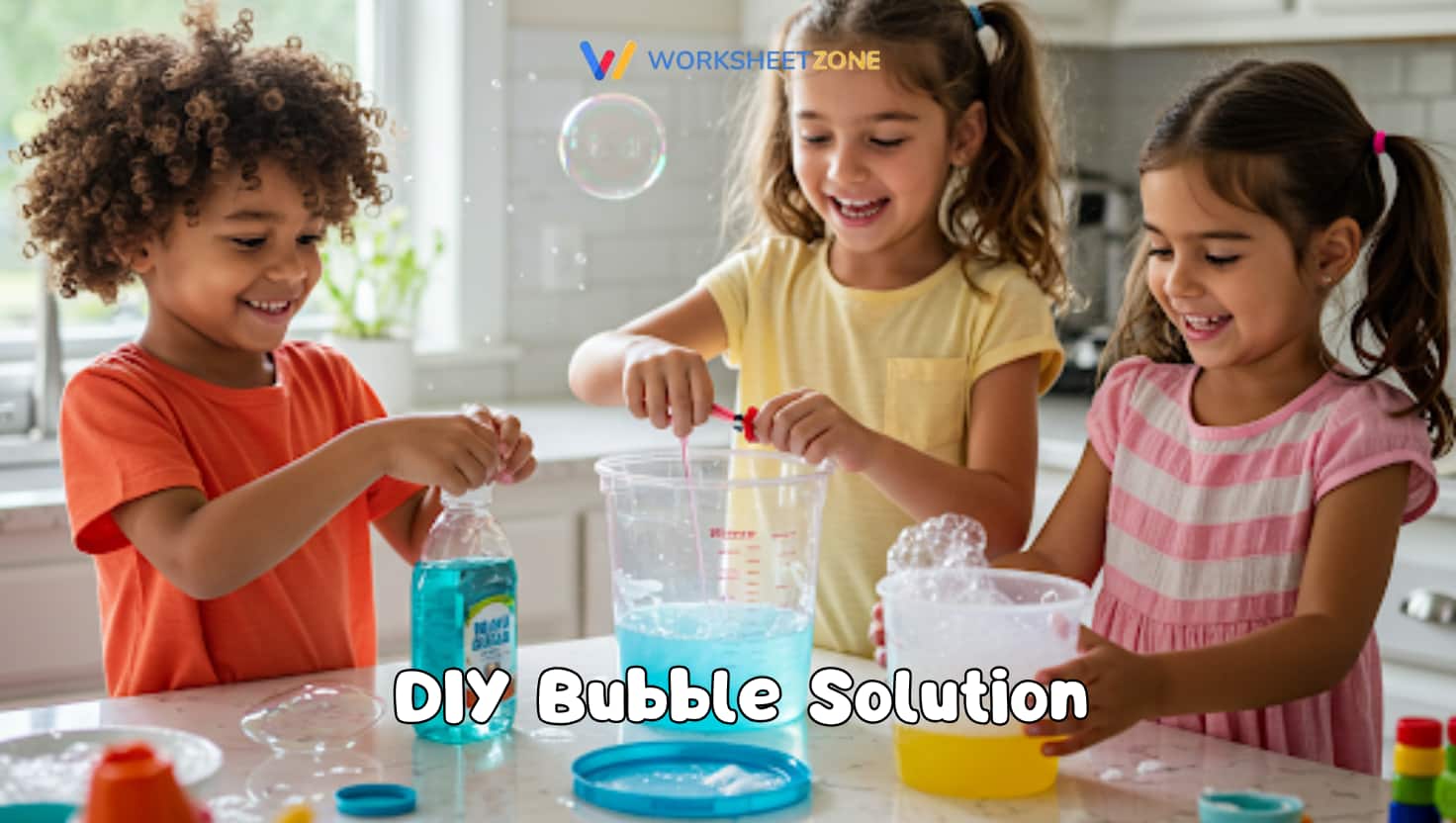
With just a few ingredients like dish soap, water, and corn syrup or sugar, kids can whip up a homemade batch of bubble liquid that works just as well—if not better—than store-bought versions. It’s budget-friendly and perfect for classroom or home use!
Materials Needed:
- 4 cups warm water
- ½ cup dish soap (like Dawn or Joy)
- ¼ cup corn syrup or 2 tbsp sugar (optional but improves bubble strength)
- Mixing bowl or container
- Spoon or whisk
How to do:
- Pour the warm water into a mixing bowl or container.
- Slowly add the dish soap and gently stir to avoid foaming.
- Add corn syrup or sugar and mix until fully dissolved.
- Let the solution rest for a few hours or overnight (optional but improves results).
- Use it with any bubble activity—wands, blowers, bubble guns—and observe how strong and stretchy the bubbles become!
9. Bubble Painting With Bubble Guns
Among the most engaging bubble activities for kids, this game turns playtime into creative art projects. By adding washable paint to the bubble solution, students can spray colorful bubbles onto paper, creating beautiful abstract masterpieces.

This activity combines creativity, movement, and sensory exploration—making it perfect for energetic classrooms or outdoor art days. It’s messy, fun, and full of surprises!
Materials Needed:
- Bubble guns
- Bubble solution
- Washable paint or liquid watercolor
- Small cups or bowls
- Thick white paper or poster board
- Aprons or old shirts.
How to do:
- In a bowl or cup, mix bubble solution with a small amount of washable paint or liquid watercolor. Stir gently to combine.
- Fill the bubble gun’s reservoir with the colored bubble mixture.
- Set up a large sheet of paper outdoors or cover a wall/fence with poster board.
- Let kids spray the colored bubbles toward the paper and watch as they pop to leave behind paint splatters.
- Rotate colors or layer different shades for more dynamic artwork.
- Allow the paintings to dry before displaying them in the classroom or taking them home.
10. Bubble Trouble
In Bubble Trouble, children compete to blow the largest, longest-lasting, or most bubbles in a set amount of time.
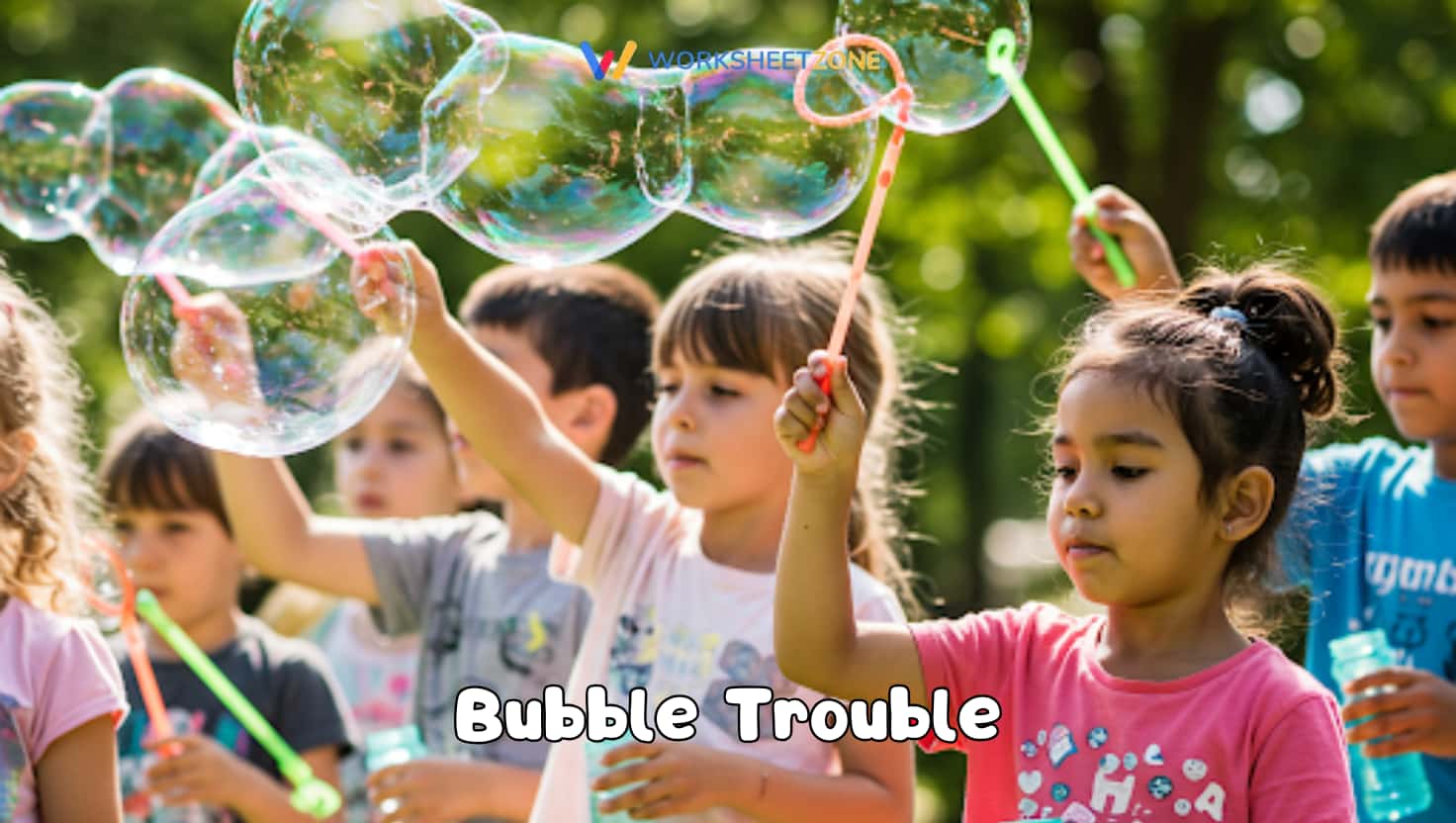
This competitive bubble activity promotes friendly rivalry and teamwork, as children work together to make the biggest bubbles or accomplish challenges. It also encourages kids to think strategically and refine their bubble-blowing skills.
Materials Needed:
- Bubble solution
- Straws or wands
- Stopwatch or timer
- Scorecards
How to do:
- Divide the children into teams or have them compete individually.
- Give each child or team a straw or wand.
- Set a timer for 2-3 minutes and see who can blow the largest bubble or the most bubbles within that time.
- Keep score and declare a winner at the end, offering a small prize for the best bubble blower. You can also add other challenges, like who can make the longest-lasting bubble.
11. Bubble Sensory Bin
A bubble sensory bin is one of the most fantastic activities for younger children to engage with bubbles in a contained environment. This activity allows children to explore bubbles through touch and sound, providing sensory stimulation.
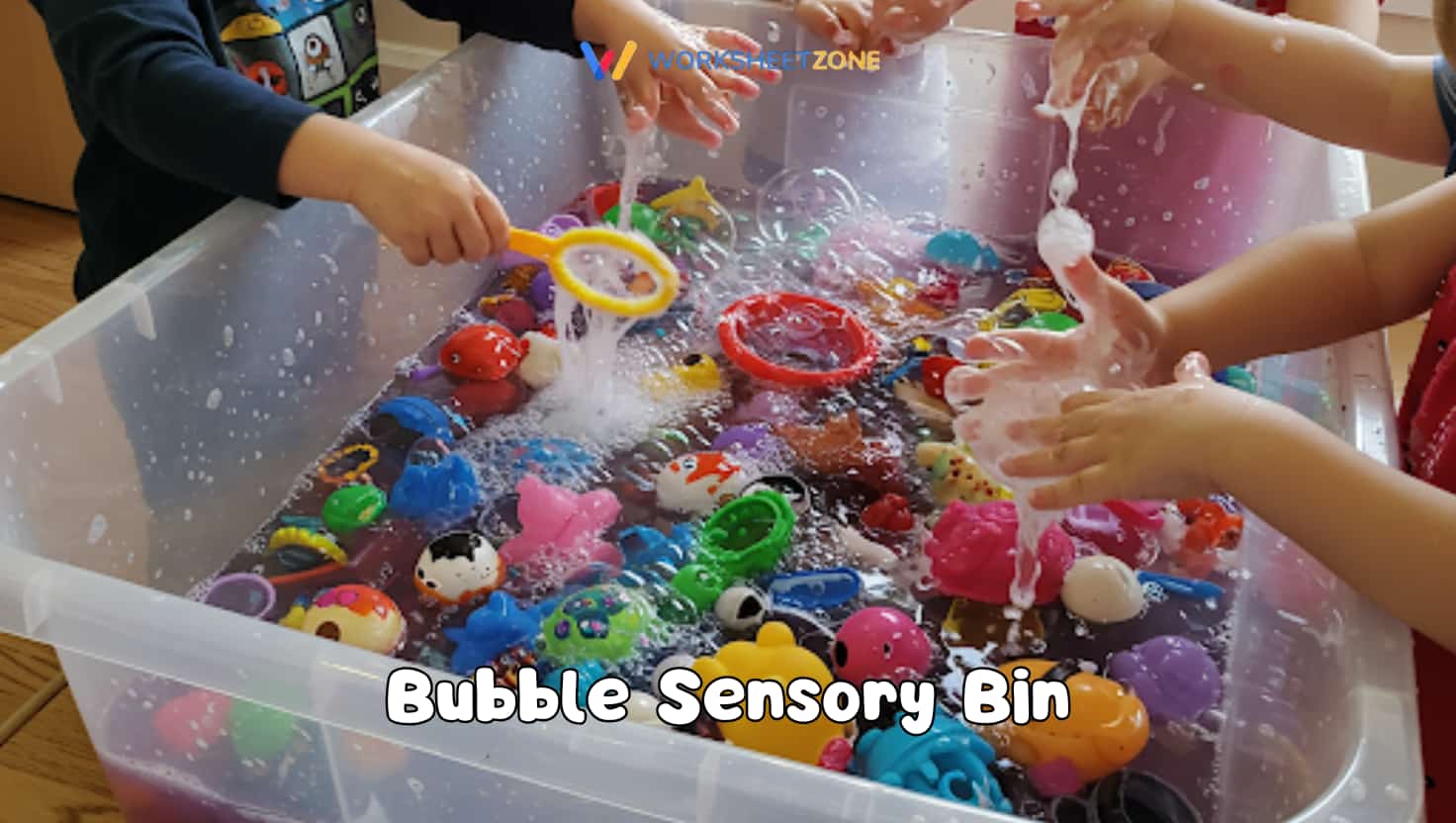
It also promotes fine motor skills as children use their hands to manipulate objects in the bin while creating and popping bubbles.
Materials Needed:
- Bubble solution
- Large plastic bin
- Small toys
- Plastic bubble wands (or anything that can hold or create bubbles)
How to do:
- Fill a large plastic bin with bubble solution.
- Add small plastic toys, rubber animals, or other sensory-friendly objects that children can use to interact with the bubbles.
- Encourage children to use their hands or bubble wands to create and pop bubbles.
- Let them explore the sensory experience, listening to the sounds of the bubbles and feeling the texture of the bubbles as they pop.
12. Rainbow Bubble Snakes
Rainbow Bubble Snakes are a colorful twist on traditional bubble play. By combining bubbles and food coloring, kids can create long, foamy streams of rainbow bubbles.
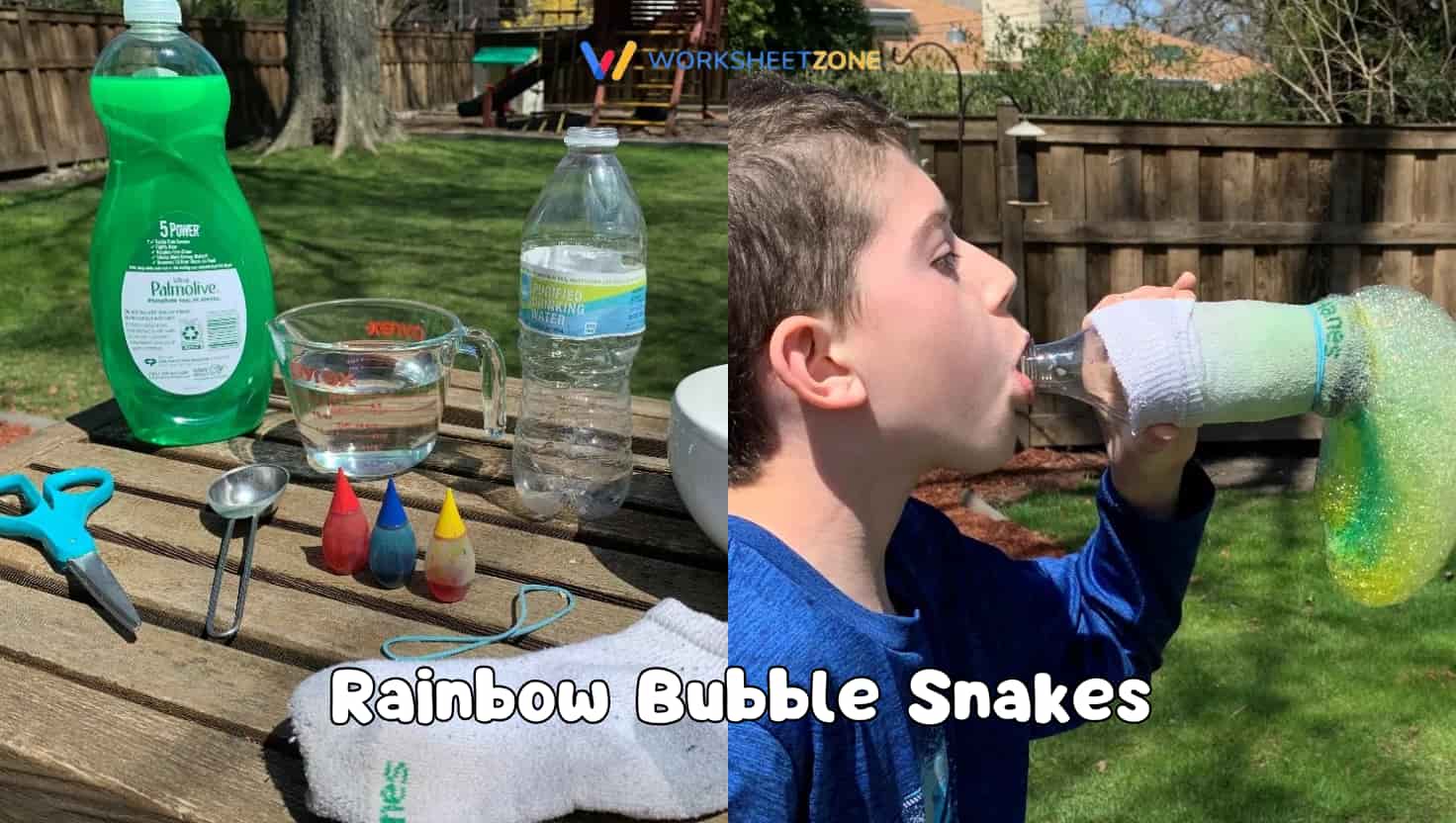
This activity is not only visually exciting but also encourages curiosity and experimentation with colors and patterns. It’s a fantastic outdoor science-art hybrid that will capture any child’s imagination.
Materials Needed:
- Empty plastic water bottles
- Dish soap
- Old socks
- Rubber bands
- Food coloring
- Scissors
- Bubble solution (optional)
How to do:
- Cut the bottom off a plastic water bottle.
- Slip a sock over the cut end and secure it tightly with a rubber band.
- Drop a few drops of food coloring onto the sock (use multiple colors for a rainbow effect).
- Dip the sock-covered end into a bubble solution.
- Have children blow through the bottle mouthpiece to create long rainbow bubble snakes.
- Encourage them to experiment with different color combinations and blowing speeds to change the bubble effects.
Frequently Asked Questions
1. What to play with bubbles?
Bubbles open the door to a world of play-based learning! You can turn a simple bottle of bubbles into hours of fun with games like Bubble Popping Challenges, Bubble Art Painting, Obstacle Bubble Races, or even bubble science experiments that explore airflow and surface tension.
Whether you’re crafting your own bubble wands, chasing bubbles in a relay race, or using them to create colorful masterpieces, bubble play combines movement, laughter, and hands-on exploration in the most magical way. It’s not just play—it’s joyful learning in action!
2. Can adults play with bubbles?
The answer is a definite yes! Bubble play isn’t just for kids—it can be a therapeutic and joyful experience for people of all ages.
Adults can enjoy mindful bubble breathing for stress relief, use bubbles to connect with their students or children, or simply enjoy the whimsical fun of popping and chasing bubbles outdoors. Whether you’re 5 or 55, bubbles have a way of sparking joy and wonder.
Final Thoughts
Bubble activities for kids are more than just fun—they’re powerful tools for learning. Through each pop and swirl, students develop motor skills, explore scientific ideas, and express creativity. These simple setups offer rich, hands-on experiences that are perfect for both indoor and outdoor classrooms.
Whether you choose bubble painting, DIY wands, or sensory play, each activity adds joy and learning to your day. So grab some soap and get ready to make the learning bubble over with excitement!


