


























Views
Downloads

Biological Kingdoms Worksheet | Essential Grade 6-8 Science
Paste this activity's link or code into your existing LMS (Google Classroom, Canvas, Teams, Schoology, Moodle, etc.).
Students can open and work on the activity right away, with no student login required.
You'll still be able to track student progress and results from your teacher account.
This comprehensive biological kingdoms worksheet provides middle school students with a structured way to master the complexities of life science classification. By focusing on the six-kingdom system, students learn to differentiate between organisms based on cellular structure, nutrition modes, and observable traits. This resource ensures learners can confidently categorize life from microscopic bacteria to complex multicellular animals.
At a Glance
- Grade: 6-8 · Subject: Science
- Standard:
MS-LS1-1— Identify living things based on cellular structures and functional characteristics- Skill Focus: Biological Kingdom Classification
- Format: 2 pages · 11 problems · Answer key included · PDF
- Best For: Middle school life science units
- Time: 20–30 minutes
What's Inside
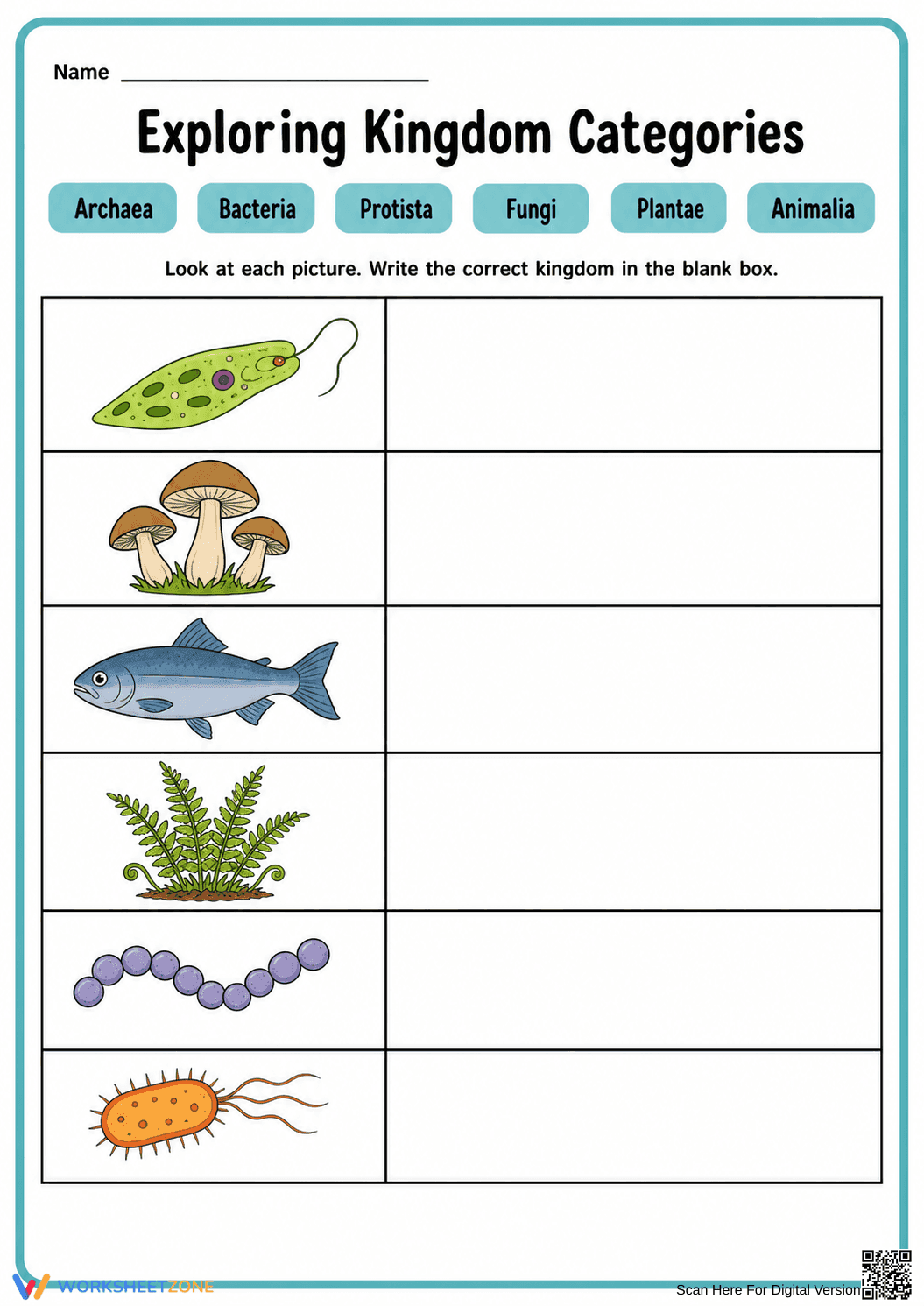
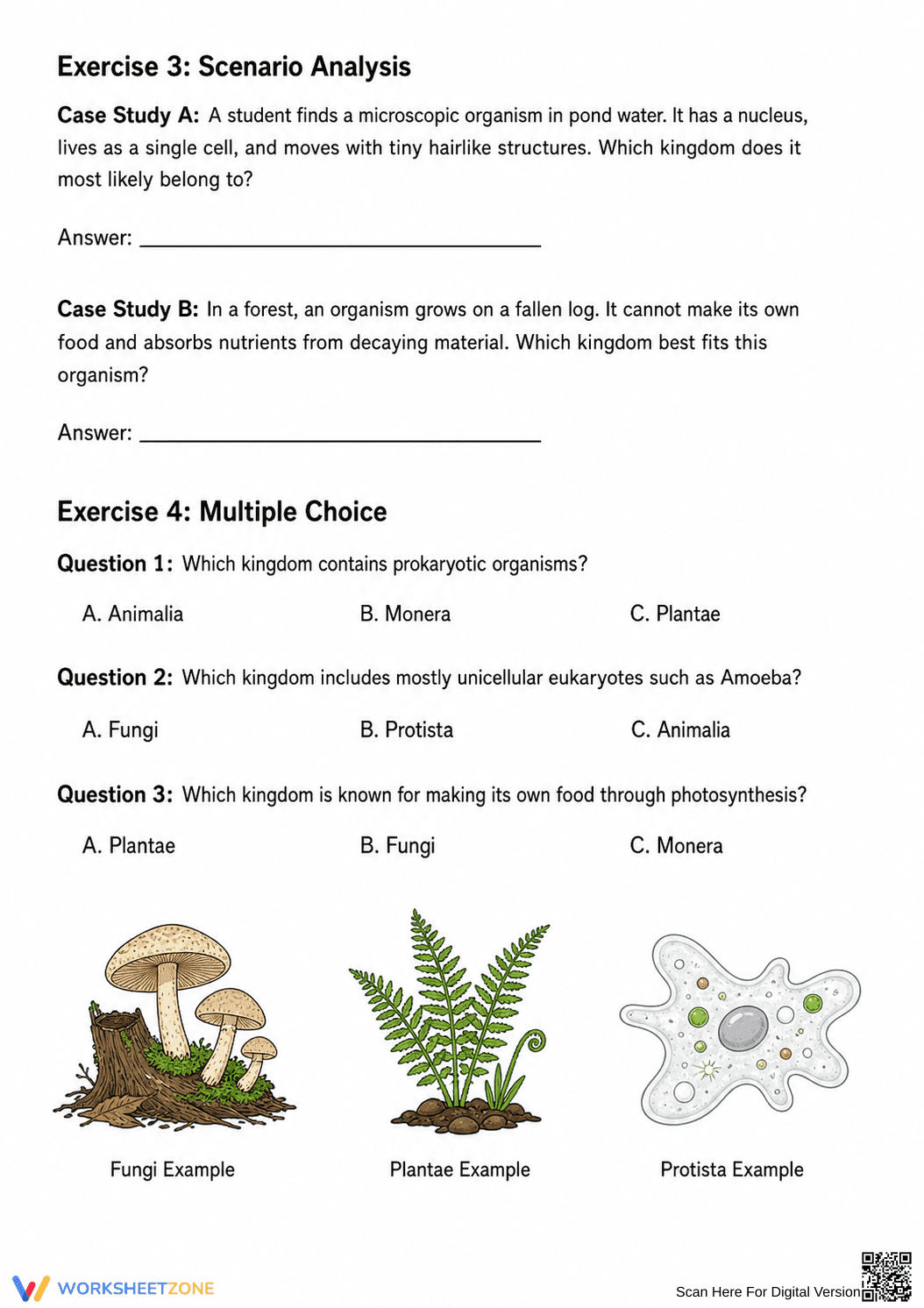
This 2-page PDF includes a variety of engaging assessment types to reinforce classification skills. The first page features a visual identification task where students match six distinct organisms to their correct kingdom using a word bank. The second page deepens understanding through two scenario-based case studies and three targeted multiple-choice questions focusing on prokaryotic versus eukaryotic traits.
Zero-Prep Workflow
- Print: Select the 2-page PDF and print enough copies for your class in under 30 seconds.
- Distribute: Hand out the worksheets as a warm-up, independent practice session, or a reliable sub-plan activity.
- Review: Use the included answer key to facilitate a quick peer-grading session or whole-class discussion in less than 5 minutes.
Standards Alignment
This resource is aligned to MS-LS1-1: "Conduct an investigation to provide evidence that living things are made of cells; either one cell or many different numbers and types of cells." It specifically addresses the cellular differences between kingdoms. This standard code can be copied directly into lesson plans, IEP goals, or district curriculum mapping tools.
How to Use It
Use this worksheet during the "Explain" or "Evaluate" phase of a 5E lesson cycle. It serves as an excellent formative assessment after students have been introduced to the characteristics of Archaea, Bacteria, Protista, Fungi, Plantae, and Animalia. Expected completion time is 20 to 30 minutes, making it ideal for a single class period or homework assignment.
Who It's For
This resource is designed for Grade 6, 7, and 8 science students. It is particularly effective for general education classrooms, homeschool environments, and as a review tool for students needing extra support with taxonomic concepts. Pair this with a kingdom characteristics anchor chart for maximum instructional impact.
According to the RAND AIRS 2024 report on science literacy, structured classification exercises are vital for developing taxonomic reasoning in middle school students. This worksheet aligns with the MS-LS1-1 standard by requiring students to differentiate between prokaryotic and eukaryotic organisms, as well as autotrophic and heterotrophic nutrition modes. By engaging with 11 distinct tasks—ranging from visual identification to complex scenario analysis—learners build a conceptual framework for the diversity of life. Research indicates that using visual cues alongside descriptive text helps bridge the gap between abstract biological concepts and observable evidence. This resource provides a comprehensive review of the six-kingdom system, ensuring students can accurately categorize organisms based on cellular traits. It serves as a reliable tool for both initial instruction and summative review in life science classrooms.


