Where narrative writing actually begins
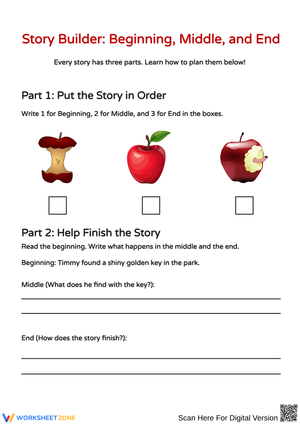
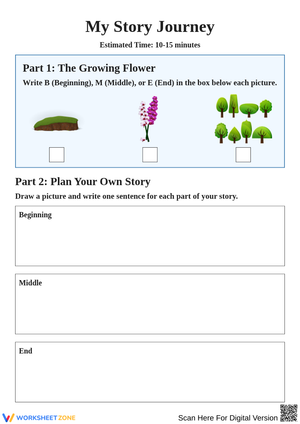
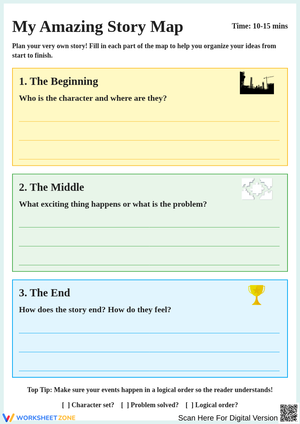
Ask a kindergartner to write a story and you'll often get one sentence about a dog. The distance between that sentence and a real narrative is structure, and beginning, middle, end worksheets are how most K-2 teachers close it. These printables give students a visible three-part frame—what happened first, what happened in the middle, and how the story ends—so retelling and writing stop feeling like guesswork.
For teachers planning early writing instruction, this skill sits underneath almost everything that follows. Students who can label the three parts of a familiar read-aloud are the same students who can later sequence their own events, add detail, and close a story on purpose. That's why the beginning-middle-end frame turns up in the reading block, in writing workshop, and in small-group intervention. It's less a single lesson and more a structure students return to all year.
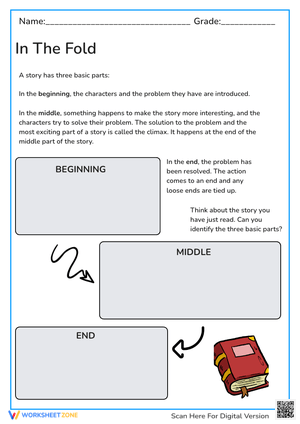
What a beginning, middle, end worksheet teaches
Most of these worksheets combine two skills: sequencing and signaling. Sequencing is the order of events. Signaling is the language that makes the order clear to a reader—temporal words like first, next, then, and last. A strong worksheet asks students to do both, not just draw three pictures in a row.
Common formats include:
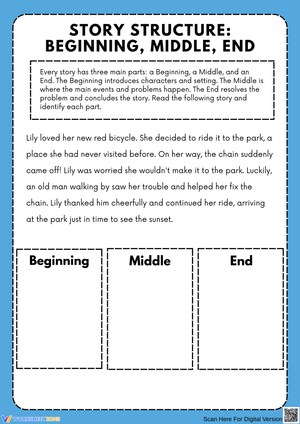
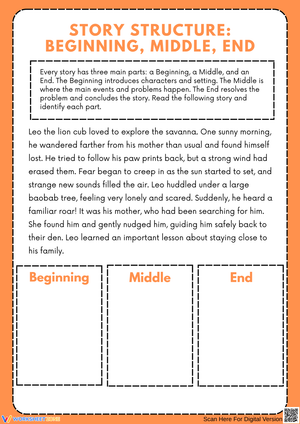
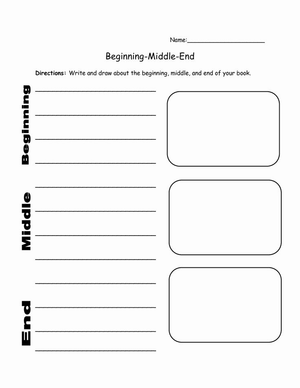
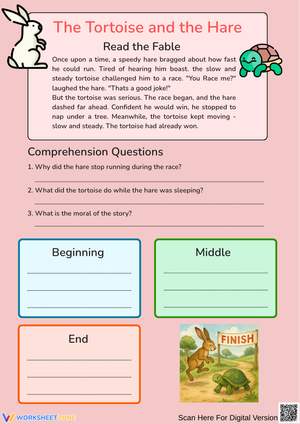
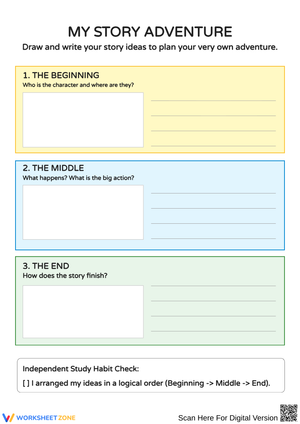
- Three-box organizers with room to draw and label each story part
- Sentence-starter templates that open each box with a temporal word
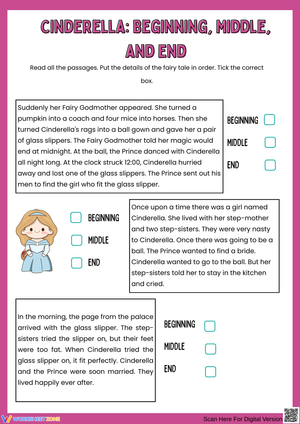
- Cut-and-sequence strips students order from a scrambled set
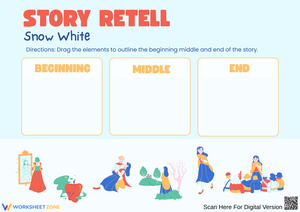
- Retelling maps tied to a specific read-aloud title
The picture-first versions let pre-writers show comprehension before they can spell, while the sentence versions push students toward independent drafting. Choosing the right format for the right week is most of the instructional work.
How these worksheets align with Common Core
The beginning-middle-end frame isn't a warm-up. It's the on-ramp to the Common Core narrative writing standards, and the progression between grades is more subtle than it looks.
Here's the detail many pacing guides miss: the jump from Grade 1 to Grade 2 isn't about adding a fourth story part—it's about elaboration inside the same three parts. CCSS.ELA-LITERACY.W.1.3 asks for two or more appropriately sequenced events, while CCSS.ELA-LITERACY.W.2.3 keeps that structure but adds actions, thoughts, and feelings. A worksheet that only ever asks what happened will quietly stall Grade 2 writers, because the standard now wants the character's inner experience, not just the plot points.
According to the Common Core State Standards, CCSS.ELA-LITERACY.W.1.3 asks Grade 1 writers to recount two or more appropriately sequenced events, use temporal words to signal order, and provide some sense of closure—a three-part shape that beginning, middle, and end worksheets map onto directly before students ever attempt an independent draft of their own.
Pairing worksheets with read-alouds
These worksheets work best when they follow a story students already know. A read-aloud gives the whole class a shared text, which means every student is sequencing the same events and you can compare their thinking. Start with short, predictable books that have an obvious problem and resolution so the three parts stand out.
After reading, revisit the book a second time and stop at the natural breaks. Where did the story really start? What changed in the middle? How did the author signal the ending? Filling the organizer against a familiar title lets students spend their energy on structure instead of inventing content, and it builds the mental model they'll reuse when the content becomes their own.
Classroom Implementation
The fastest way to make these worksheets land is to model before you assign. Read a short, familiar book aloud, then think aloud as you complete one organizer under the document camera. Students watch the three parts get named against a story they already understand.
A simple weekly routine keeps the practice consistent:
- Monday: Read-aloud, teacher models the organizer with the whole class.
- Wednesday: Shared reading, students complete the beginning box together and the middle and end in pairs.
- Friday: Students retell or draft using the worksheet on their own.
Keep the temporal words visible on an anchor chart so students reach for first, next, then, and last without being prompted. When a student writes then, then, then, treat it as a teachable moment about the middle carrying the most events.
Frequently asked questions
1. What grade level are beginning, middle, end worksheets for?
They fit K-2 best. Kindergarten uses picture-based retelling, Grade 1 adds sentence-level sequencing, and Grade 2 pushes elaboration. They also serve well in early-elementary intervention for older students who still need story-structure support.
2. How do these worksheets align with Common Core narrative writing?
They scaffold the sequencing, temporal words, and closure named in CCSS.ELA-LITERACY.W.1.3 and CCSS.ELA-LITERACY.W.2.3. The three-box frame becomes the paragraph structure students eventually write on their own.
3. How can I use them in small-group or intervention settings?
Use a completed worksheet as both a comprehension check and a retelling prop. An empty or repeated box shows exactly where sequencing or comprehension breaks down, so you can target that skill directly in your next session.
4. Which temporal words should students use?
Start with first, next, then, and last. As writers grow, add after that, later, in the end, and finally so the middle can carry more than one event without stacking the same word.
5. How are these different from a full story map?
A story map usually breaks out characters, setting, problem, and solution. A beginning-middle-end worksheet stays focused on sequence, which makes it a cleaner entry point before students take on a full story map.












 Interactive Worksheet Maker
 Quiz Maker
 Word Search Maker
 Crossword Puzzle Maker
 Word Scramble Generator
 Sentence Scramble Generator
 Handwriting Worksheet Generator
 Name Tracing Generator
 Fill In The Blank Generator