


























Views
Downloads
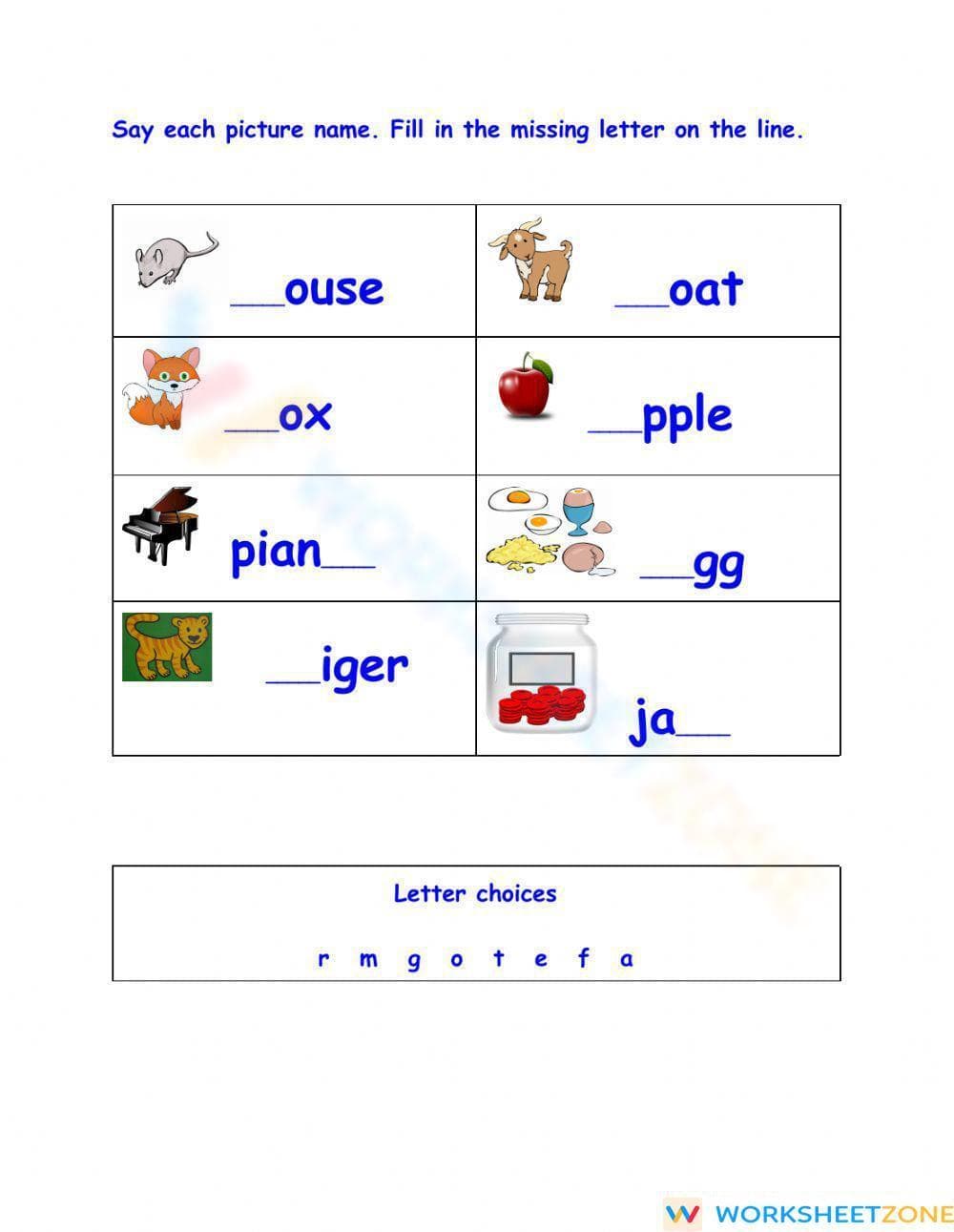

Grade K Beginning and Ending Sounds Printable Worksheet
Paste this activity's link or code into your existing LMS (Google Classroom, Canvas, Teams, Schoology, Moodle, etc.).
Students can open and work on the activity right away, with no student login required.
You'll still be able to track student progress and results from your teacher account.
This essential Grade Kindergarten worksheet provides focused practice for students learning to identify initial and final phonemes. Through a clear format, young learners work on isolating these crucial sounds, a foundational skill for decoding and reading fluency. This printable resource builds early phonemic awareness in a structured and effective way.
At a Glance
- Grade: Kindergarten · Subject: English Language Arts (ELA)
- Standard:
CCSS.ELA-LITERACY.RF.K.2.D— Isolate and pronounce initial and final sounds in words.- Skill Focus: Beginning and Ending Sounds
- Format: 1 page · 8 problems · Answer key included · PDF
- Best For: Phonics centers, morning work, or quick assessment.
- Time: 10–15 minutes
What's Inside
This single-page PDF contains eight targeted tasks designed for early readers. For each illustrated item—including a mouse, apple, and piano—students must say the word aloud and identify the missing beginning or ending sound. They then write the correct letter on the line using a provided letter choice bank. The clean layout ensures students concentrate on the auditory task.
Zero-Prep Classroom Workflow
Designed for busy classrooms, this tool streamlines phonics practice into an effective routine. The process requires virtually no teacher preparation, making it ideal for substitute plans or quick reviews.
- Print (30 seconds): Print exactly what you need for your small group or entire class.
- Distribute (30 seconds): The simple, visual tasks allow students to begin immediately with minimal instructions.
- Review (1 minute): Use the included answer key for instant feedback, easy grading, or guided review.
Standards Alignment
This worksheet is strictly aligned with Common Core State Standards for ELA, specifically CCSS.ELA-LITERACY.RF.K.2.D. This standard requires students to isolate and pronounce the initial and final sounds in words. By focusing on a word's "bookends," this activity builds the prerequisite skills needed for word blending. Supporting practice for letter-sound correspondence is naturally integrated. This standard code can be copied directly into lesson plans or IEP goals.
How to Use It
Use this resource as a quick formative assessment after a direct instruction lesson to see which students need more support. It also functions perfectly as an independent activity in literacy centers or as morning work. Most students can complete the tasks in 10-15 minutes. Note whether students struggle more with initial or final sounds to target your next instructional steps in phonics instruction.
Who It's For
This resource is designed for Kindergarten students developing early phonemic awareness. It also serves as an excellent review for advanced Preschoolers or as an intervention for First Graders. The strong visual support makes it accessible for English Language Learners building basic vocabulary. Pair this worksheet with an alphabet anchor chart or a shared reading of a phonetic picture book.
Phonemic awareness, particularly the ability to isolate individual sounds, is a key predictor of future reading success, as noted in studies analyzed by the NAEP. This Grade K worksheet directly addresses standard CCSS.ELA-LITERACY.RF.K.2.D by providing structured practice in identifying beginning and ending phonemes. Such explicit skill work is crucial for building the cognitive foundation required to map sounds to letters. According to Fisher & Frey (2014), a gradual release model where students move from guided to independent practice is highly effective. This printable resource serves as an ideal tool for that independent application phase, allowing students to solidify their understanding after direct instruction. By offering clear, repetitive tasks, the worksheet helps young learners develop the phonological precision necessary to decode words and build reading fluency, ensuring they have a stable base for future literacy growth.


