


























Views
Downloads

Alphabetical Order Worksheet | Grade Preschool Printable
Paste this activity's link or code into your existing LMS (Google Classroom, Canvas, Teams, Schoology, Moodle, etc.).
Students can open and work on the activity right away, with no student login required.
You'll still be able to track student progress and results from your teacher account.
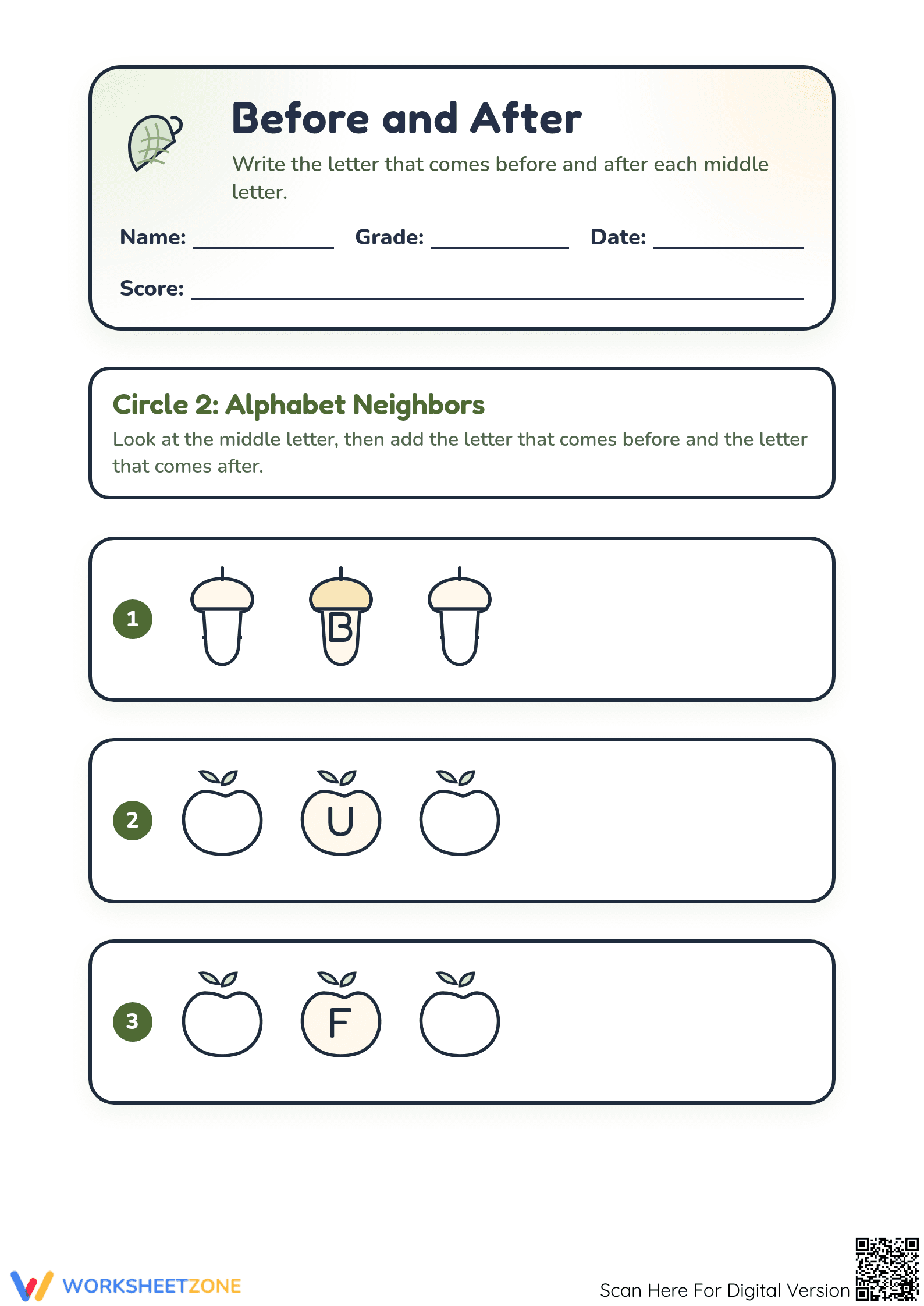
This Alphabetical Order Worksheet for Preschool learners provides essential practice in letter sequencing and letter recognition. By identifying letters that come before and after a given middle letter, students strengthen their foundational literacy skills and prepare for more advanced reading tasks. This focused activity ensures early learners master the basic structure of the alphabet.
At a Glance
- Grade: Preschool · Subject: ELA Alphabet
- Standard:
CCSS.ELA-LITERACY.RF.K.1.D— Identify and sequence uppercase letters within the alphabetical order- Skill Focus: Alphabetical Order
- Format: 2 pages · 8 problems · Answer key included · PDF
- Best For: Independent center work and letter practice
- Time: 10–15 minutes
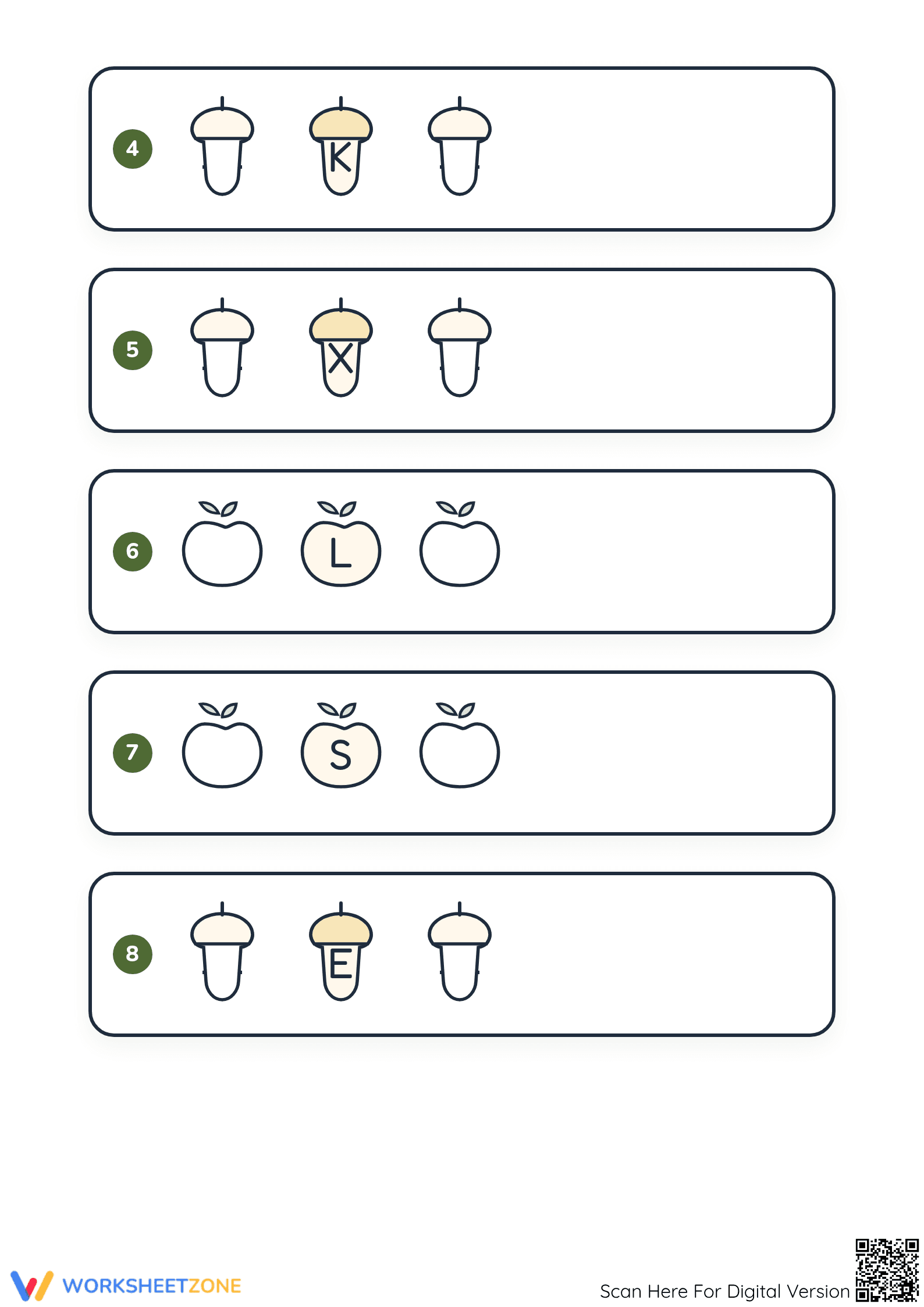
This two-page PDF includes eight individual letter-sequencing tasks. Each problem features a target letter housed within a central icon, flanked by two empty shapes for students to fill in. The worksheet uses large, clear uppercase letters including B, U, F, K, X, L, S, and E to reduce visual clutter. A complete answer key is provided for quick grading or self-checking.
Zero-Prep Workflow
- Print (30 seconds): Select the pages and print as many copies as needed for your class size.
- Distribute (30 seconds): Hand out the worksheets alongside pencils or crayons for immediate student engagement.
- Review (1 minute): Use the provided answer key to verify student responses or display it for a whole-class review.
Total teacher preparation time is under two minutes, making this an ideal resource for morning work or sudden substitute needs.
Standards Alignment
The primary standard addressed is CCSS.ELA-LITERACY.RF.K.1.D, which requires students to recognize and name all upper- and lowercase letters of the alphabet. While alphabetical sequencing is an extension of this skill, mastering "before and after" relationships is a critical prerequisite for dictionary skills and organizational literacy. This resource also supports foundational visual discrimination and fine motor development. This standard code can be copied directly into lesson plans, IEP goals, or district curriculum mapping tools.
How to Use It
Use this worksheet after students learn the alphabet song and letter names. During direct instruction, teachers can model the first problem on a whiteboard to demonstrate the directional flow of the alphabet. One formative-assessment tip is to observe whether students recite the entire alphabet song to find the neighbor letters or if they can retrieve the sequence mentally. This helps identify which students have achieved automaticity.
Who It's For
Designed for preschool and pre-kindergarten students who are beginning to understand that letters follow a fixed, predictable order. It is also suitable for kindergarteners needing remedial support or English Language Learners focusing on basic literacy foundations. Pair this worksheet with an alphabet anchor chart or a tactile letter-tracing activity to provide a multi-sensory learning experience for all students.
Research indicates that early mastery of letter-name knowledge and alphabetical sequencing is one of the strongest predictors of future reading success. According to the ScienceDirect TpT Analysis, high-quality, focused practice sheets that isolate specific sequencing skills allow students to build cognitive automaticity without being overwhelmed by complex instructions. By requiring students to identify both the preceding and succeeding letters, this worksheet challenges their bidirectional retrieval of letter information, which is more rigorous than simple rote recitation. The use of clear visual cues and repetitive task structures supports working memory in early learners, allowing them to focus entirely on the alphabetical relationship. This resource aligns with evidence-based practices for phonological awareness and letter knowledge, providing a structured pathway for students to move from simple recognition to active manipulation of the English alphabet system within a classroom setting.


