


























Views
Downloads

Alphabetical Order Worksheet | Preschool Essential
Paste this activity's link or code into your existing LMS (Google Classroom, Canvas, Teams, Schoology, Moodle, etc.).
Students can open and work on the activity right away, with no student login required.
You'll still be able to track student progress and results from your teacher account.
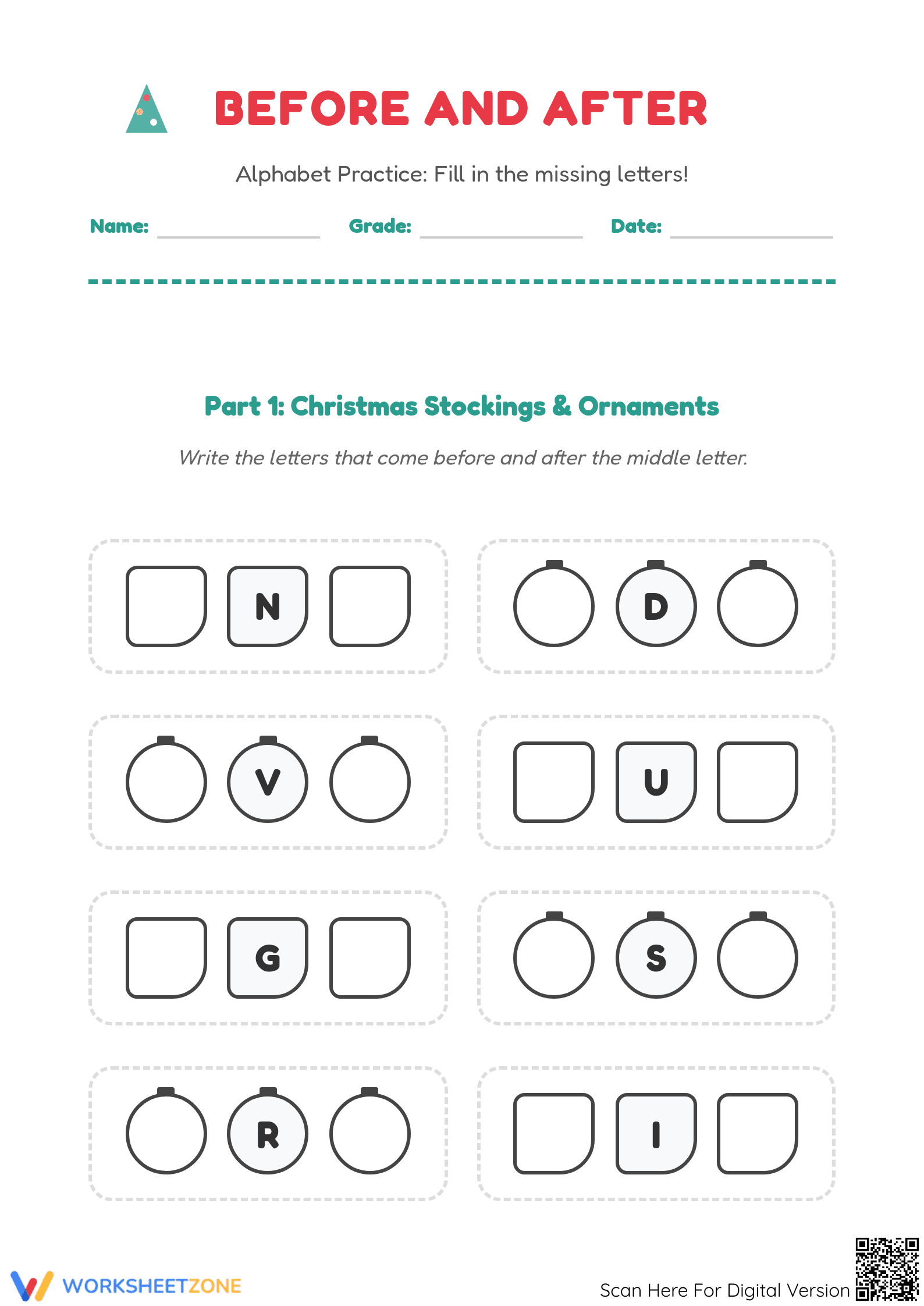
This Preschool alphabetical order worksheet helps early learners master letter sequencing by identifying which letters come immediately before and after a given target. By focusing on the relative position of letters, students move beyond simple recitation to active retrieval and recognition. This exercise builds the foundational fluency required for future reading and dictionary skills.
At a Glance
- Grade: Preschool · Subject: ELA
- Standard:
CCSS.ELA-LITERACY.RF.K.1.D— Recognize and name all upper- and lowercase letters of the alphabet- Skill Focus: Alphabetical sequencing (Before/After)
- Format: 2 pages · 16 problems · Answer key included · PDF
- Best For: Independent literacy centers and morning work
- Time: 10–15 minutes
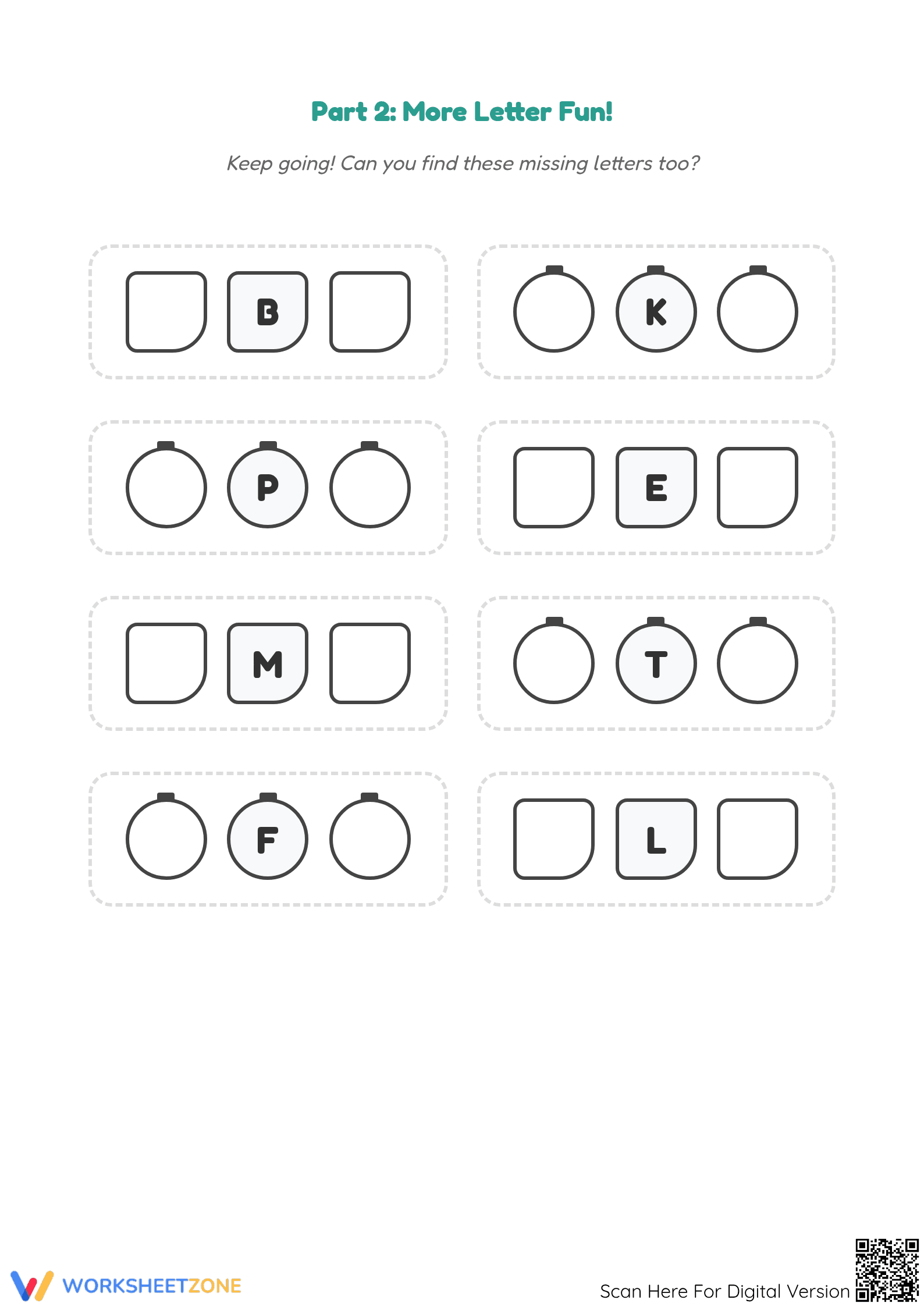
What's Inside: This comprehensive 2-page PDF features 16 distinct letter-sequencing tasks. Each task presents a middle uppercase letter housed in a festive Christmas stocking or ornament frame, flanked by two empty boxes. The layout is clean and high-contrast to support young writers. A full-color answer key is included to facilitate rapid grading or student self-correction.
Zero-Prep Workflow
- Print: Select the 2-page PDF and print enough copies for your class in less than 60 seconds.
- Distribute: Hand out the sheets during your literacy block or as a quiet transition activity; no additional manipulatives are required.
- Review: Use the included answer key to quickly identify letter reversal or sequencing errors. Total teacher prep time is under 2 minutes.
This resource is an ideal sub-plan component because the visual cues and simple instructions allow students to work with minimal adult intervention.
Standards Alignment: This resource aligns primarily with `CCSS.ELA-LITERACY.RF.K.1.D`, which requires students to recognize and name all letters of the alphabet in and out of sequence. It also supports early writing standards by providing structured spaces for letter formation. Both standard codes can be copied directly into lesson plans, IEP goals, or district curriculum mapping tools.
How to Use It: Assign this worksheet during the "You Do" phase of a gradual release lesson on the alphabet. It works exceptionally well as a formative assessment after singing the alphabet song or using letter flashcards. For a quick check, observe if students need to recite the entire alphabet from 'A' to find the missing letters, or if they can identify the neighbors through direct retrieval. Expect completion in 10 to 15 minutes.
Who It's For: This is designed for Preschoolers and early Kindergarten students who are beginning to recognize letter shapes and names. It is particularly helpful for students who struggle with the middle sections of the alphabet. Pair this worksheet with a large classroom alphabet wall chart to provide a visual scaffold for students who are still developing mastery.
According to RAND AIRS 2024, early exposure to letter sequencing and the "before and after" concept is a critical precursor to decoding and fluent reading. This worksheet targets CCSS.ELA-LITERACY.RF.K.1.D by requiring students to recall the position of 16 different uppercase letters within the standard English alphabet. Research from Fisher & Frey (2014) emphasizes that scaffolded practice with letter strings helps solidify the mental alphabet map necessary for dictionary skills and organizational thinking later in elementary school. By isolating the middle letter and asking for its neighbors, this resource reduces cognitive load while maximizing retrieval practice. Data from NAEP suggests that students who master letter-naming and sequencing in the preschool years show significantly higher reading readiness scores upon entering first grade. This printable provides the high-frequency repetition needed for mastery.


