


























Views
Downloads
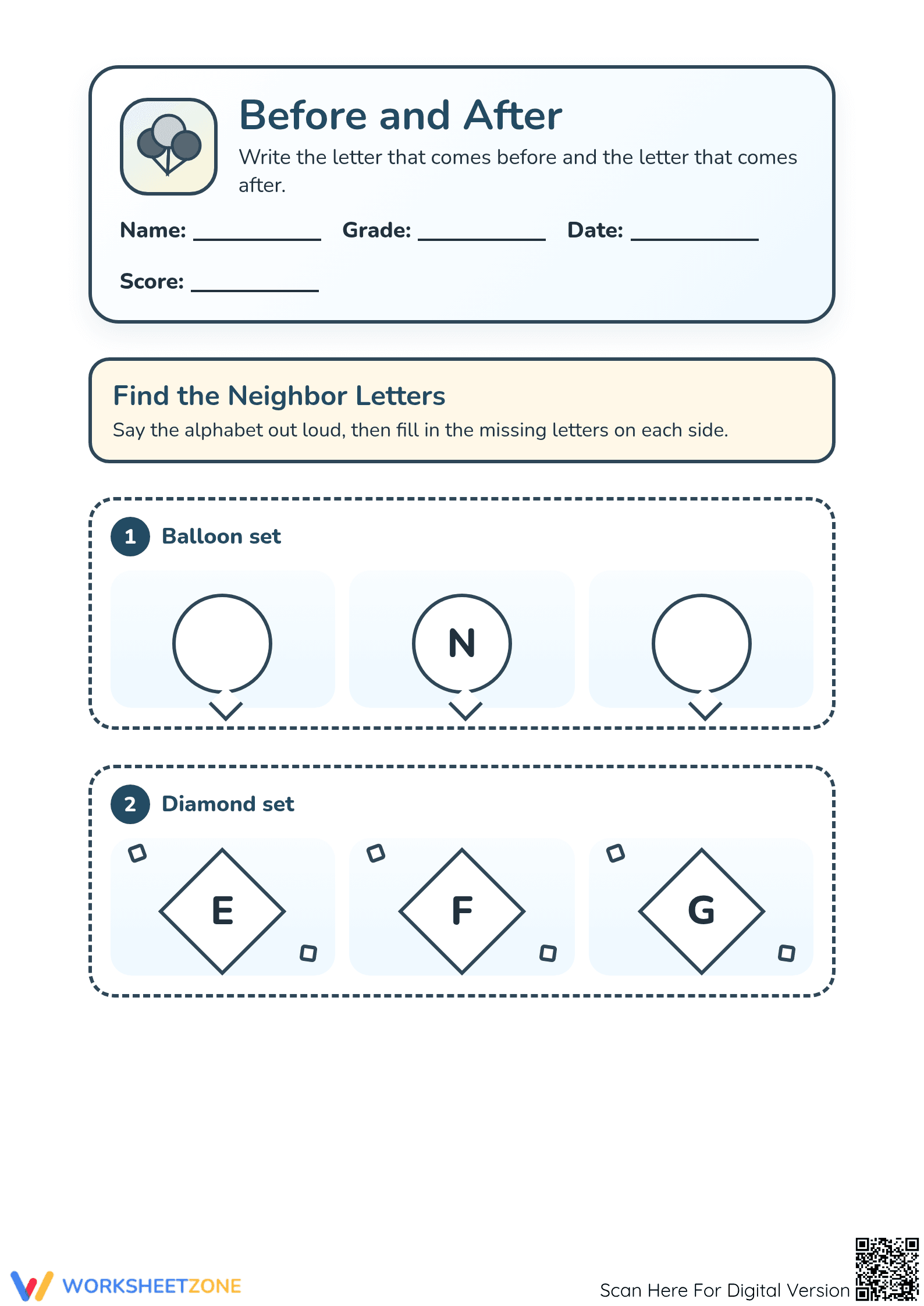
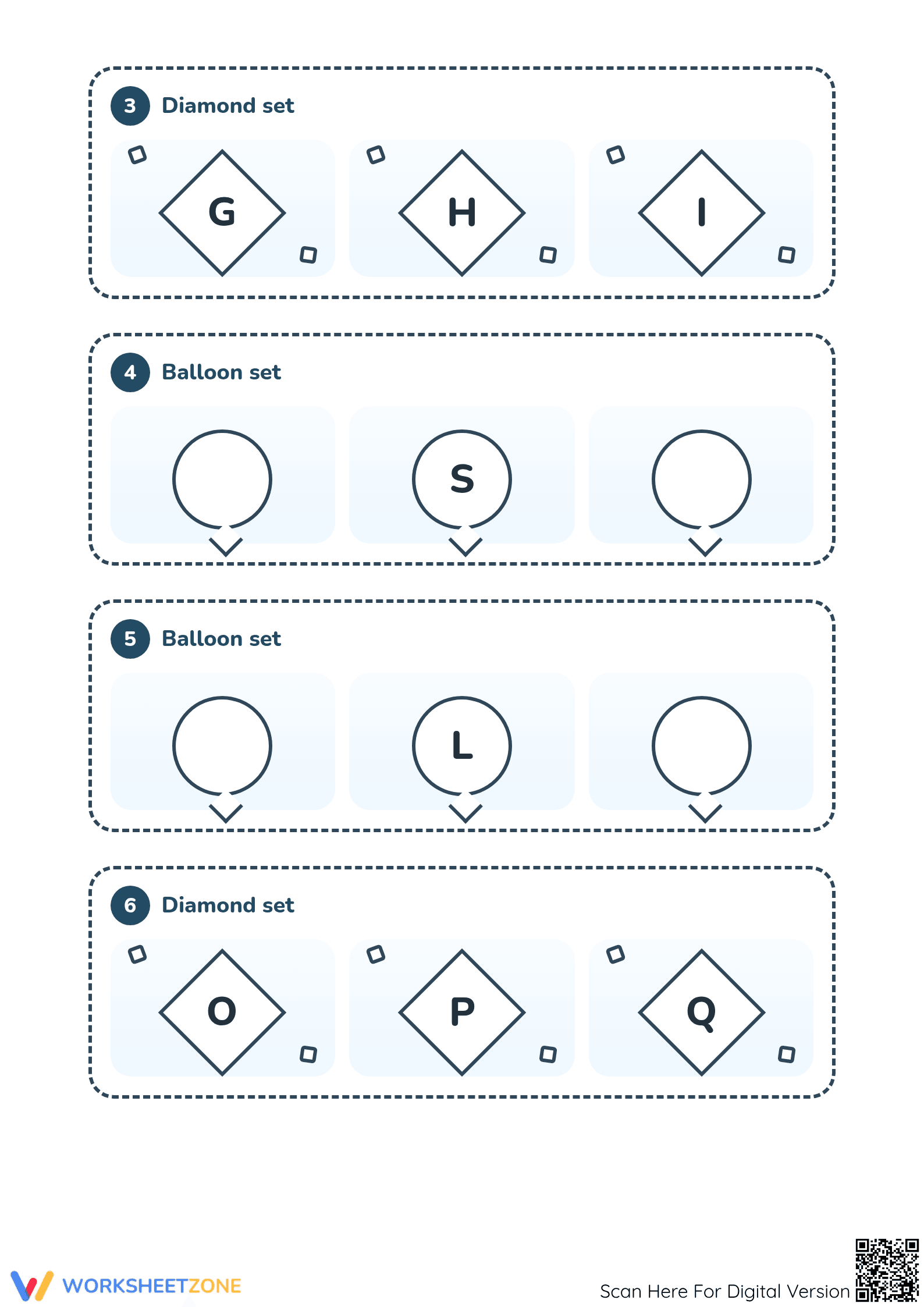
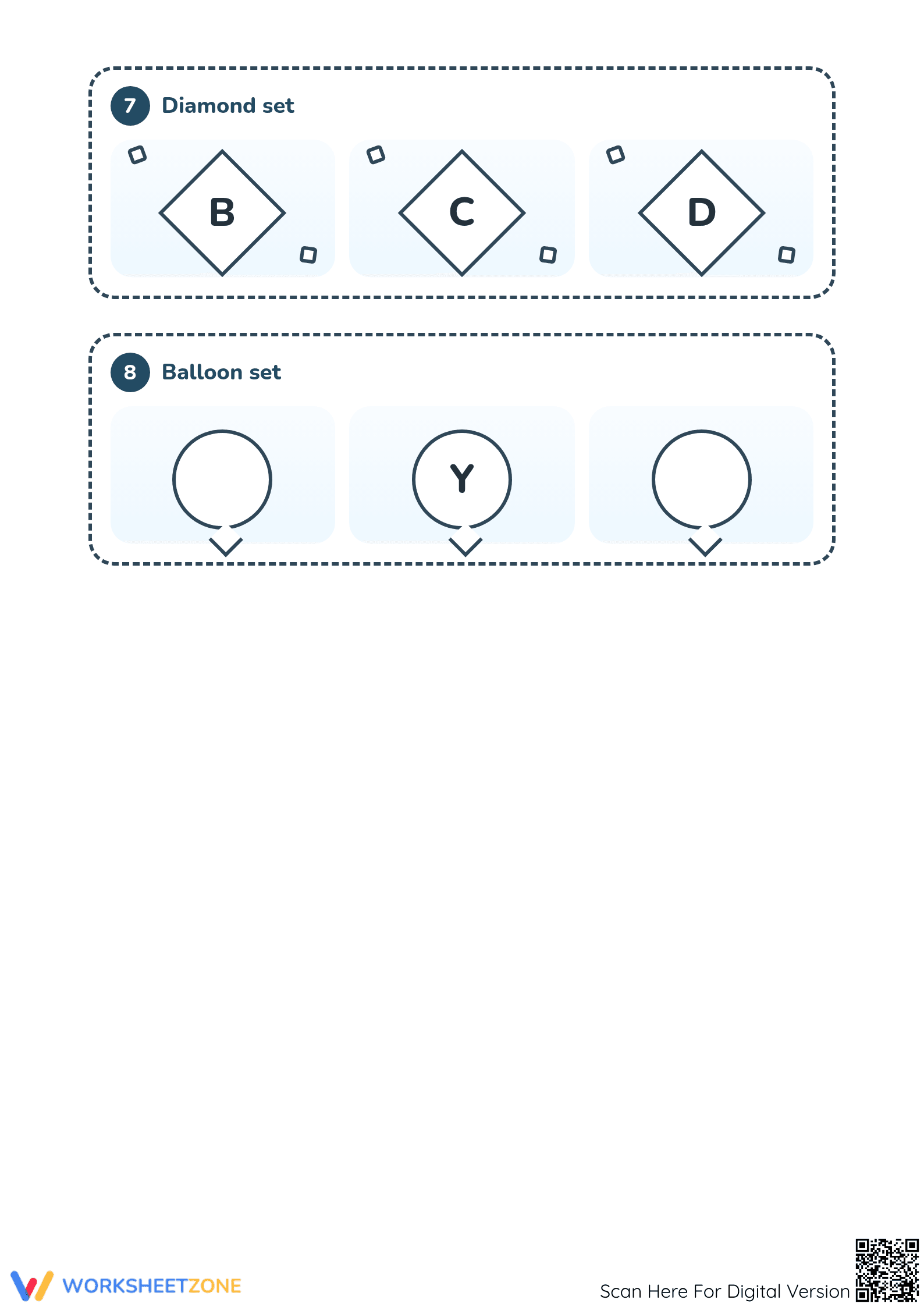

Printable Before and After Alphabet Worksheet | Preschool
Paste this activity's link or code into your existing LMS (Google Classroom, Canvas, Teams, Schoology, Moodle, etc.).
Students can open and work on the activity right away, with no student login required.
You'll still be able to track student progress and results from your teacher account.
This Preschool alphabetical order worksheet helps young learners master letter sequencing by identifying the "neighbor letters" that come before and after a given uppercase character. By practicing these 8 structured sets, students bridge the gap between simple letter recognition and fluent alphabetical knowledge, ensuring they are prepared for early reading and dictionary skills.
At a Glance
- Grade: Preschool · Subject: ELA
- Standard:
CCSS.ELA-LITERACY.RF.PK.1.d— Recognize uppercase letters and understand their sequence in the alphabet- Skill Focus: Alphabetical Order and Letter Sequencing
- Format: 3 pages · 8 problems · Answer key included · PDF
- Best For: Early literacy centers and morning work
- Time: 10–15 minutes
This 3-page printable pack features 8 distinct letter sets housed in engaging balloon and diamond graphics. Each task provides a central uppercase letter and requires students to write the preceding and succeeding letters. The clear, uncluttered layout is designed for preschool motor skills, featuring large shapes and simple arrows. A comprehensive answer key is provided to facilitate rapid grading or student self-correction.
This zero-prep resource is designed for immediate classroom integration. Teachers can follow a simple 3-step workflow: first, Print the three-page PDF (30 seconds); second, Distribute to students along with a pencil (1 minute); and third, Review the completed sequences using the provided answer key (30 seconds). The total preparation time is under 2 minutes, making it an ideal emergency sub plan or transition activity.
Standards Alignment
The primary alignment is to `CCSS.ELA-LITERACY.RF.PK.1.d`, which requires students to recognize and name upper- and lowercase letters, specifically within the context of their relative positions. This worksheet also supports foundational conventions of standard English. Both standard codes can be copied directly into lesson plans, IEP goals, or district curriculum mapping tools.
How to Use It
Use this worksheet during small-group direct instruction to model how to "recite and find" using an alphabet strip. As a formative-assessment tip, observe whether students need to sing the entire alphabet song to find a neighbor letter or if they can identify the sequence locally; this distinguishes between rote memorization and true letter fluency. The activity typically takes 10 to 15 minutes to complete.
Who It's For
This resource is tailored for preschool and transitional kindergarten students who are beginning to master the uppercase alphabet. It is also suitable for kindergarten intervention or special education students working on foundational ELA goals. Naturally pair this worksheet with an uppercase alphabet anchor chart or a letter-tracing passage to provide additional visual scaffolding for emerging writers.
Effective early literacy instruction requires a focus on letter-name knowledge and the sequential relationships between characters, as these are primary predictors of later reading success. According to the NAEP and research synthesized in EdReports 2024, students who can fluently navigate alphabetical order demonstrate higher levels of phonological awareness and decoding readiness. This worksheet addresses CCSS.ELA-LITERACY.RF.PK.1.d by providing 8 targeted practice sets that challenge students to recall letter positions without the aid of a full sequential list. By identifying "neighbor letters" in balloon and diamond formats, learners move beyond simple identification toward mastery of the alphabetical system. Fisher & Frey (2014) emphasize that such scaffolded practice supports the gradual release of responsibility, allowing students to build confidence in their independent literacy skills. This 3-page PDF resource provides the structured repetition necessary for preschool learners to internalize uppercase letter sequences efficiently and effectively.


