


























Views
Downloads

Grade 4 Environment — Printable No-Prep Worksheet
Paste this activity's link or code into your existing LMS (Google Classroom, Canvas, Teams, Schoology, Moodle, etc.).
Students can open and work on the activity right away, with no student login required.
You'll still be able to track student progress and results from your teacher account.
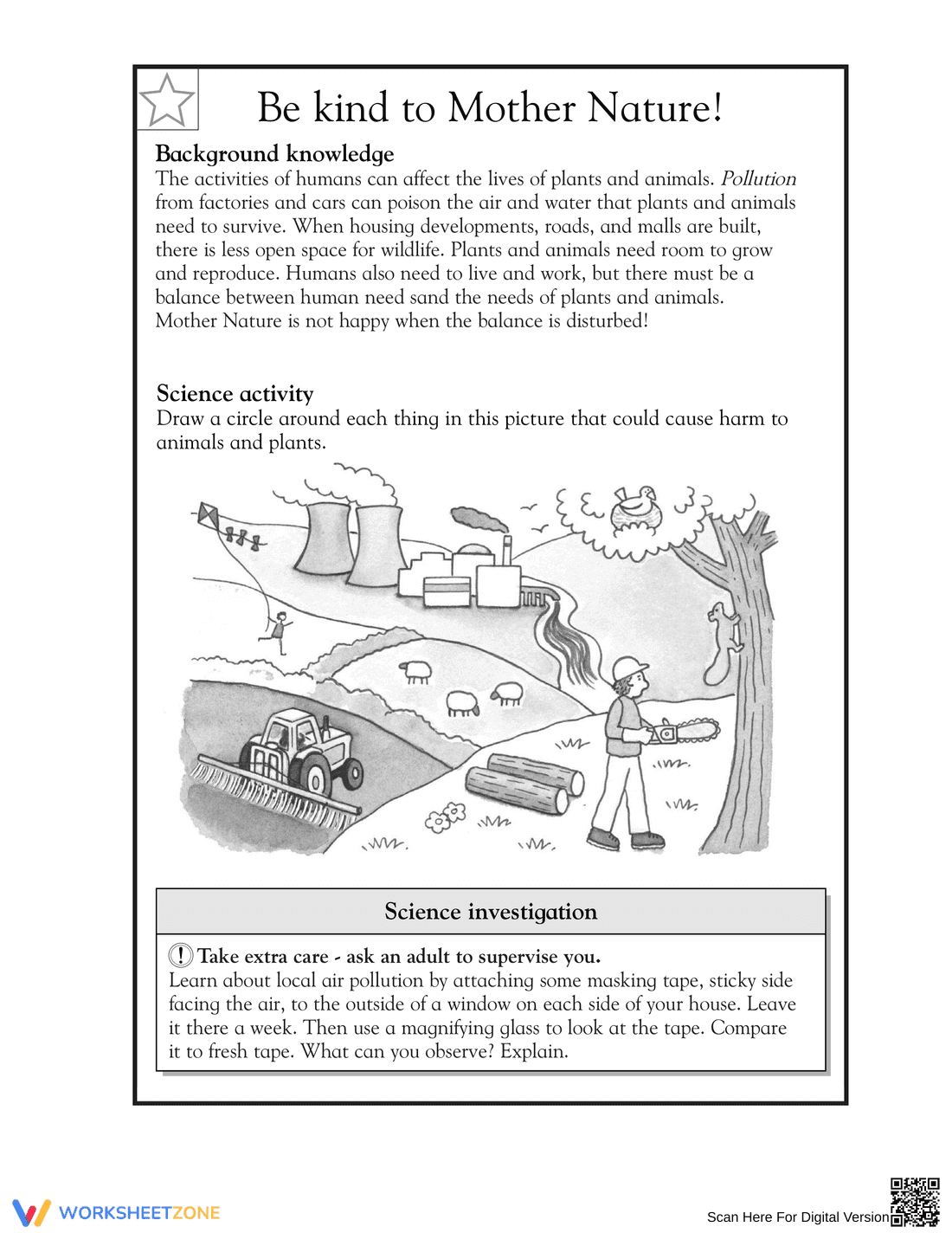
This worksheet provides a clear, engaging introduction to human impact on the environment for third and fourth-grade students. Through a reading passage, a visual identification task, and a hands-on investigation, learners will identify sources of pollution and consider the balance between human needs and nature's health, building foundational environmental literacy.
At a Glance
- Grade: 3–4 · Subject: Science, Environment
- Standard:
4-ESS3-1— Describe how the use of natural resources affects the environment.- Skill Focus: Identifying Human Impact on Ecosystems
- Format: 2 pages · 2 problems · Answer key included · PDF
- Best For: Earth Day lesson, unit introduction, sub plan
- Time: 20–30 minutes
What's Inside
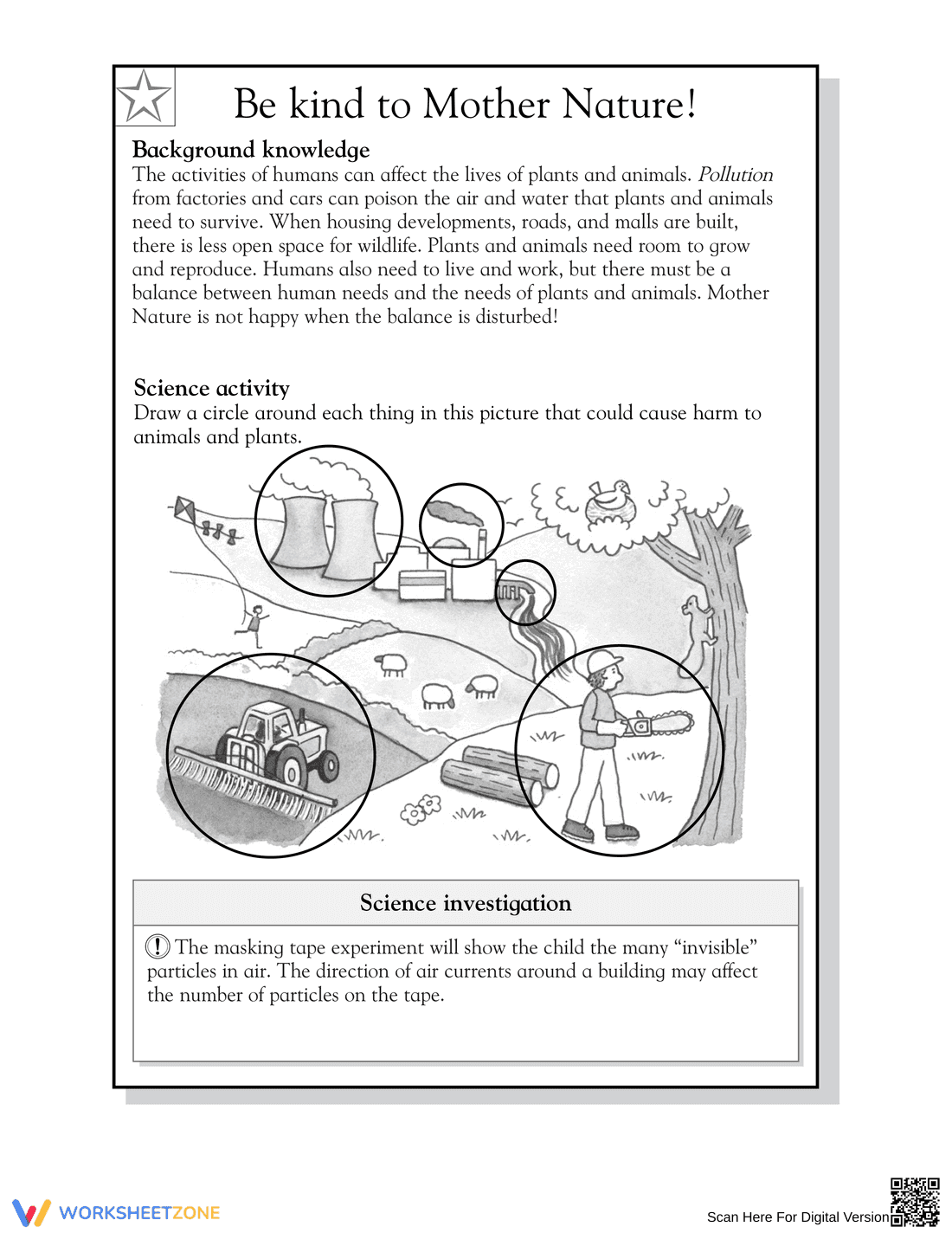
This two-page resource contains a student worksheet and a full answer key. The worksheet presents a "Background Knowledge" text on pollution, a visual task where students circle harmful activities, and a "Science Investigation" guiding a simple experiment to observe air pollution.
Zero-Prep Workflow
Designed for efficiency, this worksheet requires less than two minutes of prep time.
- Print (30 seconds): The single-page, black-and-white PDF is fast to print. An answer key is included.
- Distribute (1 minute): The self-contained instructions allow for independent work after a brief topic introduction.
- Review (5 minutes): Use the clear answer key to review the circled items with the class or allow for self-correction.
This simple workflow makes the worksheet ideal for a science lesson or an emergency substitute plan.
Standards Alignment
This worksheet aligns with NGSS 4-ESS3-1, where students describe how the use of natural resources affects the environment. The tasks require learners to identify how human activities impact the natural world. It also serves as an entry point for 3-LS4-4 (evaluating solutions to environmental problems). Both standard codes can be copied directly into lesson plans or curriculum maps.
How to Use It
Use this worksheet to introduce a unit on ecosystems or environmental science. It functions well as a pre-assessment or "hook" activity. For a formative check, circulate as students work and ask for their reasoning to gauge their understanding of cause and effect. The activity can be completed individually in about 20 minutes, with extra time for discussion.
Who It's For
This resource is designed for students in grades 3 and 4 who are beginning to learn about environmental science concepts. The clear layout and visual nature of the primary task supports a range of learners, including English Language Learners and students with reading difficulties. Pair this worksheet with an anchor chart defining "pollution" or follow it up with a read-aloud of a book about conservation to extend the learning.
This resource helps students meet key environmental science goals outlined in the NGSS framework, specifically standard 4-ESS3-1. It translates the abstract concept of "human impact" into concrete, observable examples like factories and deforestation. By asking students to identify these sources of harm, the worksheet builds critical thinking skills necessary for evaluating environmental problems, a practice supported by research from `EdReports 2024` on effective science curricula. The combination of a knowledge-based reading, a visual analysis task, and a hands-on investigation provides multiple entry points for learning, accommodating diverse student needs. This approach, which connects scientific concepts to real-world phenomena, is crucial for developing robust scientific literacy and preparing students to engage with complex environmental issues they will encounter outside the classroom. The worksheet provides a solid foundation for this essential scientific practice.


