


























Views
Downloads
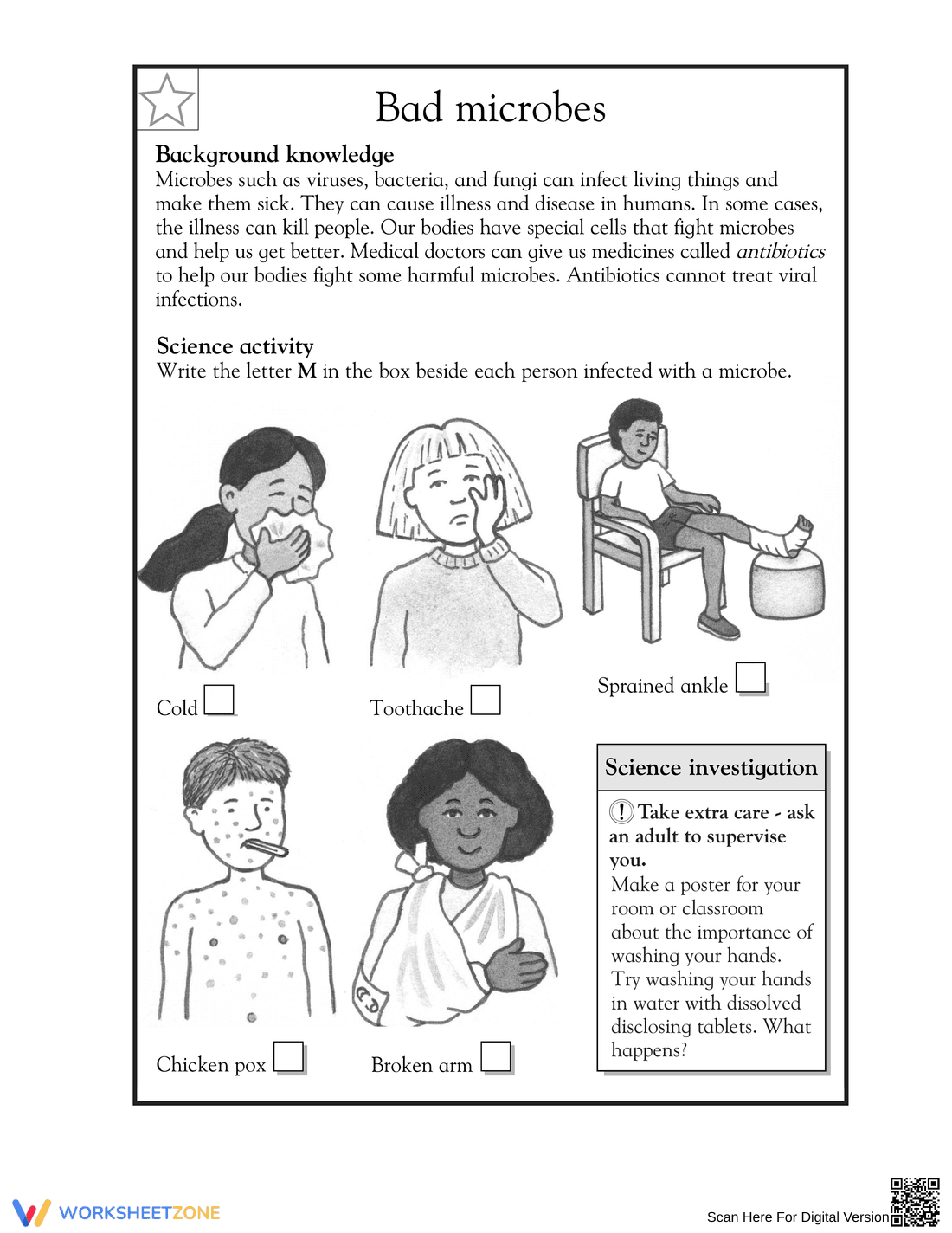
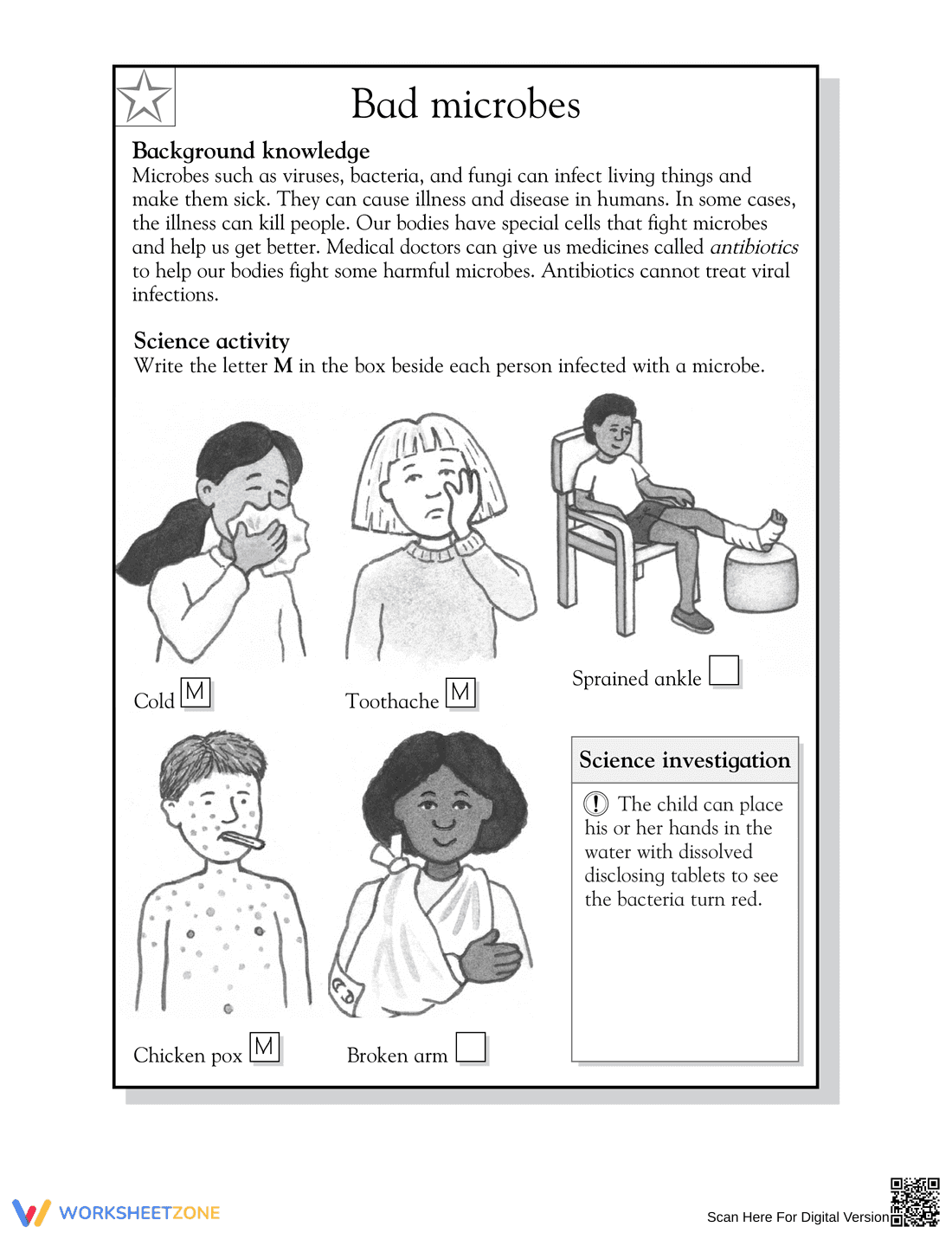

Essential Bad Microbes Worksheet | Grade 3 Science Aligned
Paste this activity's link or code into your existing LMS (Google Classroom, Canvas, Teams, Schoology, Moodle, etc.).
Students can open and work on the activity right away, with no student login required.
You'll still be able to track student progress and results from your teacher account.
This Grade 3 science worksheet helps students distinguish between illnesses caused by microbes and physical injuries. By analyzing real-world scenarios like colds and sprained ankles, learners develop a fundamental understanding of how germs affect the human body. It is an essential tool for introducing basic microbiology and hygiene practices in the classroom.
At a Glance
- Grade: 3 · Subject: Science
- Standard:
CCSS.ELA-LITERACY.RI.3.1— Cite text evidence to ask and answer questions about microbes and their effects on humans- Skill Focus: Microbe identification and hygiene
- Format: 2 pages · 5 problems · Answer key included · PDF
- Best For: Zero-prep science sub plans, emergency hygiene lessons, and formative health assessment
- Time: 15–20 minutes
What's Inside
This comprehensive resource includes a 1-page student worksheet and a corresponding answer key. The worksheet features a "Background Knowledge" section explaining viruses, bacteria, and fungi, followed by five visual identification tasks. It also contains a "Science Investigation" section that guides students through creating a hand-washing poster and performing a disclosing tablet experiment to visualize bacteria.
Zero-Prep Workflow
- Step 1: Print – Select the PDF and send to the copier for your entire class (20 seconds).
- Step 2: Distribute – Pass out the worksheets as students enter the room (40 seconds).
- Step 3: Review – Display the answer key on your interactive board for immediate feedback (40 seconds).
This workflow requires less than 2 minutes of teacher preparation, making it ideal for busy mornings or emergency sub plans. The clear layout ensures students can begin working immediately.
Standards Alignment
Aligned to CCSS.ELA-LITERACY.RI.3.1: "Ask and answer questions to demonstrate understanding of a text, referring explicitly to the text as the basis for the answers." This activity requires students to read the background text to differentiate between infection types and physical trauma. Both standard codes can be copied directly into lesson plans, IEP goals, or district curriculum mapping tools.
How to Use It
Assign this worksheet as a formative assessment after a direct instruction lesson on hygiene or the human body. Teachers can observe students as they work to identify which scenarios involve "M" for microbes, providing an immediate snapshot of their grasp of infectious versus non-infectious conditions. The expected completion time is 20 minutes including the investigation discussion.
Who It's For
This resource is designed for Grade 3 students but is suitable for Grade 2 or Grade 4 learners requiring basic germ education. It pairs naturally with informational passages about the immune system or anchor charts depicting proper hand-washing techniques. These versatile applications ensure the worksheet meets various classroom needs across different instructional settings.
The Bad Microbes worksheet provides Grade 3 students with structured practice in identifying infectious diseases and understanding basic microbiology. By requiring students to reference the provided text to categorize ailments like chicken pox versus a broken arm, the resource aligns with CCSS.ELA-LITERACY.RI.3.1 requirements for text-based evidence. According to a ScienceDirect TpT Analysis (2024), utilizing visual aids and concise background text in science education significantly improves retention of complex concepts in middle elementary students. This worksheet bridges the gap between abstract biological terms and concrete physical symptoms, fostering early scientific literacy and personal health awareness. It is a reliable, classroom-tested resource for teachers looking to integrate health education with core reading standards while maintaining a manageable preparation workload for daily instruction. By focusing on observable facts about illnesses, students build critical thinking skills that are essential for future scientific inquiry and lifelong healthy habits. Furthermore, the inclusion of a hands-on investigation encourages students to apply theoretical knowledge to real-world hygiene practices, effectively reinforcing the instructional goals of the primary lesson plan.


