


























Views
Downloads
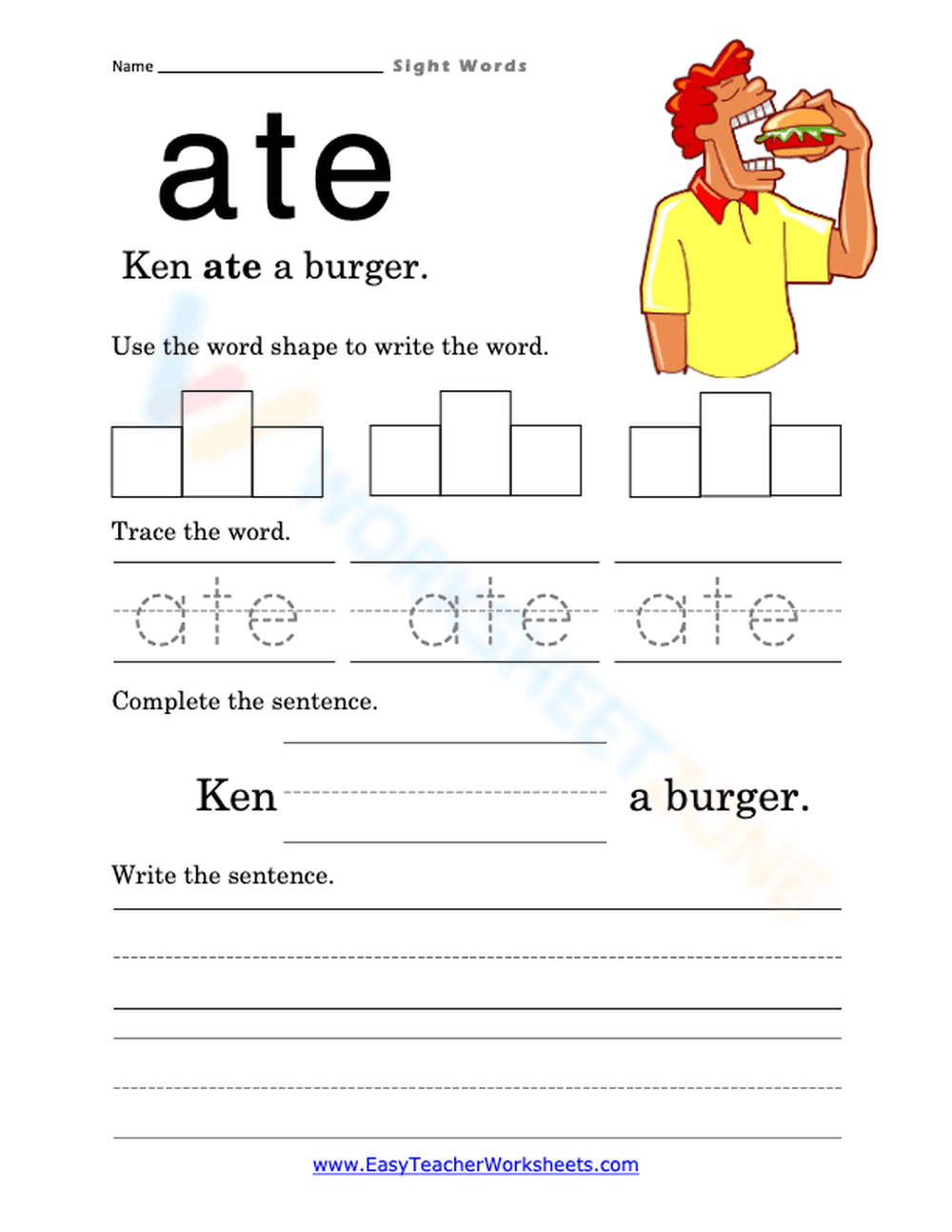

ate Sight Word Worksheet | Grade 1 Essential Practice
Paste this activity's link or code into your existing LMS (Google Classroom, Canvas, Teams, Schoology, Moodle, etc.).
Students can open and work on the activity right away, with no student login required.
You'll still be able to track student progress and results from your teacher account.
This sight word worksheet focuses on the high-frequency word 'ate,' providing Grade 1 students with a structured path to mastery. By engaging with word shapes, tracing, and sentence construction, learners move from simple recognition to fluent application. This essential practice ensures students internalize 'ate' while strengthening foundational reading and writing skills.
At a Glance
- Grade: 1 · Subject: English Language Arts
- Standard:
CCSS.ELA-LITERACY.RF.1.3.G— Recognize and read grade-appropriate irregularly spelled words in text- Skill Focus: Sight word 'ate' recognition and writing
- Format: 1 page · 10 tasks · Answer key included · PDF
- Best For: Literacy centers and independent morning work
- Time: 10–15 minutes
This PDF includes four activity zones to reinforce literacy. Students use word-shape boxes for visual memory and trace the word three times. The sheet transitions to a sentence-completion task using the context of a burger. Finally, students replicate the sentence on primary lines to practice penmanship. A full answer key ensures efficient grading.
Zero-Prep Workflow
Teachers can implement this resource in under two minutes. First, print the single-page PDF (30 seconds). Second, distribute the sheets during your literacy block (30 seconds). Third, review the completed sentences as a formative assessment (1 minute). Its clear layout makes it an ideal addition to emergency sub plans or independent work folders.
Standards Alignment
This resource is aligned to CCSS.ELA-LITERACY.RF.1.3.G, which requires students to recognize and read grade-appropriate irregularly spelled words. By focusing specifically on 'ate,' the worksheet provides the repetitive exposure necessary for high-frequency word mastery. This standard code can be copied directly into lesson plans, IEP goals, or district curriculum mapping tools to ensure instructional compliance and tracking.
How to Use It
Assign this during independent practice following a sight word lesson. It serves as an excellent formative assessment; observe students during the writing task to identify any letter formation issues. Expected completion time is 12 minutes, making it perfect for bell-ringers or quiet-time transitions.
Who It's For
This page is tailored for Grade 1, providing effective intervention for older students needing fluency support. Sentence frames and word-shape scaffolds assist English Language Learners in understanding word meaning. Pair this with a reading passage featuring high-frequency verbs to bridge the gap between practice and authentic reading.
Mastery of high-frequency words like 'ate' is a cornerstone of early literacy development, as recognized by the CCSS.ELA-LITERACY.RF.1.3.G standard. Research by Fisher & Frey (2014) highlights the importance of the gradual release of responsibility, which is mirrored in this worksheet's progression from guided word-shaping to independent sentence writing. By providing ten distinct points of interaction with a single target word, this resource ensures the cognitive load is managed while maximizing retention. National data from the NAEP underscores that students who achieve early sight word automaticity are significantly more likely to meet reading comprehension benchmarks in later grades. This worksheet serves as a evidence-based tool for building that automaticity through multimodal engagement, including visual, kinesthetic, and contextual learning. Educators can rely on this structured approach to provide the 15-20 exposures typically required for a student to internalize a new irregularly spelled word effectively within a standard classroom setting.


