


























Views
Downloads
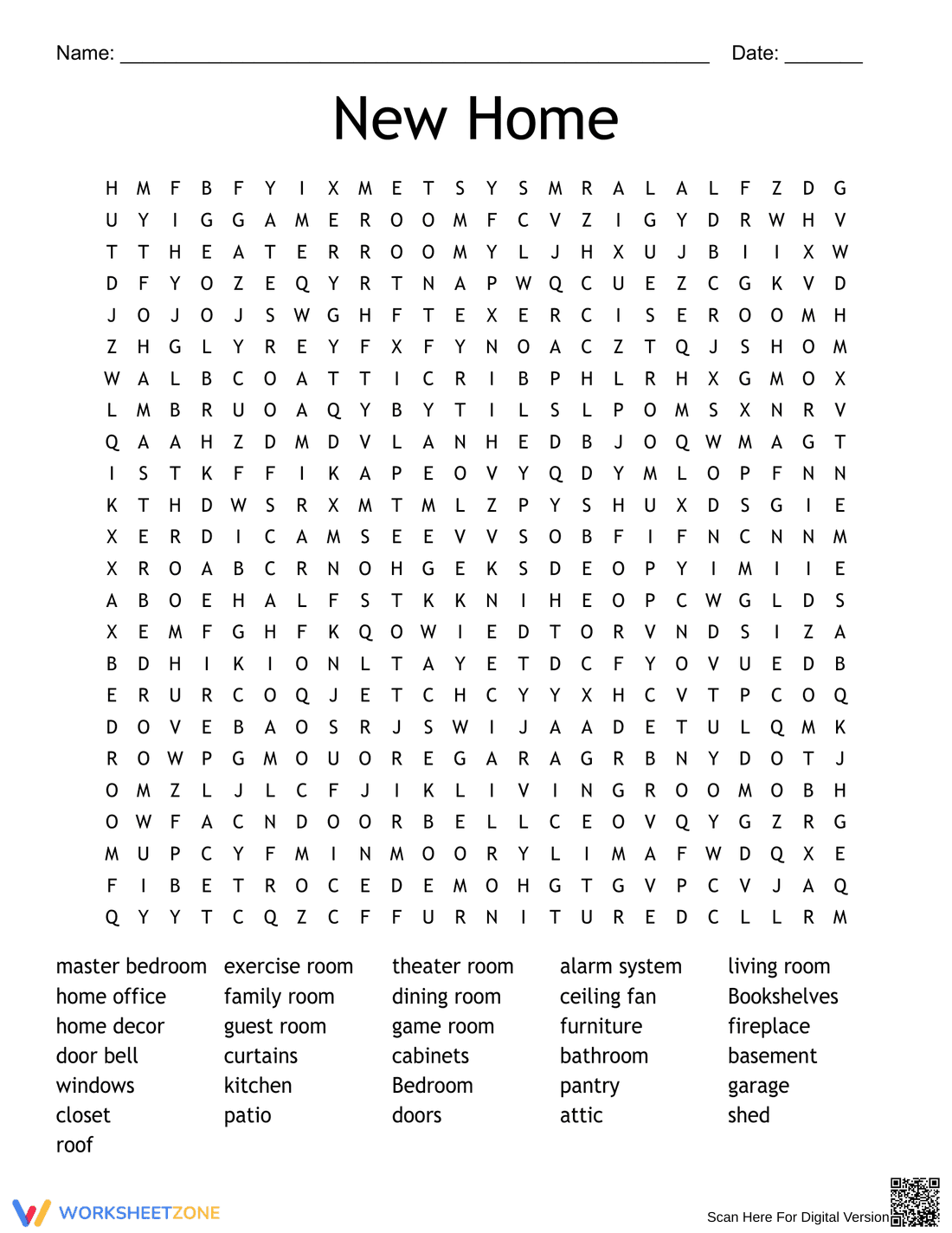

Printable House Vocabulary Word Search | Grade 5 ELA
Paste this activity's link or code into your existing LMS (Google Classroom, Canvas, Teams, Schoology, Moodle, etc.).
Students can open and work on the activity right away, with no student login required.
You'll still be able to track student progress and results from your teacher account.
This vocabulary word search worksheet helps students build spelling and word recognition skills by identifying 30 house-related terms. Students scan the grid to locate domain-specific vocabulary, reinforcing letter patterns and visual memory. This activity provides an engaging way to solidify everyday language comprehension.
At a Glance
- Grade: 5 · Subject: ELA
- Standard:
CCSS.ELA-LITERACY.L.5.6— Acquire and use accurately grade-appropriate vocabulary words.- Skill Focus: Vocabulary and Spelling
- Format: 1 page · 30 problems · Answer key included · PDF
- Best For: Independent practice and early finishers
- Time: 15–20 minutes
Inside this resource, educators will find a single-page word search puzzle featuring a 20x20 letter grid and a comprehensive word bank. The word bank contains 30 specific terms related to parts of a house, such as "master bedroom," "fireplace," and "alarm system." A complete answer key is provided to allow for quick grading or student self-checking, ensuring the activity remains entirely self-contained and easy to manage.
This worksheet is designed for a completely zero-prep workflow, requiring under two minutes of teacher preparation time. First, print the required number of copies (1 minute). Next, distribute the puzzle to students along with highlighters or pencils (1 minute). Finally, review the answers using the included key or allow students to self-correct (3 minutes). Because the directions are self-explanatory, this activity serves as an excellent emergency sub plan or independent center activity.
This activity aligns with CCSS.ELA-LITERACY.L.5.6: "Acquire and use accurately grade-appropriate general academic and domain-specific words and phrases." By actively searching for and identifying these terms, students reinforce their spelling and visual recognition of everyday vocabulary. Both standard codes can be copied directly into lesson plans, IEP goals, or district curriculum mapping tools.
Teachers can deploy this word search during independent work time or as a targeted activity for early finishers. It works exceptionally well after direct instruction on household vocabulary or life skills. As a formative assessment observation tip, teachers can monitor which students struggle to find longer compound words, indicating a potential need for additional spelling support. Most students will complete the puzzle within the expected 15 to 20 minute time range.
This resource is primarily designed for fifth-grade general education students, but it also provides excellent support for English Language Learners (ELLs) building foundational vocabulary. To differentiate, teachers can pair struggling readers with a partner to hunt for words collaboratively. This puzzle pairs naturally with visual anchor charts labeling parts of a house or introductory life skills reading passages.
Integrating targeted vocabulary activities like this word search supports broader language acquisition goals in the elementary classroom. Aligned to CCSS.ELA-LITERACY.L.5.6, this resource requires students to acquire and use accurately grade-appropriate vocabulary words. According to Fisher & Frey (2014), repeated visual exposure to domain-specific terminology significantly improves long-term retention and spelling accuracy. When students actively scan for letter sequences in a grid, they reinforce their orthographic mapping skills, which are critical for fluent reading and writing development. This low-stakes practice environment reduces cognitive load while maintaining high student engagement. By incorporating structured word puzzles into the weekly instructional routine, educators provide necessary repetition without the fatigue often associated with traditional rote memorization drills. This evidence-based approach ensures students build a robust working vocabulary essential for both academic success and everyday communication.


