




























1 / 3
0
Views
0
Downloads

0.0
0
Save
0 Likes
Share
Answering Questions on Nutrient Cycles: Worksheet for Ecology
0 Views
0 Downloads

Paste this activity's link or code into your existing LMS (Google Classroom, Canvas, Teams, Schoology, Moodle, etc.).
Students can open and work on the activity right away, with no student login required.
You'll still be able to track student progress and results from your teacher account.
Information
Description
What It Is:
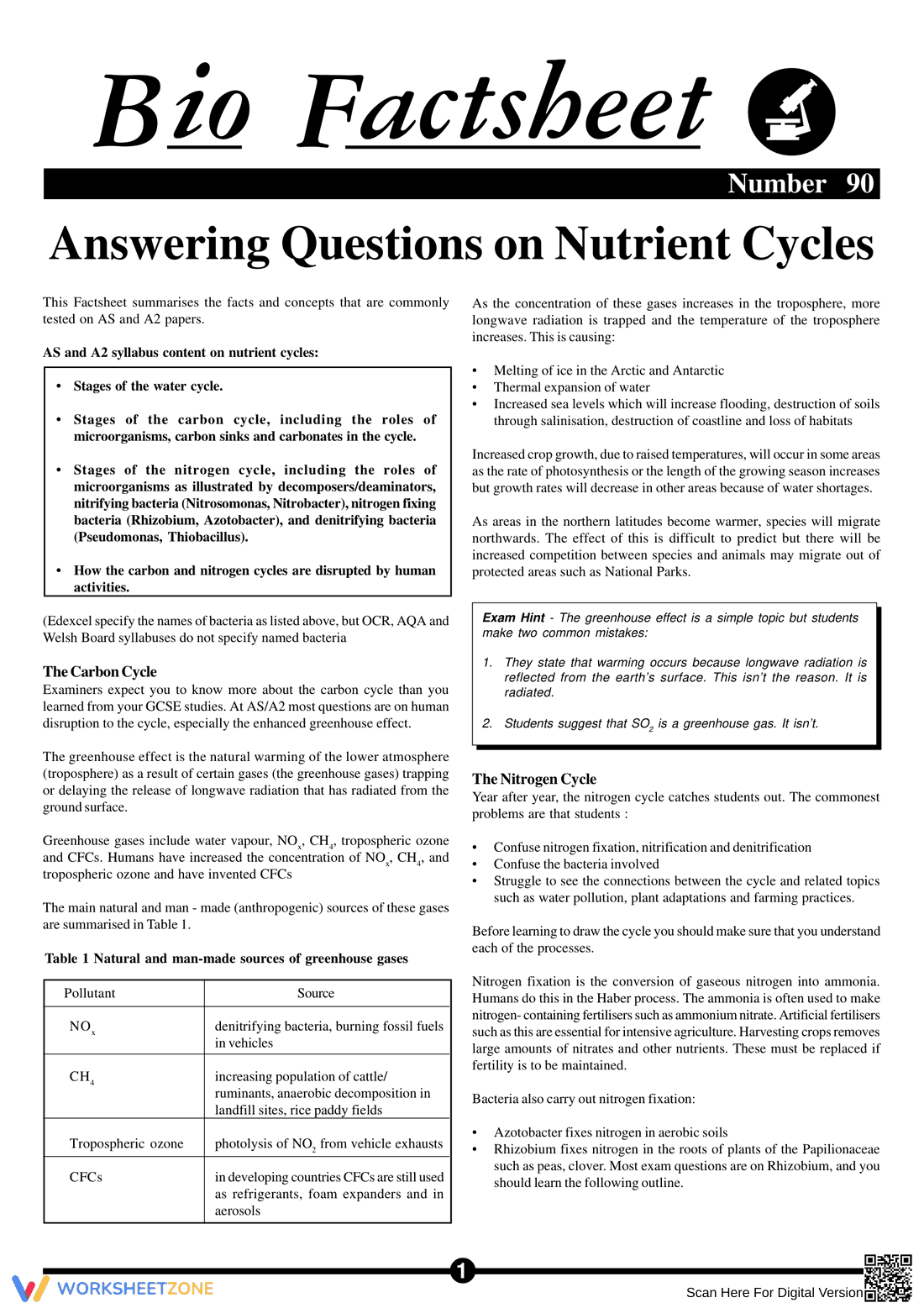
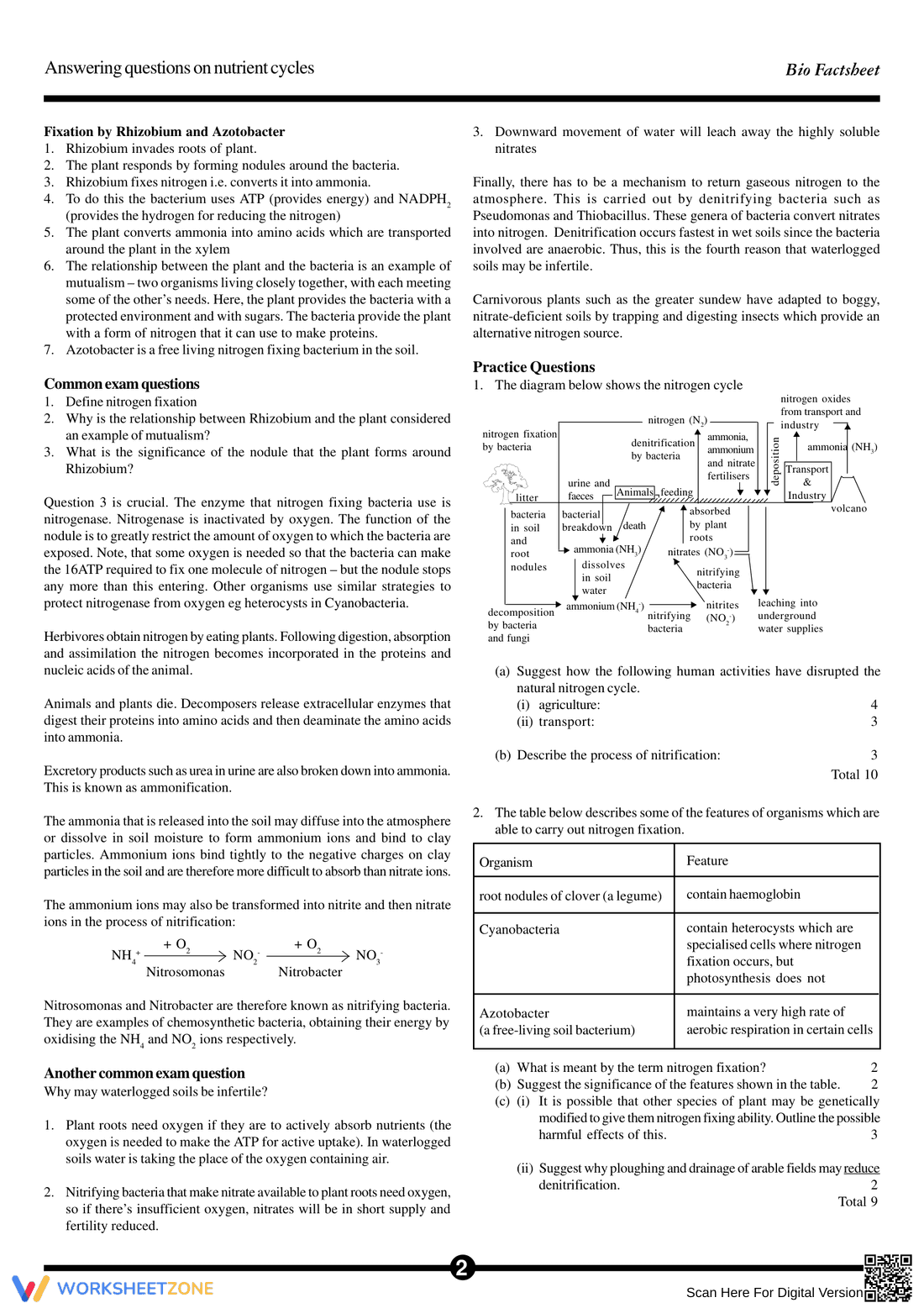
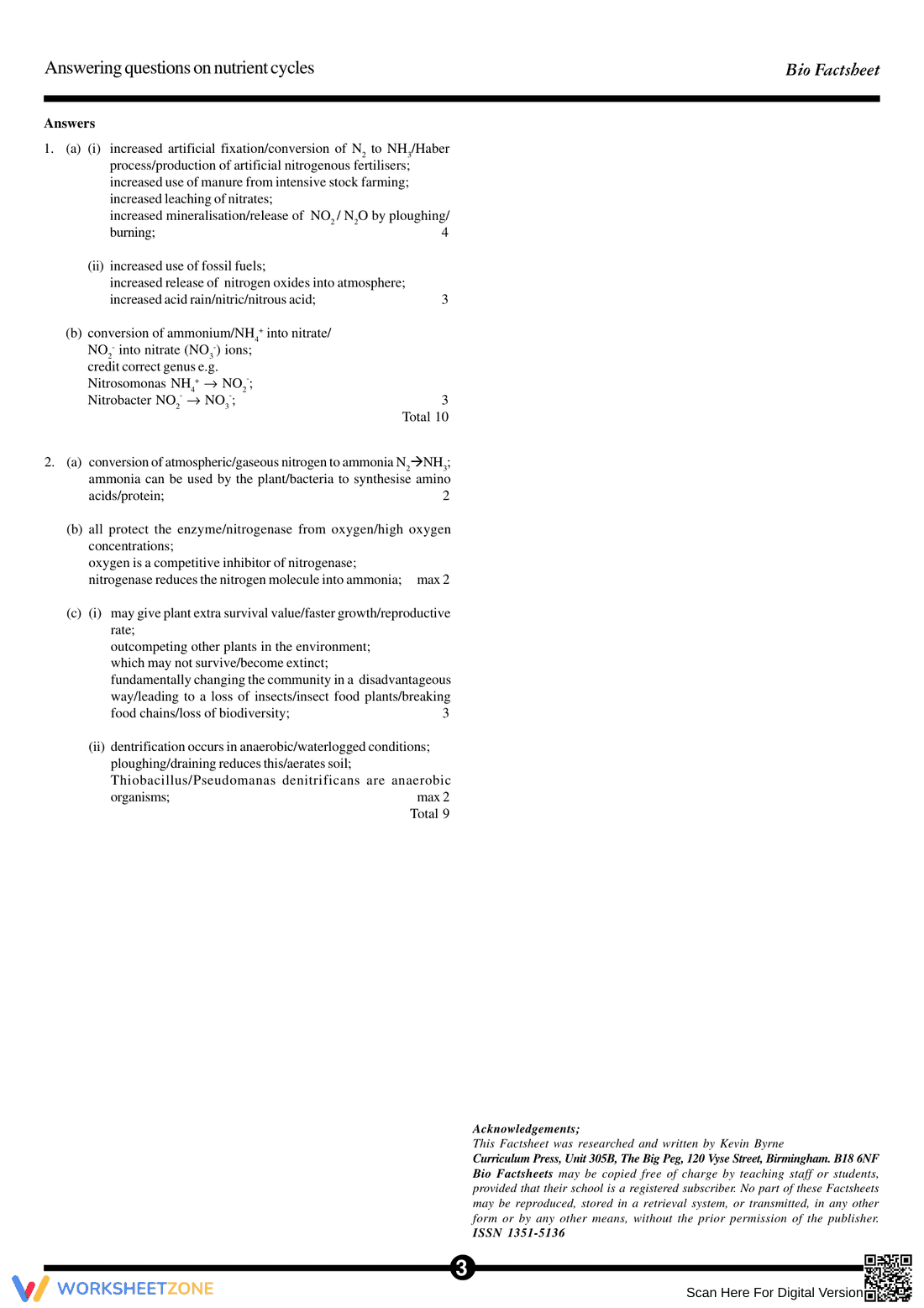
This is a biology factsheet, number 90, focused on answering questions about nutrient cycles. It covers the stages of the water cycle, carbon cycle (including the roles of microorganisms, carbon sinks and carbonates), and nitrogen cycle (including the roles of nitrifying bacteria, nitrogen fixing bacteria, and denitrifying bacteria). It also addresses how carbon and nitrogen cycles are disrupted by human activities. The sheet includes a table summarizing natural and man-made sources of greenhouse gases, and discusses the carbon cycle, the greenhouse effect, and the nitrogen cycle, along with processes like nitrogen fixation, nitrification, and denitrification. It also presents some common student mistakes regarding the greenhouse effect.
Grade Level Suitability:
This worksheet is suitable for high school students, specifically grades 11-12 (A/S and A2 level, as indicated in the text). The content is detailed and requires an understanding of complex biological processes, chemical formulas, and environmental impacts.
Why Use It:
This factsheet helps students understand the interconnectedness of nutrient cycles and their impact on the environment. It clarifies the roles of various organisms and processes within these cycles, and highlights the consequences of human activities on these natural systems. It helps to consolidate understanding of key concepts, identify common misconceptions, and provide a framework for answering questions on nutrient cycles.
How to Use It:
Students can use this factsheet as a study guide or reference material. They can read through the explanations, review the diagrams, and use the information to answer questions related to nutrient cycles. The table can be used to understand the sources of greenhouse gases. The 'Exam Hint' section can help students avoid common mistakes in exams.
Target Users:
The target users are high school biology students, particularly those studying for A/S and A2 level exams. It would also be beneficial for teachers to use as a supplementary resource or as a basis for lesson planning on nutrient cycles and environmental science.
This is a biology factsheet, number 90, focused on answering questions about nutrient cycles. It covers the stages of the water cycle, carbon cycle (including the roles of microorganisms, carbon sinks and carbonates), and nitrogen cycle (including the roles of nitrifying bacteria, nitrogen fixing bacteria, and denitrifying bacteria). It also addresses how carbon and nitrogen cycles are disrupted by human activities. The sheet includes a table summarizing natural and man-made sources of greenhouse gases, and discusses the carbon cycle, the greenhouse effect, and the nitrogen cycle, along with processes like nitrogen fixation, nitrification, and denitrification. It also presents some common student mistakes regarding the greenhouse effect.
Grade Level Suitability:
This worksheet is suitable for high school students, specifically grades 11-12 (A/S and A2 level, as indicated in the text). The content is detailed and requires an understanding of complex biological processes, chemical formulas, and environmental impacts.
Why Use It:
This factsheet helps students understand the interconnectedness of nutrient cycles and their impact on the environment. It clarifies the roles of various organisms and processes within these cycles, and highlights the consequences of human activities on these natural systems. It helps to consolidate understanding of key concepts, identify common misconceptions, and provide a framework for answering questions on nutrient cycles.
How to Use It:
Students can use this factsheet as a study guide or reference material. They can read through the explanations, review the diagrams, and use the information to answer questions related to nutrient cycles. The table can be used to understand the sources of greenhouse gases. The 'Exam Hint' section can help students avoid common mistakes in exams.
Target Users:
The target users are high school biology students, particularly those studying for A/S and A2 level exams. It would also be beneficial for teachers to use as a supplementary resource or as a basis for lesson planning on nutrient cycles and environmental science.


