




























1 / 2
0
Views
0
Downloads

0.0
0
Save
0 Likes
Share
Animal Cell Anatomy: Interactive Worksheet
0 Views
0 Downloads

Paste this activity's link or code into your existing LMS (Google Classroom, Canvas, Teams, Schoology, Moodle, etc.).
Students can open and work on the activity right away, with no student login required.
You'll still be able to track student progress and results from your teacher account.
Information
Description
What It Is:
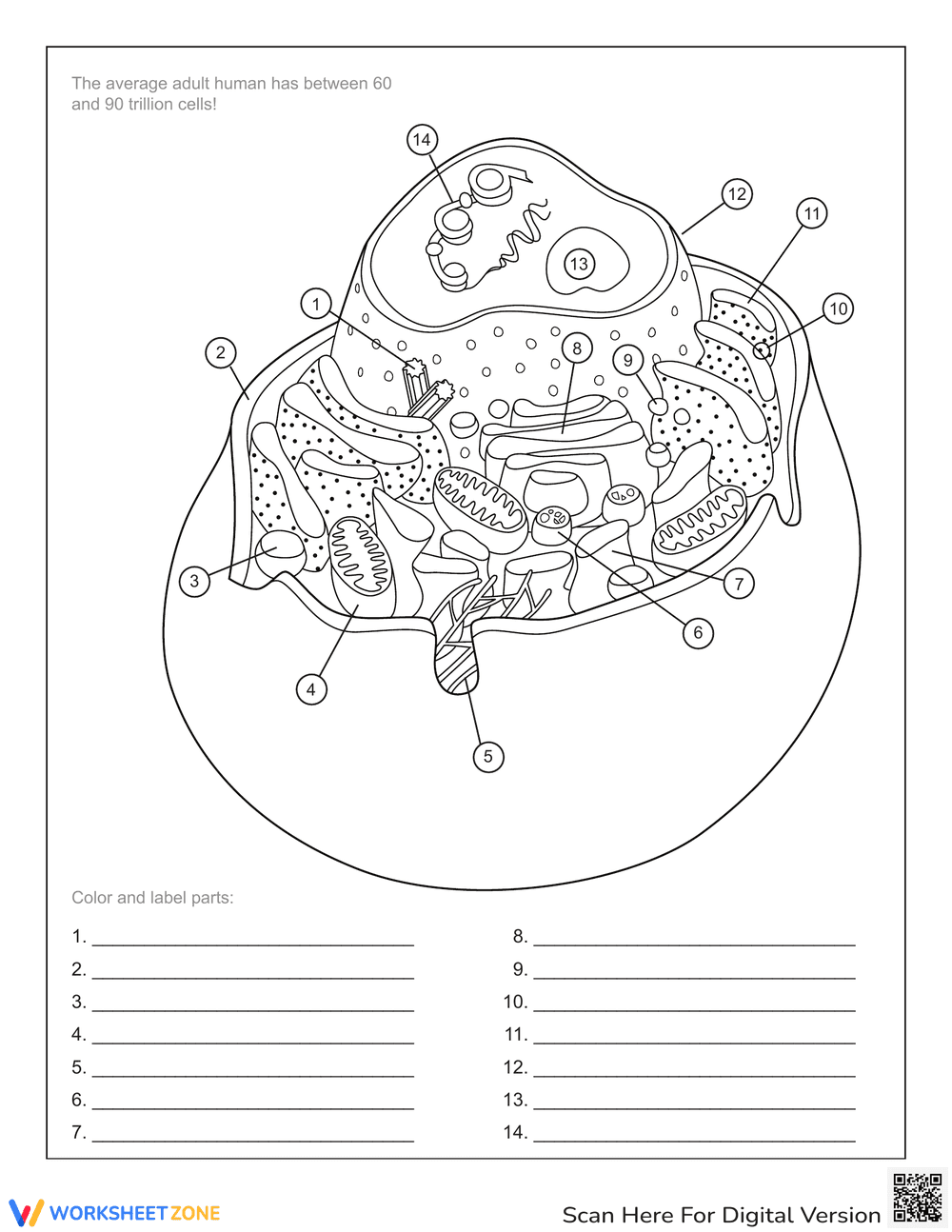
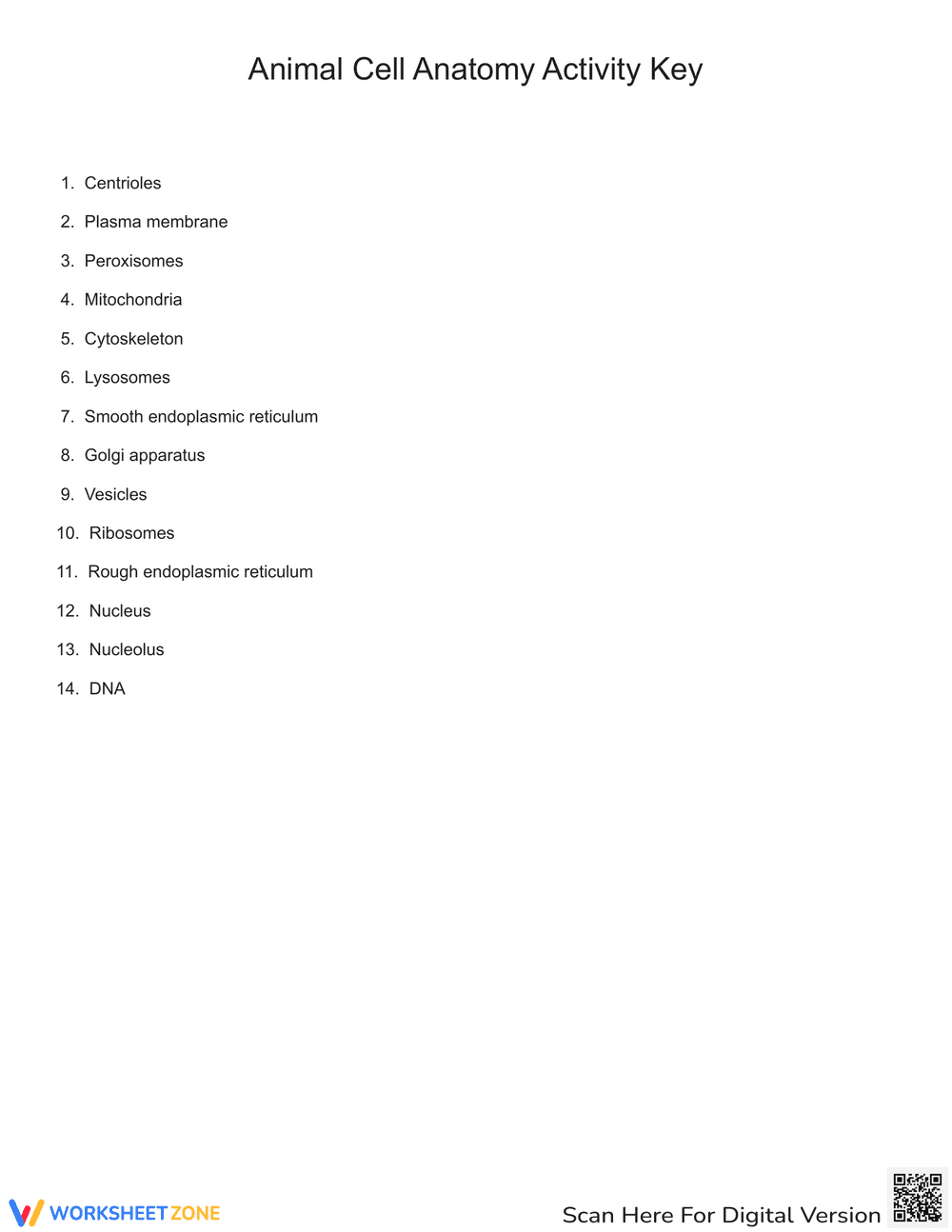
This is a black and white educational worksheet featuring a detailed illustration of an animal cell. The worksheet is designed for students to color and label the various parts of the cell, including structures like the nucleus, ribosomes, endoplasmic reticulum, Golgi apparatus, mitochondria, and cell membrane. Numbers 1 through 14 point to different cell parts for labeling. The worksheet also includes a fill-in-the-blank section with numbered lines for students to write the names of the corresponding cell parts.
Grade Level Suitability:
This worksheet is suitable for grades 6-9. The complexity of the cell structure and the need to identify and label specific organelles make it appropriate for middle school and early high school students who are learning about cell biology.
Why Use It:
This worksheet helps students learn and reinforce their knowledge of cell anatomy and organelle functions. Coloring the cell parts can improve retention, and labeling helps students associate the visual representation with the correct terminology. It promotes active learning and provides a hands-on approach to understanding cell structure.
How to Use It:
First, students should color the different parts of the cell using colored pencils or markers. Then, they should use their textbook or other resources to identify the structures indicated by the numbers 1 through 14. Finally, they should write the names of each cell part in the corresponding numbered blank spaces provided at the bottom of the worksheet.
Target Users:
This worksheet is ideal for science teachers looking for supplemental materials to teach cell biology. It's also beneficial for students studying for biology exams or anyone interested in learning more about the structure and function of animal cells. Homeschooling parents can also use this worksheet as part of their science curriculum.
This is a black and white educational worksheet featuring a detailed illustration of an animal cell. The worksheet is designed for students to color and label the various parts of the cell, including structures like the nucleus, ribosomes, endoplasmic reticulum, Golgi apparatus, mitochondria, and cell membrane. Numbers 1 through 14 point to different cell parts for labeling. The worksheet also includes a fill-in-the-blank section with numbered lines for students to write the names of the corresponding cell parts.
Grade Level Suitability:
This worksheet is suitable for grades 6-9. The complexity of the cell structure and the need to identify and label specific organelles make it appropriate for middle school and early high school students who are learning about cell biology.
Why Use It:
This worksheet helps students learn and reinforce their knowledge of cell anatomy and organelle functions. Coloring the cell parts can improve retention, and labeling helps students associate the visual representation with the correct terminology. It promotes active learning and provides a hands-on approach to understanding cell structure.
How to Use It:
First, students should color the different parts of the cell using colored pencils or markers. Then, they should use their textbook or other resources to identify the structures indicated by the numbers 1 through 14. Finally, they should write the names of each cell part in the corresponding numbered blank spaces provided at the bottom of the worksheet.
Target Users:
This worksheet is ideal for science teachers looking for supplemental materials to teach cell biology. It's also beneficial for students studying for biology exams or anyone interested in learning more about the structure and function of animal cells. Homeschooling parents can also use this worksheet as part of their science curriculum.


