


























Views
Plays
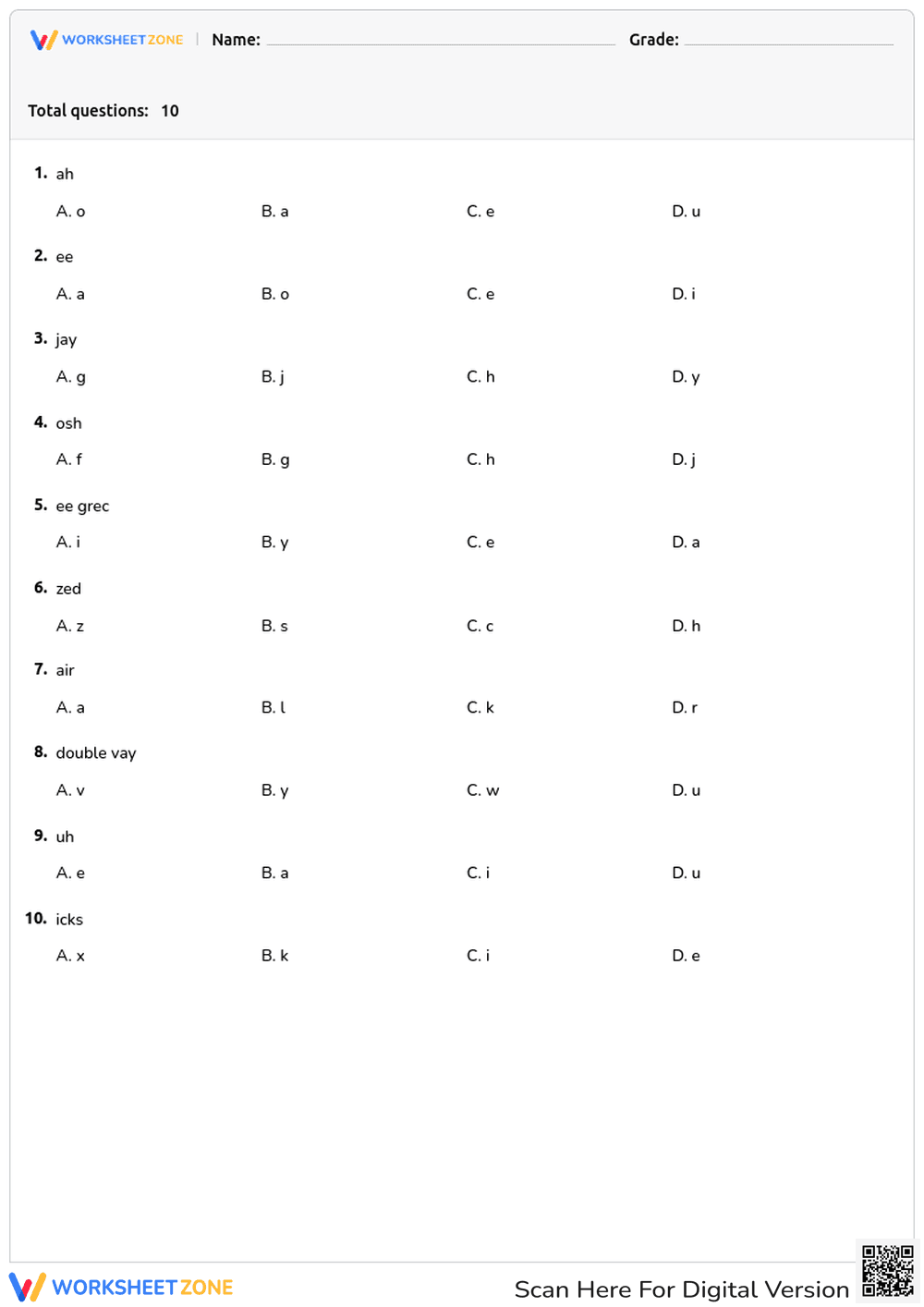

Grade 1 Alphabet Sounds — Printable No-Prep Worksheet
Paste this activity's link or code into your existing LMS (Google Classroom, Canvas, Teams, Schoology, Moodle, etc.).
Students can open and work on the activity right away, with no student login required.
You'll still be able to track student progress and results from your teacher account.
This foundational alphabet sounds worksheet helps students bridge the gap between auditory phonetics and visual letter recognition. By presenting phonetic spellings as prompts, the activity challenges learners to identify the correct grapheme from a multiple-choice selection. This approach ensures students develop a robust understanding of how letters are named and pronounced in a structured format.
At a Glance
- Grade: 1 · Subject: ELA
- Standard:
CCSS.ELA-LITERACY.RF.K.1.D— Recognize and name all upper- and lowercase letters of the alphabet- Skill Focus: Phonetic Letter Recognition
- Format: 1 page · 10 problems · Answer key included · PDF
- Best For: Introductory phonics and letter-sound drills
- Time: 10–15 minutes
The worksheet contains 10 carefully constructed multiple-choice questions. Each item features a phonetic representation of a letter sound, such as "osh" or "icks," followed by four letter options. This single-page PDF is designed for clarity, with ample white space to prevent visual overwhelm. A comprehensive answer key is provided to facilitate quick grading or student self-correction, making it a versatile addition to any foundational literacy toolkit.
The zero-prep workflow for this resource is designed for maximum efficiency. First, print the single-page PDF (30 seconds). Next, distribute the worksheet to students as a warm-up or independent task (30 seconds). Finally, review the answers using the included key to provide immediate feedback (1 minute). This entire process requires less than 2 minutes of teacher preparation time, making it an ideal choice for emergency sub plans or busy morning routines.
This resource is primarily aligned with CCSS.ELA-LITERACY.RF.K.1.D, which focuses on the ability of students to recognize and name all letters of the alphabet. Additionally, it supports foundational phonics skills by emphasizing the relationship between spoken sounds and written symbols. Both standard codes can be copied directly into lesson plans, IEP goals, or district curriculum mapping tools to ensure instructional alignment and accountability.
Use this worksheet as a quick formative assessment after a lesson on alphabet sounds. It works well as a "bell-ringer" activity to settle students or as an exit ticket to gauge understanding. Teachers should observe if students are subvocalizing the phonetic prompts, which is a key indicator of active processing. Expect most students to complete the 10 questions within a 12-minute window.
This material is ideal for first-grade students or English Language Learners (ELL) beginning their journey into phonetic awareness. It also serves as an excellent resource for introductory French students. Pair this worksheet with a letter-sound anchor chart or a digital pronunciation guide to provide a multi-sensory learning experience that accommodates various learning styles and needs.
According to research by Fisher & Frey (2014), the development of phonological awareness and letter-sound correspondence is a critical precursor to fluent reading and orthographic mapping. This worksheet targets CCSS.ELA-LITERACY.RF.K.1.D by requiring students to identify the correct grapheme associated with specific phonetic pronunciations. By isolating the auditory component of the alphabet—specifically focusing on phonetic spellings like "ee grec" and "double vay"—students build the cognitive pathways necessary for decoding complex texts. Studies from the NAEP indicate that students who master these foundational skills in early primary grades demonstrate significantly higher literacy outcomes in later years. This resource provides a structured, low-stakes environment for students to practice these essential skills, ensuring they can accurately recognize and name letters based on their unique sounds. The 10-question format is designed to minimize cognitive load while maximizing retention of phonetic patterns, making it an ideal tool for formative assessment in diverse classroom settings.


