


























Views
Downloads
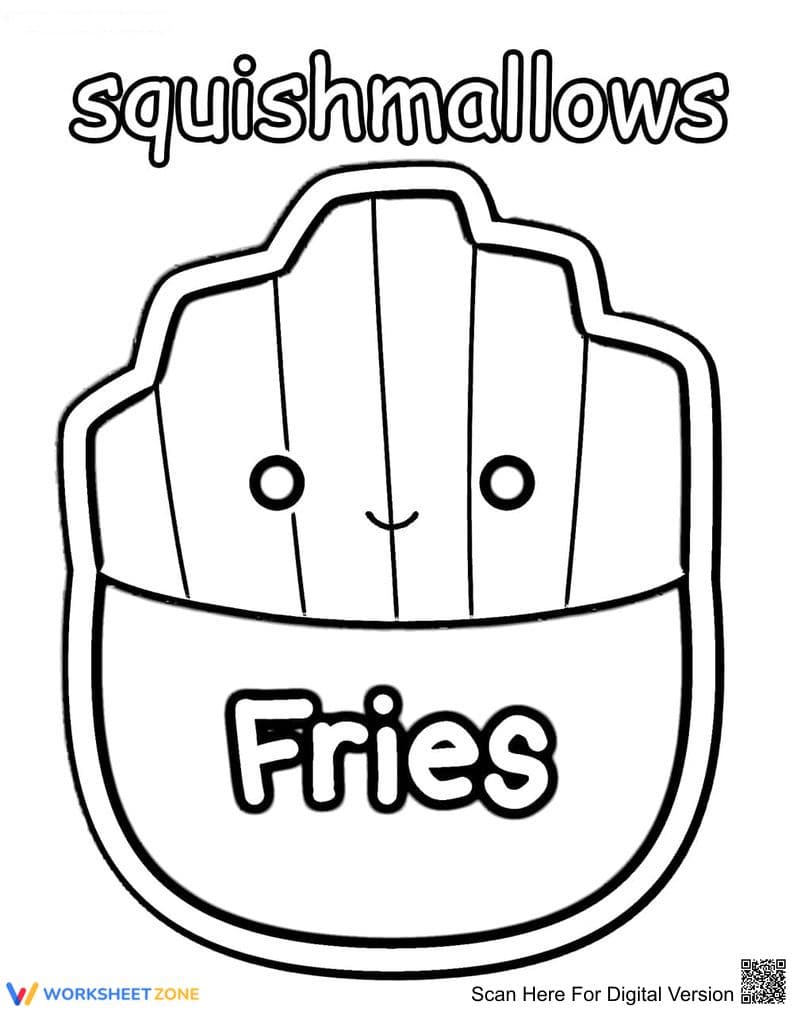

Printable Squishmallows Fries Coloring Page | Grade K-1
Paste this activity's link or code into your existing LMS (Google Classroom, Canvas, Teams, Schoology, Moodle, etc.).
Students can open and work on the activity right away, with no student login required.
You'll still be able to track student progress and results from your teacher account.
This printable Squishmallows Fries coloring page helps early learners develop essential fine motor control and pencil grip. By coloring the friendly French fry character, Kindergarten and Grade 1 students practice spatial awareness and hand-eye coordination. This simple activity prepares young children for formal writing tasks by strengthening hand muscles.
At a Glance
- Grade: Kindergarten to Grade 1 · Subject: Fine Art
- Standard:
CCSS.ELA-LITERACY.L.K.1.A— Print many upper- and lowercase letters through fine motor practice- Skill Focus: Fine motor control and pencil grip
- Format: 1 page · 1 coloring task · No answer key required · PDF
- Best For: Morning work or early finishers
- Time: 15–20 minutes
This resource consists of a single-page PDF featuring a large, bold illustration of a Squishmallow French fry character. The design includes thick black outlines that help young children stay within the lines, along with the word "Fries" in bubble letters at the bottom. This layout encourages both creative coloring and letter recognition, providing a friendly, low-stress environment for artistic expression.
Zero-Prep Workflow
- Print: Print the single-page PDF in black and white in less than 1 minute.
- Distribute: Hand out the sheets to students with crayons, colored pencils, or markers.
- Review: Check completed pages to assess pencil grip and color selection.
The entire setup requires under 2 minutes of teacher preparation, making it an ideal choice for emergency sub plans, transition periods, or quiet afternoon activities.
Standards Alignment
This activity aligns with CCSS.ELA-LITERACY.L.K.1.A, which focuses on printing upper- and lowercase letters. While primarily an art activity, coloring builds the foundational hand strength and finger dexterity required for writing letters. Both standard codes can be copied directly into lesson plans, IEP goals, or district curriculum mapping tools.
How to Use It
Use this worksheet during morning arrival to help students transition into the school day, or as a quiet activity following recess. It works well as a post-instruction reward or during small-group rotations. While students color, observe their pencil grasp and hand posture to identify children who may need extra support with writing tools. Most students will complete the coloring page within 15 to 20 minutes.
Who It's For
This worksheet is designed for Kindergarten and Grade 1 students, including English language learners and students receiving occupational therapy. You can easily differentiate the activity by asking advanced students to write a sentence about the character on the back of the page. Pair this coloring sheet with a read-aloud book about food or a basic shapes anchor chart to extend the lesson.
This educational coloring worksheet supports early childhood development by targeting fine motor control, aligned with the CCSS.ELA-LITERACY.L.K.1.A standard for print concepts. According to research from Fisher & Frey (2014) on gradual release of responsibility and motor skill integration, structured coloring tasks help young learners build the muscle memory and spatial awareness necessary for writing. By engaging with clear boundaries and familiar characters, students develop the visual-motor integration skills that directly correlate with early literacy success. This resource provides a practical, low-stakes environment for children to practice pencil grip and hand endurance. Educators can use this single-page activity to monitor developmental milestones in coordination, making it a valuable addition to early childhood classrooms.


