


























Views
Downloads

Essential Valentine's Day Addition Worksheet | Grades 7-9
Paste this activity's link or code into your existing LMS (Google Classroom, Canvas, Teams, Schoology, Moodle, etc.).
Students can open and work on the activity right away, with no student login required.
You'll still be able to track student progress and results from your teacher account.
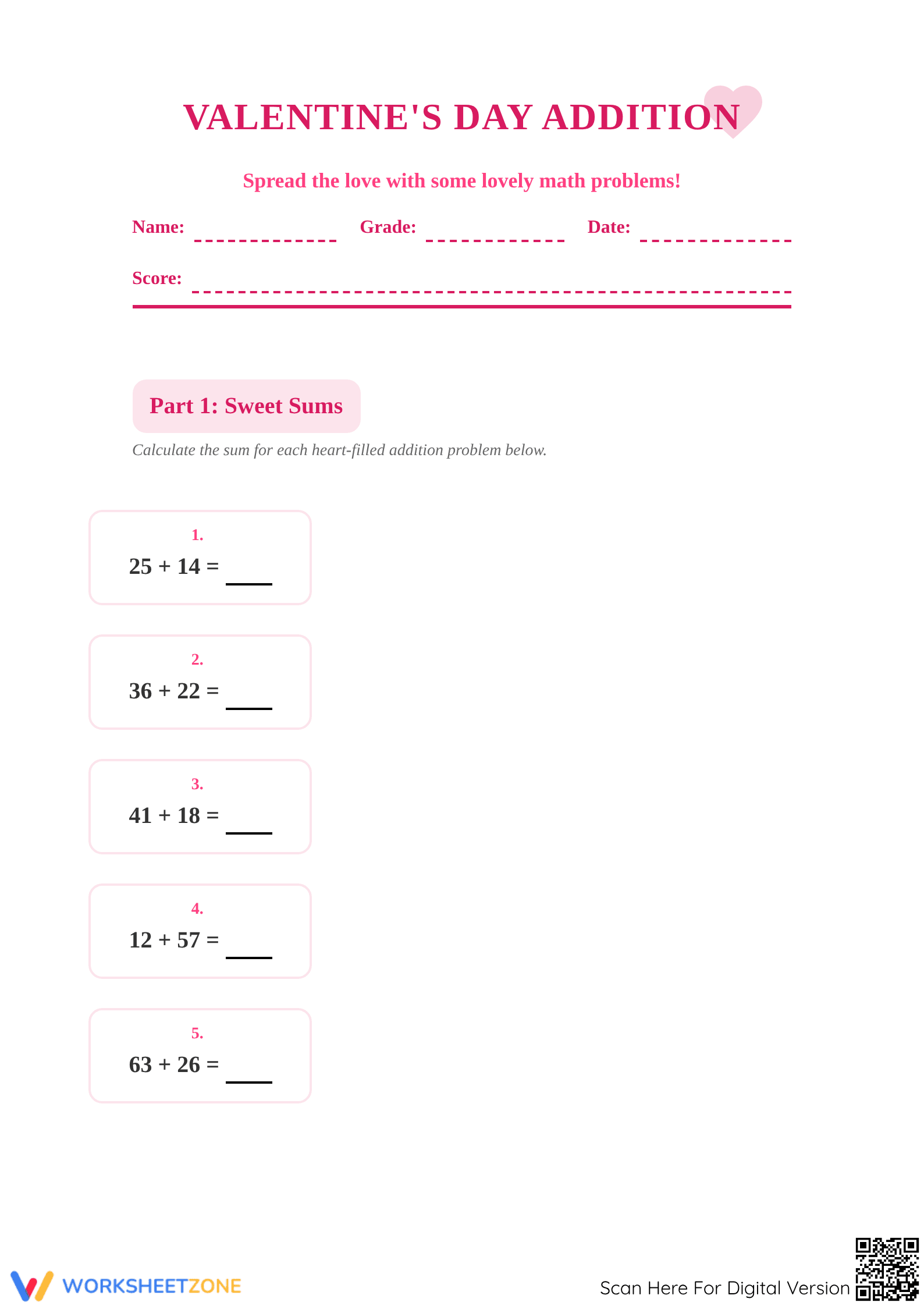
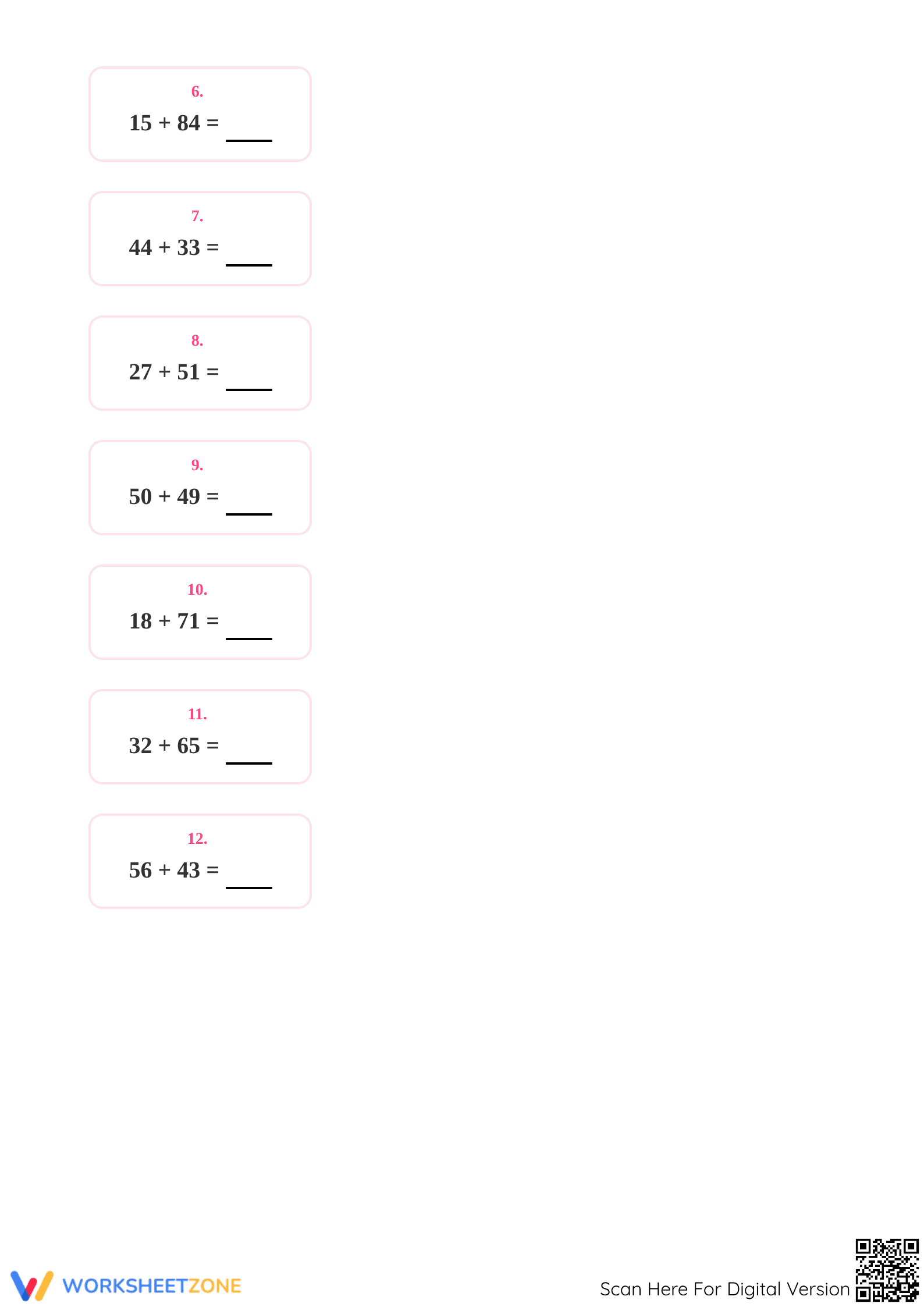
This printable Valentine's Day addition worksheet provides Grade 7, 8, and 9 students with a charming way to reinforce core arithmetic skills. Students solve 27 double-digit addition problems across multiple formats, improving their calculation fluency and accuracy. By combining seasonal engagement with structured practice, this resource ensures high student participation while mastering foundational place value concepts.
At a Glance
At a Glance
- Grade: 7-9 · Subject: Valentine's Day Math
- Standard:
CCSS.MATH.CONTENT.2.NBT.B.5— Fluently add within 100 using place value strategies and properties of operations- Skill Focus: Double-Digit Addition
- Format: 5 pages · 27 problems · Answer key included · PDF
- Best For: Seasonal skill review and sub plans
- Time: 25–35 minutes
What's Inside
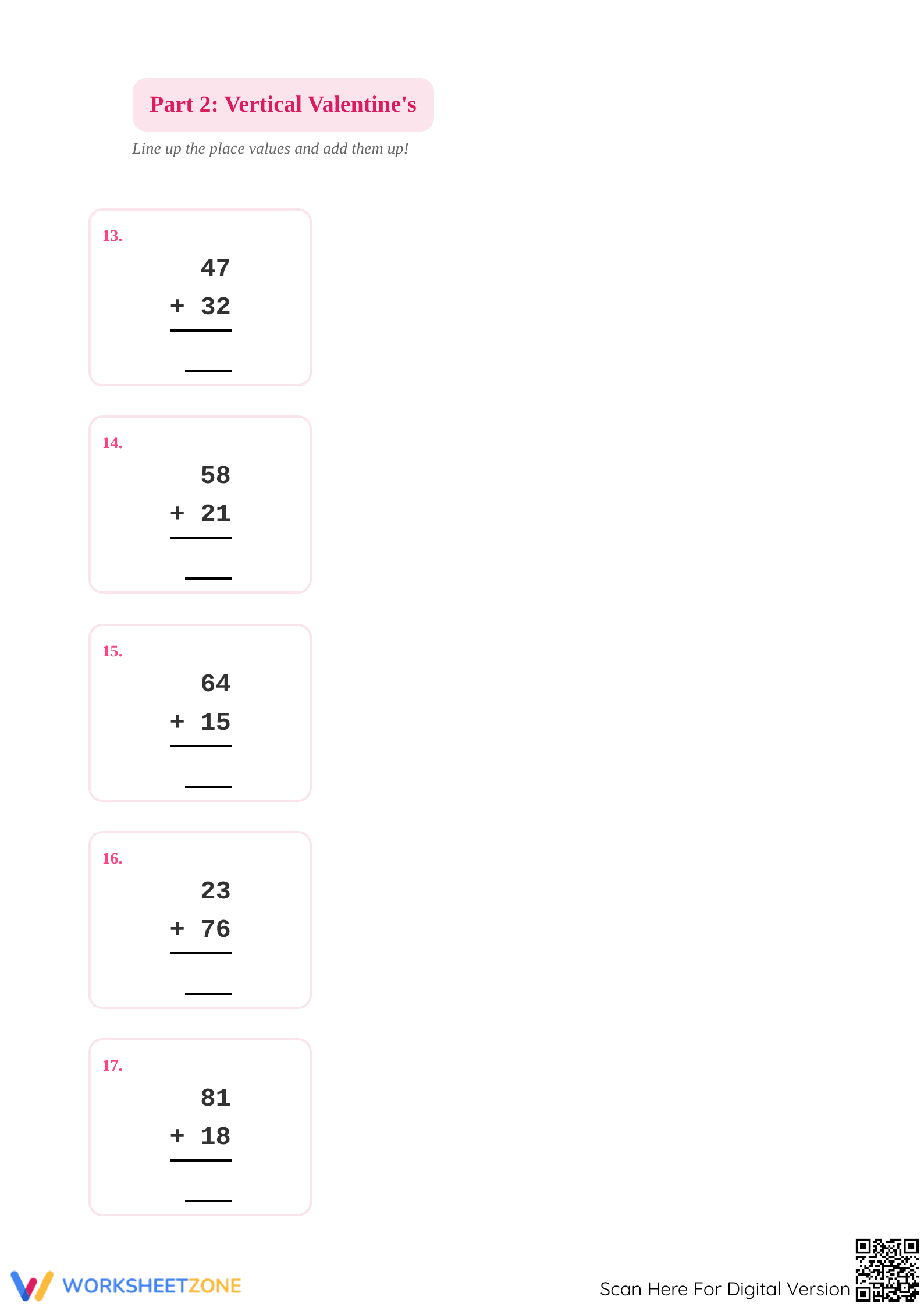
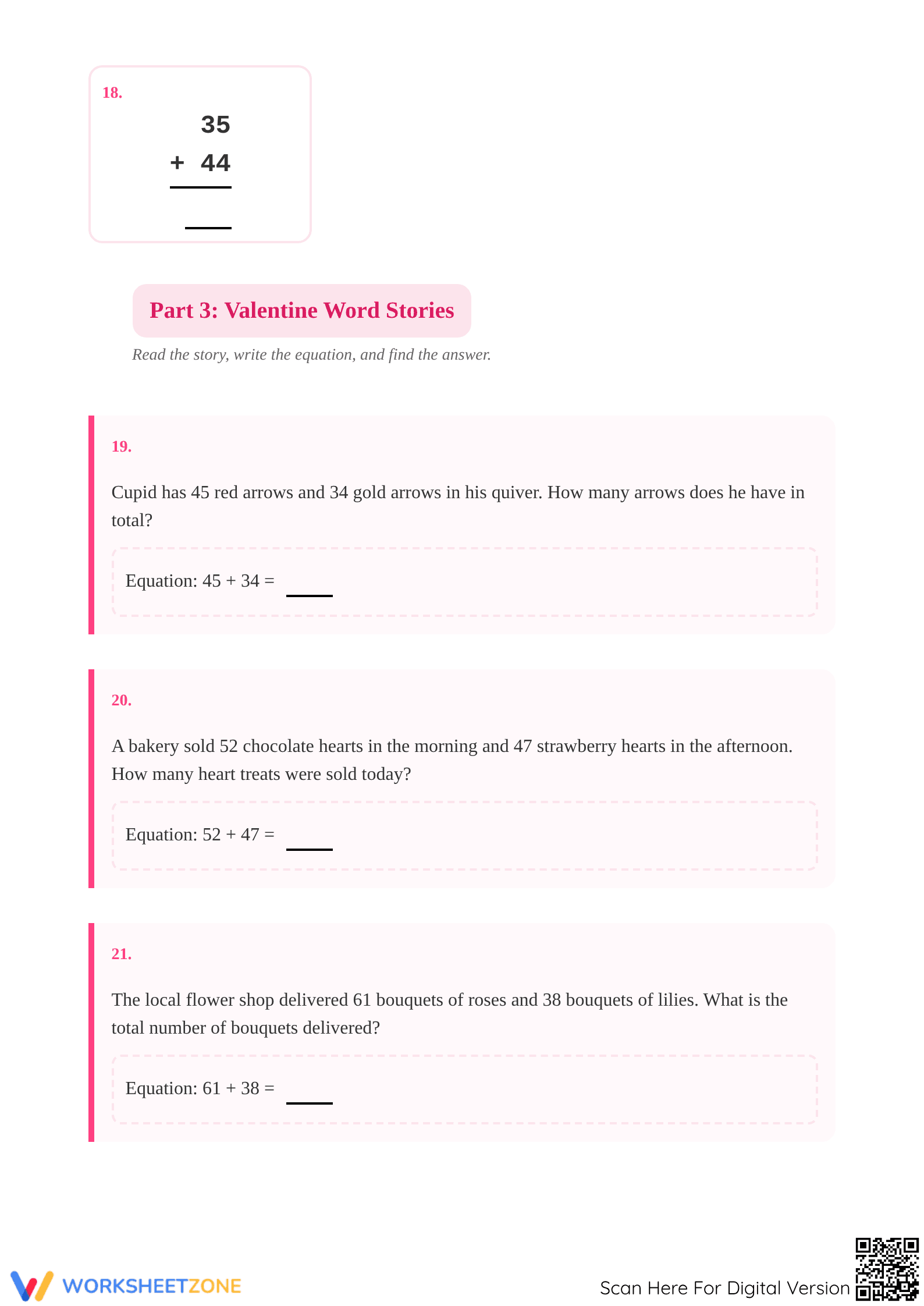
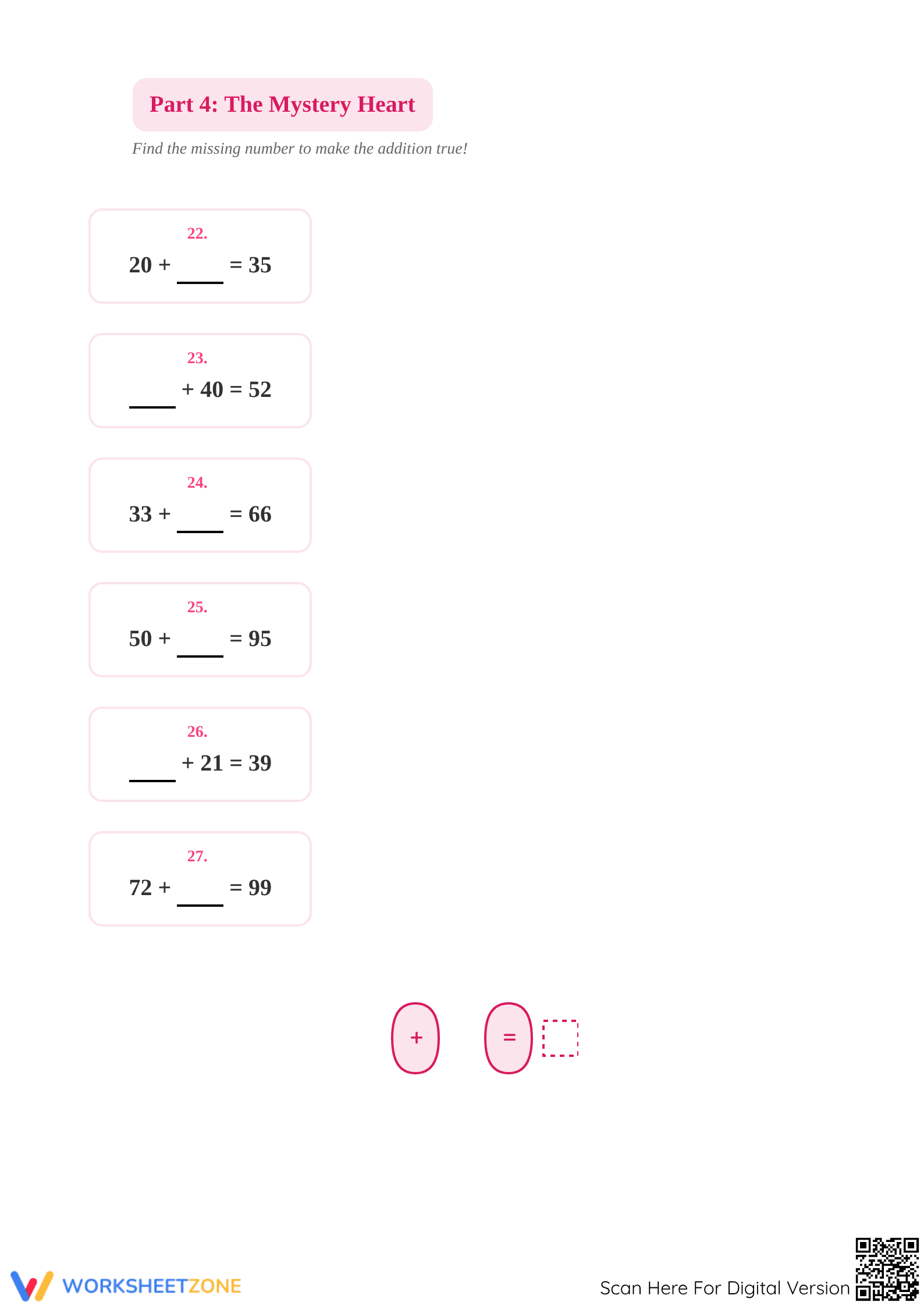
This comprehensive five-page packet features four distinct sections to keep learners engaged. "Sweet Sums" introduces horizontal addition, followed by "Vertical Valentine's" for column-based practice. The "Valentine Word Stories" section transitions students to real-world application, while "The Mystery Heart" challenges them with missing-addend problems. A full answer key is included for immediate feedback and easy grading.
Zero-Prep Workflow
This resource is designed for teacher efficiency. First, print the five-page PDF (30 seconds). Next, distribute the packets for independent work (1 minute). Finally, use the answer key to review the 27 problems or for quick individual grading (under 5 minutes). Total preparation time is less than two minutes, making it an ideal choice for sub plans or holiday activities.
Standards Alignment
The primary focus is `CCSS.MATH.CONTENT.2.NBT.B.5`, requiring students to fluently add within 100 using strategies based on place value. While used for older students as a remedial review tool, the structural integrity of the problems supports numeric fluency. Both standard codes can be copied directly into lesson plans, IEP goals, or district curriculum mapping tools.
How to Use It
Use this worksheet as a warm-up activity during Valentine's Day to settle the class before transitioning into complex concepts. Alternatively, assign it as a low-stress formative assessment to identify students needing support with mental math. Teachers should observe whether students line up place values correctly, which typically takes between 25 and 35 minutes to complete.
Who It's For
This resource is for Grade 7, 8, and 9 students needing repetitive practice or those in special education settings. The clear layout and thematic icons provide a non-intimidating environment. It pairs naturally with a place value session or can be used alongside a themed reading passage for a cross-curricular lesson.
Research from the RAND AIRS 2024 report emphasizes that seasonal, thematic integration in math curriculum significantly increases student engagement and task persistence among middle school learners who may otherwise feel disconnected from abstract numeric concepts. By utilizing the CCSS.MATH.CONTENT.2.NBT.B.5 standard within a Valentine's Day context, this worksheet leverages the interest-based learning model supported by Fisher & Frey (2014), which suggests that relatable contexts reduce cognitive load during remedial skill practice. This approach allows Grade 7-9 students to perform 27 addition tasks with greater focus, as the holiday theme provides a familiar cognitive scaffold. Furthermore, the inclusion of word stories and missing addends ensures that the practice extends beyond rote calculation into higher-order thinking. This self-contained module serves as a robust tool for educators aiming to bridge the gap between foundational fluency and grade-level secondary mathematical expectations.


