




























Views
Downloads
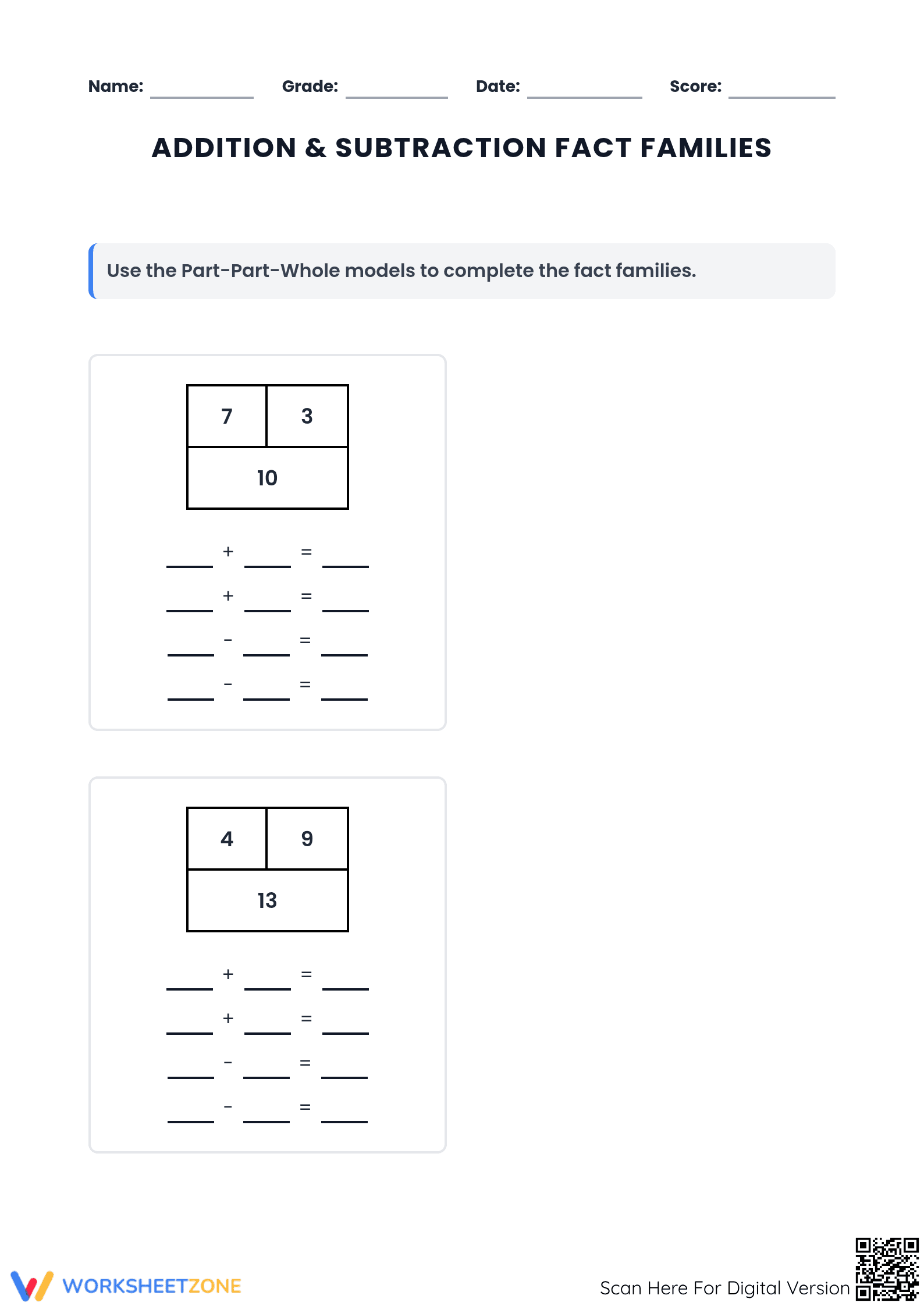
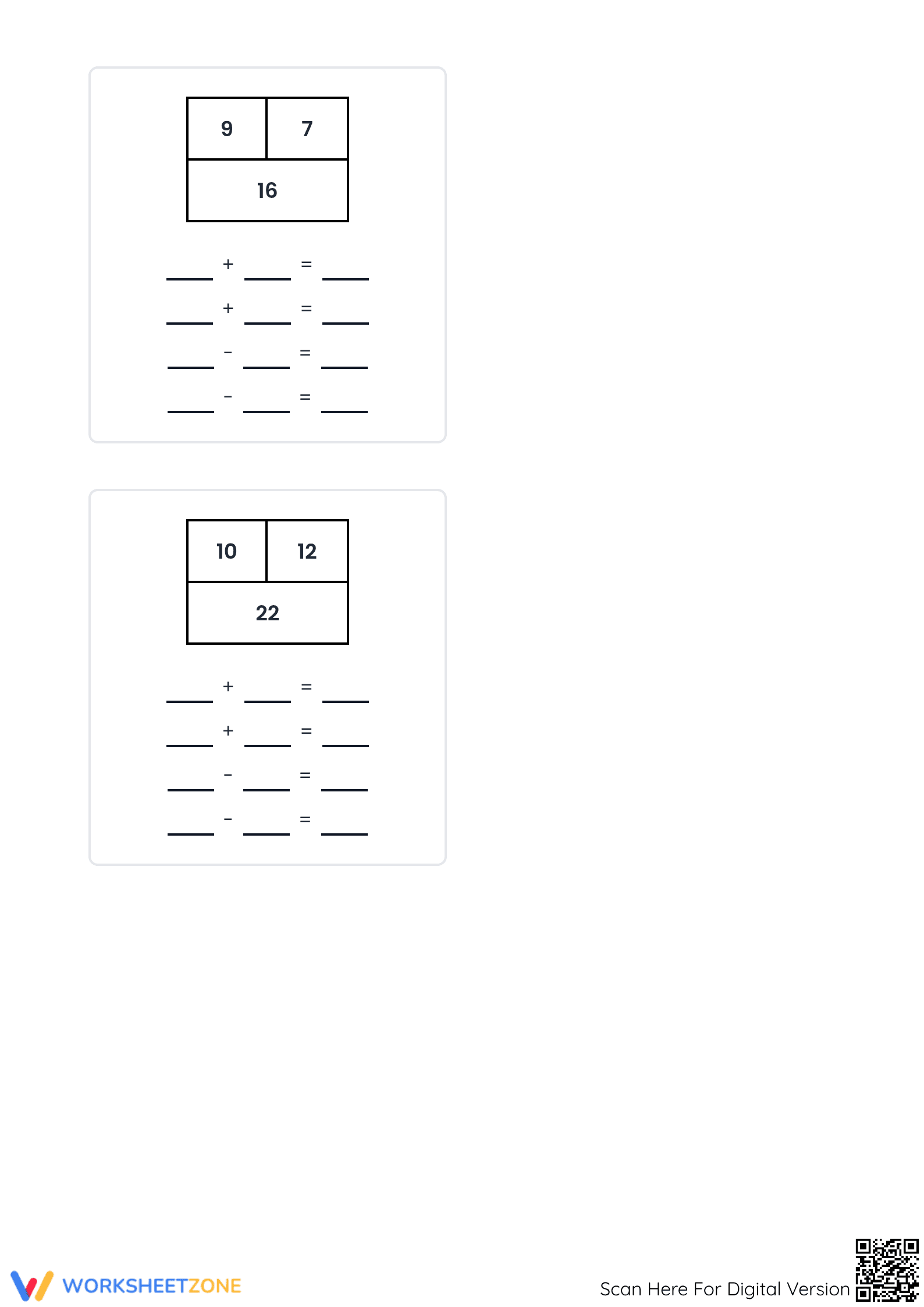
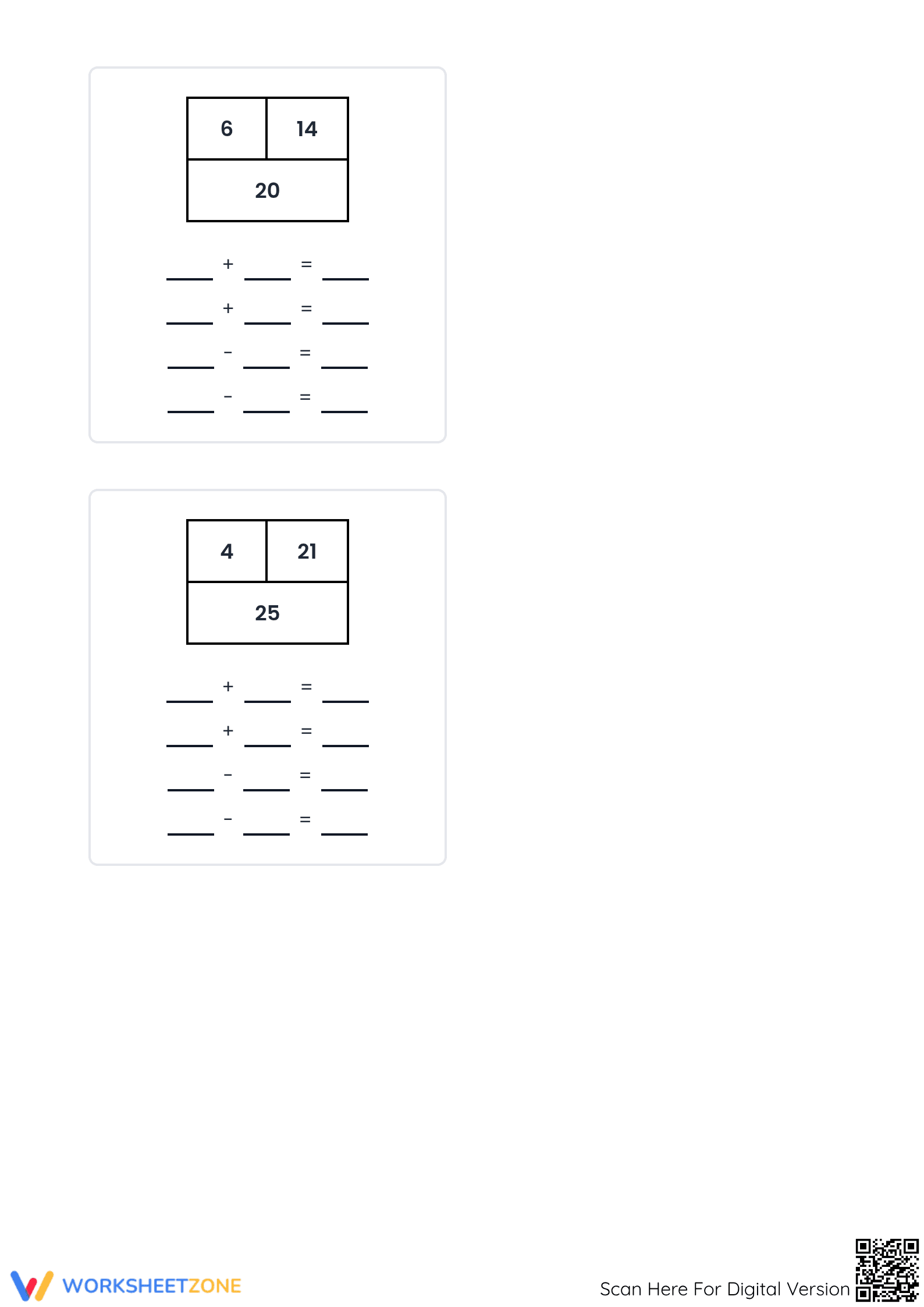
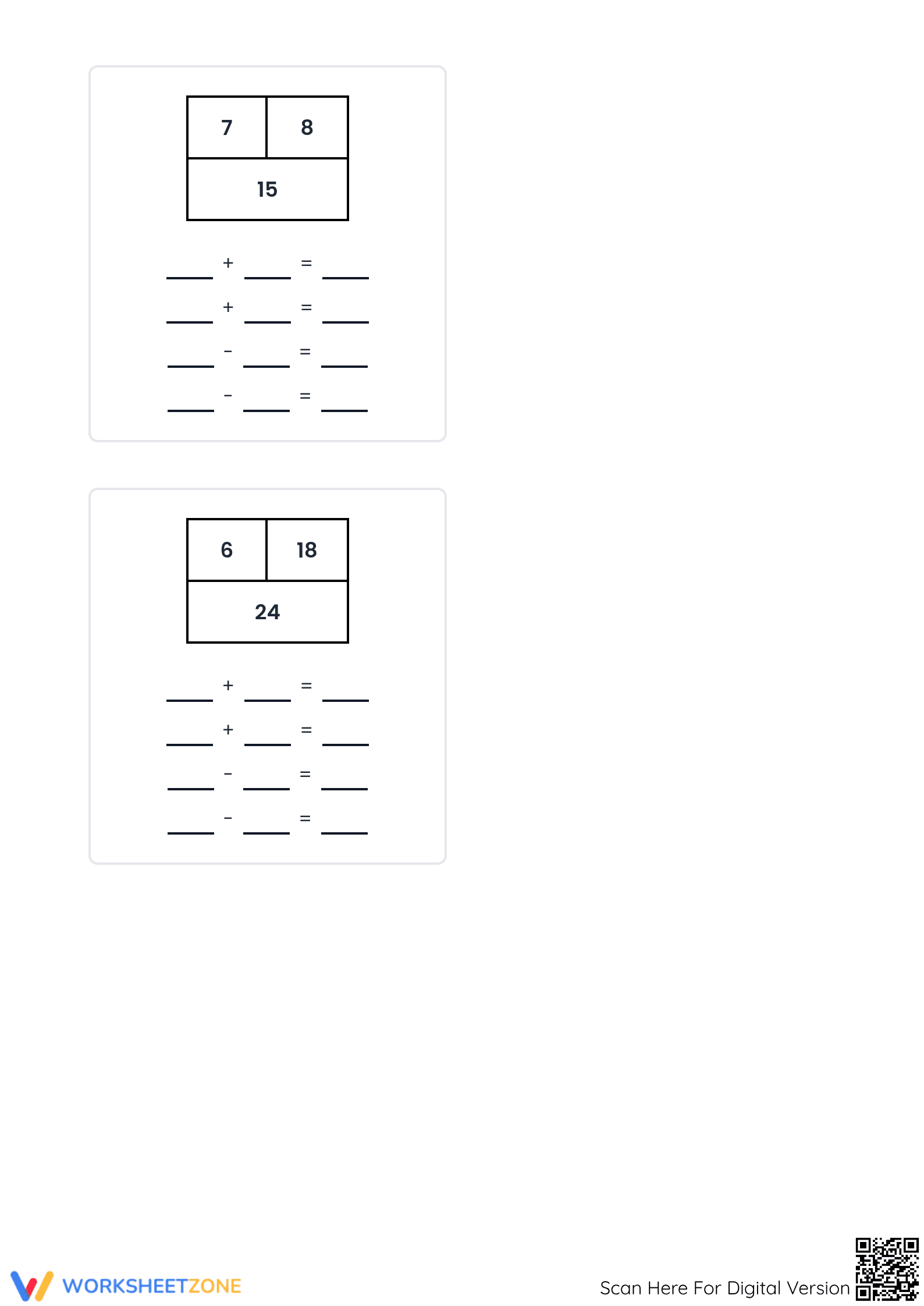

Essential Fact Families Worksheet | Grades 6-9 Math

Paste this activity's link or code into your existing LMS (Google Classroom, Canvas, Teams, Schoology, Moodle, etc.).
Students can open and work on the activity right away, with no student login required.
You'll still be able to track student progress and results from your teacher account.
Strengthen foundational math fluency with this comprehensive fact families worksheet. Designed for older students requiring targeted review, this resource utilizes part-part-whole models to solidify the inverse relationship between addition and subtraction. Students translate visual models into four distinct equations, ensuring they internalize how numbers interact within a family. This practice builds the computational speed necessary for complex algebra.
At a Glance
- Grade: 6–9 · Subject: Math
- Standard:
CCSS.MATH.CONTENT.1.OA.B.3— Apply properties of operations as strategies to add and subtract- Skill Focus: Fact Family Relationships
- Format: 4 pages · 32 problems · Answer key included · PDF
- Best For: Remedial fluency practice and RTI support
- Time: 15–20 minutes
What's Inside
This four-page PDF includes eight distinct part-part-whole models, with two models presented per page. Each model provides three numbers (the whole and two parts) and requires students to write two addition and two subtraction equations. The clear, uncluttered layout is specifically optimized for students who benefit from high-contrast visual aids and plenty of white space for writing. A full answer key is included for rapid grading.
Zero-Prep Workflow
This resource is designed for immediate classroom implementation with a total teacher prep time of under 60 seconds. Simply print the four-page packet or select specific pages for a shorter session. Distribute the worksheets to students as a bell-ringer or independent station activity. Because the part-part-whole models provide the necessary numerical data, no additional manipulatives or teacher-led setup is required, making it an ideal emergency sub-plan addition.
Standards Alignment
The primary focus aligns with `CCSS.MATH.CONTENT.1.OA.B.3`, which emphasizes understanding the properties of operations and the relationship between addition and subtraction. While these are foundational Grade 1 skills, the repetition of these patterns is essential for middle school students struggling with mental math and integer operations. This standard code can be copied directly into lesson plans, IEP goals, or district curriculum mapping tools to document remedial intervention strategies.
How to Use It
Deploy this worksheet during the first ten minutes of class as a high-frequency fluency warm-up. It also serves as an effective formative assessment tool; observe if students struggle to identify which number serves as the "whole" in subtraction equations (the minuend). Expect most students to complete the 32-task set within 20 minutes. For students with IEPs, consider assigning one page per day to prevent cognitive fatigue while maintaining daily fluency practice.
Who It's For
This resource is tailored for Grade 6-9 students who demonstrate gaps in basic operation recall or those in specialized education settings. It is particularly effective for English Language Learners (ELLs) due to the minimal text and heavy reliance on universal mathematical symbols. Pair this worksheet with a brief anchor chart demonstration of the part-part-whole relationship to maximize student independence during the practice session.
The mastery of fact families is a prerequisite for higher-level mathematics, including solving multi-step algebraic equations and understanding functions. According to the RAND AIRS 2024 report, students who maintain high levels of foundational operation fluency demonstrate significantly lower math anxiety when transitioning to abstract variable manipulation. This worksheet addresses that need by providing 32 structured opportunities to practice the inverse property. By utilizing the part-part-whole model, the resource scaffolds the cognitive load, allowing students to focus on the logic of number relationships rather than just rote memorization. This approach is supported by evidence-based instructional design, which suggests that visual models bridge the gap between concrete and abstract understanding. The inclusion of a comprehensive answer key ensures that teachers can provide immediate feedback, a critical component in remediating persistent mathematical misconceptions. This document serves as a durable asset for any middle or high school math intervention toolkit.


