


























Views
Downloads
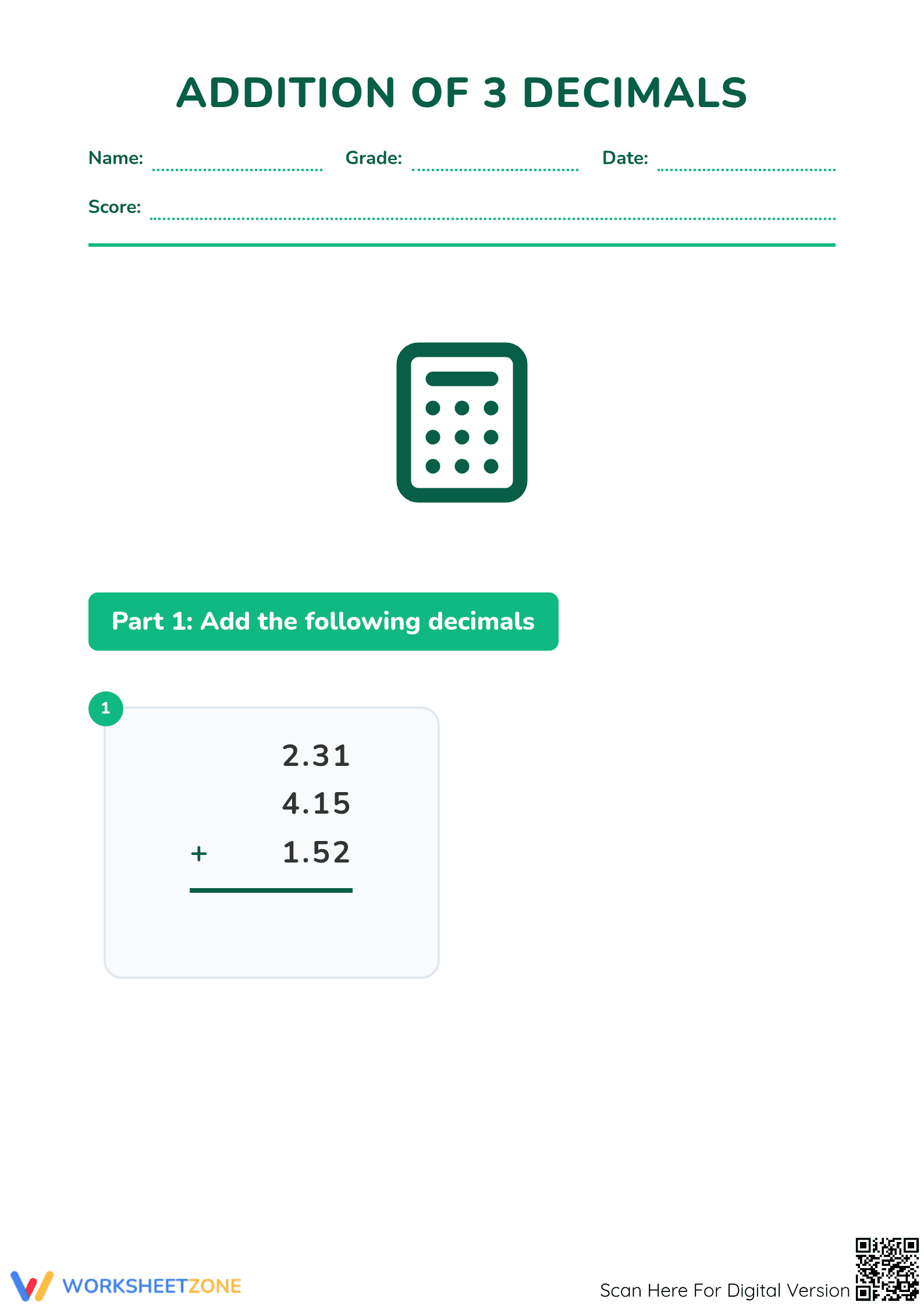
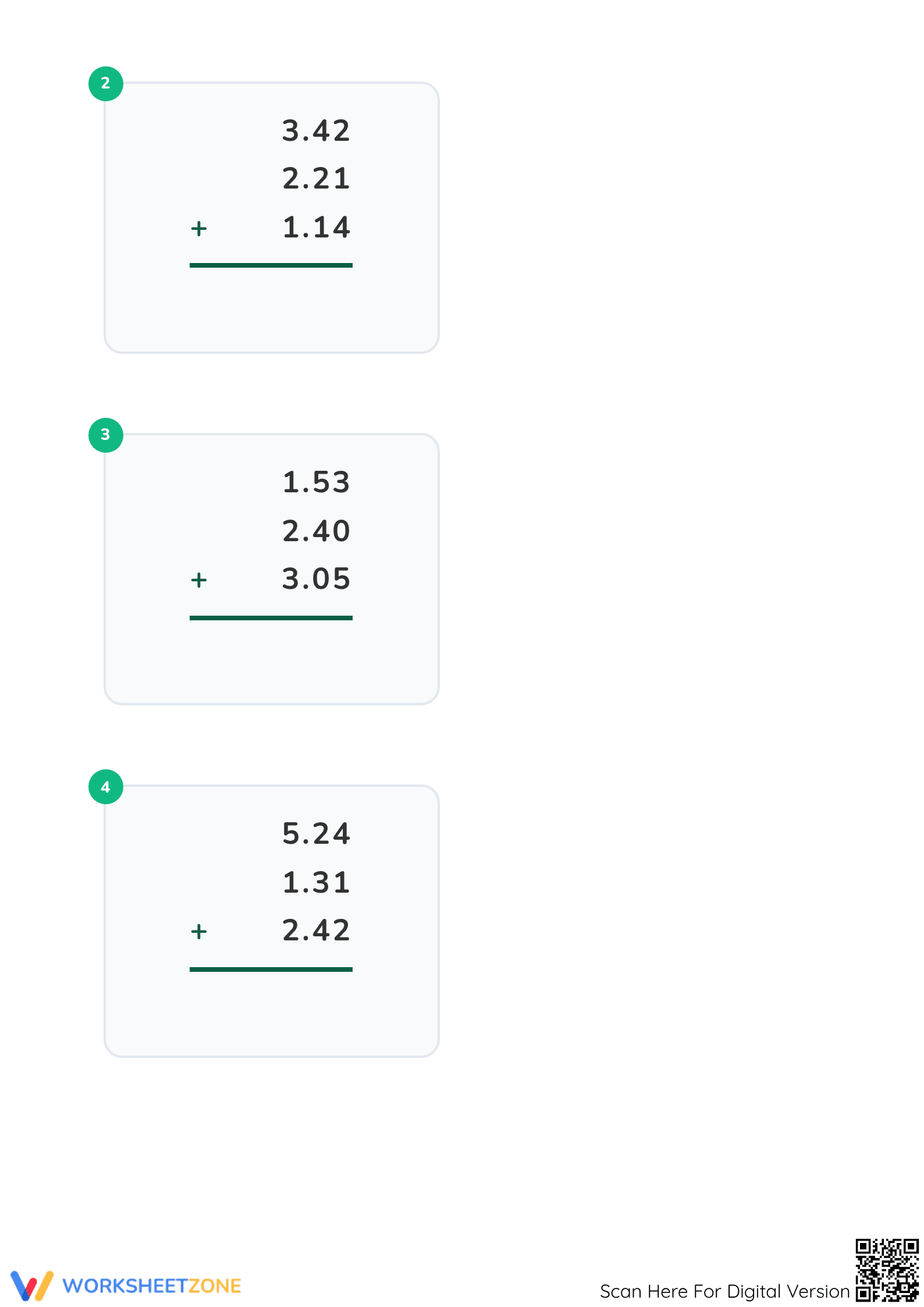
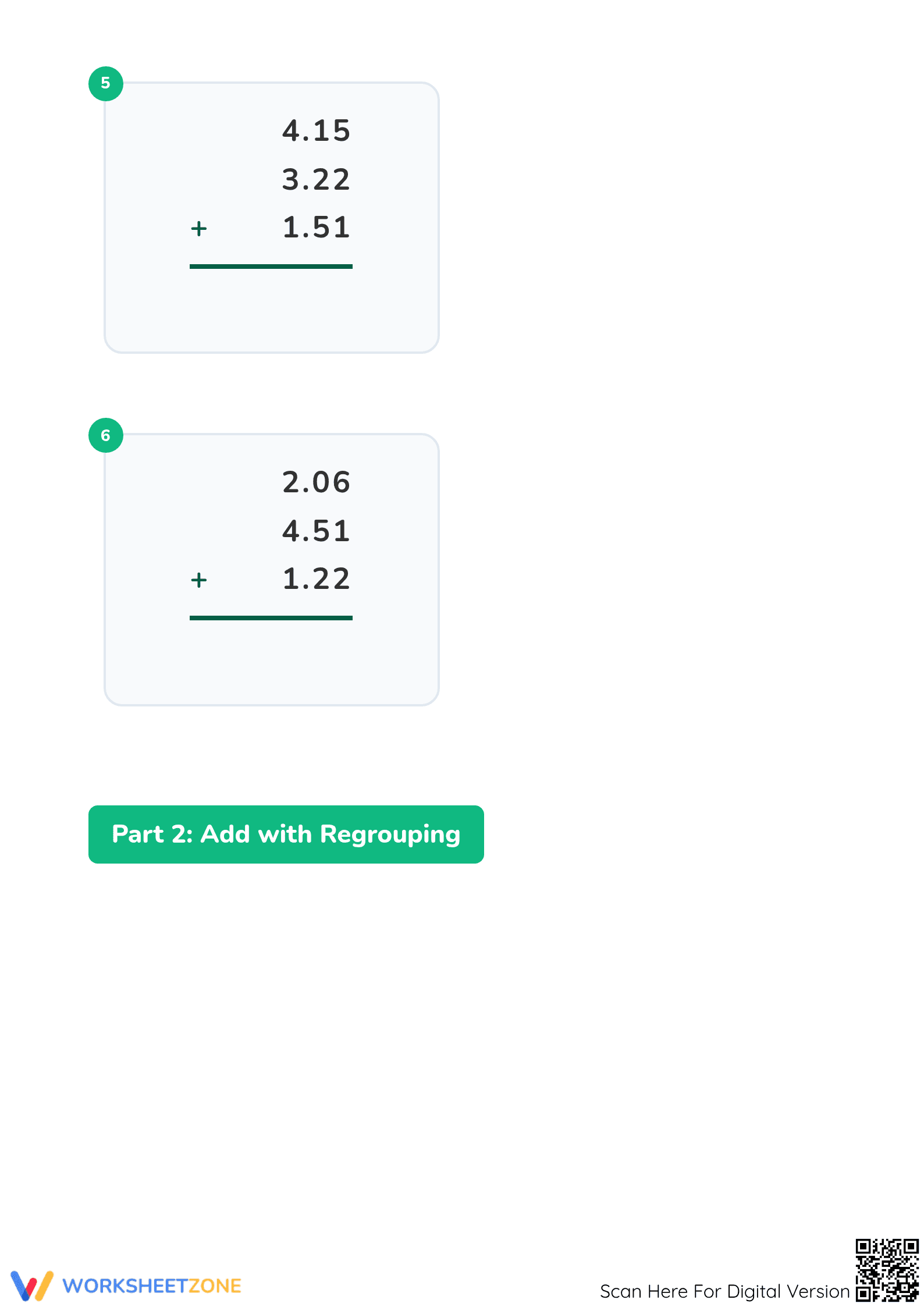
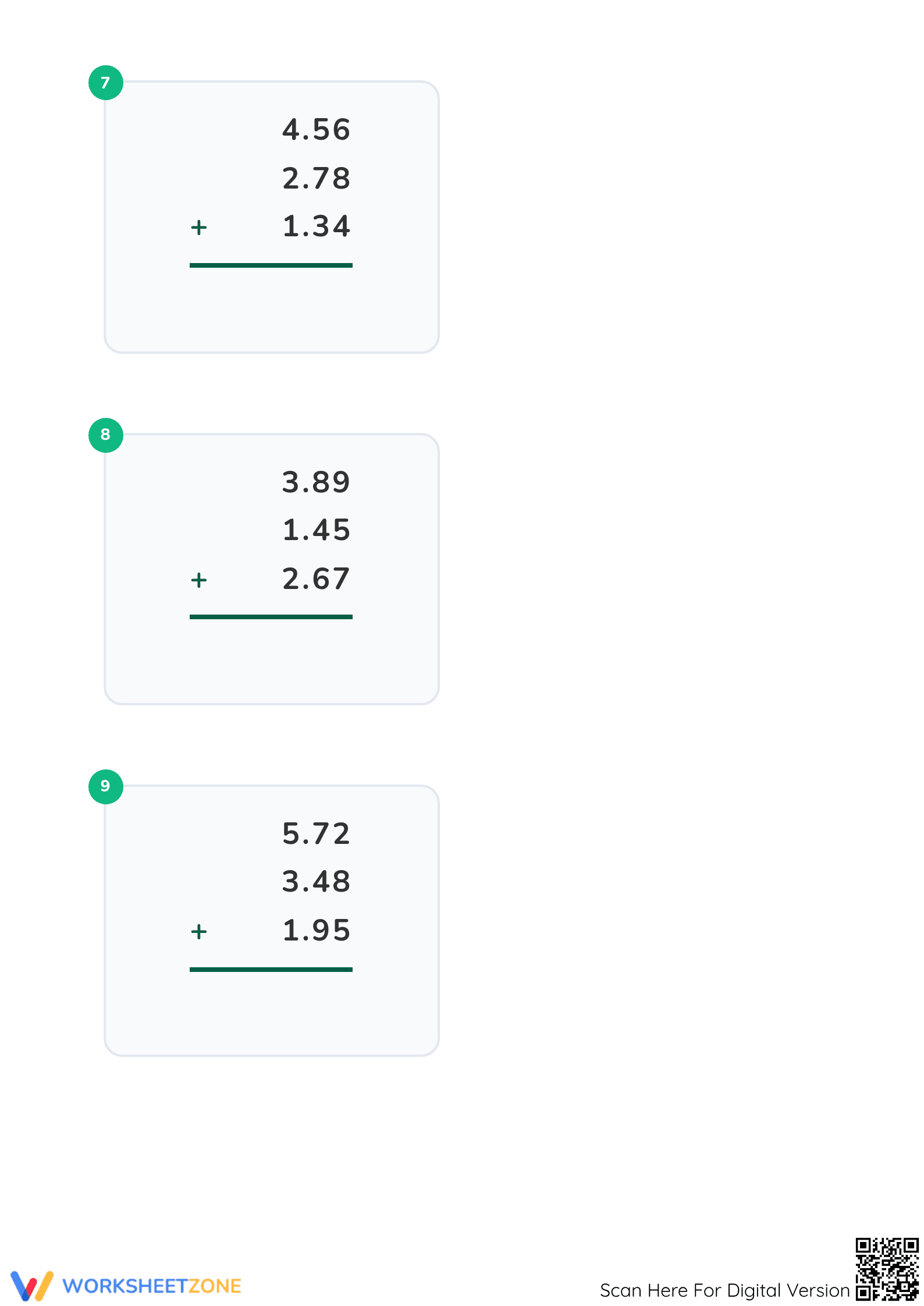
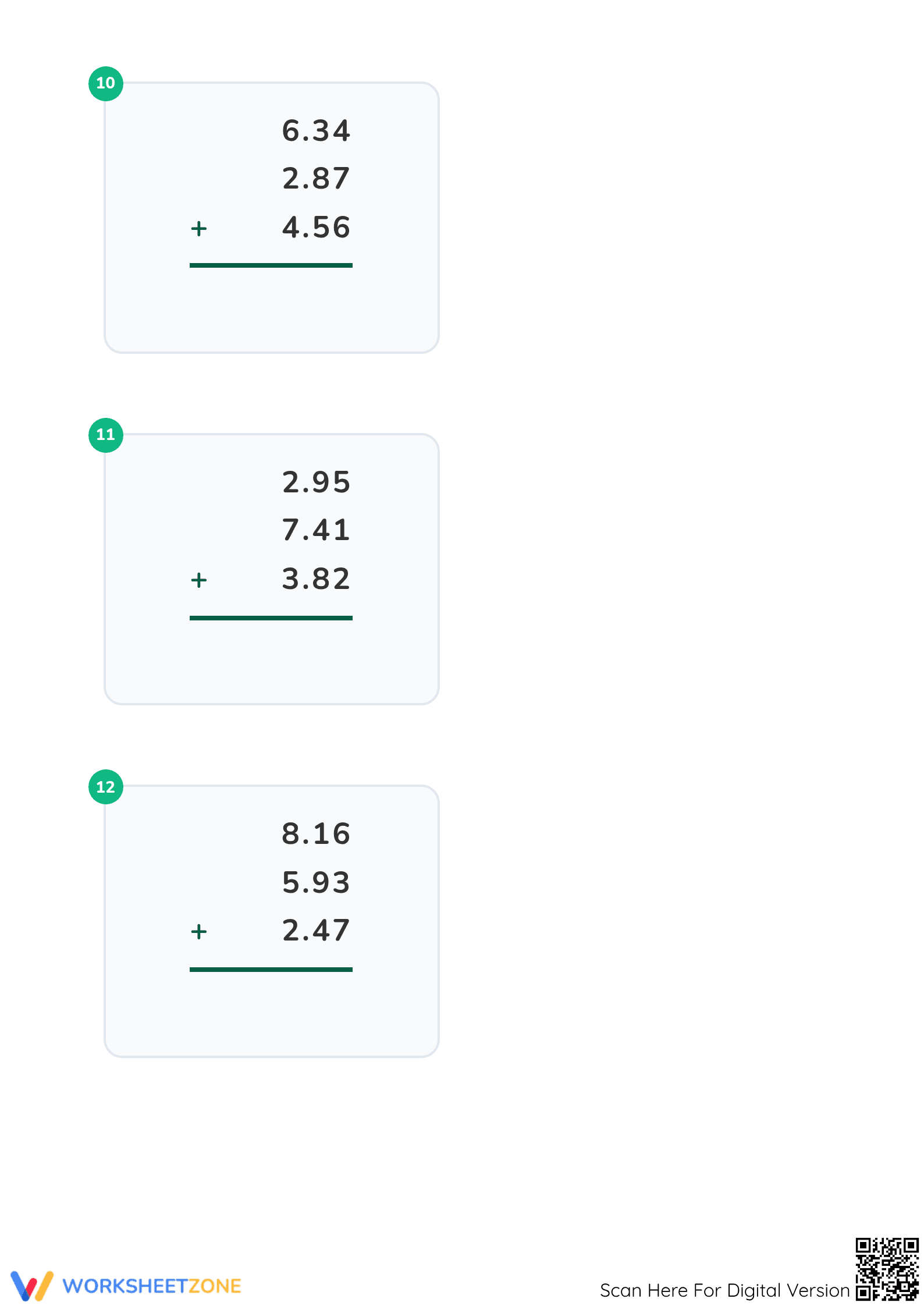

Grade 5 Adding Decimals — Essential No-Prep Worksheet
Paste this activity's link or code into your existing LMS (Google Classroom, Canvas, Teams, Schoology, Moodle, etc.).
Students can open and work on the activity right away, with no student login required.
You'll still be able to track student progress and results from your teacher account.
This worksheet provides focused practice for Grade 5 students on adding three decimal numbers to the hundredths place. It is a straightforward resource designed to build fluency and accuracy with a core arithmetic skill. Students will solve 60 problems, reinforcing their understanding of place value and decimal operations.
At a Glance
- Grade: 5 · Subject: Math
- Standard:
CCSS.MATH.CONTENT.5.NBT.B.7— Add decimals to hundredths using place-value strategies.- Skill Focus: Adding three decimal numbers
- Format: 5 pages · 60 problems · Answer key included · PDF
- Best For: Independent practice, homework, or skill reinforcement
- Time: 20–30 minutes
What's Inside
This resource includes five pages of math problems and a complete five-page answer key. Each page presents 12 unique problems where students add three decimal numbers. The clean layout provides space for students to show their work, and the included key makes for quick and easy grading.
Zero-Prep Classroom Workflow
Designed for busy teachers, this worksheet is ready in minutes. Its workflow is streamlined for efficiency.
- Print (1 min): The PDF is ready to print.
- Distribute (1 min): Hand out the sheets for immediate use. The directions are self-explanatory.
- Review (5-10 min): Use the provided answer key for quick grading or peer review.
With a total prep time of under two minutes, it's an ideal resource for substitute plans or supplemental practice.
Standards Alignment
This worksheet is directly aligned with Common Core State Standard CCSS.MATH.CONTENT.5.NBT.B.7, which requires students to add decimals to the hundredths place using strategies based on place value. This resource provides the procedural practice necessary for mastering that component of the standard. The code can be copied directly into lesson plans or curriculum maps.
How to Use It
This worksheet is a versatile tool. Use it right after a lesson on decimal addition for immediate application. As a formative assessment, assign one page to check for common errors, such as misaligning decimal points. For homework, it provides focused reinforcement of the skill. The worksheet is designed for a completion time of 20 to 30 minutes, fitting easily into a standard math block.
Who It's For
This resource is for fifth-grade students learning to add multi-digit decimals. It's also useful for advanced fourth graders or sixth graders needing remediation. The repetitive structure benefits all learners by building confidence and procedural fluency. It pairs well with a classroom place value chart that shows tenths and hundredths to support student work.
This standards-aligned worksheet provides critical practice in decimal operations, a key predictor of future mathematics achievement. By focusing on CCSS.MATH.CONTENT.5.NBT.B.7, it helps students master the procedural skill of adding decimals. Research consistently shows that fluency in multi-digit arithmetic is essential for accessing higher-level concepts. According to the RAND AIRS (2024) report on foundational skills, repeated, structured practice with core operations significantly improves student retention and confidence. This resource offers 60 targeted problems that build this procedural fluency, ensuring students have a solid computational foundation. The worksheet's design reflects the principle that mastery requires sufficient practice to make the process automatic, freeing cognitive resources for more complex problem-solving. It directly supports the development of skills measured by national assessments.


