


























Views
Downloads

Printable Adding Regions Area Worksheet | Grade 6-9
Paste this activity's link or code into your existing LMS (Google Classroom, Canvas, Teams, Schoology, Moodle, etc.).
Students can open and work on the activity right away, with no student login required.
You'll still be able to track student progress and results from your teacher account.
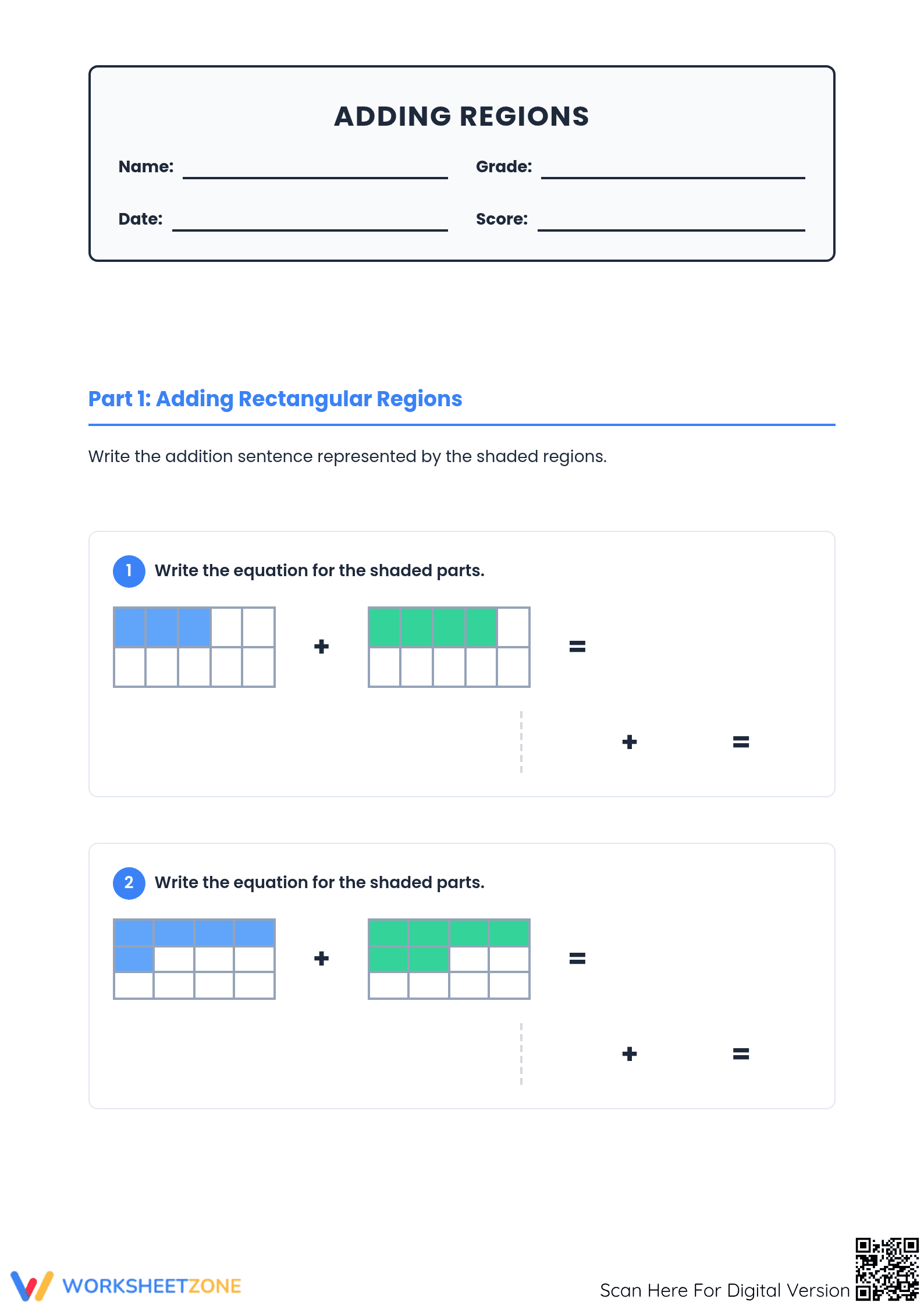
Mastering spatial reasoning and area calculation is essential for middle and high school geometry. This comprehensive worksheet guides students through the process of determining the total area of shaded regions by composing and adding distinct geometric parts. Students will translate visual representations into precise mathematical equations, fostering a deep understanding of area properties and additive principles across nine structured problems.
At a Glance
- Grade: 6–9 · Subject: Geometry & Measurement
- Standard:
6.G.A.1— Find area by composing into rectangles or decomposing into shapes- Skill Focus: Adding area regions and spatial visualization
- Format: 4 pages · 9 problems · Answer key included · PDF
- Best For: Geometry skill reinforcement and formative assessment
- Time: 25–35 minutes
What's Inside
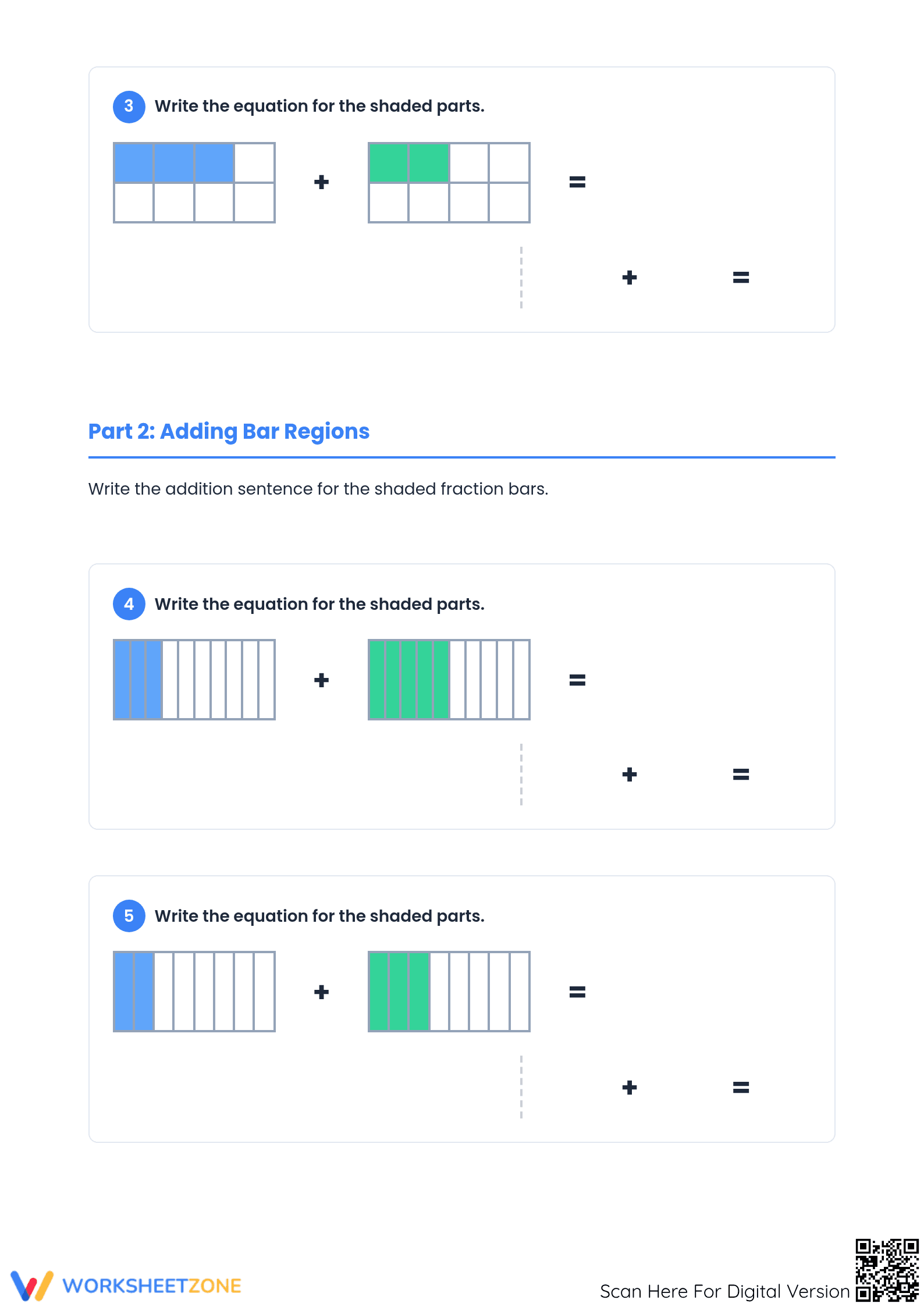
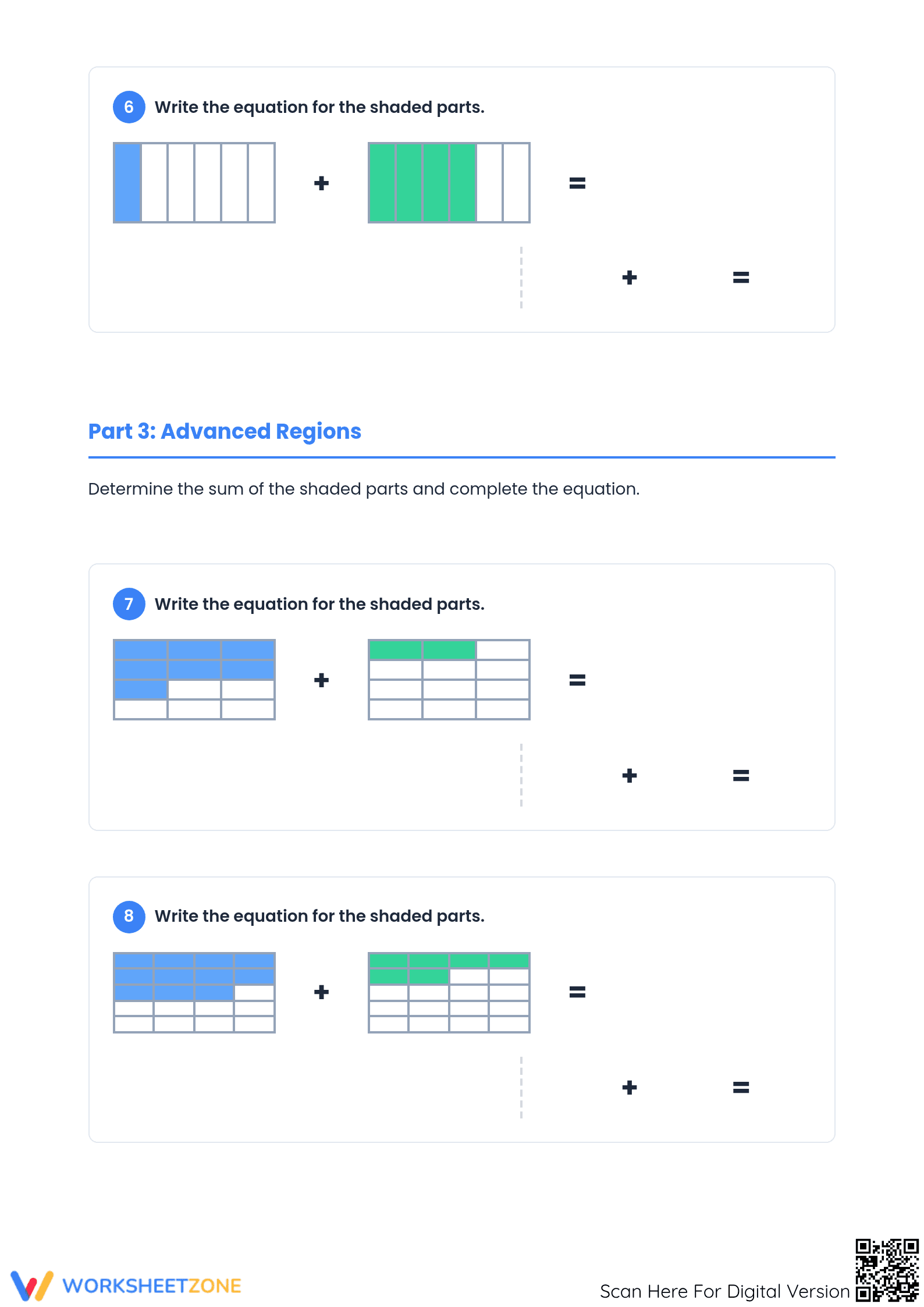
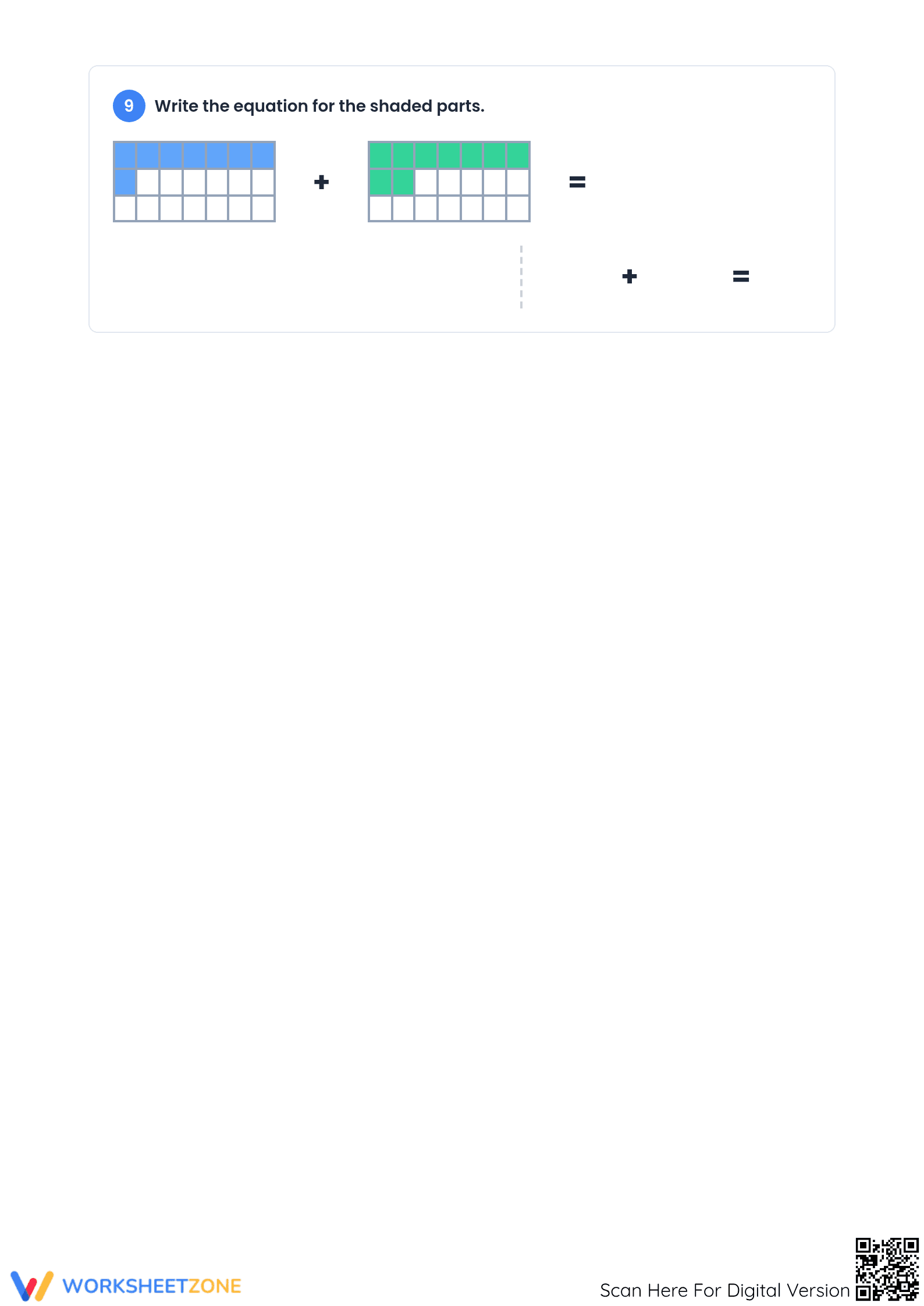
This four-page instructional resource features nine high-quality visual problems divided into three progressive sections. Parts cover rectangular regions, bar models, and complex 3x5 grids. Each page provides dedicated space for writing addition sentences and equations, accompanied by a full answer key for rapid grading and student self-correction.
Skill Progression
- Guided Practice: The first three problems utilize simple 2x4 grids to help students identify shaded parts and translate them into basic addition sentences with clear visual supports.
- Supported Practice: Problems 4 through 6 transition to bar models, encouraging students to recognize area as a consistent unit of measure while maintaining equation-based structure.
- Independent Practice: The final advanced set requires students to analyze 15-unit grids independently, calculating sums with less scaffolding to ensure geometric mastery.
This structured approach follows the Gradual Release of Responsibility model, moving from explicit visual cues to more abstract geometric calculations.
Standards Alignment
This resource is strictly aligned with CCSS.MATH.CONTENT.6.G.A.1, which requires students to find the area of polygons by composing into rectangles or decomposing into other shapes. It also supports the application of these techniques to solve real-world and mathematical problems. Standard codes can be copied directly into lesson plans, IEP goals, or district curriculum mapping tools.
How to Use It
Use this worksheet as a focused exit ticket during a geometry unit to gauge how well students can synthesize complex area models into equations. Alternatively, it serves as an excellent station activity for small-group rotations. Teachers should observe students during the transition to advanced regions to identify those struggling with grid-based spatial orientation.
Who It's For
This activity is designed for Grade 6 through 9 students mastering the foundations of geometry. It is effective for visual learners who benefit from seeing area as concrete chunks rather than abstract numbers. It pairs naturally with area model manipulatives to bridge the gap between concrete and abstract math.
Effective geometry instruction relies on the integration of visual models and symbolic representation to build conceptual understanding. According to Fisher & Frey (2014), the use of scaffolds like area grids allows students to internalize the additive property of area before moving to complex formulas. This worksheet applies these principles by requiring students to write addition sentences for the standard code 6.G.A.1, ensuring they understand that total area is the sum of its parts. By engaging with shaded rectangular and bar regions, learners develop the spatial visualization skills necessary for advanced mathematics and engineering. The nine problems included here provide sufficient repetition to move students from initial recognition to independent proficiency in area composition. This evidence-based approach aligns with current best practices in mathematics education, supporting both procedural fluency and conceptual depth in accordance with modern standards for college and career readiness.


