


























Views
Downloads
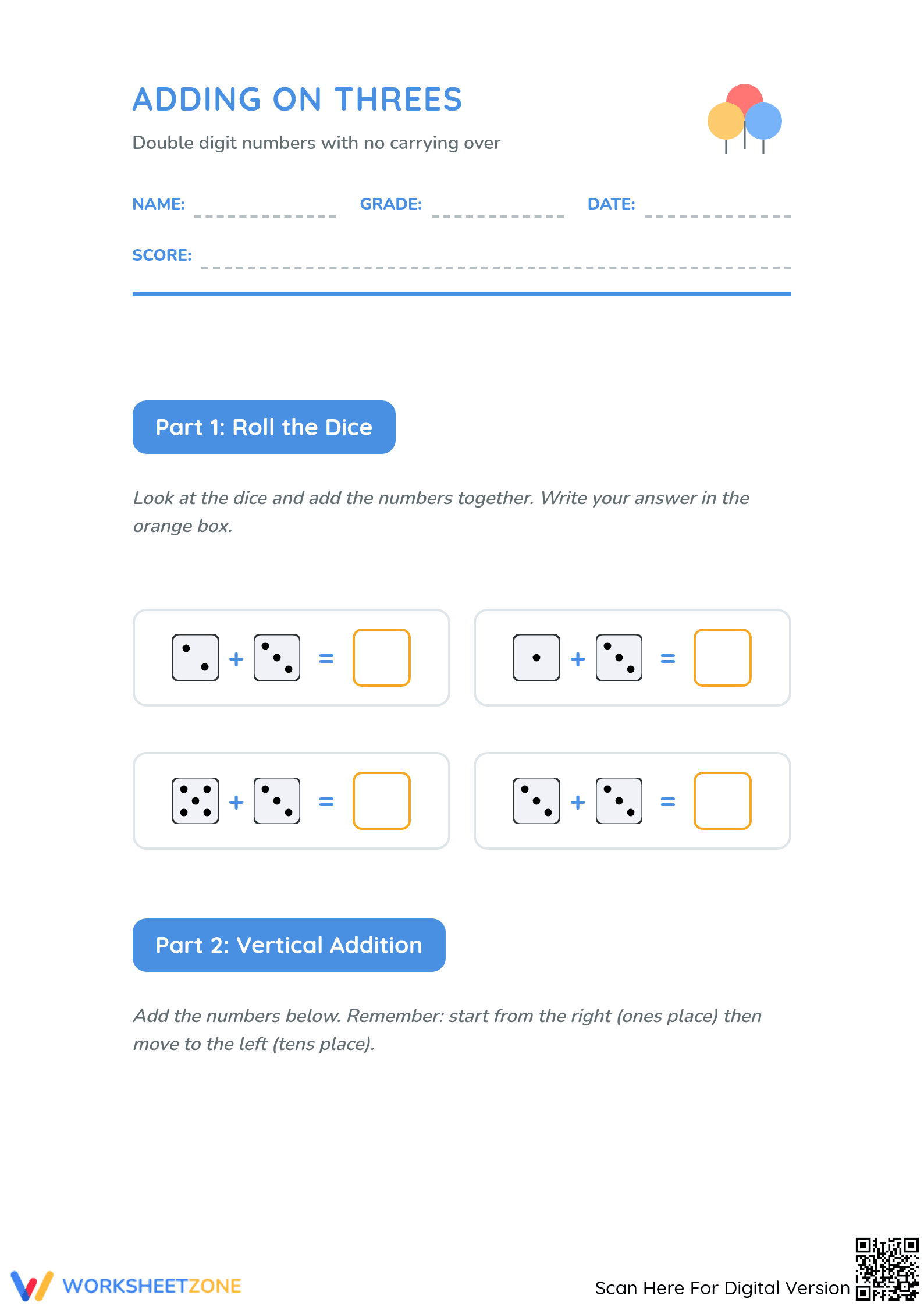
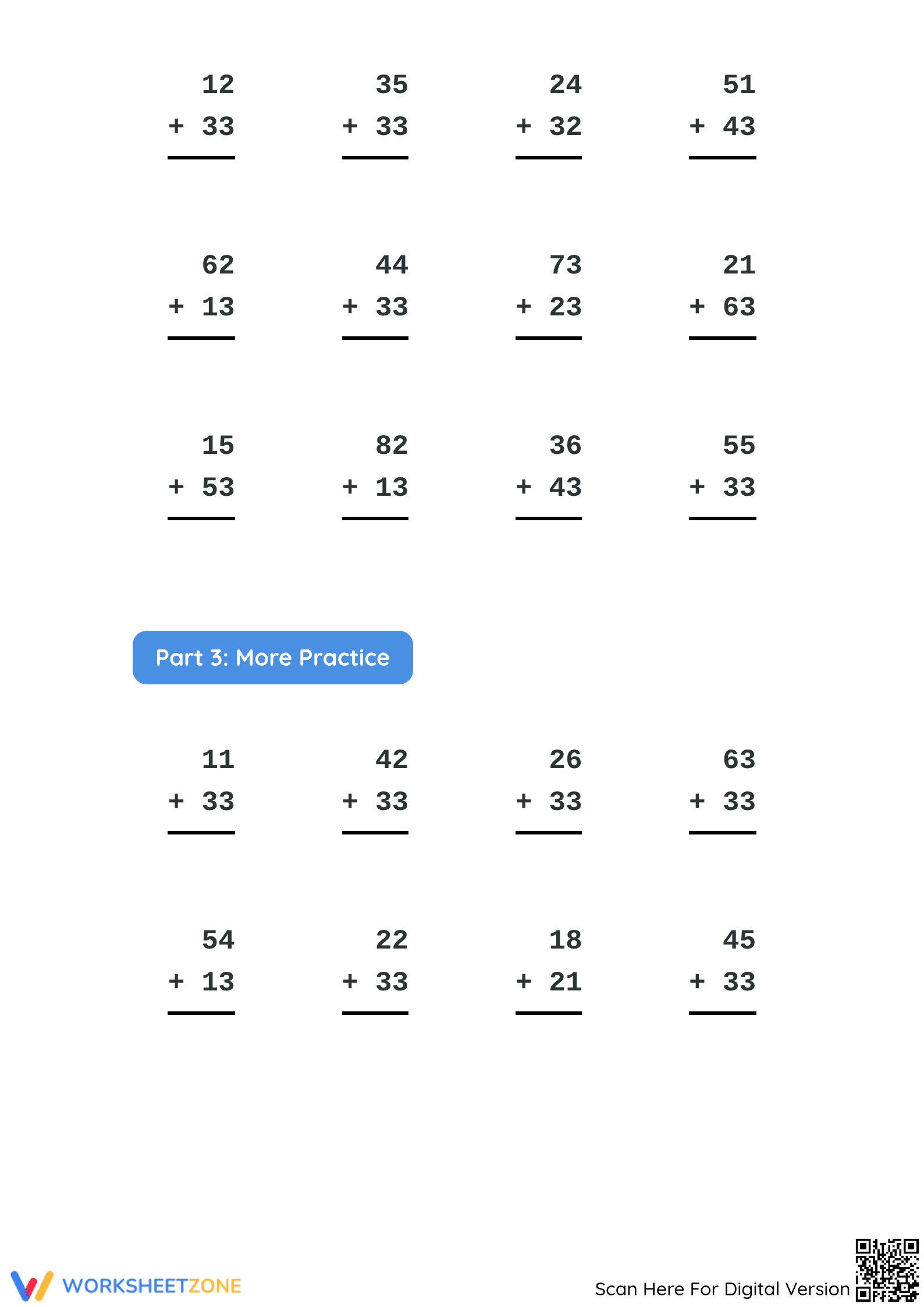
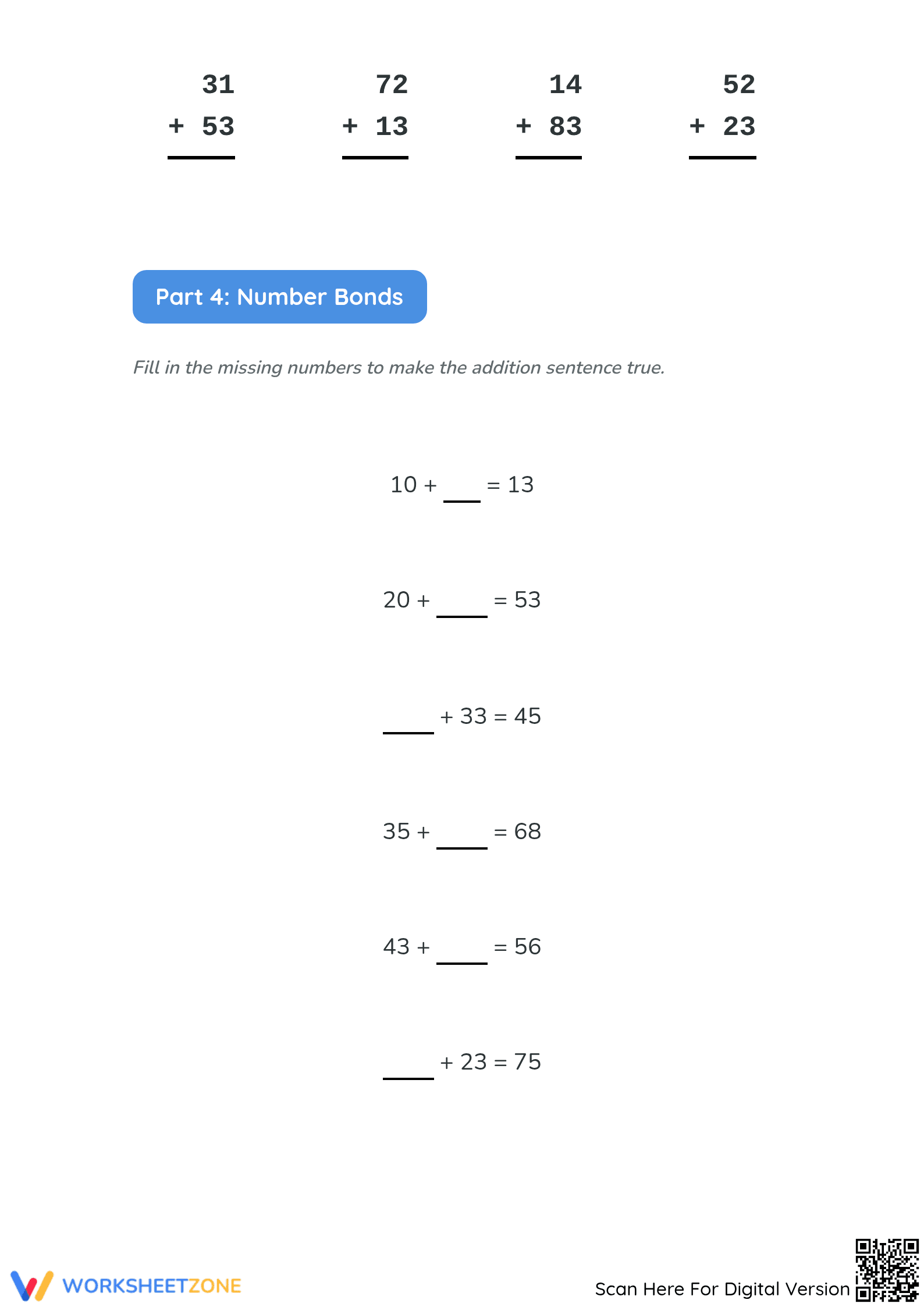
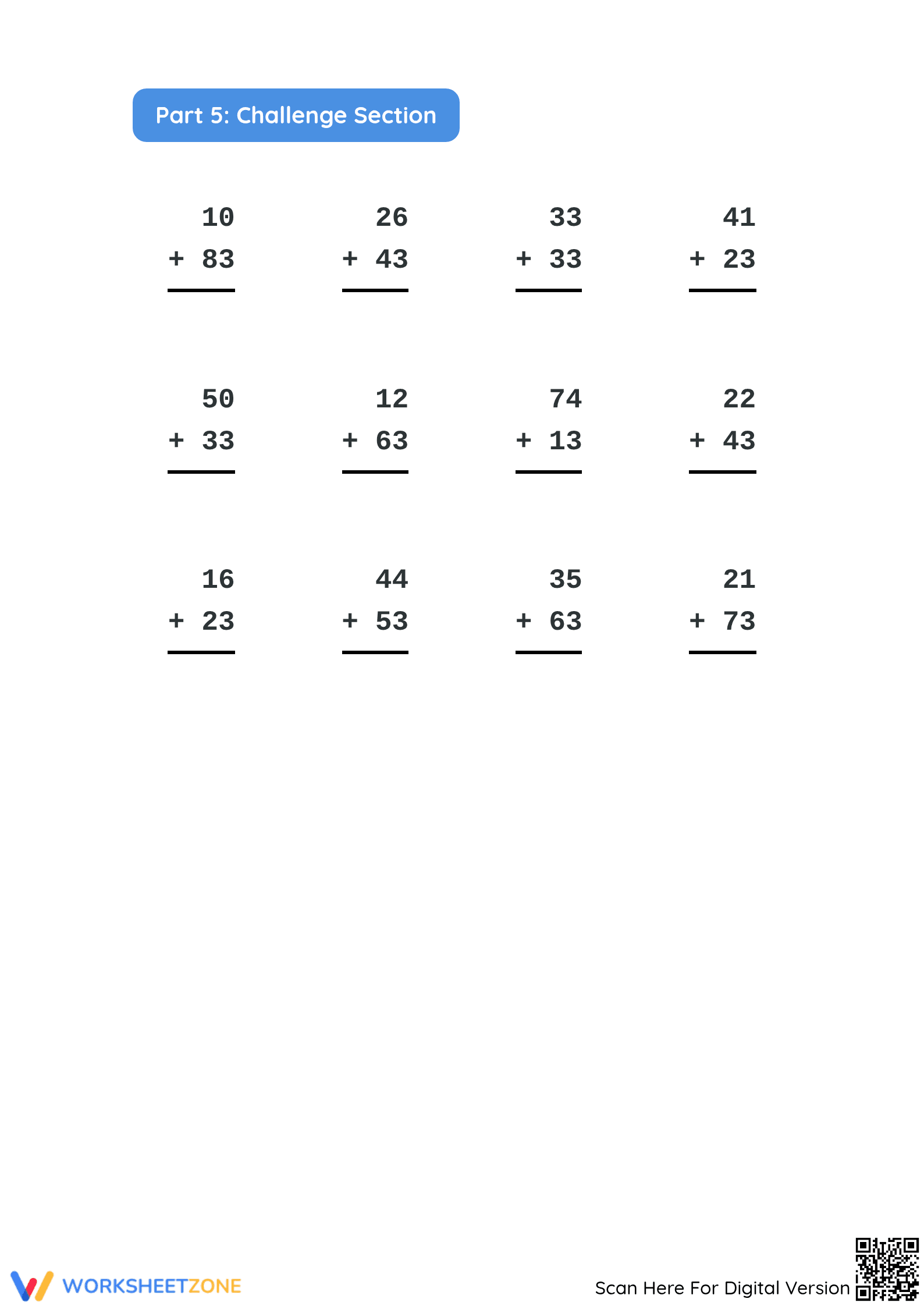

Grade 2 2-Digit Addition — Printable No-Prep Worksheet
Paste this activity's link or code into your existing LMS (Google Classroom, Canvas, Teams, Schoology, Moodle, etc.).
Students can open and work on the activity right away, with no student login required.
You'll still be able to track student progress and results from your teacher account.
This comprehensive worksheet helps second-grade students master two-digit addition without carrying. Through a series of varied and engaging activities, learners will build fluency and confidence in adding numbers within 100. The resource is designed for independent practice, providing a structured path to reinforce foundational place value concepts and addition strategies.
At a Glance
- Grade: 2 · Subject: Math
- Standard:
CCSS.MATH.CONTENT.2.NBT.B.5— Fluently add numbers within 100 using place value strategies.- Skill Focus: 2-Digit Addition (No Regrouping)
- Format: 4 pages · 42 problems · Answer key included · PDF
- Best For: Independent practice, homework, sub plans
- Time: 20–30 minutes
What's Inside
This four-page PDF contains a complete learning sequence for two-digit addition. It begins with a fun dice-rolling activity, moves to standard vertical addition, and includes number bonds to build flexible thinking. With 42 problems, the worksheet provides ample practice. A full answer key is included for easy grading.
Zero-Prep Workflow
Designed for busy teachers, this resource is ready in minutes. The workflow is simple:
- Print (1 minute): The 4-page student packet and answer key are formatted for easy printing.
- Distribute (1 minute): Hand out the worksheets for immediate use. No extra materials are needed.
- Review (5 minutes): Use the provided answer key to quickly review student work or allow for self-correction.
Total prep time is under two minutes, making this ideal for morning work, math centers, or substitute plans.
Standards Alignment
This worksheet is directly aligned with the following Common Core State Standard for Grade 2 Mathematics:
CCSS.MATH.CONTENT.2.NBT.B.5: Fluently add and subtract within 100 using strategies based on place value, properties of operations, and/or the relationship between addition and subtraction.
While the focus is on addition, the strategies reinforce number sense that supports the entire standard. Both standard codes can be copied directly into lesson plans, IEP goals, or district curriculum mapping tools.
How to Use It
This worksheet can be used at multiple points in an instructional cycle. Use it after direct instruction for independent practice, or assign as homework to reinforce concepts. For formative assessment, observe students during the "Part 4: Number Bonds" section; difficulty here may signal a need to review part-whole relationships. Most second graders will complete all tasks in 20 to 30 minutes.
Who It's For
This resource is for second-grade students learning two-digit addition without regrouping. The clear layout makes it accessible for all learners, including those in intervention settings. For a natural pairing, use this worksheet alongside a place value anchor chart showing tens and ones blocks.
This worksheet provides targeted practice for CCSS.MATH.CONTENT.2.NBT.B.5, a critical gateway standard for elementary mathematics. By focusing on adding two-digit numbers without regrouping, it builds the procedural fluency that underpins future work with multi-digit operations. Research consistently shows that a strong foundation in place value and early addition is a key predictor of later math achievement. According to the National Assessment of Educational Progress (NAEP), proficiency in operations is foundational. This resource supports that goal by offering varied, scaffolded practice on this core skill. As noted by Fisher & Frey (2014), effective practice moves students from guided to independent work, a structure reflected in the worksheet's five distinct parts. The 42 problems offer the repetition needed for students to internalize the process of adding tens with tens and ones with ones, preparing them for more complex calculations.


