


























Views
Downloads


Essential Addition with Objects Worksheet | Grade K Math
Paste this activity's link or code into your existing LMS (Google Classroom, Canvas, Teams, Schoology, Moodle, etc.).
Students can open and work on the activity right away, with no student login required.
You'll still be able to track student progress and results from your teacher account.
Mastering Early Addition with Visuals
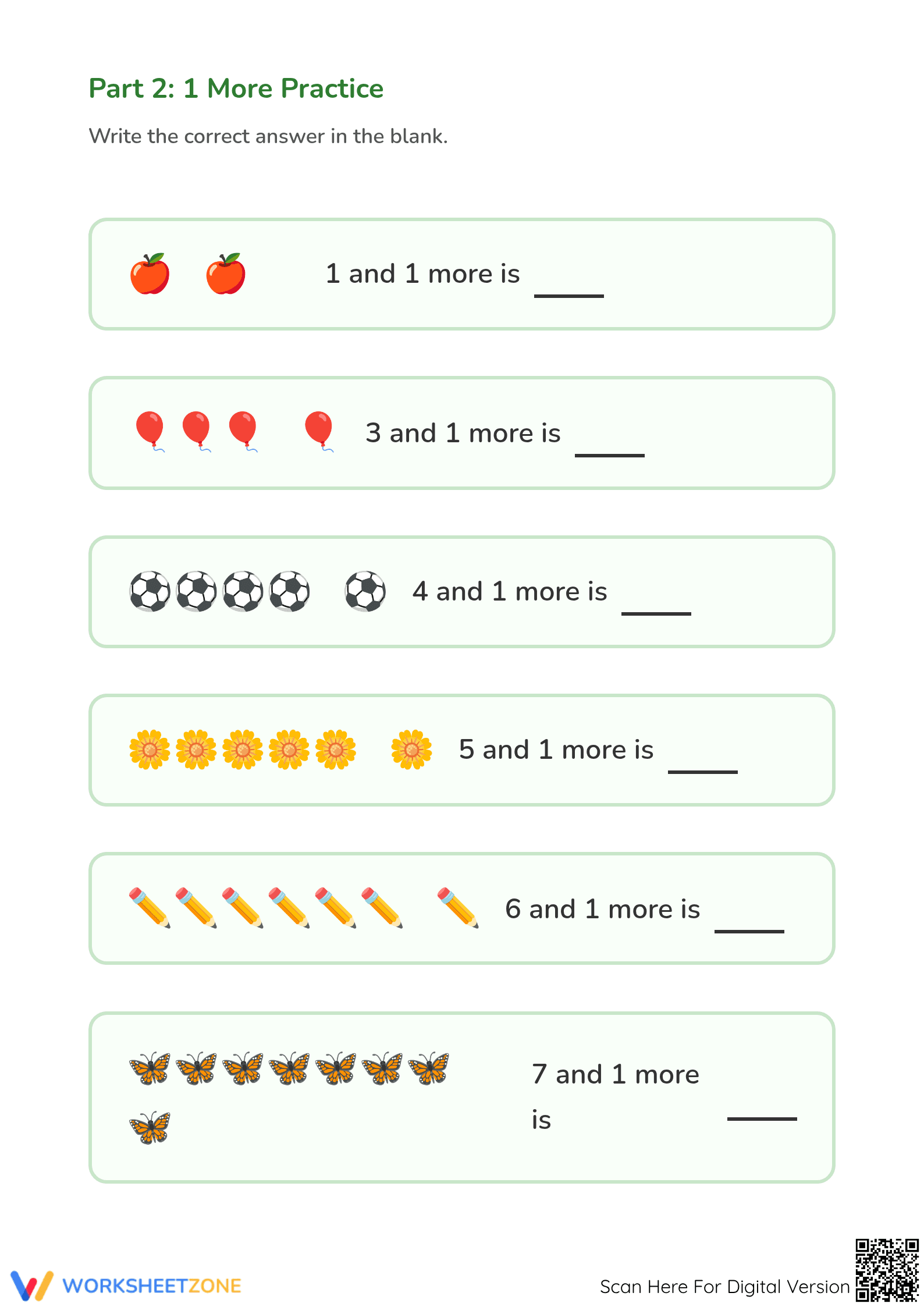
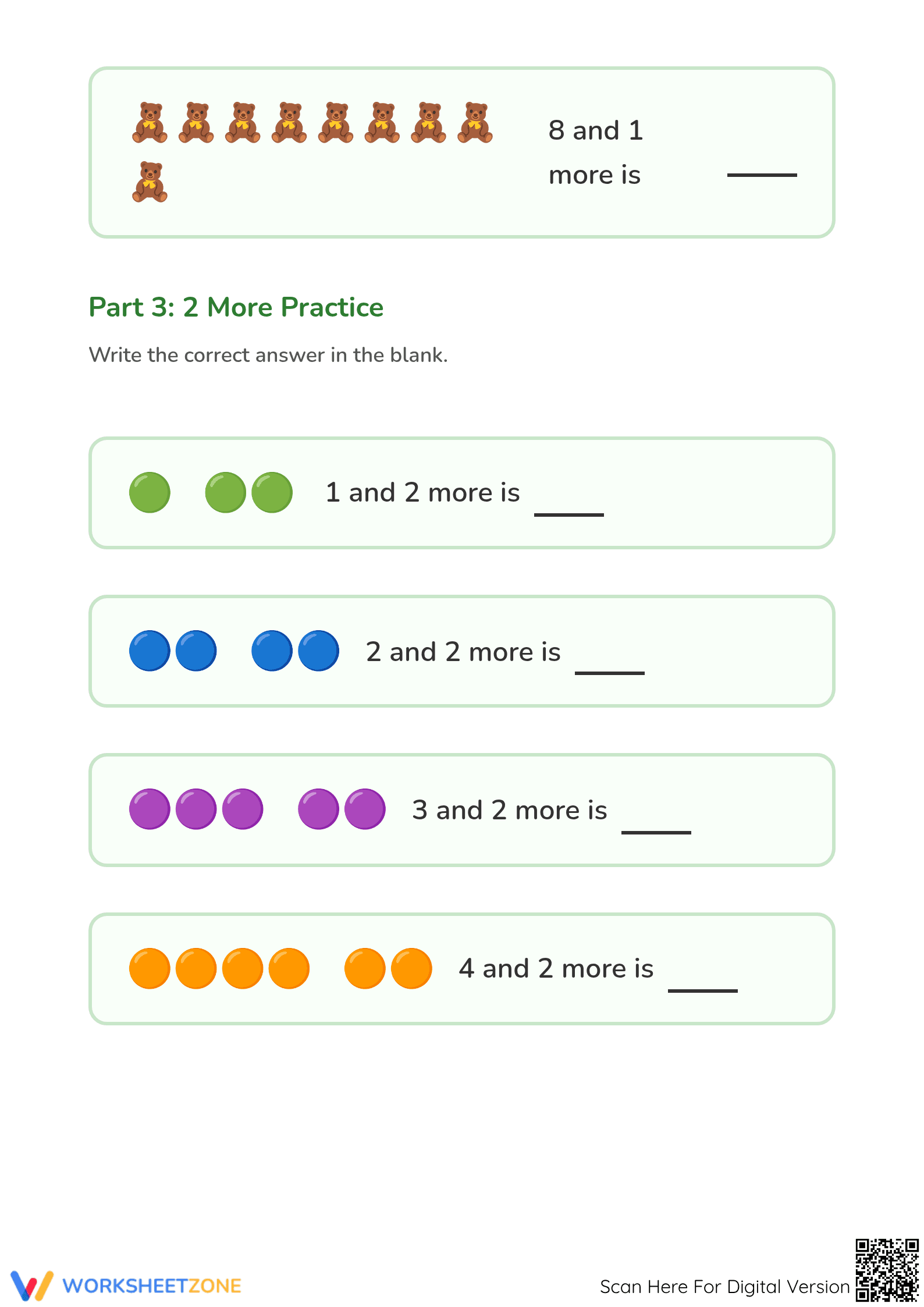
This essential worksheet helps young learners master early addition by connecting counting to objects. Students will practice adding 1, 2, and 3 to numbers within 10, using clear visuals to build a foundational understanding of operations and prepare them for more complex arithmetic.
At a Glance
- Grade: K–1 · Subject: Math
- Standard:
CCSS.MATH.CONTENT.K.OA.A.1— Represent addition with objects, fingers, drawings, or sounds.- Skill Focus: Addition within 10
- Format: 5 pages · 22 problems · Answer key included · PDF
- Best For: Guided practice, math centers, homework
- Time: 15–20 minutes
What's Inside
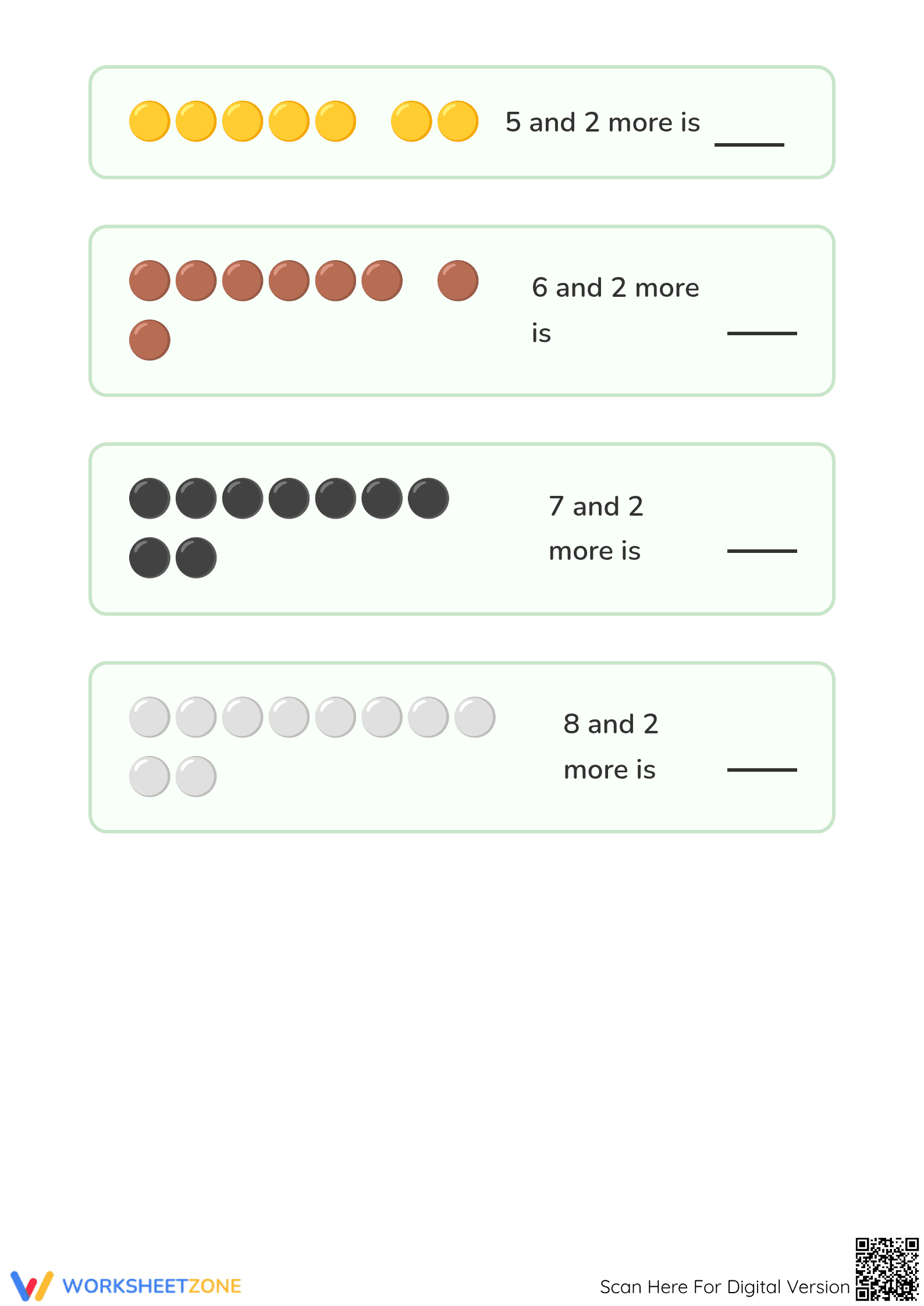
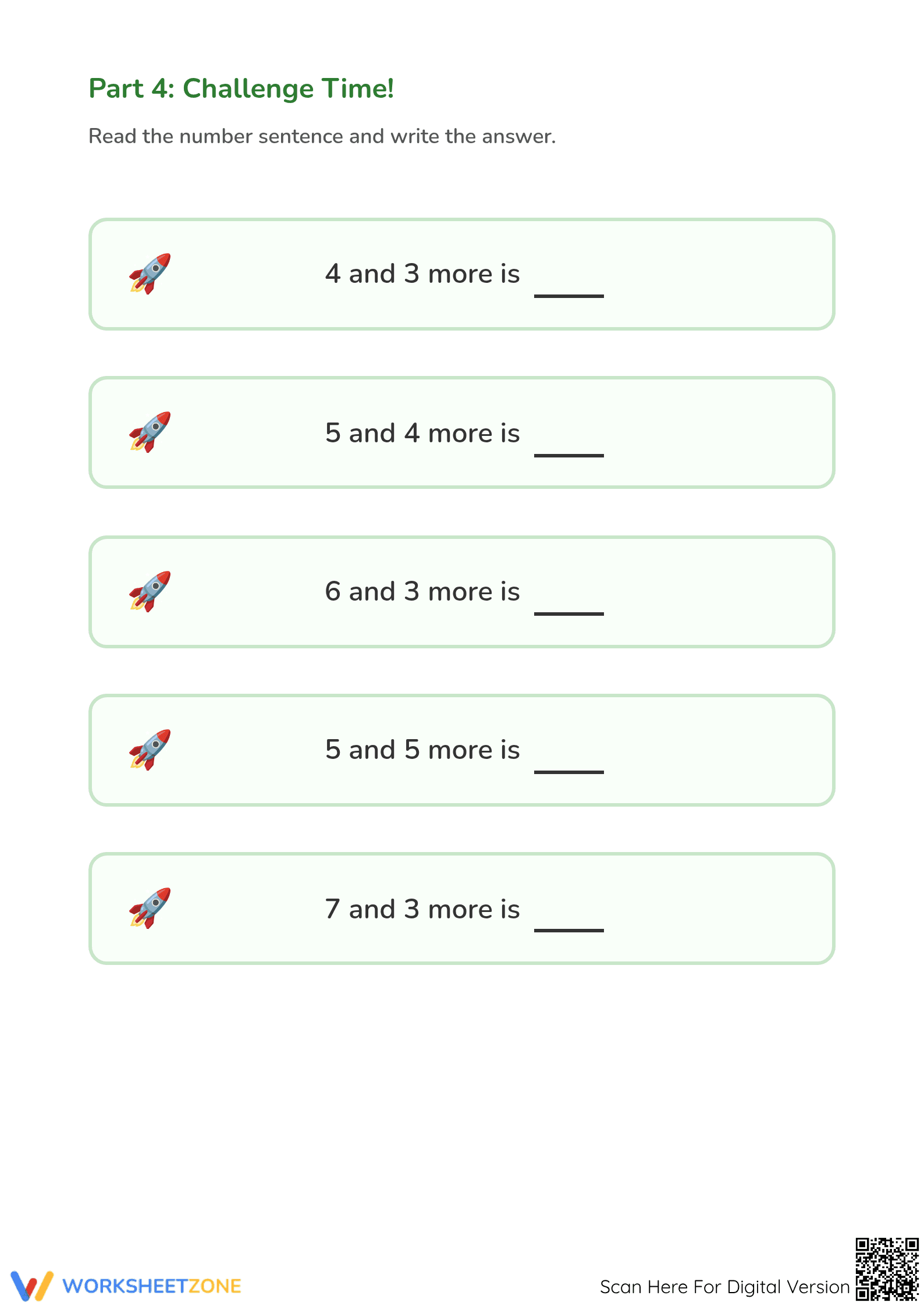
This five-page PDF packet contains 22 problems across four parts. The worksheet uses colorful images as counters to help students visualize the addition process. A complete five-page answer key is included, showing the correct numeral for every problem for easy grading and review.
A Clear Path to Addition Fluency
This resource follows a gradual-release model:
- Guided Practice: Early sections focus on adding one or two, using objects as direct visual support for each problem. Students begin by counting concrete items to find the sum.
- Supported Practice: The worksheet then encourages students to practice counting on from a larger number rather than recounting every single object.
- Independent Practice: The final challenge removes picture support, requiring students to read a number sentence and perform the addition with greater independence.
Aligned with Core Math Standards
This worksheet directly aligns with CCSS.MATH.CONTENT.K.OA.A.1, where students "Represent addition... with objects." It provides targeted practice using objects to model addition and also supports counting and cardinality (K.CC.B.4.A). Both standard codes can be copied directly into lesson plans, IEP goals, or curriculum maps.
Putting It Into Practice
Use this worksheet in a math center after direct instruction. Students can work independently or in pairs, using pictures to confirm their answers. For a quick formative assessment, observe if students are "counting all" or "counting on." The entire packet can be completed in a 15- to 20-minute session.
Designed for Early Learners
This resource is ideal for Kindergarten students beginning their journey with addition. It also serves as an excellent review for first graders needing to solidify their understanding of operations with concrete models. For extra support, provide physical counters (like blocks or beads) to match the items. This worksheet pairs well with a classroom number line anchor chart.
Foundational math skills, particularly the ability to represent operations with objects as specified in CCSS.MATH.CONTENT.K.OA.A.1, are a critical predictor of later achievement. Research from Fisher & Frey (2014) emphasizes the importance of a gradual release of responsibility, moving from concrete to representational to abstract understanding. This worksheet provides the concrete and representational practice necessary for this transition. By having students physically count objects to solve addition problems, it builds the conceptual framework needed before abstract symbols (+, =) are fully mastered. According to the NAEP, students who demonstrate a strong grasp of number properties and operations in early grades are significantly more likely to succeed in higher-level mathematics. This resource provides precisely that targeted, foundational practice for developing robust number sense in young learners.


