


























Views
Downloads

Grade 3 Spelling Test | Printable Aligned ELA Worksheet
Paste this activity's link or code into your existing LMS (Google Classroom, Canvas, Teams, Schoology, Moodle, etc.).
Students can open and work on the activity right away, with no student login required.
You'll still be able to track student progress and results from your teacher account.
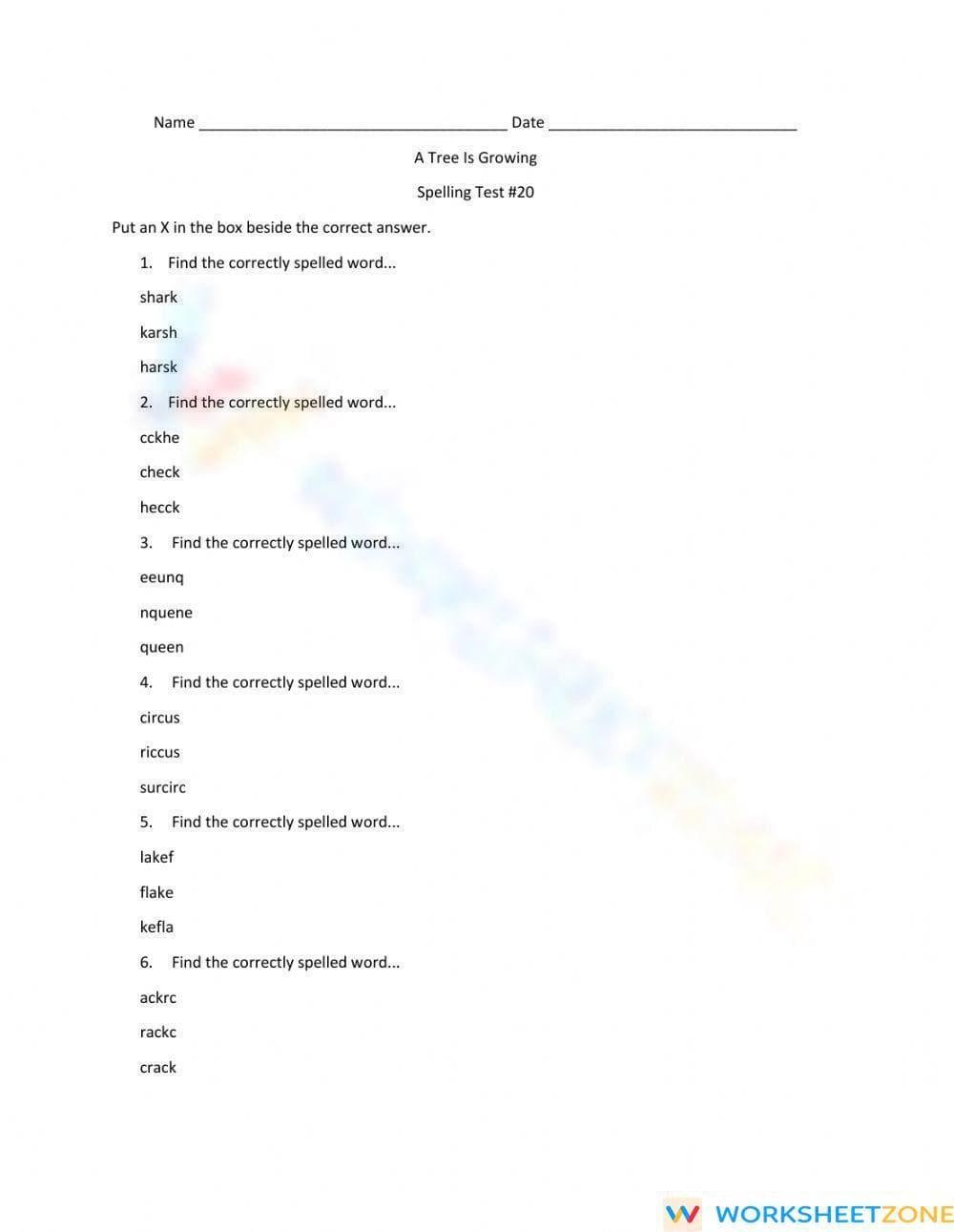
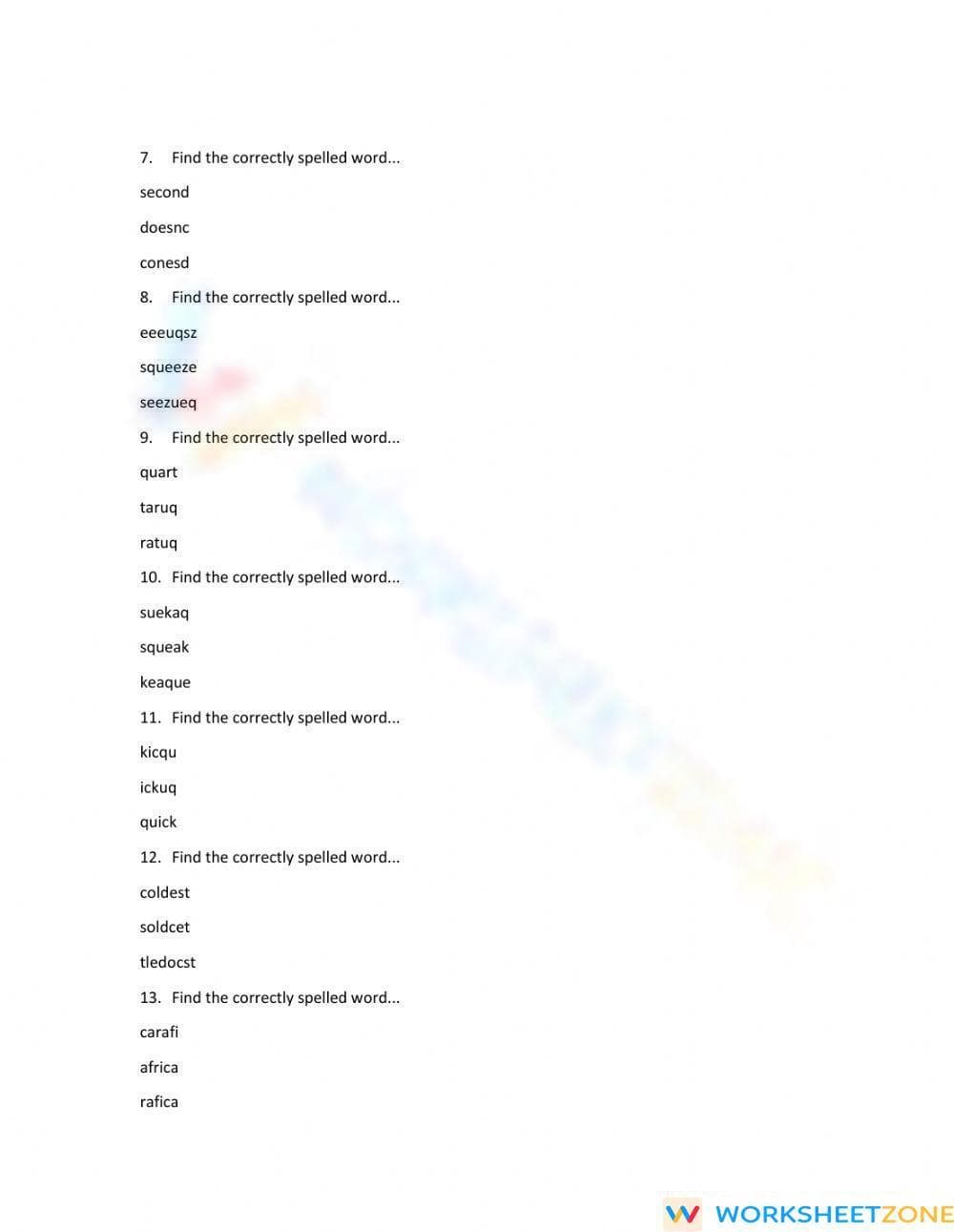
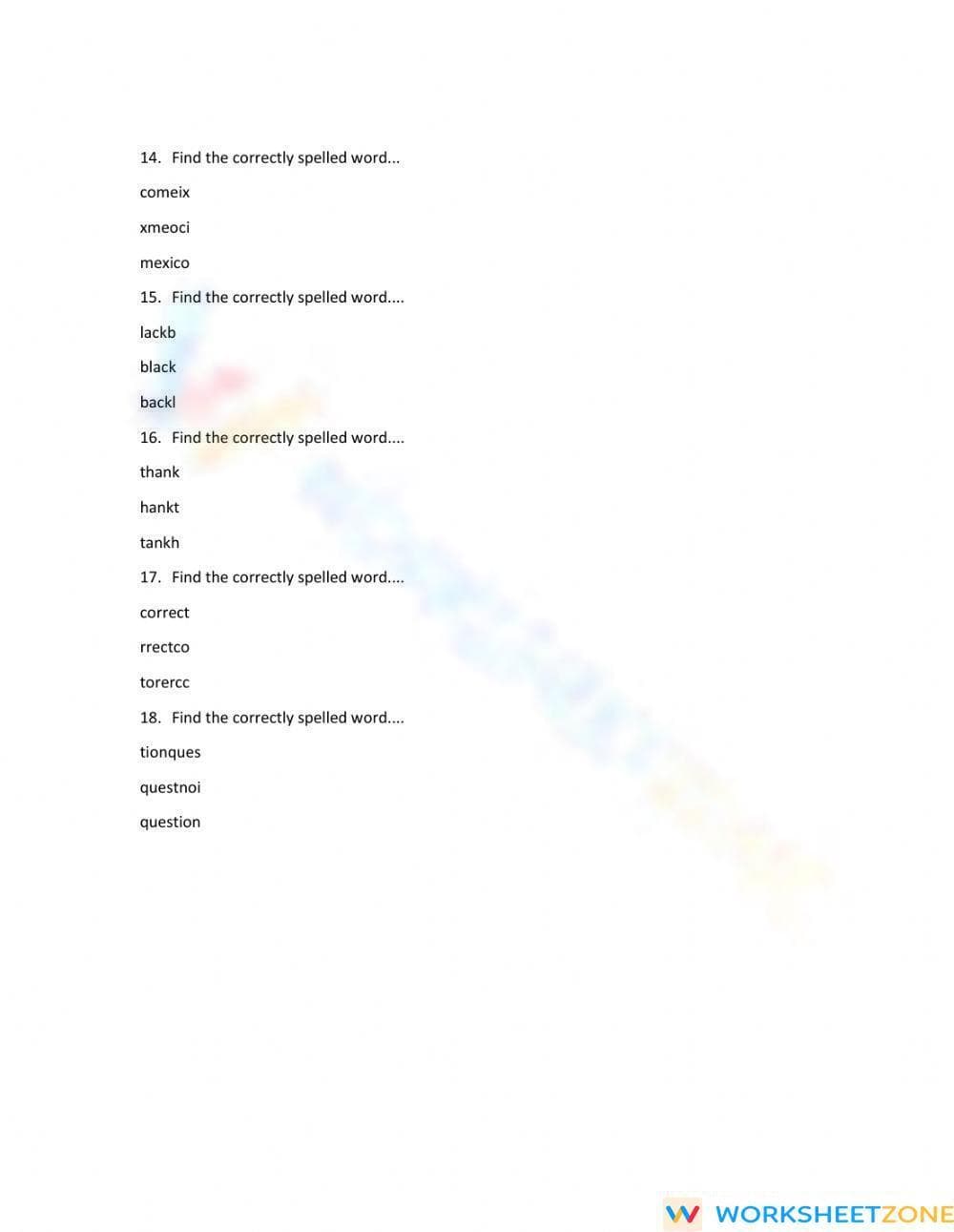
Mastery of conventional spelling is achieved through the 18 structured tasks in this Grade 3 assessment for 'A Tree Is Growing.' Students sharpen their orthographic precision and visual memory by identifying correctly spelled high-frequency words among common distractors.
At a Glance
- Grade: 3 · Subject: ELA
- Standard:
CCSS.ELA-LITERACY.L.3.2.E— Use conventional spelling for high-frequency words and studied patterns- Skill Focus: Comprehensive orthographic identification and spelling accuracy for Grade 3 vocabulary
- Format: 3 pages · 18 problems · Answer key included · PDF
- Best For: Weekly summative assessment, sub plans, or spelling center rotations
- Time: 15–20 minutes
What's Inside
This three-page PDF is a complete, ready-to-use spelling assessment featuring 18 multiple-choice items. Each task presents a 'find the correctly spelled word' challenge, utilizing high-frequency words and domain-specific vocabulary from common Grade 3 units. The clean layout includes clear name and date lines, making it easy to collect and grade. A full answer key is provided to ensure rapid feedback for students.
Zero-Prep Workflow
- Print (1 minute): Open the PDF and print the three-page set for your entire class. No resizing or margin adjustments are required for standard letter paper.
- Distribute (1 minute): Hand out the tests at the start of your ELA block or spelling center rotation. The instructions are self-explanatory, requiring no additional teacher modeling.
- Review (5 minutes): Use the included answer key to grade the 18 items. The simple 'X in the box' format allows for rapid scanning or even peer-grading for immediate formative feedback.
Standards Alignment
This resource is explicitly aligned to CCSS.ELA-LITERACY.L.3.2.E, which requires students to use conventional spelling for high-frequency and other studied words. It specifically targets the student's ability to recognize correct orthic patterns in words like 'circus,' 'squeeze,' and 'question.' Both standard codes can be copied directly into lesson plans, IEP goals, or district curriculum mapping tools.
How to Use It
Deploy this worksheet as a summative Friday assessment to conclude a spelling unit on long vowels or complex consonants. Alternatively, use it as a 'pre-test' to gauge existing word-bank knowledge before starting the 'A Tree Is Growing' curriculum. During administration, observe if students are sounding out the distractors or using visual memory to pick the correct word, as this provides valuable formative data.
Who It's For
This assessment is designed for Grade 3 and Grade 4 students working on spelling mastery. It is particularly effective for learners who benefit from a structured, multiple-choice format rather than traditional dictation tests. Pair this resource with a vocabulary anchor chart or a 'word wall' to support students who are still building their orthographic confidence during the learning phase.
Effective spelling instruction requires a balance of phonological awareness and visual orthographic memory. According to research from Fisher & Frey (2014) on the gradual release of responsibility, structured assessments like this spelling test serve as a critical 'Independent Practice' phase where students apply internal word schemas without external scaffolds. The 18-item format provides a sufficient sample size to determine whether a student has reached the 'Automaticity' stage of spelling for the target CCSS.ELA-LITERACY.L.3.2.E words. By requiring students to distinguish the correct spelling from common phonetically plausible distractors, the worksheet forces higher-level cognitive processing of word structures rather than simple rote memorization. This methodology aligns with evidence-based practices that prioritize the recognition of correct spellings as a precursor to consistent production in independent writing. Using this data-driven approach ensures that spelling instruction is both measurable and targeted toward specific phonics gaps identified during the assessment.


