




























Views
Downloads

Grade 1 Questions vs Statements — Printable No-Prep Sheet

Paste this activity's link or code into your existing LMS (Google Classroom, Canvas, Teams, Schoology, Moodle, etc.).
Students can open and work on the activity right away, with no student login required.
You'll still be able to track student progress and results from your teacher account.
This Grade 1 ELA worksheet helps young learners master the difference between statements and questions. By identifying sentence types and applying correct end punctuation, students build foundational grammar and mechanics skills. The engaging train-themed design keeps children focused as they practice essential writing conventions. It is a perfect addition to any literacy center or homework packet.
At a Glance
- Grade: 1 · Subject: English Language Arts
- Standard:
L.1.2.B— Use end punctuation for sentences- Skill Focus: Statements vs. Questions
- Format: 2 pages · 7 problems · Answer key included · PDF
- Best For: Zero-prep grammar practice and review
- Time: 10–15 minutes
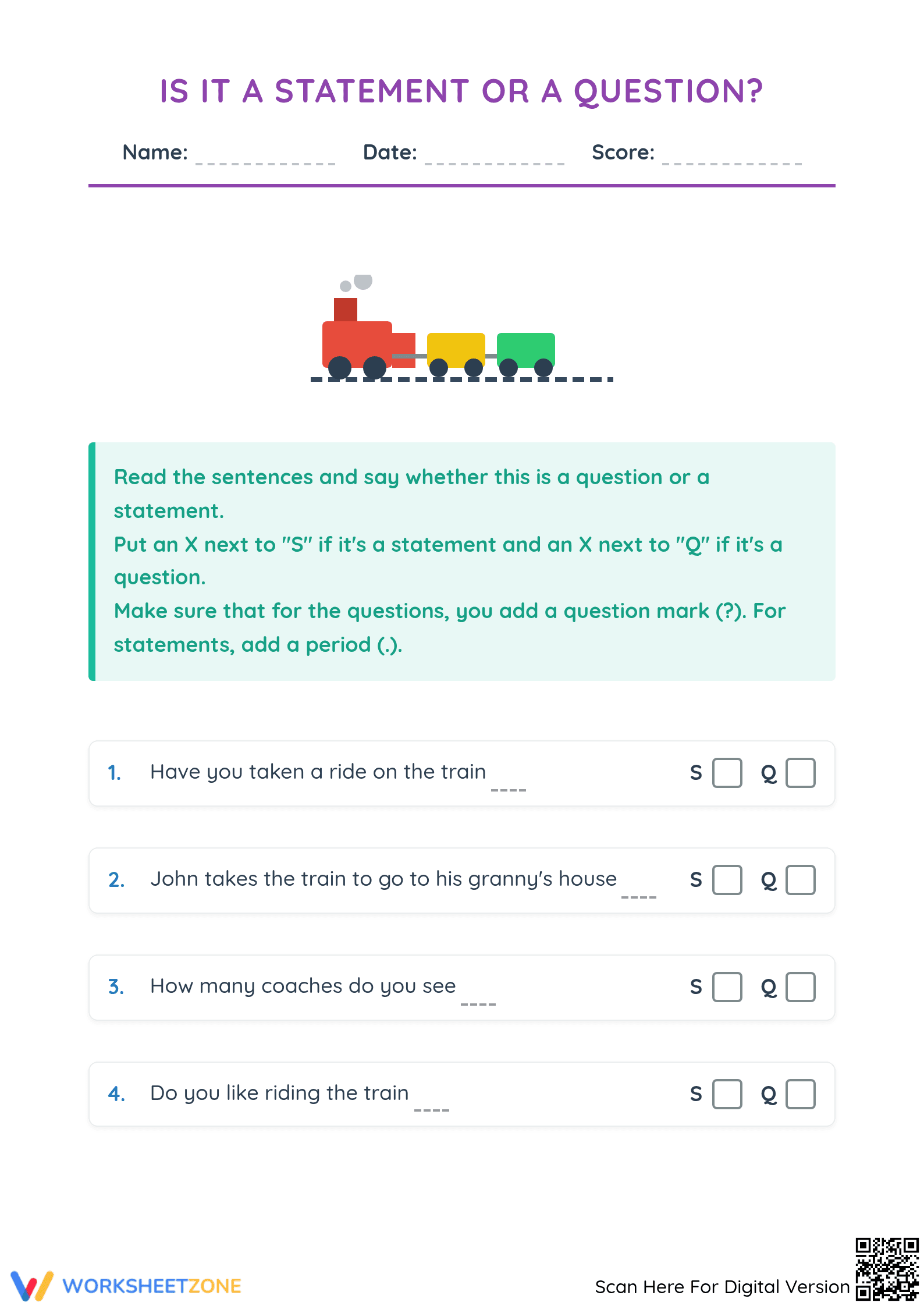
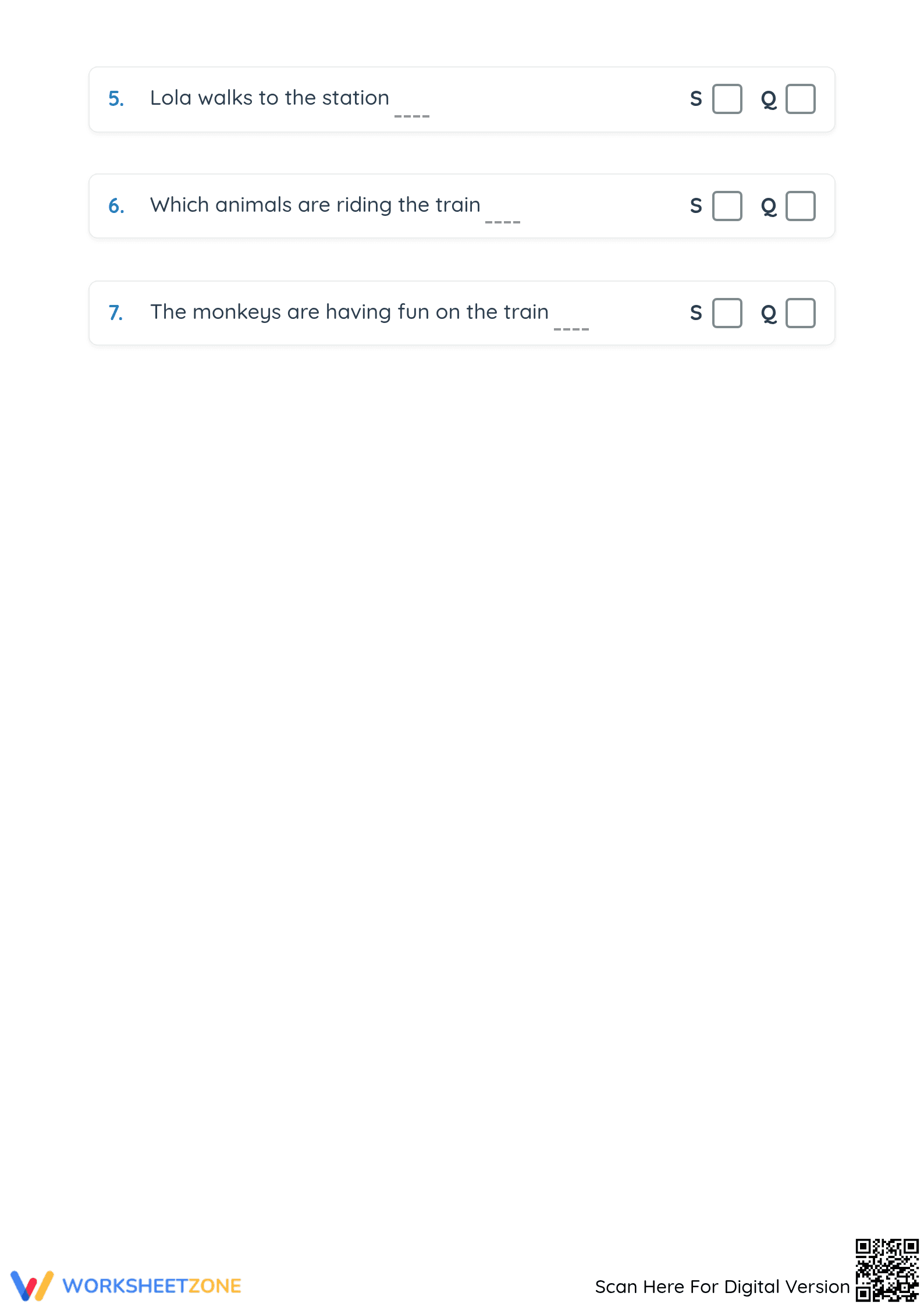
The packet contains two pages of structured practice focusing on ending punctuation. Each of the seven tasks presents a train-themed sentence followed by two checkboxes for identifying the sentence as a statement ("S") or a question ("Q"). Students must also write the appropriate period or question mark on the provided lines. A complete answer key is included for rapid teacher grading or student self-check.
Zero-Prep Workflow
The workflow for this resource is designed for maximum efficiency in busy classrooms. Teachers can Print the double-sided PDF in less than 30 seconds. Distributing the worksheets to a full class takes approximately one minute, with no additional materials required beyond a pencil. Finally, Reviewing student work is streamlined by the clear checkbox format, taking under two minutes to assess an entire set of responses.
Standards Alignment
The resource is directly aligned with `CCSS.ELA-LITERACY.L.1.2.B`, which requires students to use end punctuation for sentences. By forcing a choice between "S" and "Q," students must cognitively process the function of the sentence before applying the convention. This standard code can be copied directly into lesson plans, IEP goals, or district curriculum mapping tools to ensure instructional compliance and tracking.
How to Use It
Use this worksheet as a formative assessment after an introductory lesson on sentence types. Observe if students can distinguish the "asking" tone of questions from the "telling" tone of statements. It also serves as an excellent independent practice station during literacy rotations. For students who finish early, challenge them to write one original statement and one original question about the train on the back of the page.
Who It's For
This activity is tailored for first-grade students or kindergarteners ready for advanced punctuation work. It provides necessary scaffolding for English Language Learners who are learning the melodic cues of English syntax. Pair this resource with a short mentor text about transportation to provide context for the sentences provided in the exercises.
The "A Question or A Statement?" worksheet facilitates the development of syntactic awareness, a critical component of early literacy. Research from the NAEP underscores that mastery of sentence-level mechanics in the primary grades is a strong predictor of later writing fluency and reading comprehension. By focusing on `L.1.2.B`, students move beyond simple word recognition to understanding the functional intent of written communication. Fisher & Frey (2014) emphasize that targeted practice in identifying sentence types helps students internalize the relationship between punctuation and meaning, bridging the gap between oral language and formal writing. This 2-page PDF provides the structured repetition necessary for this internalization, allowing teachers to assess student progress through seven distinct data points. Whether used as a remedial tool or a standard classroom exercise, the resource ensures that Grade 1 learners can consistently apply ending punctuation to clarify their message for readers.


