


























Views
Downloads


Narrator Point of View Worksheet | Grade 5 Essential
Paste this activity's link or code into your existing LMS (Google Classroom, Canvas, Teams, Schoology, Moodle, etc.).
Students can open and work on the activity right away, with no student login required.
You'll still be able to track student progress and results from your teacher account.
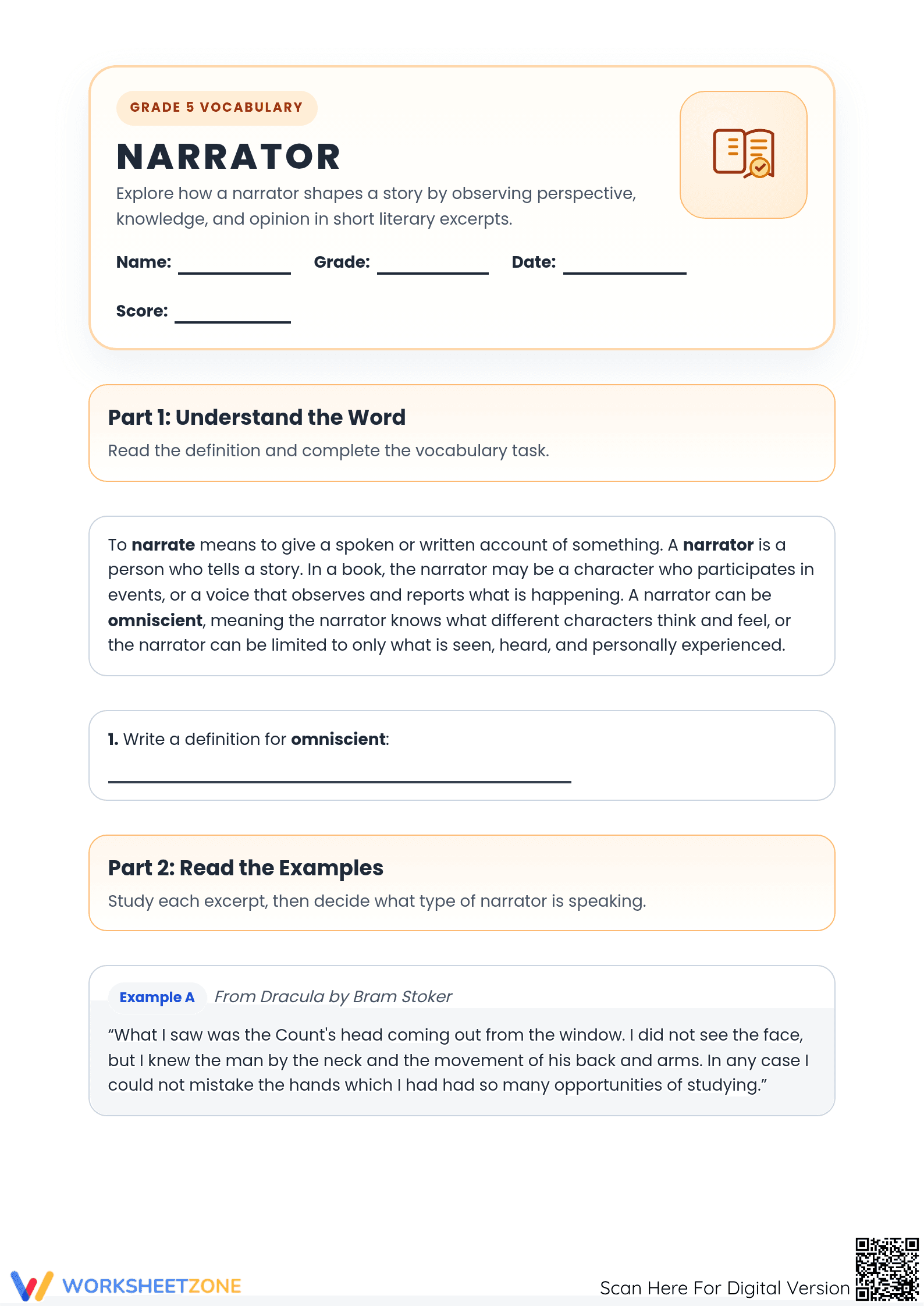
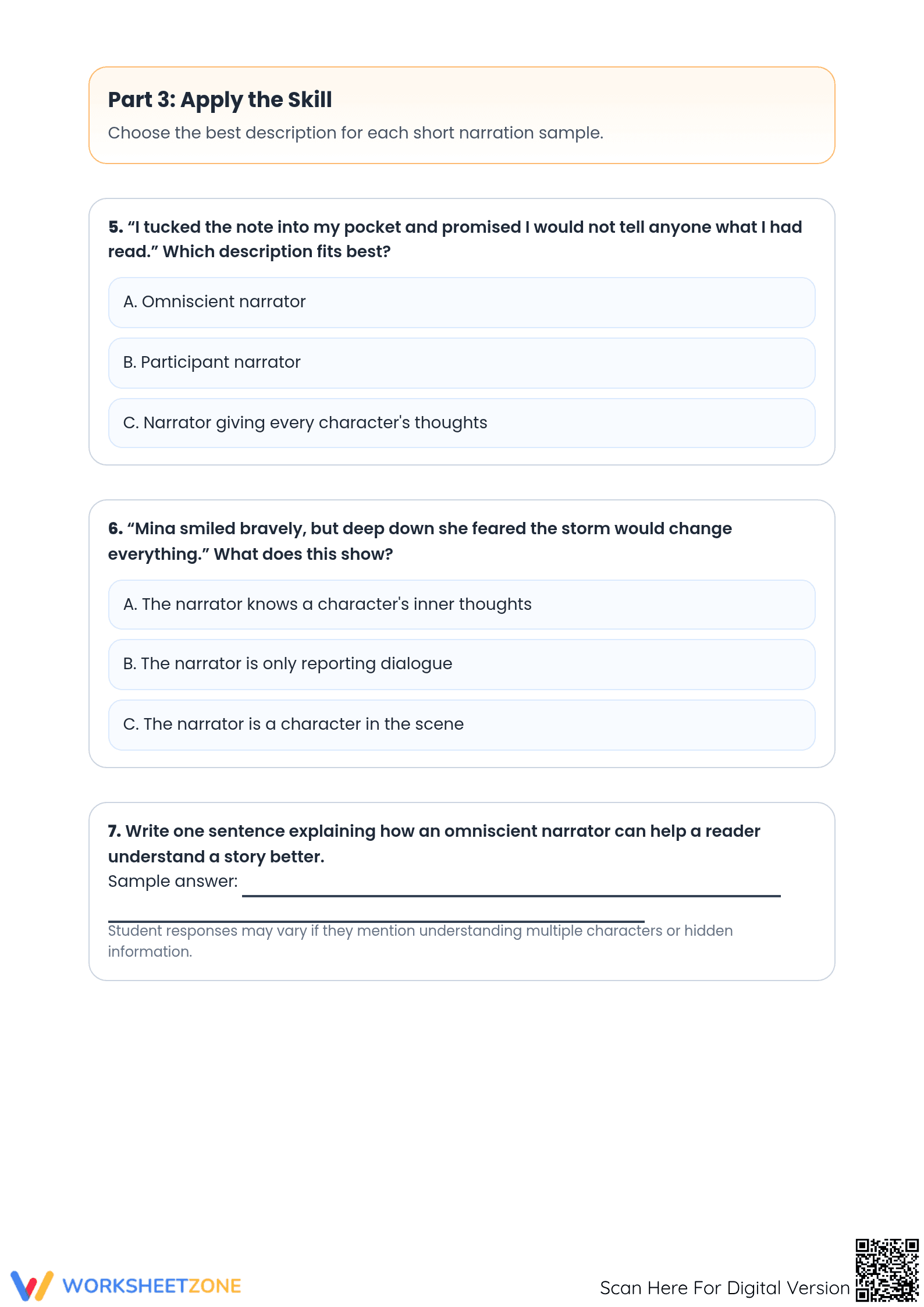
This Grade 5 narrator worksheet helps students distinguish between different narrative perspectives using classic literary excerpts. By analyzing excerpts from Dracula and Little Women, learners identify omniscient and participant voices. This resource ensures students understand how a narrator's knowledge shapes the reader's experience of a story before they move to complex creative writing.
At a Glance
- Grade: 5 · Subject: ELA
- Standard:
CCSS.ELA-LITERACY.RL.5.6— Describe how a narrator's point of view influences how events are described- Skill Focus: Narrative Perspective & Omniscient Voice
- Format: 3 pages · 7 problems · Answer key included · PDF
- Best For: Independent practice or guided reading support
- Time: 20–30 minutes
What's Inside: This 3-page PDF includes a vocabulary definition section, three literary excerpts for analysis, and a mix of multiple-choice and short-answer questions. Students work with a full answer key that provides sample responses for open-ended questions. The layout uses clear headings and boxed examples to keep students focused on the text evidence rather than complex formatting.
Skill Progression
- Guided practice: Students begin by defining "omniscient" based on a provided text block to establish foundational vocabulary and conceptual understanding.
- Supported practice: Learners analyze three distinct literary examples to identify narrator types and specific opinions expressed within the text.
- Independent practice: The final section requires students to apply their knowledge to new snippets and explain the impact of an omniscient narrator in their own words.
This gradual-release model moves from basic recall to high-level analysis of narrative influence, following the I Do, We Do, You Do instructional framework.
Standards Alignment
The primary focus is `CCSS.ELA-LITERACY.RL.5.6`, which requires students to describe how a narrator's or speaker's point of view influences how events are described. It also supports L.5.4 by building domain-specific vocabulary related to literary analysis. Both standard codes can be copied directly into lesson plans, IEP goals, or district curriculum mapping tools.
How to Use It
Use this worksheet during the independent practice phase of a lesson on point of view. It works well as a formative assessment after students have been introduced to first-person and third-person perspectives. Teachers should observe if students can distinguish between a narrator who knows all characters' thoughts versus one who is a character in the scene. Expected completion time is 25 minutes.
Who It's For
This resource is designed for fifth-grade students mastering literary analysis. It provides enough scaffolding for English Language Learners through clear definitions, while the classic literature excerpts offer rigor for advanced readers. Pair this with an anchor chart on narrative voice or a direct instruction lesson on perspective for maximum instructional impact.
According to Fisher & Frey (2014), the gradual release of responsibility is vital for mastering complex literary concepts like narrative perspective. This worksheet aligns with CCSS.ELA-LITERACY.RL.5.6 by requiring students to move beyond simple identification to explaining the mechanics behind a narrator's voice. By using 7 targeted tasks across 3 pages, the resource provides the structured repetition necessary for students to internalize the difference between omniscient and limited viewpoints. Research from the NAEP indicates that students who can identify a narrator's perspective are significantly more likely to succeed in high-level reading comprehension tasks. This printable PDF offers a reliable way to track student progress toward mastery of Grade 5 ELA standards while providing immediate feedback via the included answer key.


